Key takeaways
Summary: Coastside Cohousing in Santa Cruz offers a different model for people who want private homeownership, real equity, and a stronger sense of community. For the right buyer, especially a longtime Bay Area homeowner thinking about what comes next, it may be less about simply downsizing and more about choosing a more connected, intentional way to live.
I sat down with Wesley Chang on a recorded video call to talk about Coastside Cohousing, a project he’s building in Santa Cruz. I’d heard about co-housing before, but honestly, I didn’t understand it the way I do now. And after walking the land with Wesley and hearing what he’s building, I realized this is worth talking about, especially for people in their 60s and 70s who are thinking about what comes next.
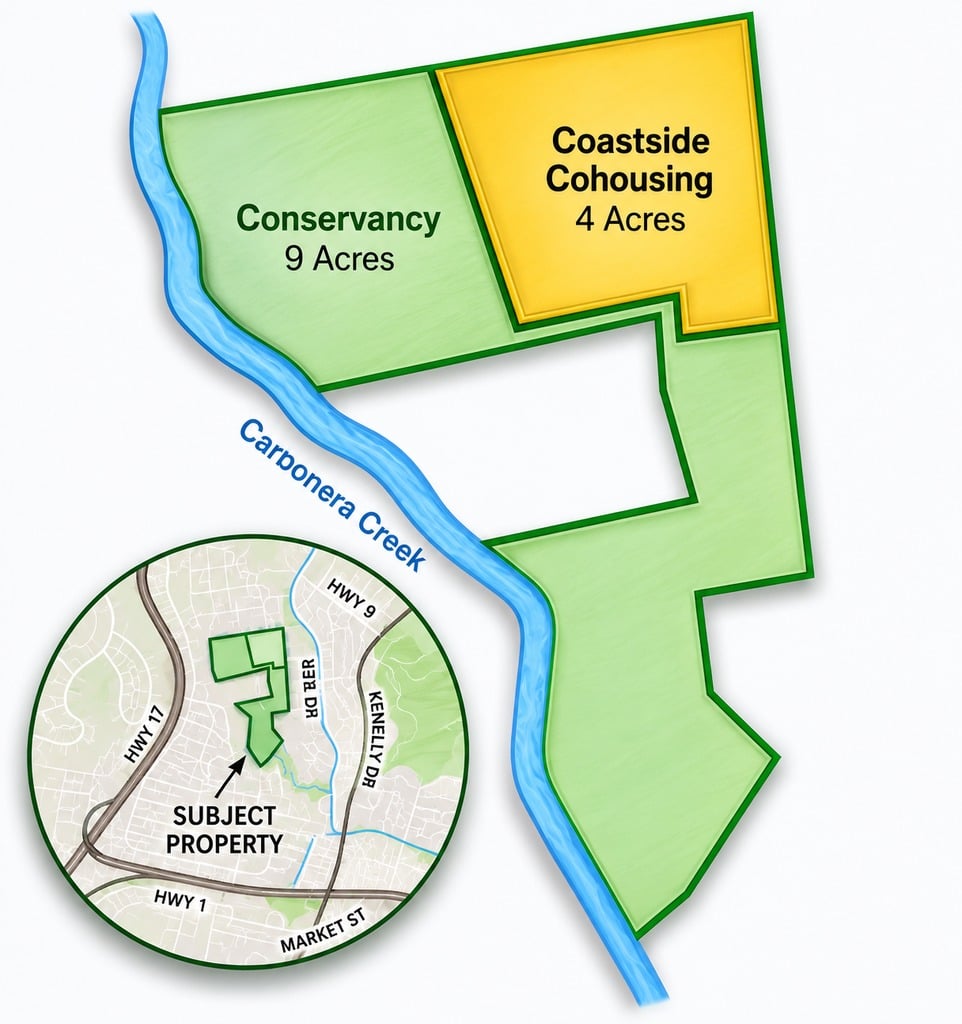
The project is in one of the most gorgeous parts of Santa Cruz, in an area called Carbonera Estates. And when Wesley started explaining what co-housing actually is, he asked me a question that made me stop and think. How many of your neighbors do you actually know? Not people whose names you see on a mailbox, but really know them. How often are you getting together, supporting each other, actually doing life as a community?
For most people in Silicon Valley, the answer is almost never. We design our neighborhoods for privacy, and that works great until you realize that all that privacy actually adds up to isolation.
That’s what makes what Wesley is building interesting. It’s not a commune, and it’s not a traditional retirement community. It’s something different, and from what I saw, it’s worth paying attention to.
What Co-Housing Actually Means
When I asked Wesley to explain co-housing, he did something really helpful. He didn’t give me a textbook definition. Instead, he asked a question: what’s your neighborhood actually designed to do for you? Privacy, right? Individual homes, individual yards, minimal interaction by default.
Co-housing flips that entire premise, Wesley explained. You still own your own private home. You have your own space, your own parcel number, your own property tax bill. It’s legally structured like a condo community with an HOA, which means you have full equity ownership in what you’re building.
But here’s the difference. Instead of having a handful of people in charge and everyone else just minding their own business, you’re building a community where your neighbors are actually your neighbors. You design foot traffic through common spaces. You share meals together at least twice a week. You work together on projects. When someone has young kids, people help with childcare. When people are older, you’re looking out for each other, keeping an eye on things.
Wesley was clear on this point. That’s not sentimental talk. That’s the entire design principle behind the community.
The Practical Side of Co-Housing
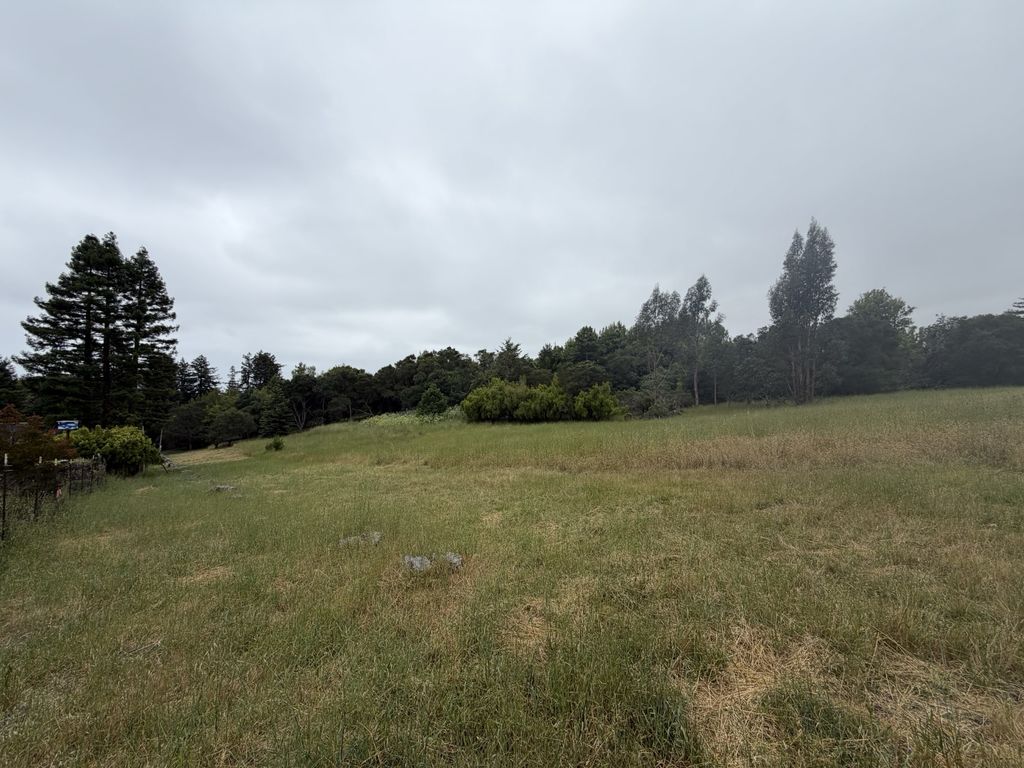
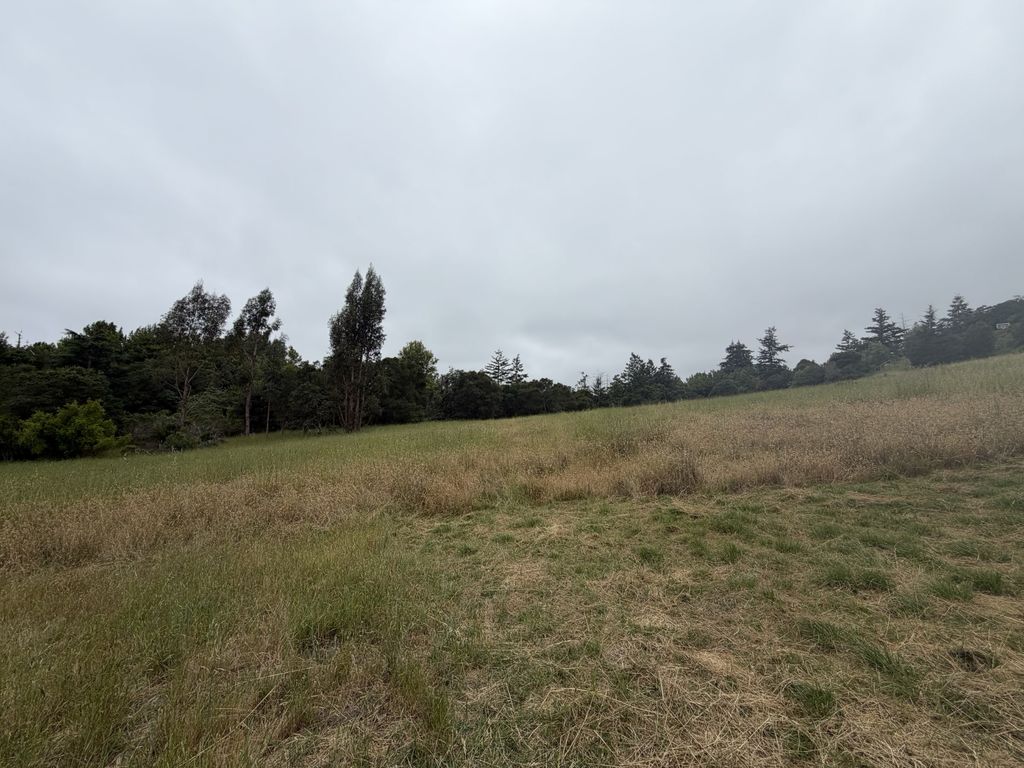
As Wesley walked me through the details, I started to understand how this actually works in practice. The site itself is stunning. Four acres of actual development, almost ten acres left as permanent open space and conservation area. So you’re not packed in tight next to sprawl. You get privacy and community simultaneously.
They’re planning for around 30 households. Wesley was clear that this is intentional. The community has to stay small enough that you can actually govern together and know everyone. If you try to do this with hundreds of people, it breaks down.
The units come in three types. There are flats with no stairs, which Wesley emphasized is really important since a lot of people want to age in place at Coastside. A three-bedroom two-bath flat, a two-bedroom two-bath flat for something smaller, and then three-bedroom townhomes for families with younger kids. Wesley mentioned they’re learning from Katie McCamey, the co-housing expert who brought this entire concept from Denmark about 35 years ago. The design comes from decades of experience with successful co-housing communities.
One thing I asked about was the age mix. Wesley told me they’ve explicitly chosen not to do age-restricted. They’ve already got families with young kids and people in their 50s, 60s, and 70s in the founding group. That mix is intentional because, as Wesley said, a healthy community needs different ages and life stages.
Live by the Beach

How You Actually Join One
When I asked Wesley how the financial piece works when you won’t move in for four or five years, he explained their structure. You become a member of an LLC, essentially the development company that everyone in the community owns equally. You put in an initial deposit (right now it’s $10,000), and then you make regular payments over the next couple of years, eventually getting to about 20 percent of your expected unit cost. It’s basically like putting 20 percent down on a house, except you’re paying it over time instead of all at once.
Wesley told me they’re estimating the units will run between about $1.3 to $1.9 million by the time they’re complete in 2030. In today’s 2026 dollars, that’s roughly $1.1 to $1.7 million. They did a market analysis and found that tracks right with what new builds in that area are going for. So you’re not paying a premium for the co-housing model. You’re paying market rate.
Here’s where it gets interesting. If you come in early and pay your deposits over time, you get a say in the design and you get to pick which unit you want. If you wait until construction is done and the units are formally for sale, you can buy in like a normal real estate transaction, but you don’t get to choose your location. Wesley will tell you straight up that historically co-housing communities sell out before construction is even done. People want this. When they understand what they’re getting, they commit.
I asked Wesley what happens if life changes and you need to leave before move-in. Your investment converts to a loan with an interest rate, and you get paid back when the units are sold and the funds are available. Your risk is really low because either the project succeeds and you get your money back with interest, or it doesn’t, but the community is transparent about the risk from the beginning.
The Governance Part
When I brought up governance, Wesley didn’t shy away from it. I said, okay, this sounds nice, but 30 families all having a say sounds like it could be chaos. How do you actually make decisions?
Wesley explained they’re using something called sociocracy, which is a governance model where you have smaller working groups or circles that handle specific functions. Right now they have four circles: one for development, finance, and legal work; one for design where they work directly with the architects; one for marketing and recruiting new members; one for activities and social stuff; and one for process and governance itself. Wesley emphasized that last one is really important because as they build, people’s expectations are going to shift and you need good decision-making processes in place.
I asked whether you need to be an architect or a lawyer or an engineer to join. Wesley was clear: no, you don’t. They happen to have those professionals in their founding group, which makes things easier, but most co-housing communities hire that expertise as needed. What they’re looking for is people willing to do the work, to show up, and to be part of making collective decisions instead of letting one developer or one small group call all the shots.
Life’s a Beach
Who Is This Actually For?
When I walked the site with Wesley, I asked him what kind of people are moving into Coastside. Because honestly, if you’re planning to invest $1.3 to $1.9 million in a house that won’t be ready for five years, you’re either financially solid or you’re planning some kind of major transaction with your current home.
Wesley said that’s exactly the demographic they’re seeing. A lot of the people joining are Silicon Valley long-time homeowners who can sell their current home and move into something that’s going to be less expensive than what they have now. For them, it’s a clean financial transition and they get to be part of building intentional community instead of just buying another house and living in isolation.
What struck me in that conversation is how this addresses something a lot of people don’t realize they’re looking for. In my work with people over 60 who are thinking about housing transitions, I hear them say they want to downsize or they’re ready to move. And sometimes what they really mean is they want a place where daily life is easier, where they’re not maintaining three bedrooms they don’t use, where they feel safe and connected instead of alone.
Co-housing is one answer to that. Not the only answer, but a real answer, and a good one for the right people.
Next Steps If You’re Interested
Before we wrapped up, I asked Wesley how someone would actually get started if this seemed interesting to them. Wesley explained they hold regular information sessions (about an hour long, covering co-housing in general and then specifics about their project) and site tours led by community members. You can find both on their website at coastsidecohousing.com.
They also have an explorer program, Wesley told me. You get all the materials they’ve developed, work with a personal navigator to understand the process, and actually sit in on their meetings so you can see how the community operates before you commit to anything. Wesley said they already have quite a number of explorers involved and expects some of them to come on as owners soon.
I asked about the selection process. Is there formal approval? Wesley was clear. It’s mostly self-selecting. You come, you meet people, you see if you vibe with them and if this way of living resonates with you. The community will have conversations with prospective members to make sure the fit is mutual, but it’s not formal gatekeeping. It’s people trying to build something together and making sure everyone wants to be part of it for real reasons.
What stood out to me after talking with Wesley is that projects like Coastside challenge the basic assumption that your only options for housing are living alone, living in a retirement community, or moving in with family. There are other ways to structure community and daily life. Some of those ways involve intentionality and choice and getting to know your neighbors again.
Frequently Asked Questions
What is Coastside Cohousing in Santa Cruz?
Is Coastside Cohousing a commune?
Is Coastside Cohousing a retirement community?
Where is Coastside Cohousing located?
How many homes are planned at Coastside Cohousing?
What kinds of homes will Coastside Cohousing offer?
How much will homes at Coastside Cohousing cost?
How do you join Coastside Cohousing?
What happens if someone joins early and later changes their mind?
Who is Coastside Cohousing best suited for?
Time to talk to a REALTOR?

Santa Cruz County Luxury Homes For Sale
2
3
4
5
6
7
8
9
10
11
12
13
14
15
16
17
18
19
20
21
22
23
24
25