

For Best Results
Want the full market report for Scotts Valley?
We want to ensure that you have all the information needed to make the best decisions when it comes to your home goals. When you enter your info below you will get instant access to the area's latest market report, complete with sales and demographic trends.

Local News & Advice
Read helpful resources and articles related to the area.
Mortgage Rates Over 7%: What It Means for Longtime Silicon …
TakeawaysThe average 30-year fixed rate hit 7.03% in late September 2026, its first time above 7% since January…
Preemptive Offers in Silicon Valley Real Estate: The Complete 2026 …
Every spring in Silicon Valley, some version of this conversation happens a few thousand times. A house comes…
Why Downsizing Seems Impossible, And What You Can Do About …
TakeawaysThe real reason downsizing feels impossible usually isn't logistics, it's fear. Your brain is wired to keep you…
At Home in Scotts Valley
Scotts Valley is the smallest city I work in, covering about 4.6 square miles with roughly 11,700 residents, and it has the second oldest median age of any city on my list at around 47. It sits in the hills between Santa Cruz and the summit of Highway 17, which means it is frequently above the coastal fog when the beaches are socked in. The town incorporated in August 1966, partly out of concern that Santa Cruz would otherwise annex it, and that streak of independence still shapes local politics.
The name comes from Hiram Daniel Scott, who bought land here in 1850. The house he built in 1853 still stands and is listed on the National Register of Historic Places. Before the suburbs arrived, the local economy ran on lumber, grain milling, hide tanning and peat extraction, which is a stranger list of industries than most Bay Area towns can claim.
The twentieth century gave Scotts Valley an unusually colorful run. Santa’s Village, a Christmas-themed amusement park, operated here from 1957 to 1979 and is still the first thing older locals mention. Sky Park, a general aviation airport, ran until 1983, and the city turned the land into Skypark, which is now the main community park and event grounds. The Barn hosted major touring acts during its short life from 1965 to 1968. Alfred Hitchcock kept a home in the area from 1940 to 1972, and in 1997 Reed Hastings and Marc Randolph founded Netflix here, in a town of fewer than ten thousand people at the time.
Present-day Scotts Valley is honest about what it is. There is no historic downtown, and commercial life runs along Scotts Valley Drive and the Kings Village area rather than a walkable main street. Skypark is the civic heart, hosting the Scotts Valley Art, Wine and Beer Festival each August along with smaller community events through the year. What the town lacks in charm it makes up for in access to redwoods, with Henry Cowell Redwoods and Big Basin Redwoods state parks both a short drive into the surrounding mountains, and the Scotts Valley Chamber of Commerce tracks what else is happening locally.
Schools are one of the strongest arguments for buying here. Scotts Valley Unified School District runs four schools covering kindergarten through twelfth grade in a single district, which is simpler than the split elementary and high school districts common across the hill in Santa Clara County, and its reputation drives a meaningful share of buyer demand. That matters for resale even if your own children finished school decades ago.
For older residents, the Scotts Valley Senior Center on Kings Village Road runs activities, meals and social programs, and the Scotts Valley branch of the Santa Cruz Public Libraries serves the town. The single most relevant address for my clients is Montevalle, a planned age-restricted community that offers single-level living inside the city, and it is one of the few genuine 55 and over options anywhere in Santa Cruz County. There is no hospital in Scotts Valley, so Dominican Hospital in Santa Cruz, about fifteen minutes down the hill, is the nearest emergency room.
Highway 17 runs straight through town, which is the whole reason Scotts Valley exists in its current form. Off peak you can be in Los Gatos or San Jose in twenty to twenty-five minutes, faster than from anywhere else in Santa Cruz County, and that is why the town has always attracted people who work over the hill but wanted mountain air and a lower price. Commute hours are another story, and winter storms close or slow the road more often than newcomers expect. Santa Cruz METRO runs the Highway 17 Express through Scotts Valley to Diridon Station, which is a reasonable alternative to driving it yourself.
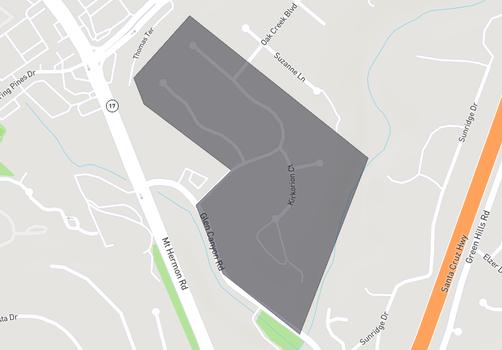
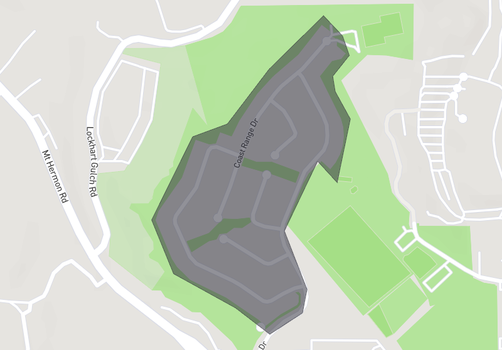
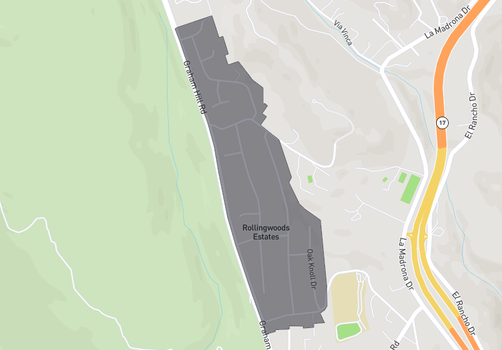
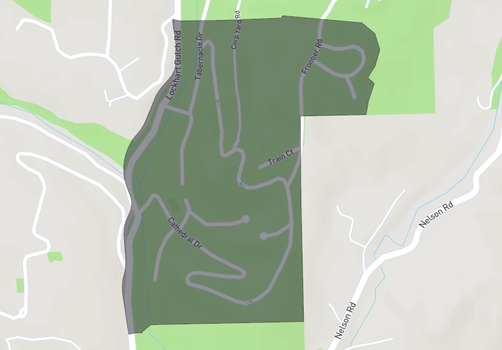
The housing stock skews newer than the rest of the county. Most of it is 1960s through 1990s suburban tract and ranch construction built after incorporation, with additional development through the 2000s, and neighborhoods like Rolling Woods, Monte Fiore, Scotts Valley Heights, Polo Ranch and The Vineyards each have their own feel. The Bean Creek and Glenwood corridors offer larger, more rural parcels for people who want space. Single-level homes are reasonably common, which puts Scotts Valley ahead of most of the county for buyers who are done with stairs.
The market here is the slowest of any city I track, and sellers need to know that going in. Through the summer of 2026 the median sale price has been running around $1.21 million, up not quite two percent from a year earlier, but homes have been taking a median of roughly 41 days to go into contract, about seventeen days longer than the same period last year. That is a market where pricing correctly at launch matters enormously, because the homes that miss on price sit for months. My Scotts Valley home prices page follows the trend as sales close.
Plenty of people find their way here by selling a Silicon Valley house and buying something with a shorter commute, more trees and money left in the bank. If you are 55 or older, Proposition 19 lets you carry your existing property tax basis from Santa Clara County to a replacement home here, which changes the math considerably and is worth understanding before you list anything. Walking older adults and their families through exactly that sequence is what I do. Book a call with me to talk it through, or read about my approach to selling if you are ready to start on the valley side.