


Free Buyer Strategy Call
Before you tour a single home,let's build your game plan.
In Santa Cruz County, the buyers who win usually aren't the ones with the biggest offer. They're the ones who knew exactly how they'd compete before the right house ever came up. In 30 minutes we'll talk through your timing, how your down payment and equity comp fit together, and which towns and neighborhoods, from the mountains to the beach, really match the way you live, then put together a plan to win the home you want without overpaying for it.
Book My Buyer Strategy Call →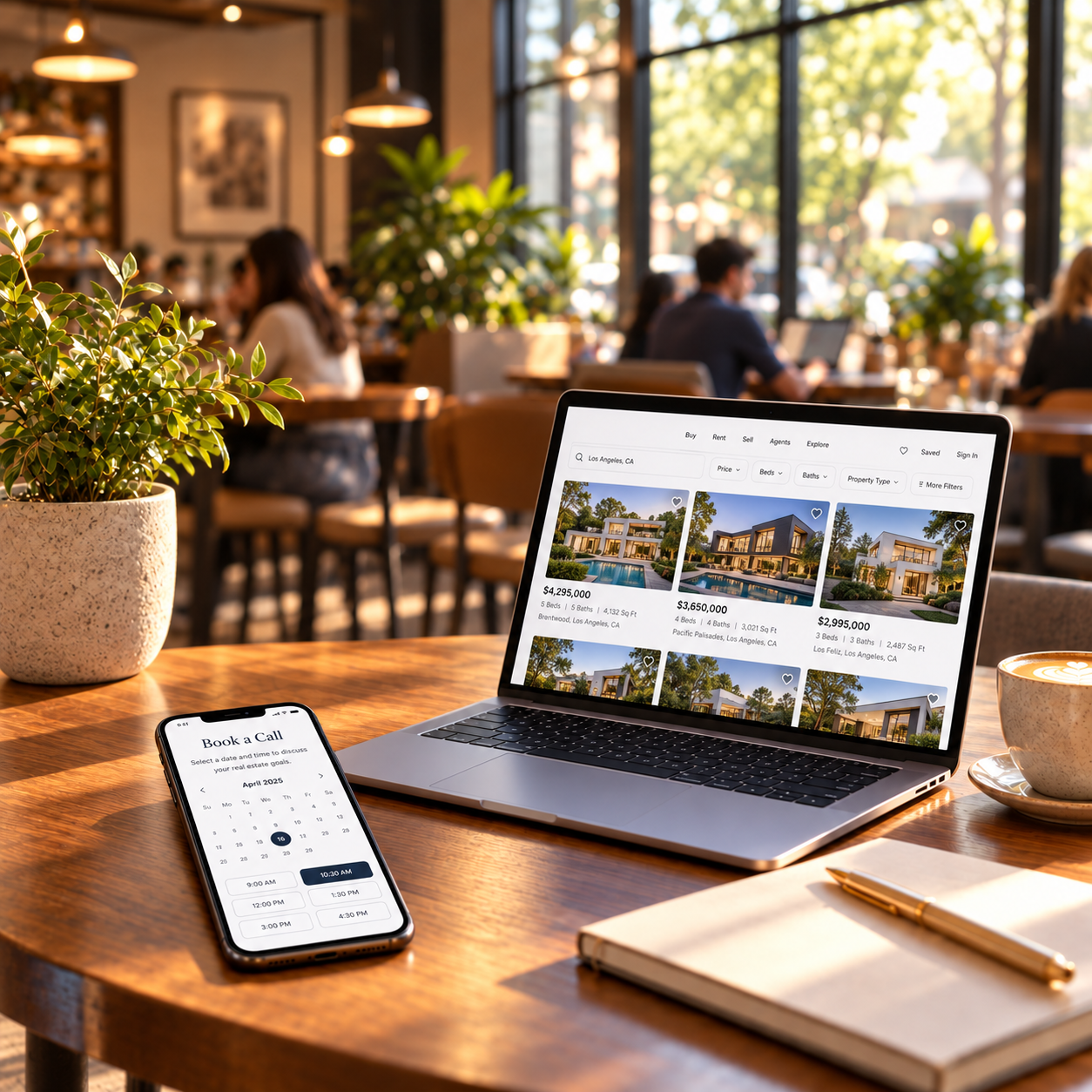




Want the full market report for Capitola?
We want to ensure that you have all the information needed to make the best decisions when it comes to your home goals. When you enter your info below you will get instant access to the area's latest market report, complete with sales and demographic trends.

Silicon Valley Home Search
Stop scrolling stale listings.See what's really for sale today.
A lot of the homes on the big portals went pending last week, and you don't find out until you've already fallen for one. My home search pulls straight from the MLS across Santa Clara and Santa Cruz counties, so every home you see is actually available. Filter by price, neighborhood and home type, save the searches you care about, and be the buyer who already knows the inventory when the right house comes up.
Search Homes For Sale Now →
Local News & Advice
Read helpful resources and articles related to the area.
Tour the Rispin Mansion in Capitola
above the western bank of Soquel Creek, the historic Rispin Mansion was built between 1919 and 1921 and still…

Exploring Capitola Beach
Key takeawaysCapitola Beach is one of the most accessible and family-friendly beaches in Santa Cruz County, known for…

Shadowbrook Restaurant in Capitola
Shadowbrook Capitola, a landmark restaurant nestled in the heart of Capitola-by-the-Sea, carries a legacy that stretches back almost…
Living in Capitola, CA
Early Capitola History
For more than 1,000 years, the area that is now called Capitola, California was home to native villages, and the Capitola Historical Museum recognizes it as the ancestral homeland of the Aptos, Casjataca and Uypi peoples. After the Spanish founded Mission Santa Cruz in 1791, many of the people living here were moved to the mission, and within a generation most visible signs of the earlier communities had vanished. The land later became part of Rancho Soquel, which was granted to Martina Castro in 1833, and she and her husband, Michael Lodge, raised their family on it.
By the time California became a state in 1850, traffic through the area had already picked up. The Gold Rush pulled people west from all over the continent, and when the gold fever faded, many settlers stayed around Soquel Landing for the farming, lumber and fishing that made a good living possible. In 1865 Frederick Hihn, the businessman credited with developing much of the county, bought the beach flat from Martina Castro’s heirs.
Camp Capitola and the Birth of a Seaside Resort
A few years later Hihn leased a parcel near the wharf to Samuel A. Hall, a former contractor turned farmer who believed the mild weather and the beach could draw summer visitors. Hall’s daughter Lulu suggested a summer tent camp, and Camp Capitola welcomed its first guests in the summer of 1874, likely named after Capitola, the heroine of E.D.E.N. Southworth’s popular novel The Hidden Hand. The Santa Cruz Railroad between Santa Cruz and Watsonville was completed in 1876 and converted to standard gauge in 1883, and from then on the trains delivered thousands of summer visitors to the village.
Hihn saw the business the camp was generating, took control of the resort after the Halls left, and in 1884 drew up a subdivision map and began selling lots for summer homes. The big Hotel Capitola followed, and between the hotel, hot saltwater baths and steady rail traffic, Capitola became one of the busiest resorts on the coast. When Hihn died in 1913, his daughter Katherine Henderson inherited Capitola and sold it after World War I to Henry Allen Rispin, who planned to remake it as Capitola-by-the-Sea and built the Rispin Mansion. Rispin went bankrupt just before the Great Depression, and the residents who stayed carried the town through the lean years until Capitola incorporated on January 11, 1949, the third city in Santa Cruz County.
Capitola Village, Beaches and Festivals
That history is still at the heart of the town. The Capitola Historical Museum on Capitola Avenue, run by the city, is free and open Friday through Sunday afternoons, and it is the best place to see how a tent camp turned into the village you walk through today. Capitola is often called the oldest beach resort on the West Coast, and the city itself says it may be California’s oldest continuing resort. The climate stays mild almost all year, and between the main beach in the village, the wharf and New Brighton State Beach on the east end, you will always find surfers, paddlers, anglers and families out on the sand.
The Capitola Begonia Festival ended after more than six decades, but the town still hosts the Capitola Art and Wine Festival every September. For one weekend, local artists, more than 20 local wineries and other artisans set up booths in the village, admission is free, and local music and dance groups perform both days. Residents are not limited to the beach, either, because the Soquel hills and the redwoods of the Forest of Nisene Marks are a short drive away for hiking, running and cycling.
Capitola Schools
Capitola is small, with roughly 9,900 residents at the 2020 census on about 1.7 square miles, so most families are served by districts that cross city lines. The Soquel Union Elementary School District is headquartered here and runs New Brighton Middle School in Capitola along with elementary schools in Soquel and Santa Cruz Gardens, and high schoolers generally go on to Soquel High in Santa Cruz City Schools. Always confirm the assigned schools for a specific address, since boundaries do not follow the city limits. For higher education, Cabrillo College in Aptos is minutes away and UC Santa Cruz is about fifteen minutes up the coast.
Capitola Neighborhoods and Housing
The housing here is as varied as anywhere in the county. Capitola Village packs cottages, condos and vacation rentals around the beach, Depot Hill sits on the bluff above it with some of the town’s most coveted ocean views, and neighborhoods like the Jewel Box and Cliffwood Heights offer more everyday single-family streets. Design styles vary a lot from one house to the next, so whatever your taste, you can usually find something that fits in this city by the sea.
Capitola Neighborhoods
Capitola is only about 1.7 square miles, but each pocket of town has its own feel, from bluff top cottages to 1960s ranch homes and condos near 41st Avenue. These are the Capitola neighborhood guides I’ve put together so far.
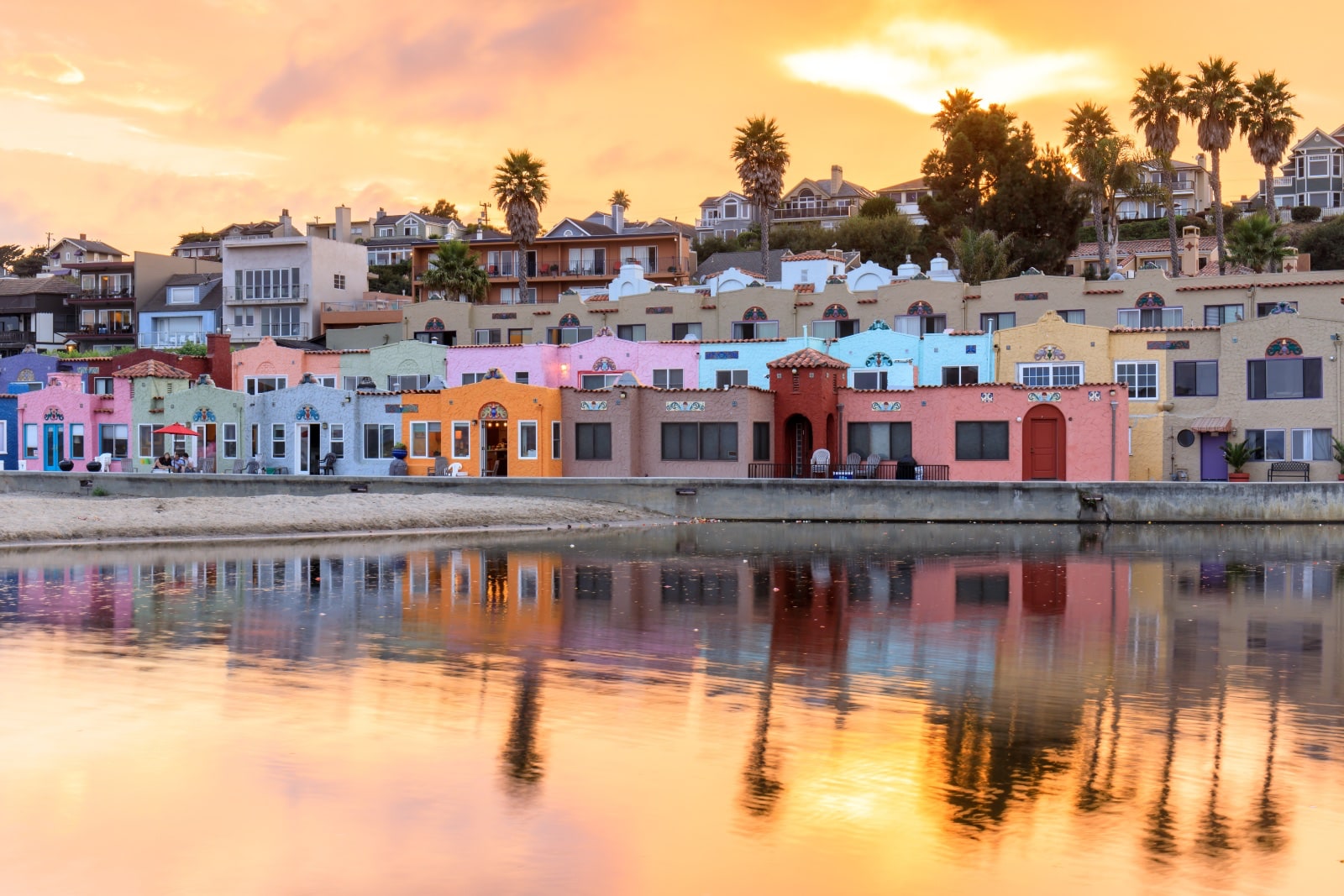
- Capitola Village, the historic beachfront core with cottages, condos and the Venetian Court
- Depot Hill, bluff top homes above the Village with ocean views
- Riverview Terrace, quiet creekside streets along Soquel Creek just north of the Village
- Jewel Box, beach cottages on gem named streets between the Village and 41st Avenue
- Cliffwood Heights, flat streets of 1960s homes built on the old airfield near New Brighton State Beach
- Villas of Capitola, a 1970s condo community with pools on 46th Avenue
Is Capitola a Good Fit for Downsizers?
For a lot of older homeowners it’s one of the best fits in the county. The Jewel Box and Cliffwood Heights have flat streets and plenty of single level homes, condos around the Village and at Villas of Capitola remove the yard work, and 41st Avenue puts groceries, pharmacies and Capitola Mall a few minutes from almost anywhere in town. The Capitola Community Center at Jade Street Park hosts city recreation programs, and Dominican Hospital on Soquel Drive in Santa Cruz is about ten minutes away.
The tradeoffs are real too. Depot Hill and parts of the Village involve steep streets and steps, many older cottages are two story, summer parking is tight near the beach, and condo buyers should read HOA budgets and rules closely. When more support is needed, Westmont of Santa Cruz in neighboring Soquel offers independent living, assisted living and memory care, and my downsizing guide covers how to plan the move.
The Capitola Housing Market
Capitola is small, but its housing market is still a competitive one. For the three months ending September 2026, Redfin’s market data puts the median sale price at about $1.4 million, down about five percent from a year earlier, with homes selling in a median of 30 days compared with 43 days the year before. Only 27 homes sold in September, so a handful of village or bluff-top sales can swing those numbers in either direction, and I would rather pull comparable sales for your street than lean on a citywide median.
Frequently Asked Questions About Capitola
What is the median home price in Capitola?
According to Redfin, Capitola homes sold for a median of about $1.4 million over the three months ending September 2026, down about 5 percent from a year earlier. With fewer than 30 sales a month, a few village or bluff top sales can move that number quite a bit.
What schools serve Capitola?
Most Capitola homes are in the Soquel Union Elementary School District, which runs New Brighton Middle School in Capitola, and Santa Cruz City Schools for high school, usually Soquel High. Confirm the assignment for a specific address with the districts.
Is Capitola a good place to retire?
Many retirees love it for the mild climate, walkable village and flat neighborhoods like the Jewel Box and Cliffwood Heights. Dominican Hospital is about ten minutes away, and condos give downsizers lower maintenance options.
How far is Capitola from San Jose?
San Jose is roughly 45 minutes to an hour over Highway 17 depending on traffic. Downtown Santa Cruz is about 15 minutes away on Highway 1.
What kinds of homes are in Capitola?
You’ll find historic cottages in the Village, bluff top homes on Depot Hill, 1920s to 1950s bungalows in the Jewel Box, 1960s ranch homes in Cliffwood Heights, plus condos and manufactured homes. Many coastal properties fall in the Coastal Zone, which affects remodel permits.
Is Capitola walkable?
The Village and the neighborhoods around it are very walkable, with the beach, wharf, restaurants and shops within a few blocks. Most residents still drive to 41st Avenue for bigger errands.
Capitola, like most of the communities in this region, rewards having a REALTOR® who knows the area street by street and has a track record of getting clients the best result possible. If you are 55 or older and selling a longtime home over the hill, Proposition 19 can let you carry your property tax basis to a home here, and that is worth understanding before you list anything. If you are buying or selling a property in Capitola, I would love the chance to work for you. Book a call with me and let’s talk about the best way to make your next move the best one yet.

