Most people outside the Bay Area know exactly one thing about Cupertino: Apple is here. And that’s true — Apple’s presence defines the city’s economy, its tax base, its traffic patterns, and a good chunk of its international reputation. But people who reduce Cupertino to a tech company address are missing most of the story. I’ve sold homes here for over two decades, and what I see on the ground is a city with exceptional schools, serious parks, a genuinely diverse community, and a quality of life that holds up across every stage of life. The iPhone campus is the headline. The livability is the story.
Cupertino’s Population
Cupertino has about 55,000 residents, making it one of the larger cities in the South Bay by population while still maintaining a distinctly suburban character. The demographic composition is notable: roughly 70% of residents identify as Asian, reflecting decades of immigration from China, India, Taiwan, Korea, and across the Pacific Rim, driven largely by the tech industry and the school system. It’s one of the most educationally credentialed communities in the country, which shapes everything from the school culture to the restaurant scene to the way local civic life operates.
What I notice in my practice is that Cupertino attracts people at two distinct life stages: families arriving for the schools, and older adults staying because they built their lives here and don’t want to leave. The city serves both groups reasonably well, though for different reasons.
Geography
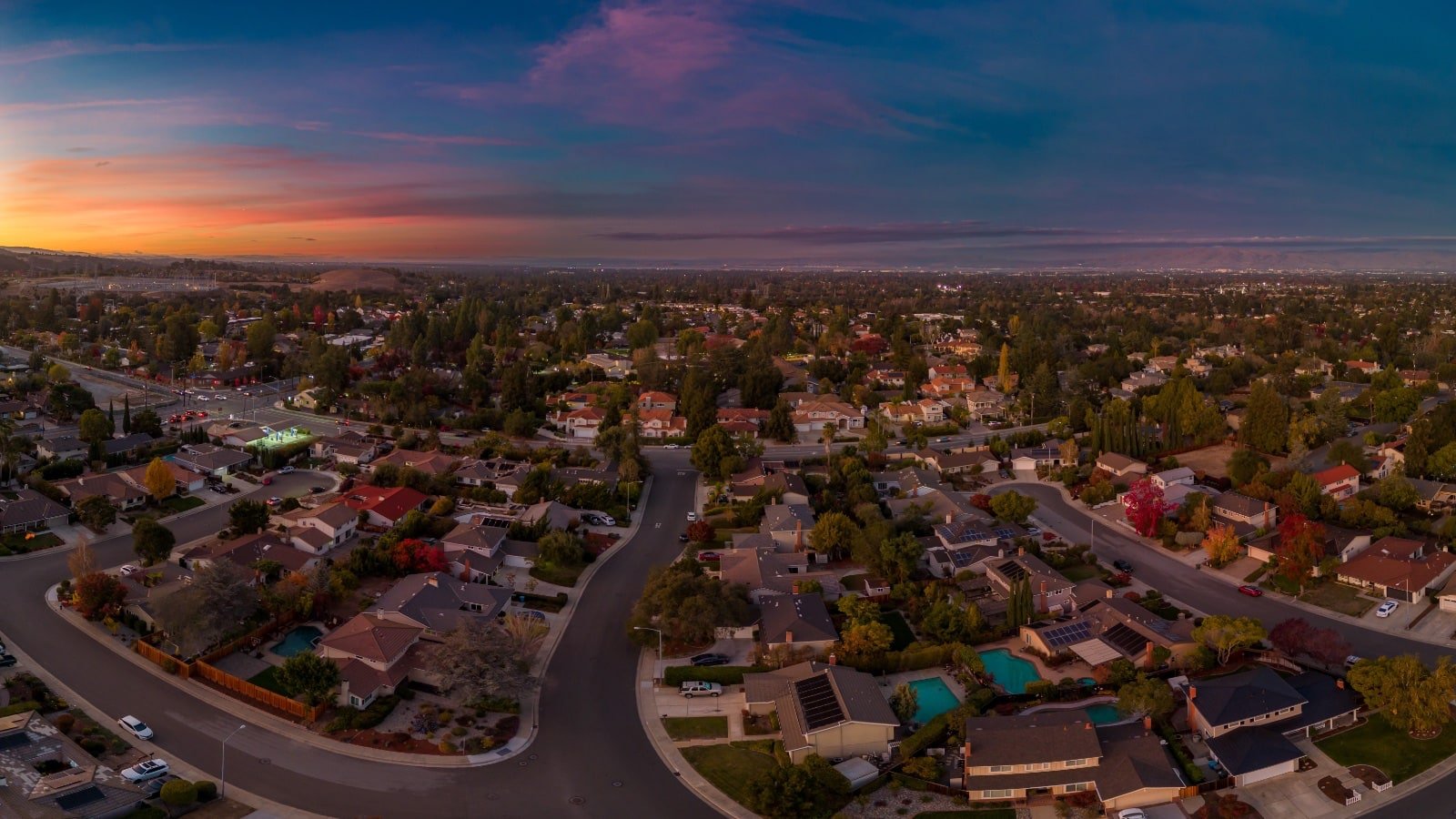
Cupertino covers about 11.33 square miles in the southwest corner of Santa Clara County, with the Santa Cruz Mountains rising to the west and the broader valley floor extending to the north and east. Stevens Creek runs through the city, feeding the reservoir to the west and providing a natural green corridor through the suburban landscape.
The terrain matters here. The western edge of the city climbs into the foothills, producing neighborhoods with views and a more natural setting. The flatter eastern sections feel more typically suburban but are more accessible on foot and by bike. Silicon Valley’s major arteries — Highway 85, Interstate 280, and DeAnza Boulevard — border or traverse the city, which makes commuting practical while also creating some of the traffic management challenges that come with being at the center of a major tech corridor.
Moving to Silicon Valley?

Why Cupertino Is Famous
The obvious answer is Apple. Apple’s headquarters have been in Cupertino since 1977, and the company’s growth from a garage startup to the most valuable company in the world has been the defining economic fact of the city’s modern era. Apple Park, the ring-shaped campus that opened in 2017, is worth seeing in person — the scale of it is genuinely hard to grasp from photographs, and the Visitor Center is open to the public with exclusive merchandise and exhibits about the design process behind the campus.
Beyond Apple, the Cupertino Historical Society Museum traces the city’s evolution from its orchard and vineyard origins through the tech transformation that followed World War II. It’s a well-curated collection, and it gives the city’s current identity a grounding that helps explain why Cupertino feels different from purely tech-era cities like Santa Clara or Milpitas.
The Fujitsu Planetarium at De Anza College is one of the most underrated public assets in the South Bay — a 50-foot dome with regular public shows that take the audience through the night sky with genuine scientific rigor. Worth knowing about, particularly for families and for anyone who wants a non-digital evening out.
The History of Cupertino
The Ohlone people inhabited this land for thousands of years before Spanish missionaries arrived in the late 18th century. European settlement accelerated in the mid-19th century, when the area was planted in orchards, vineyards, and prune and apricot groves that became part of the broader Santa Clara Valley agricultural economy. The name “Cupertino” derives from Arroyo San José de Cupertino, named by Spanish explorer Juan Bautista de Anza in 1776 — itself named after an Italian friar, St. Joseph of Cupertino. The orchard economy persisted well into the 20th century, and the generations of families who farmed here are still a meaningful part of the city’s collective memory.
The post-World War II tech migration changed everything. Semiconductor and defense companies established themselves throughout Santa Clara County in the 1950s and 1960s, and when Apple was founded in 1976 — first in Los Altos, then relocating to Cupertino — the city’s trajectory was set. Within two decades, the orchards were gone and the city had become what it is today.
What’s worth noting is that Cupertino has held onto the civic institutions that connect it to that agricultural past. The historical society, the preservation of Blackberry Farm, the community events that predate the tech era — these aren’t just nostalgia. They’re the tissue that makes the city a community rather than just a corporate address.
Top Employers
Apple is in a category of its own — the company employs tens of thousands of people at Apple Park and its surrounding facilities, generating tax revenue that funds some of the best-resourced public services in the county. The scale of Apple’s local footprint is difficult to overstate. It is simultaneously Cupertino’s largest employer, its most significant retail presence, its most recognizable landmark, and its most important economic driver.
De Anza College is the second major employment anchor — a respected community college with a strong academic reputation and a campus that functions as a genuine community asset. Digital payment security firm Wibmo also maintains a significant presence here, part of a broader supporting ecosystem of mid-size and enterprise tech companies that have clustered around Apple over the decades.
Find your Place

Schools in Cupertino
The schools are the reason a lot of families move here, and the reputation is earned. The Cupertino Union School District covers elementary and middle grades and is consistently among the highest-performing school districts in California. The Fremont Union High School District covers the high school level with the same rigorous profile.
Monta Vista High School is the most well-known of the high schools — ranked nationally, with a demanding AP curriculum, strong athletic and extracurricular programs, and a college placement record that draws families from across the South Bay. The academic culture is genuinely competitive, which is worth knowing before you commit. For families who thrive in a high-achievement environment, it’s extraordinary. For students who need more space to develop at their own pace, it’s worth considering whether the fit is right.
L.P. Collins Elementary is one of several elementary schools in the district with strong community involvement and dedicated parent participation — the hallmarks that typically distinguish a good school from a great one. The district as a whole benefits from a well-educated, highly engaged parent community that takes the schools seriously as civic institutions.
For families doing multi-generational planning — grandparents considering proximity to grandchildren — Cupertino’s school quality is one of the strongest arguments for staying or moving to the area.
Climate
Cupertino runs warmer than the coastal communities over the Santa Cruz Mountains — summers reach the mid-70s to mid-80s Fahrenheit, occasionally pushing into the 90s during inland heat events. Winters are mild, with daytime temperatures in the mid-40s to mid-60s and rain primarily confined to November through March. The Mediterranean climate means a long, dry, sunny season that supports an outdoor lifestyle from spring through fall.
The Santa Cruz Mountains moderate the worst of the valley’s heat, and the city’s mature tree canopy helps keep neighborhoods cooler than the surrounding commercial corridors. It’s not the ideal climate if you dislike warm summers, but for most of the year it’s genuinely pleasant for outdoor living.
One honest note for older adults evaluating climate: Cupertino’s summer temperatures are meaningfully warmer than coastal options like Santa Cruz or Capitola. For people with heat sensitivity, that’s worth factoring into the decision.
Parks and Recreation
The outdoor infrastructure in Cupertino is significantly better than most people expect from a city this urbanized.
Rancho San Antonio Open Space Preserve is the crown jewel — over 4,000 acres of open space on Cupertino’s western edge with more than 24 miles of trails traversing rolling hills, creek corridors, and meadows with views across the entire valley. It’s consistently ranked among the most-visited open space preserves in the Bay Area, and for good reason. The terrain ranges from flat, paved farm roads accessible to most ability levels to demanding uphill routes for serious hikers. Deer Creek Trail and the Rogue Valley Trail are particular favorites among regulars.
Blackberry Farm offers a completely different experience — a historic picnic and recreation area along Stevens Creek with a working farm component, a pond, mini-golf, and a genuine sense of history in the landscape. It operates on a reservation system during peak season, which keeps it from being overrun. For families with children, it’s one of the better half-day destinations in the South Bay.
Memorial Park is the city’s central community park — the venue for major public events, with sports fields, a community amphitheater, and the picnic infrastructure that anchors Cupertino’s outdoor social calendar.
McClellan Ranch Preserve is a quieter, nature-focused option in the Monta Vista neighborhood — a community garden, a creek, wildlife habitat, and the kind of contemplative outdoor space that serves a different need than a sports park. Worth knowing about if you live nearby.
Restaurants in Cupertino
The dining scene in Cupertino is one of the most diverse in the South Bay, reflecting the city’s demographics with a deep bench of Asian cuisine options alongside a broader range of global and American restaurants.
Benihana on Stevens Creek has been a Cupertino institution for decades — teppanyaki performance dining with a loyal local following. It’s not the most sophisticated Japanese food in the city, but the experience is reliably fun and works well for groups and celebrations.
Galpao Gaucho is a proper Brazilian churrascaria — the kind of place where servers circulate with skewers of grilled meat until you flip the coaster from green to red and admit defeat. The salad bar alone is worth the visit, and the overall execution is several notches above typical all-you-can-eat steakhouse quality.
Beyond these two, the most interesting dining in Cupertino tends to be in the strip malls and plazas along Stevens Creek Boulevard and De Anza Boulevard, where you’ll find excellent Sichuan, Taiwanese, Hong Kong-style, Korean, and South Indian restaurants serving the city’s large immigrant community. These aren’t tourist-facing operations; they’re cooking for a highly discerning local audience that knows the cuisines from the source. That’s a meaningful quality indicator.
Access Off-Market Inventory

Shopping in Cupertino
Main Street Cupertino is the city’s most appealing retail environment — a mixed-use development along Stevens Creek Boulevard with restaurants, cafes, boutiques, and a walkable street-level experience that gives Cupertino the closest thing it has to a downtown. It’s also the social anchor for the surrounding neighborhoods, with outdoor seating and regular programming that gives it genuine community life.
The Apple Park Visitor Center is a pilgrimage stop for Apple enthusiasts and a genuinely well-designed retail experience for everyone else — exclusive products, a detailed augmented reality model of the campus, and the architecture of the building itself, which is an extension of the design language of Apple Park proper.
The former Vallco Mall site is undergoing redevelopment into what will eventually be a major mixed-use project. The details and timeline have been subject to years of community debate and litigation, but the long-term direction is toward increased housing, retail, and office density in the heart of the city. Worth monitoring if you’re buying in the surrounding neighborhoods.
Annual Festivals and Events
Cupertino’s event calendar reflects its demographic diversity in a way that feels genuine rather than performative.
The Cherry Blossom Festival at Memorial Park is a full celebration of Japanese culture with traditional music, martial arts demonstrations, food, and art. It draws the broader South Bay community and has a festive energy that Memorial Park’s amphitheater is well-suited to support.
The Diwali Festival of Lights has grown significantly in recent years and is now one of the larger Diwali celebrations in the Bay Area — dancing, music, food, and a fireworks display that reflects the scale of the city’s South Asian community.
Cupertino’s Earth Day and Arbor Day programming reflects a genuine local commitment to environmental stewardship — tree planting, sustainability workshops, and the kind of community participation that goes beyond a press release. The city’s park system is partly the result of that civic priority.
Most Walkable Neighborhoods
Cupertino’s walkability is uneven, but the neighborhoods worth knowing about are genuinely pedestrian-friendly.
The area around Main Street Cupertino and Stevens Creek Boulevard constitutes the closest thing to a walkable downtown core — restaurants, cafes, retail, and the community amenities of Memorial Park all within a reasonable walk from the surrounding residential streets.
Monta Vista is the most sought-after residential neighborhood in the city, with tree-lined streets, proximity to Blackberry Farm and McClellan Ranch Preserve, walkable access to highly-rated schools, and the kind of established neighborhood character that comes from decades of owner-occupancy and community investment. Real estate here is consistently competitive.
Rancho Rinconada offers good walkability in a more affordable section of the city, with well-maintained sidewalks, access to parks, and a quieter residential feel than the more commercial corridors.
Cupertino for the 60+ Community
I work primarily with older adults and their families throughout Silicon Valley, so I want to address this directly.
Cupertino is one of the better options in the South Bay for aging in place, particularly for long-term residents who built their lives here and want to stay in familiar surroundings. The healthcare infrastructure is excellent — El Camino Health has facilities in both Los Altos and Mountain View, a short drive from most Cupertino addresses, with a particularly strong cardiovascular program and dedicated senior services. Stanford Health Care is about 20 minutes north, providing access to one of the top academic medical centers in the world for specialized care.
The housing stock includes a meaningful number of single-story ranch homes from the 1950s and 1960s that adapt well for aging in place — good lot sizes, accessible floor plans, and garages that support mobility equipment if needed. The city’s relatively flat eastern sections are more practical for residents whose mobility may be evolving.
The school quality argument works in reverse for this audience: for grandparents evaluating where to live relative to family, Cupertino’s school system is one of the reasons adult children with school-age kids tend to stay. Proximity to grandchildren in a stable, long-term community is a real quality-of-life factor that my clients consistently underweight until they experience it.
The city is also home to several senior services and social organizations. Cupertino Senior Center offers programming, fitness classes, social activities, and resources specifically for residents 50 and over. It’s a well-run facility and an underutilized resource for newer residents who don’t yet know about it.
Why People Stay in Cupertino
The families I’ve worked with in Cupertino tend to stay longer than anywhere else I operate. The schools keep them through the childhood years. The careers keep them through the professional years. And the community, the healthcare, and the infrastructure keep them as they age. That three-stage retention is unusual in a region that’s otherwise characterized by constant churn.
What Cupertino offers is a version of Silicon Valley that works. The trade-offs are real — housing prices are high, traffic is real, and the summers are warmer than the coast. But the schools are legitimate, the parks are legitimate, the healthcare is legitimate, and the community has enough cultural depth and civic investment to feel like a real place rather than a bedroom community that happens to be near something important.
If you’re evaluating Cupertino — whether you’re arriving for a new job, thinking about whether to stay as your family’s needs evolve, or helping an aging parent consider their options — I’d welcome the conversation. Call or text me at 408-596-1623, or book a call here and let’s figure out whether Cupertino makes sense for where you are in life.
Time to talk to a REALTOR?

Beautiful Cupertino Homes for Sale
2
3
4
5
6
7
8
9
10
11
12
13
14
15
16
17
18
19
20
21
22
23
24
25