Looking for a Santa Cruz County outing that works for the grandkids, your adult children, and you all at the same time? Roaring Camp Railroads in Felton is one of the few places I know that pulls that off. You ride a narrow-gauge steam train from the 1890s and early 1900s up through old-growth redwoods, wander a recreated 1880s logging town, and if you time it right, you can take the Beach Train all the way down to the Boardwalk. Here’s what it’s like, what it costs, how to plan the day, and the surprisingly colorful history behind the place.
Key Takeaways
Summary: Roaring Camp Railroads in Felton offers a 75-minute steam train ride through old-growth redwoods to Bear Mountain and a weekend Beach Train to the Santa Cruz Beach Boardwalk. Grounds admission is free, parking is $10, and the park is accessible, so it works well for families visiting with young kids or older parents.
Free Listing Alerts
Be First to See New Homes Before Everyone Else
Good homes rarely sit for long, and the best ones are often in contract before the weekend. Tell me where to send them and I'll email you new listings as soon as they hit the MLS.
You're all set. Thanks! New listings will start landing in your inbox. If you don't see the first one, check your promotions or spam folder.
Experience the Magic of Roaring Camp Railroad
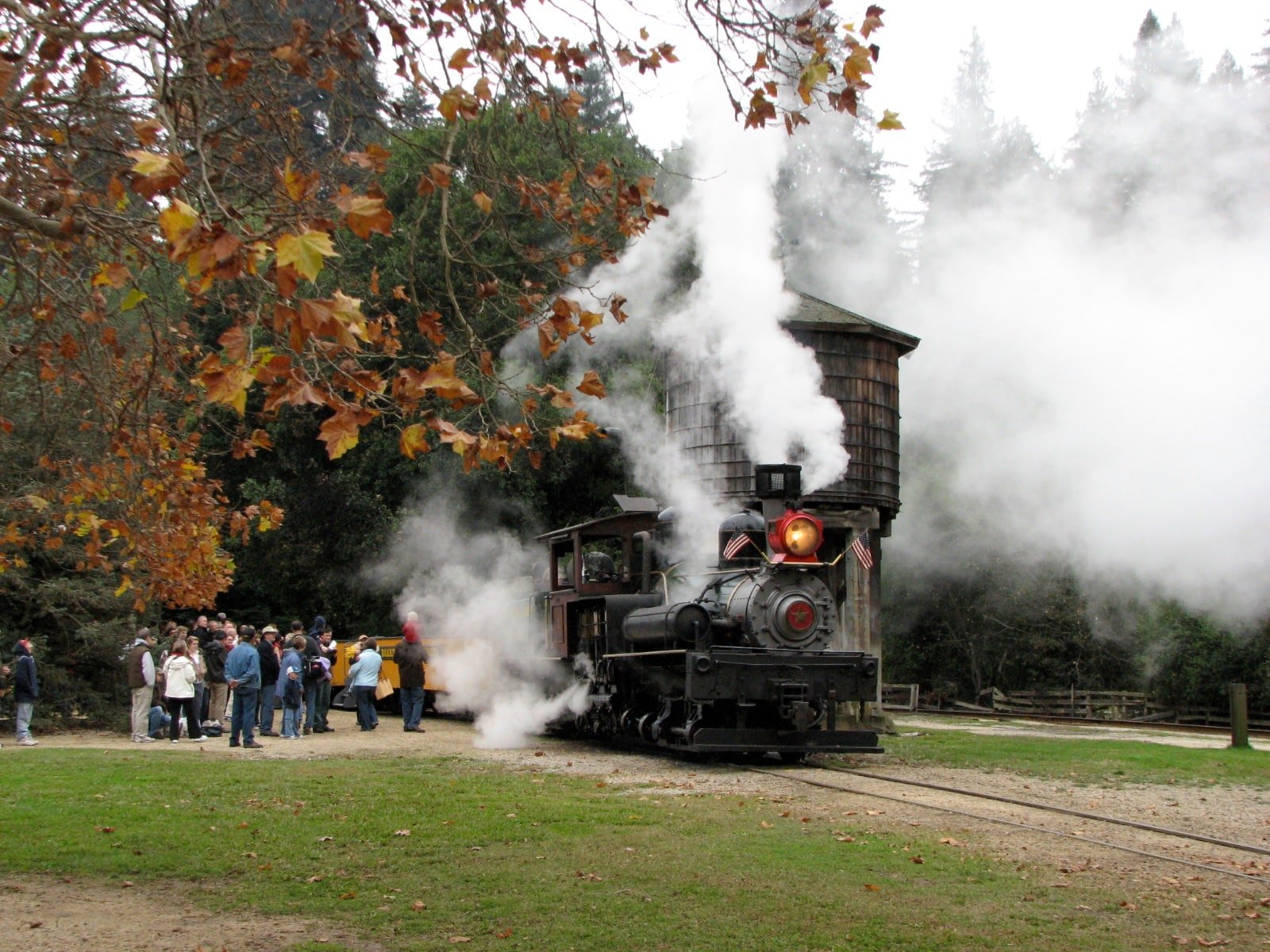
The main event is the Redwood Forest Steam Train. You climb aboard open-air cars pulled by a vintage steam locomotive, and for the next 75 minutes you chug over trestles and up some of the steepest narrow-gauge grades in North America to the summit of Bear Mountain. The conductor narrates the whole way, and between the smell of the coal smoke, the sound of the whistle echoing off the canyon, and the slow sway of the cars, it’s hard not to feel like you’ve slipped back a century or so.
The ride runs right through a grove of old-growth coast redwoods, some of them well over a thousand years old. Roaring Camp sits beside Henry Cowell Redwoods State Park, so if you want more time among the big trees after your ride, the park’s flat Redwood Grove Loop Trail is just next door.
Back in the town of Roaring Camp, kids can try gold panning, candle making, a hand car, and an old printing press through the Kids Club activities, and there’s usually a blacksmith demonstration or face painting going on too. There’s a General Store for snacks and souvenirs, horseshoes and cornhole on the lawn, and plenty of shade for grandparents who’d rather sit and watch the trains come and go.
The Santa Cruz Beach Train
The Santa Cruz Beach Train runs on the Santa Cruz, Big Trees & Pacific Railway, following a route that first carried tourists between Felton and the coast back in 1875. The train leaves Roaring Camp, rolls through Henry Cowell Redwoods State Park, winds down the San Lorenzo River Gorge, crosses a 1909 steel truss bridge, passes through an 1875 tunnel, and ends up at the Santa Cruz Beach Boardwalk. The trip takes about an hour each way.
The Beach Train runs on weekends on a seasonal schedule. Recent departures from Roaring Camp have been at 10:00 a.m. and 2:00 p.m., with trains leaving the Boardwalk at noon and 4:00 p.m. (the 4:00 p.m. train is one way only, so plan your ride home if you take it). You can also start the round trip from the Boardwalk end, which is a nice option if you’re already spending the day in Santa Cruz. Always confirm the current calendar on the Roaring Camp Beach Train page before you go.
Discover the History of Roaring Camp Railroad
Nestled in Felton at the southern end of the San Lorenzo Valley, Roaring Camp is one of the best-known landmarks in Santa Cruz County. The history here runs from a rowdy 1830s frontier settlement to one of the first redwood groves ever protected from logging, and finally to the heritage railroad that’s been carrying visitors up Bear Mountain since 1963. The conductors love to share those stories on the ride, and they’re worth listening to.
Step into the General Store and you’ll see the same care for the past. The whole town is laid out as an 1880s logging village, from the covered bridge at the entrance (built in 1969) to the depot where you board. Whether you’re a local or visiting from over the hill, it’s a very easy place to spend an afternoon.
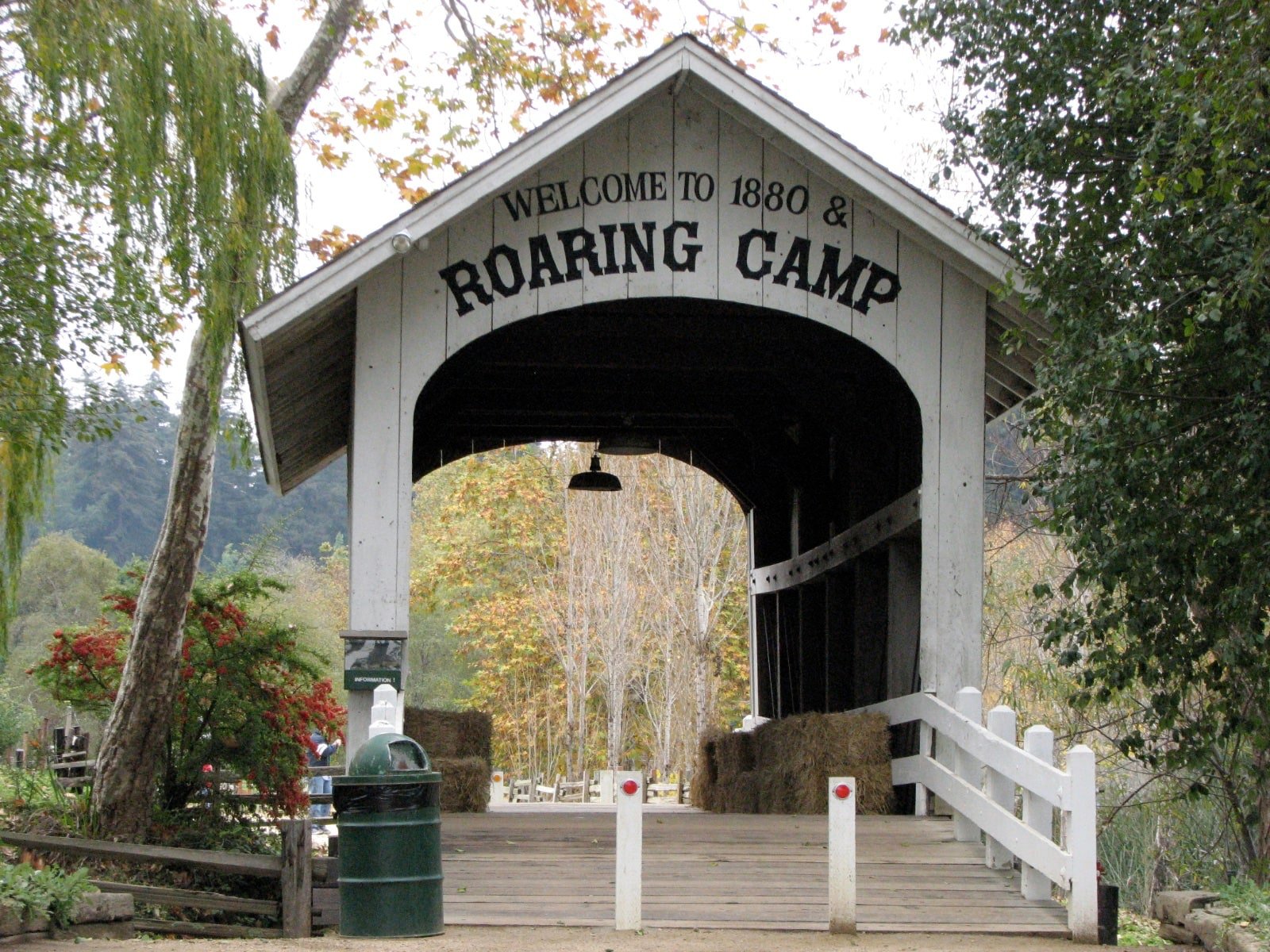
Roaring Camp Railroad Bridge
The Birth of Roaring Camp: How It All Began
Contrary to tourist lore, Roaring Camp didn’t start out as a logging camp. In the 1830s, mountain man Isaac Graham settled in the area, and his lively settlement was dubbed “Roaring Camp” by the Mexican authorities of the day. Graham went on to build what’s often called the first sawmill west of the Mississippi in 1842, but the site known today as Roaring Camp was never a logging camp itself.
Private Access
See the Santa Cruz Homes That Never Hit Zillow
A lot of the best homes in Santa Cruz County change hands quietly, before they're ever listed. Get free access to our off-market homes database and see what's available right now.
You're in. Thanks! Taking you to the off-market homes database now.
In 1867, San Francisco businessman Joseph Warren Welch bought the old-growth redwood grove here specifically to protect it from the logging that was stripping the rest of the Santa Cruz Mountains. It became one of the first stands of virgin redwoods ever preserved. Welch’s Big Trees Grove turned into a popular tourist stop, especially once the Santa Cruz & Felton Railroad started running excursion trains in 1875. The Welch family held the land until 1930, when Santa Cruz County bought the grove, and it later became the heart of Henry Cowell Redwoods State Park in 1954.
The neighboring land that would become Roaring Camp stayed largely undeveloped until railroad enthusiast F. Norman Clark secured it in the late 1950s. His goal, in his words, was to bring the romance and color of steam railroading back to America. He spent years finding and restoring locomotives, and Roaring Camp & Big Trees Narrow Gauge Railroad carried its first passengers on April 6, 1963.
Roaring Camp Ownership Today
Roaring Camp is still a privately held, family-run company. After Norman Clark died in December 1985, his wife Georgiana Clark took over and led the railroad for decades, earning a long list of industry awards before her passing in 2012. Today their daughter, Melani Clark, serves as CEO and continues to run both the Bear Mountain line and the Santa Cruz, Big Trees & Pacific Railway, which the family has operated since 1985.
The Historic Trains of Roaring Camp
Roaring Camp runs a collection of historic steam locomotives that once hauled logs, coal, and sugar cane for industrial railroads around the country. The flagship is Dixiana (#1), a Class B Shay built by the Lima Locomotive Works in 1912. It started out with the Alaculsy Lumber Company in the mountains of southeastern Tennessee, passed through several owners (including a coal company in Dixiana, Virginia, which gave it its name), and was bought by Norman Clark in 1958. After a full restoration, Dixiana pulled Roaring Camp’s very first passenger train in 1963, and it’s now recognized as a National Historic Mechanical Engineering Landmark.
Another standout is Tuolumne (#2), a Heisler built in 1899 for the West Side Flume & Lumber Company near Tuolumne City, California. Clark bought it in 1962 for $7,000. The roster also includes Kahuku (#3), an 1890 Baldwin that worked a Hawaiian sugar plantation, Bloomsburg (#5), a 1928 Climax, and Sonora (#7), a 1911 Shay that came from the same West Side Lumber Company as Tuolumne. On some trips a 1941 Plymouth diesel fills in for steam, so if riding behind a steam engine matters to you, ask when you book.
Keeping century-old steam engines running is serious work, and Roaring Camp’s own shop crew handles the maintenance and restoration that keeps these locomotives in regular passenger service.
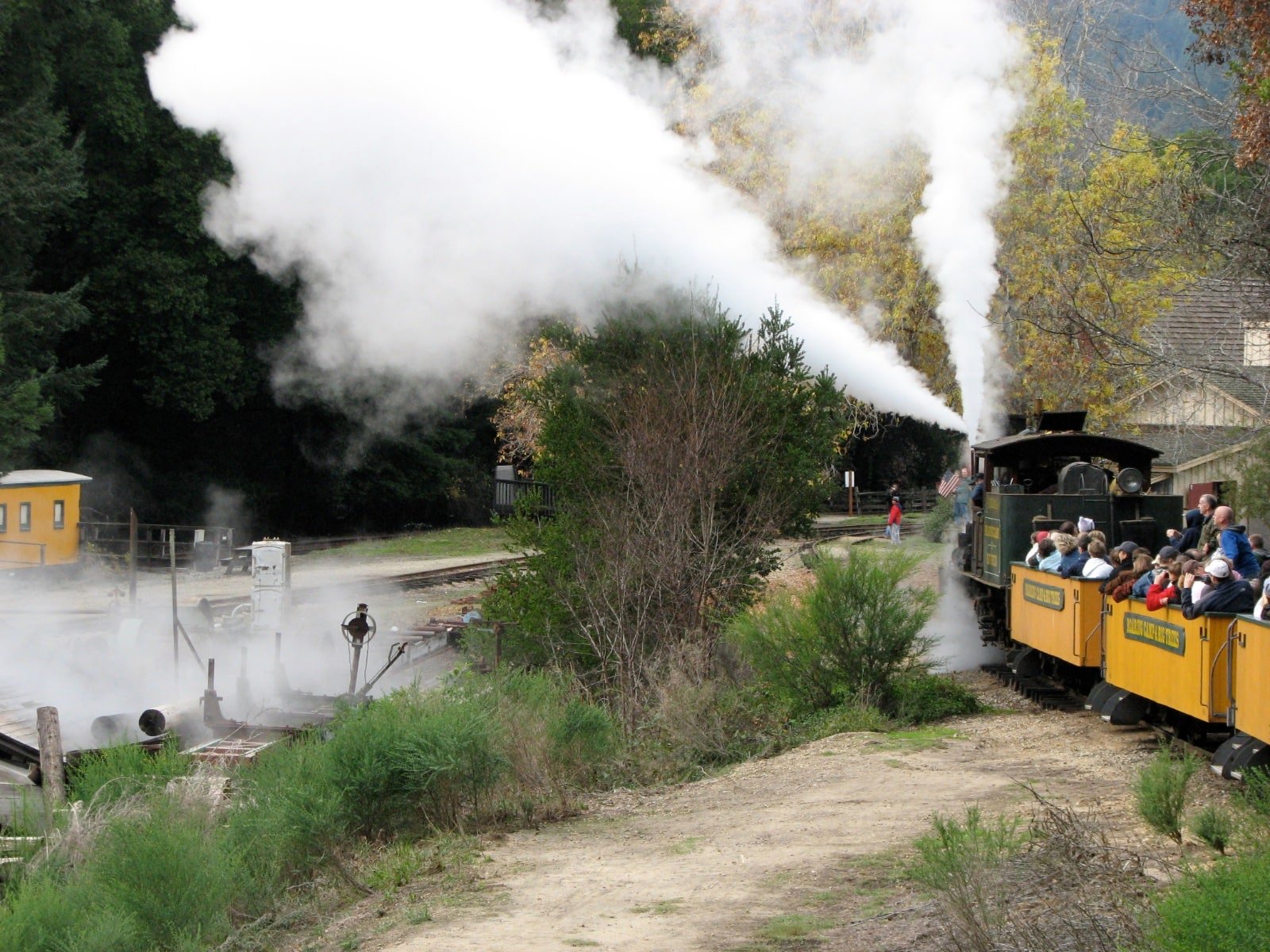
Roaring Camp Steam Train
Roaring Camp Rail Line to Santa Cruz
The Beach Train runs on the old Felton Branch, the line between Felton and Santa Cruz that Norman Clark acquired after Southern Pacific shut it down in the early 1980s. The first Santa Cruz, Big Trees & Pacific trains ran in 1985, and the line is operated today by Roaring Camp. At the Santa Cruz end it connects with the Santa Cruz Branch Rail Line, the coastal corridor between Davenport and Watsonville that the Santa Cruz County Regional Transportation Commission bought in 2012.
The future of that coastal corridor, and whether parts of it should be converted to a trail, has been one of the longest-running debates in the county. Roaring Camp has pushed hard to protect rail access to Santa Cruz and the Boardwalk, and storm damage over the past several winters has added repair costs to the conversation. If you’re planning a Beach Train trip, it’s smart to check Roaring Camp’s calendar close to your date in case of track work or service changes.
Preserving the Legacy: Roaring Camp’s Restoration Efforts
Restoring Authenticity
Roaring Camp takes pride in recreating the historic railroad experience. From the vintage steam engines to the restored passenger cars, the details are chosen to take you back in time, and the conductors share stories of Bear Mountain’s past as they guide you along the route.
Santa Cruz County Home Search
Stop scrolling stale listings. See what's really for sale today.
A lot of the homes on the big portals went pending last week, and you don't find out until you've already fallen for one. My home search pulls straight from the MLS across Santa Cruz and Santa Clara counties, so every home you see is actually available. Filter by price, neighborhood and home type, save the searches you care about, and be the buyer who already knows the inventory when the right house comes up.
Search Homes For Sale Now →
Reviving Past Glory
The General Store, the depot, and the rest of the 1880s-style town give visitors a feel for what life in the Santa Cruz Mountains was like during the logging era. Bret Harte Hall, a barn-style building on the grounds, hosts weddings, reunions, and company events, so the town gets plenty of use beyond the train rides.
Balancing Conservation and Tourism
Running a busy attraction in the middle of an old-growth redwood forest isn’t simple. Roaring Camp has to balance historic preservation and forest stewardship with the practical needs of welcoming families and school groups year round, and it’s done that for more than 60 years now.
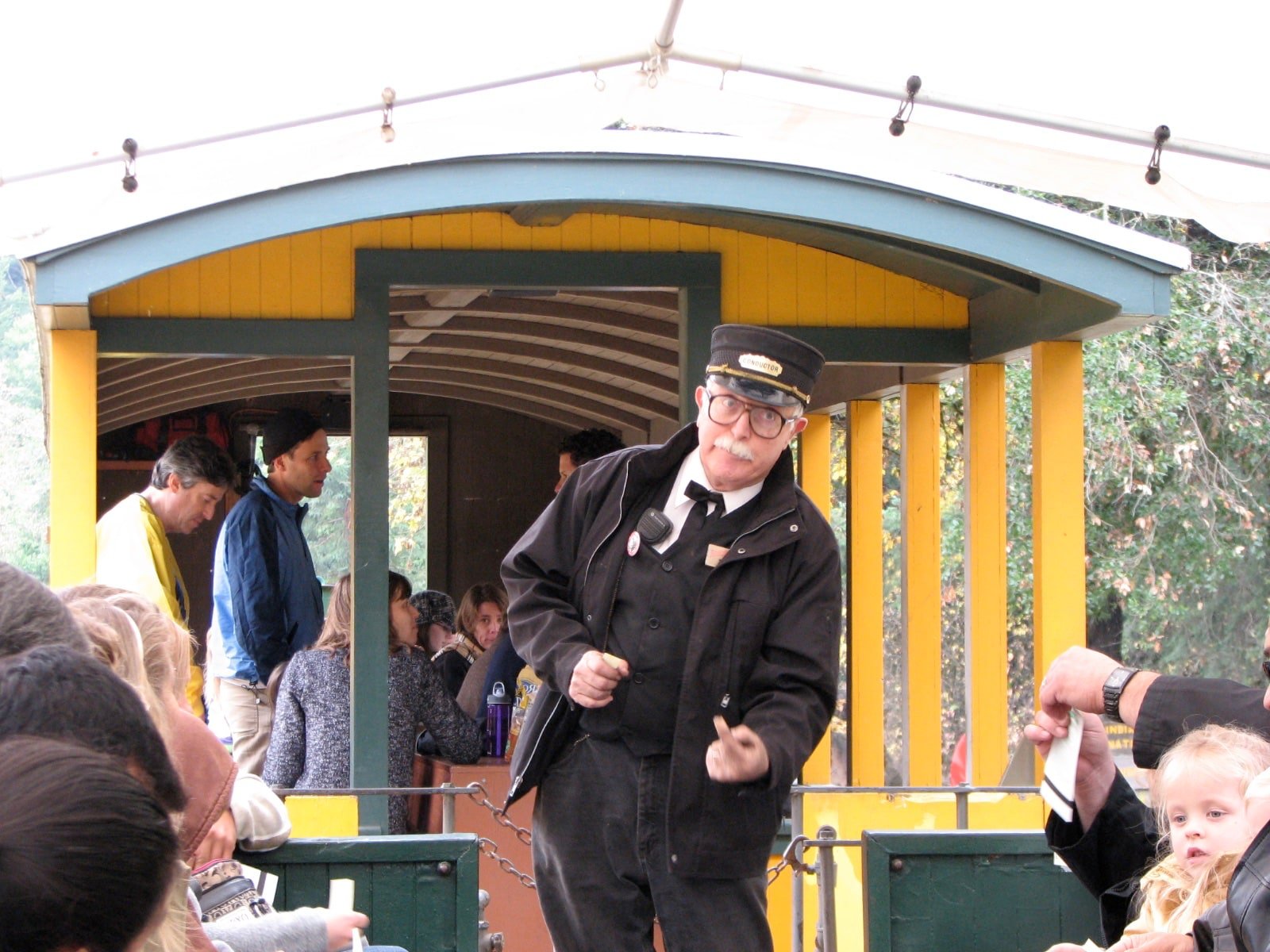
Roaring Camp Train Conductor
Plan Your Visit to Roaring Camp Railroad
Hours of Operation and Ticket Information
Roaring Camp Railroads opens its gates at 9:00 a.m., and parking closes at 5:00 p.m. unless trains are still running. The Redwood Forest Steam Train departs daily, but departure times change with the season, so check the booking calendar before you go. You can reach the ticket office at (831) 335-4484.
- Redwood Forest Steam Train: $42.35 for adults 13 and up, $26.45 for kids 2 to 12, free for children under 2. The round trip takes about 75 minutes.
- Santa Cruz Beach Train: $46.59 for adults 13 and up, $31.75 for kids 2 to 12, free for children under 2. About an hour each way, weekends only.
- Grounds admission: Free, except during some special events. Annual passes are available but aren’t valid for special events.
- Special events: Roaring Camp runs seasonal themed trains throughout the year, including the Holiday Lights Train in December, and hosts events like its annual BBQ cook-off. Check the events calendar for dates and pricing.
Prices above were current as of September 2026 and can change without notice, so confirm on Roaring Camp’s site when you book.
Directions and Parking
Roaring Camp is at 5401 Graham Hill Road, Felton, CA 95018, just off Highway 9 on the edge of downtown Felton. From Silicon Valley it’s roughly 45 minutes to an hour over Highway 17 through Scotts Valley, depending on traffic. Parking is on site and costs $10 per vehicle.
Public Transportation Options
Santa Cruz METRO buses serve Felton along Highway 9, and Roaring Camp is a short walk from downtown Felton. Check Santa Cruz METRO for current routes and schedules, and take care walking along Graham Hill Road with little ones. Another option is to start at the Boardwalk and take the Beach Train up to Roaring Camp and back, which turns the transportation into part of the fun.
Visiting with Grandkids or Older Parents
I work with a lot of families where three generations are trying to find something everyone can enjoy, and Roaring Camp is one I recommend often. The park is wheelchair accessible, and you can rent a wheelchair at the ticket office if a parent or grandparent can’t manage the walk from the parking lot. If anyone in your group needs help boarding the train, call the ticket office ahead of time at (831) 335-4484 so they can plan for it. Strollers aren’t available to rent, so bring your own. Dogs are welcome in the park and on both trains, as long as they ride on the floor of the car.
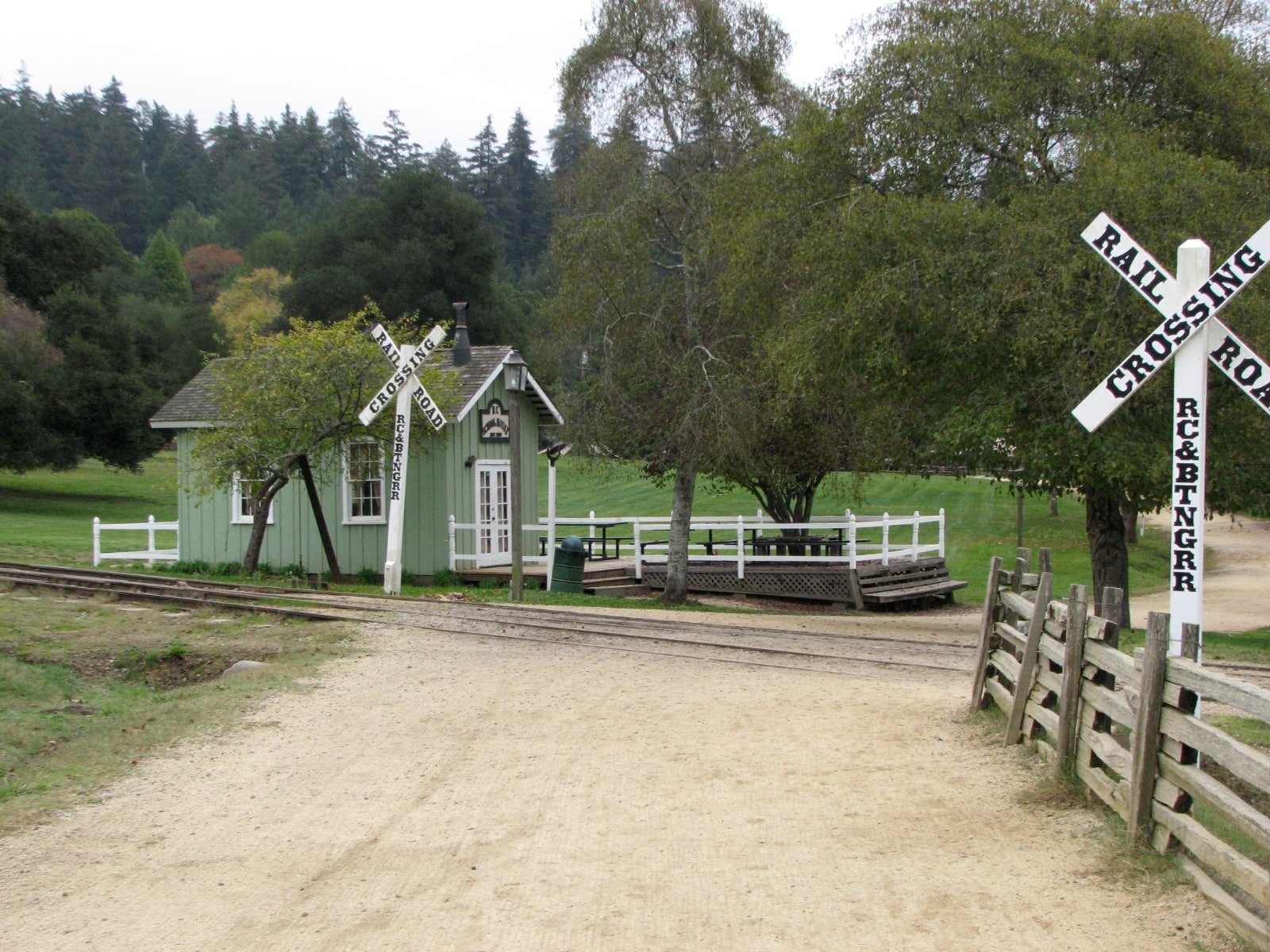
Roaring Camp Train Crossing
Tips for a Memorable Visit
Arrive early, especially on summer weekends and holidays, to get parking and your pick of departure times, and book train tickets online ahead of time. Bring your camera, because the trestles and redwood groves make for great pictures. For food, Georgie’s Cook House serves burgers and hot dogs, and the Chuckwagon BBQ does outdoor barbecue with vegetarian options. You’re also welcome to bring your own picnic, and picnic tables can be reserved for $25. Layers are a good idea too, since it can be cool and shady under the redwoods even when it’s warm down at the beach. Wear sturdy walking shoes if you plan to explore the trails.
Buying in Santa Cruz County?
Buying a home is tough. You don't have to go it alone.
In a low-inventory, multiple-offer market, strategy and speed matter as much as budget. I'll guide you from your first showing to the keys in your hand.
Get the Help You Need →Rather talk now? Call or text 408.413.3087

If you’re making a weekend of it, pair Roaring Camp with Covered Bridge Park in Felton or use my three-day weekend getaway guide to Santa Cruz.
Living Near Roaring Camp
A lot of people who fall in love with Felton on a day trip end up asking me what it would take to live here. The San Lorenzo Valley offers redwood-surrounded homes, a small-town feel, and a much quieter pace than Silicon Valley, while keeping you within reach of the coast and the jobs over the hill. If you’re curious, my Santa Cruz County relocation guide and my article on moving from the Bay Area to Santa Cruz are good places to start, and you can check current values on my Santa Cruz home prices page.
Frequently Asked Questions
How much are tickets for the Roaring Camp steam train?
As of September 2026, the Redwood Forest Steam Train costs $42.35 for adults 13 and up and $26.45 for children 2 to 12, and kids under 2 ride free. Prices can change, so confirm on roaringcamp.com when you book.
How long is the Roaring Camp train ride?
The Redwood Forest Steam Train is about a 75-minute round trip to the summit of Bear Mountain. The Santa Cruz Beach Train takes about an hour each way between Roaring Camp and the Santa Cruz Beach Boardwalk.
Does the Santa Cruz Beach Train run every day?
No. The Beach Train runs on weekends on a seasonal schedule. Recent departures from Roaring Camp have been at 10:00 a.m. and 2:00 p.m., and you can also start the round trip from the Boardwalk. Check the Roaring Camp calendar for current dates.
How much does it cost to park at Roaring Camp?
Parking is $10 per vehicle. Walking the grounds of Roaring Camp is free except during some special events, and you only pay for the train rides.
Is Roaring Camp accessible for wheelchairs and older visitors?
Yes. Roaring Camp says the park is handicap accessible, and wheelchairs can be rented at the ticket office. Call (831) 335-4484 ahead of your visit if someone in your group needs help boarding the train.
Can I bring my dog on the Roaring Camp train?
Yes. Dogs are allowed in the park and on both the Redwood Forest Steam Train and the Beach Train, but they have to ride on the floor of the train car. There are no kennel facilities on site.
Can you bring your own food to Roaring Camp?
Yes. You can bring a picnic, and picnic tables can be reserved for $25. Food is also sold on site at Georgie’s Cook House and the Chuckwagon BBQ.
Free Buyer Strategy Call
Before you tour a single home, let's build your game plan.
In Santa Cruz County, the buyers who win usually aren't the ones with the biggest offer. They're the ones who knew exactly how they'd compete before the right house ever came up. In 30 minutes we'll talk through your timing, how your down payment and equity comp fit together, and which towns and neighborhoods, from the mountains to the beach, really match the way you live, then put together a plan to win the home you want without overpaying for it.
Book My Buyer Strategy Call →
Gorgeous San Lorenzo Valley Homes for Sale
2
3
4
5
6
7
8
9
10
11
12
13
14
15
16
17
18
19
20
21
22
23
24
25