
I’d like to talk about one of the more frustrating experiences you can have as a Bay Area home buyer, which is finding a house you love, trying to buy it, but then losing out to the competition. Maybe you wrote what felt like a strong offer, maybe you wrote your absolute best, and the answer came back that the seller went with somebody else. Maybe you got a quick rejection with no counter, no chance to come up, no second at-bat. And now you’re sitting there trying to figure out what just happened, whether you should have offered more, whether the listing agent was straight with you, and what you’re supposed to do next.
I’ve been working with Bay Area buyers for over twenty years, and I’ve watched this play out too many times. So I want to walk you through how I think about all of it, because honestly, most of the pain people feel after losing a bidding war comes from things they didn’t see coming, and a lot of it can be avoided just by knowing how the game actually gets played around here. We’ll cover prevention first, then we’ll cover what to do when you lose anyway.
How Not to Lose In the First Place
The single biggest reason buyers lose homes they actually wanted is they bid based on what they thought the home was worth, instead of what it was worth to them. And those are often two completely different numbers, and it’s the difference between them that costs people the houses they really, really wanted.
Years ago, I wrote a whole piece on this called Win at Highest and Best Offers in the Bay Area, and the core idea there is what I call the win-either-way mental exercise. Here’s how it works. Before you submit your offer, don’t ask yourself “what’s this house worth” (by looking at the comps). Ask yourself a different question entirely. Imagine you offer $1,800,000 and you find out later that somebody else got it for $1,825,000. Would you have offered $1,830,000 to beat them? If the answer is yes, then you need to offer $1,830,000 right now, not $1,800,000.
Now run the exercise again. If you found out later that the winning bid was $1,840,000, would you have gone to $1,850,000 to win? If yes, then $1,850,000 is your number. Keep doing this exercise with yourself, raising and raising, until you hit a price where, if somebody else pays more than that, you can shrug your shoulders and say good for them, that’s more than I would’ve paid anyway.
That’s your number. That’s the offer you write. Of course, many people are afraid to write that number, because they’re worried about overpaying. To that, I say: everyone overpays for homes in the Bay Area. If you’re overpaying to the point where you can’t afford it, then it’s smart to worry. But when you’re held back by thinking you’re paying too much just because it seems like that particular home isn’t worth it – but you still love the home – if you want it, swallow hard and write that big number into the contract.
And here’s the part most buyers miss completely: when you do it this way, you actually win either way. If you get the house, great, you bought it at a price you were willing to pay, which ultimately means you got it for a fair price for you. And if you lose, you lose to somebody who paid more than you ever would’ve, which means you didn’t actually lose anything you saw that kind of value in. That’s an easier pill to swallow than losing, regretting that you could have won, had you only paid more.
The buyers I see in the most pain after losing a bidding war are almost always the ones who skipped this exercise. They offered what they thought was “fair” based on the comps, the home sold for more, and now they’re tortured by the fact that they’d absolutely have paid that little extra if somebody had just given them the chance. But too often they don’t get the chance, because, sadly, most listing agents don’t know the first thing about negotiation.
Could you use a Helping Hand?

Here’s the Hard Truth About Counter Offers in This Market
Now, I have to be straight with you about something most buyers don’t realize until it’s too late: a lot of Bay Area listing agents just won’t get you a counter offer. They’ll tell you they’ll try, but they probably won’t try too hard.
I see this all the time. The listing agent calls your buyer’s agent and says, “Hey, we’ve got a couple of offers, your client’s is in the mix, we’ll see what we can do, hang tight.” Maybe they ask for highest and best offers at some point, or maybe they don’t. Either way, the implication is that they’re going to work with you. And then your phone rings later that day, or the next morning and the answer is, “Sorry, they accepted another offer.” No counter, no second chance. No “there’s another offer that’s $50,000 – can you beat it?”
Why does this happen? A few reasons. Sometimes the listing agent had a much better offer in hand, perhaps one that came with a really short expiration date, and they genuinely felt it was unbeatable, so they had to take it. Sometimes they did intend to come back to you, but the seller, exhausted from the process, perhaps pressured by an aggressive buyer’s agent and poorly supported by a weak or inexperienced listing agent, just picked the cleanest one and moved on.
What it comes down to, in most cases, is that the listing agent just isn’t very good at negotiating, and it ends up costing a lot of buyers needless heartache, while also leaving money on the table for the seller.
What this means for you as a buyer is that, to take the prize, you have to write every offer like it’s your only shot, because there’s a very real chance it is. You can’t say to yourself, “I’ll hold back a bit, see what they come up with and come up if I need to.” That’s wishful thinking dressed up as strategy. In this market, if you come in soft, you’re far more likely to get passed over entirely than to get a polite counter offer giving you a chance to compete.
Too often, that doesn’t work. Treat every offer as if it’s the last one you’ll ever get to write on that house, because sadly, it very often is.
Access Off-Market Inventory

What If You’re The Only Bidder In A Bidding War?
This one stings. You go in hard because you were told there’d be multiple offers. You write a strong offer: waive contingencies, you jack up the price, you write the love letter, the whole thing. After your offer is submitted, you find out that actually, you’re the only buyer who stepped up to the plate. But you’ve swung for the fences, feeling like you needed to hit a home run, but the other team wasn’t even on the field.
So did you get played? Maybe. But it’s also possible that nothing improper happened and the listing agent was just doing their job. They’re not supposed to straight-out lie to you; they’re required by law to be honest. In most cases, they honestly were expecting however many offers they said they were. But expecting and having them in hand is two completely different things. Sometimes, “promised” offers just don’t show up.
Regardless, the system is set up so that buyers need to assume more competition than actually exists, and listing agents feel they have little incentive to correct that assumption. This is one of the reasons I always tell my buyer clients not to base their offer on what they think other buyers are bidding. You don’t know what other buyers are bidding; actually, you usually don’t even know with certainty that there are other buyers. The only thing you can control is what the home is worth to you, which is exactly why the win-either-way exercise matters so much. Run that exercise honestly, and it doesn’t matter whether there were ten offers, three offers, or none. You’re going to write the same offer either way, and you’re going to be okay with the outcome either way.
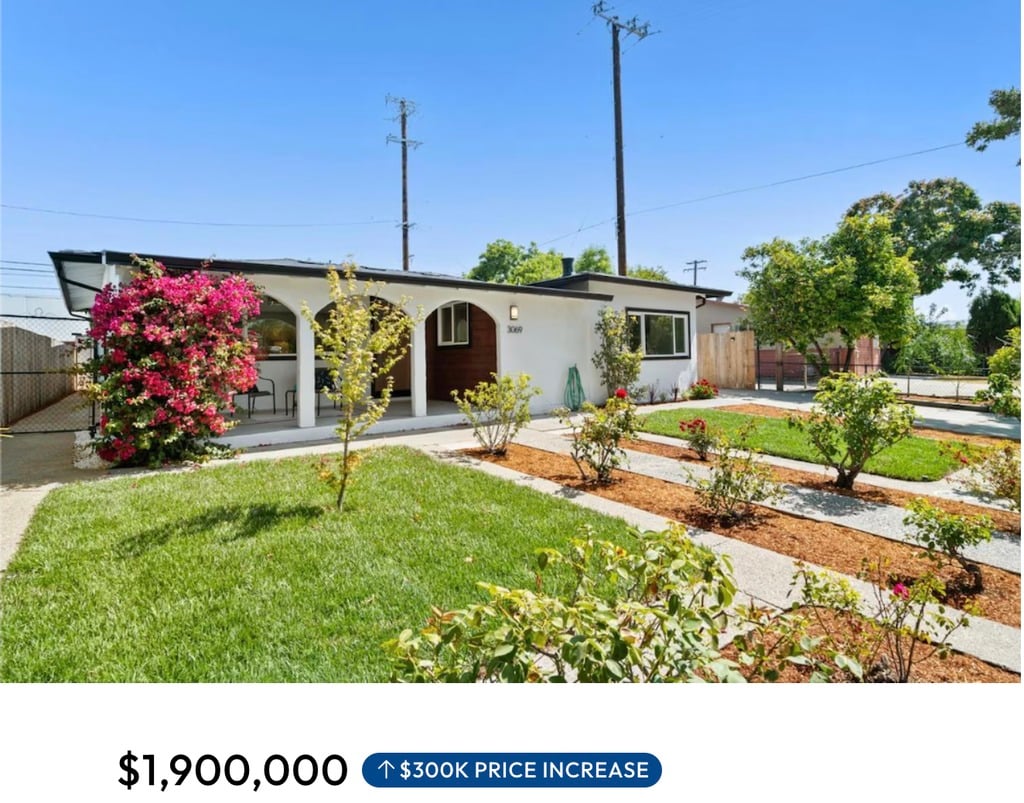
A Seller Raised Their Price When They Didn’t Get an Offer They Liked
The buyers who get most upset by the phantom-offers scenario are usually the ones who let the perceived competition push them past their actual comfort level on price. If you stick to your number, the question of whether the competition was real becomes academic. You did what was right for you, and that’s all you can really do.
And yes, sometimes that means you’ll feel like you’ve ended up paying more (maybe even a lot more) than you could have, if you’d had a crystal ball and knew exactly how this was going to play out ahead of time. Here’s the thing though: most listing agents intentionally underprice the home. Everyone’s expecting it will sell for more than list price – probably, much more. So offering $200K over list price when there are no other bidders didn’t mean that you paid $200K too much; in many cases, the seller would have just kept waiting for buyers, and tried to negotiate a sale over list price…or just raise the list price after a week or two to be more transparent about the price they’re looking for.
Hey Buyers, It’s Rough out There!

What If the Home Sells for Less Than You Would Have Paid?
Now this one is the flip side, and honestly, it’s the question that haunts buyers the most in my experience. You see a home, it’s not perfect but it checks a lot of boxes and for the right price, you’d take it. But you think it’s going to sell for more than you’d pay, so you decide not to write an offer, or you write a soft one, and you find out a few weeks later it sold for, say, $1,650,000. And your gut reaction is, “Wait, I thought it’d go for $1.8 – I totally would’ve paid $1,650,000 for that. Why didn’t I just bid?”
I want you to take a breath here, because this is actually really important. If a home sells for a price meaningfully below what you would’ve considered paying, the market is telling you something. The market is telling you that home was not, in fact, the great opportunity you now imagine it was in hindsight. If it had been, somebody else would have, in all likelihood, offered higher too.
Think about that for a second. The Bay Area is full of buyers actively looking for homes, and every listing gets seen by hundreds, sometimes thousands of qualified shoppers. If a home sells for $1,650,000, it sold for that price because that was the highest amount that any of those qualified shoppers was willing to pay for it. Assuming the home had been on the market for a week or ten days, and it sold for less than you thought it would have, it probably wasn’t such a great property. In other words, you may have just dodged a bullet to some degree.
What you’re really feeling when you see a sale price below what you would’ve paid is a kind of retrospective bargain hunting that doesn’t survive scrutiny. In your head, the home looks better now than it did when you actually walked through it, because you’ve forgotten the parts you didn’t like. The location issues you compromised on, the floor plan that felt off, the neighbor’s awful yard, the power lines across the back fence, whatever it was. The other buyers in the market didn’t forget those things. They factored all of them in, just like you did, and the price reflects that collective verdict.
When The Seller Doesn’t Accept Your Offer…or Any Offer
Now here’s a scenario that’s actually full of opportunity, and most buyers don’t recognize it when they’re in it.
You wrote an offer that you considered to be a solid deal, but the seller didn’t accept it. They didn’t counter it, and they probably didn’t reject it; they just let it die. You’re frustrated, and a few days go by. The home remains on the market, with Active status in the MLS, just sitting there. You still want the house, but at something like what you offered, but the seller has just dug in and shows no signs of moving.
Here’s an opportunity to re-engage. This is one of the few situations in Bay Area real estate where the leverage shifts back to the buyer, and a lot of buyers miss it because they’re emotionally wounded from the lack of acceptance (and communication). You still want the house, but don’t want to look weak by coming back to the seller with a higher offer.
But if you want the house, you’ll just need to get over that. Have your agent reach out to the listing agent and find out what’s going on. Sometimes the seller had an inflated idea of value that the market didn’t validate. And every day the house remains unsold means it’s more likely they’ll take a lower offer – ideally, your lower offer.
The right play here is usually to come back with the same offer, or maybe a slightly higher one, and have your agent communicate clearly that you’re still interested and ready to move quickly. There’s a real chance you become the deal that gets done, because the seller has now had another week or two of carrying costs, another string of days watching their listing get stale, and the urgency is now theirs, not yours.
The key thing here is being passed over the first time doesn’t mean you don’t have a shot. In a market that’s moved off the 2022 peak, sellers who reject reasonable offers expecting better ones often discover that better ones aren’t coming. If you wait the right amount of time and re-engage the right way, you can sometimes buy the house you “lost” at a price you actually feel good about.

Free Relocation Guide
Thinking About Living in Silicon Valley?
What it really costs to live here, town by town, from someone who has sold homes in this valley since 2003. Current home prices, property taxes and Prop 19, commutes, school districts, and how buying here actually works.
Read the Relocation Guide →Sometimes Losing Is Better Than Winning
I’m going to say something that may sound a little strange coming from a REALTOR®. There are some homes you’re supposed to lose. Not every home you write on is the right home, even if you wanted it badly at the time. The fact that the market priced you out, or that the seller picked somebody else, or that the timing didn’t line up, sometimes that’s the universe doing you a small favor that you’ll only recognize in hindsight.
I’ve had clients lose homes they were heartbroken about, only to land six months later in a place they love more, at a price that worked better, in a neighborhood they actually prefer. It happens all the time.
In the end, after a couple of decades-plus in this business, I truly feel that if you end up not getting a house you thought you wanted, it can only be because there’s a better home, a better situation out there for you, somewhere, sometime. If it didn’t come together, it probably wasn’t meant to be – and your next best home awaits elsewhere. You’ve just got to remain persistent and focused on your intention to find it, while remaining present in the current moment.
Let’s Talk
Look, the Bay Area buying process is hard, even in those periodic episodes when the market isn’t white hot. There’s no version of this where you don’t occasionally get your heart broken, and there’s no perfect strategy that wins every time. But there is a way to write offers, lose offers, and recover from losses that leaves you in a much better spot than just winging it and hoping for the best.
If you’re getting ready to write an offer and you want to talk through the win-either-way exercise on a specific home, or if you just lost a home and want to figure out what to do next, give me a call. You can reach me directly at 408-413-3087, or book a call on my calendar when it works for you. By all means, give me a call or shoot me a text message anytime. An great home is out there for you, and I’d love to help you find it.
Free Buyer Strategy Call
Before you tour a single home, let's build your game plan.
In Silicon Valley, the buyers who win usually aren't the ones with the biggest offer. They're the ones who knew exactly how they'd compete before the right house ever came up. In 30 minutes we'll talk through your timing, how your down payment and equity comp fit together, and which neighborhoods really match the way you live, then put together a plan to win the home you want without overpaying for it.
Book My Buyer Strategy Call →
Silicon Valley Luxury Homes for Sale
2
3
4
5
6
7
8
9
10
11
12
13
14
15
16
17
18
19
20
21
22
23
24
25