When most people think about Mountain View these days, they think about Google, Castro Street on a Friday night, traffic on 101, and the price of whatever house just sold down the street. They probably don’t think about a Victorian Italianate mansion built by a 21-year-old German immigrant who arrived in San Francisco with four dollars in his pocket. But that house still exists, and it has been part of the Mountain View landscape for more than 150 years.
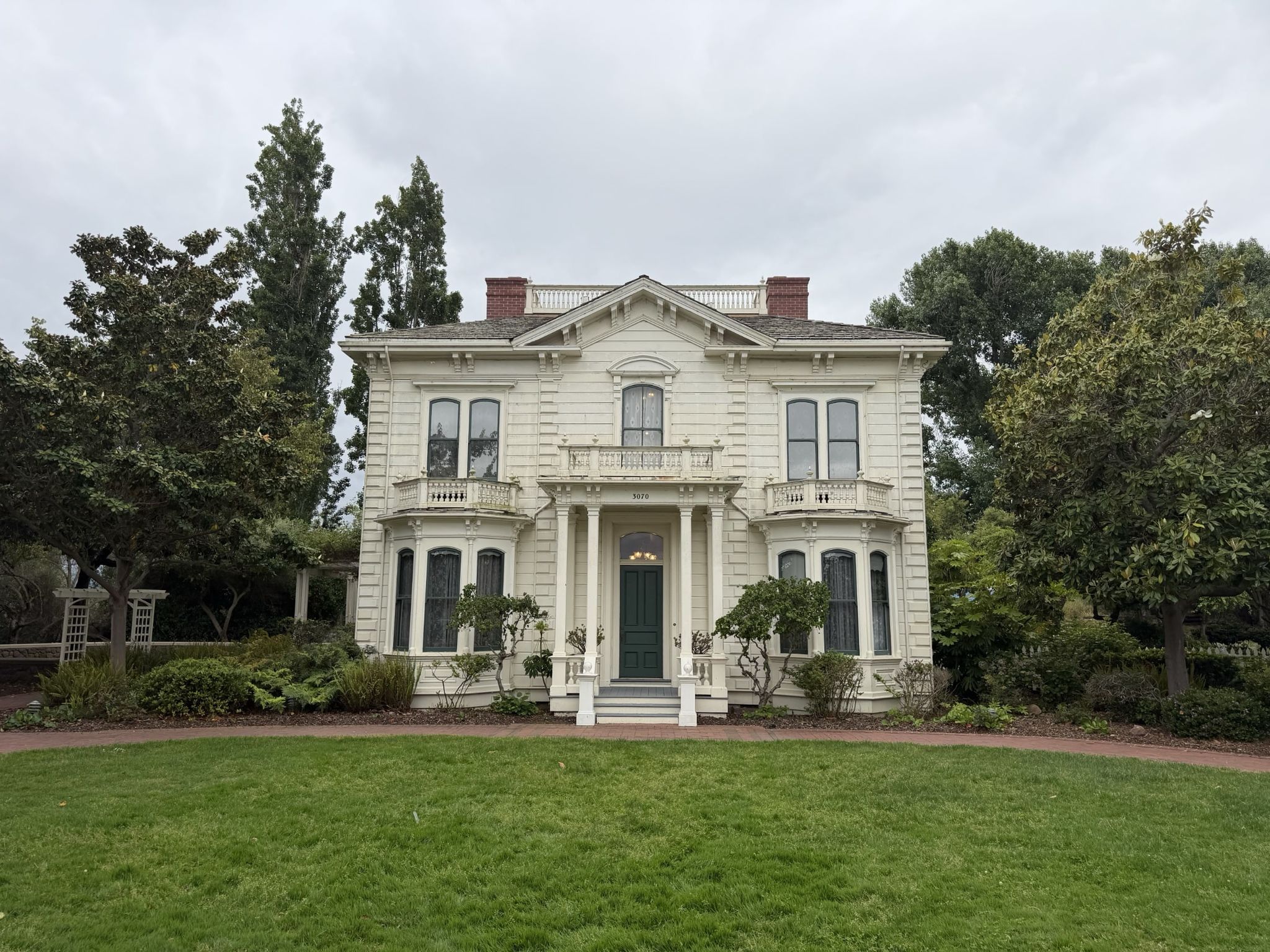
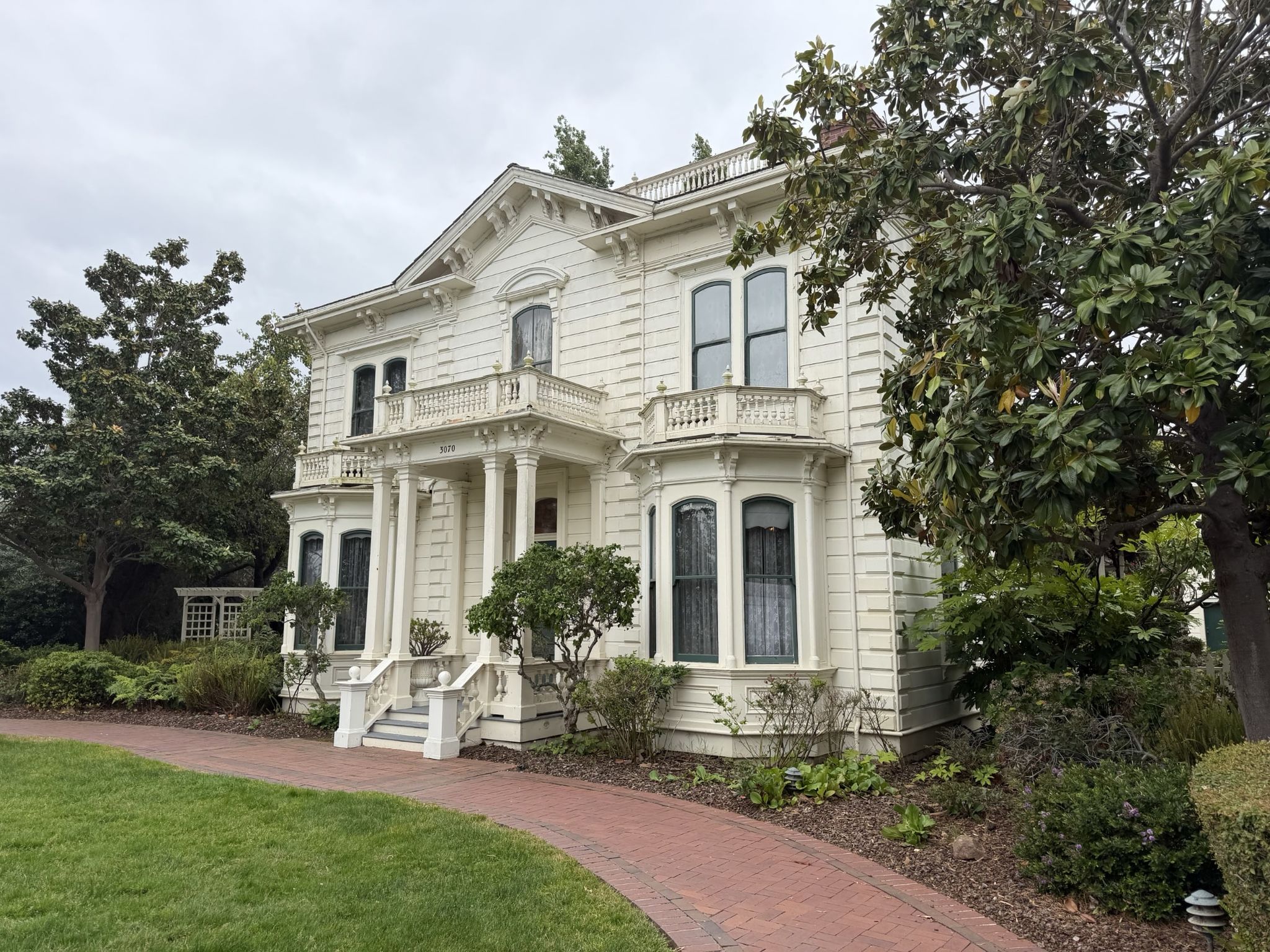
I’m talking about the Rengstorff House, located at 3070 N. Shoreline Boulevard, right in the middle of Shoreline at Mountain View. As someone who has spent more than two decades helping people buy and sell homes throughout the Mountain View area, I’ve driven past this place countless times, and I still think it is one of the more interesting pieces of local history in Silicon Valley. It is the oldest standing house in Mountain View, and it tells a story about this valley that predates the version most people know today.
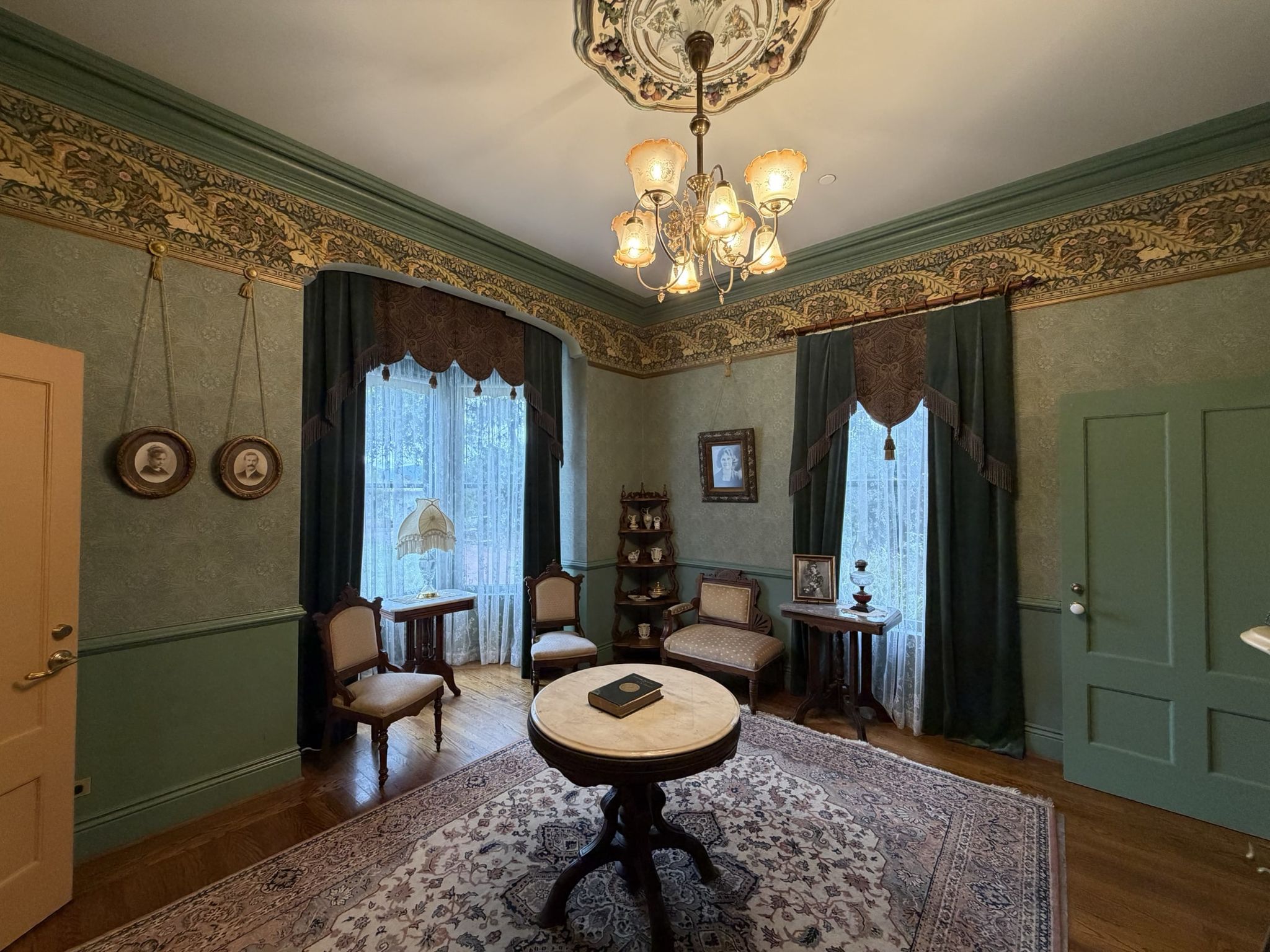
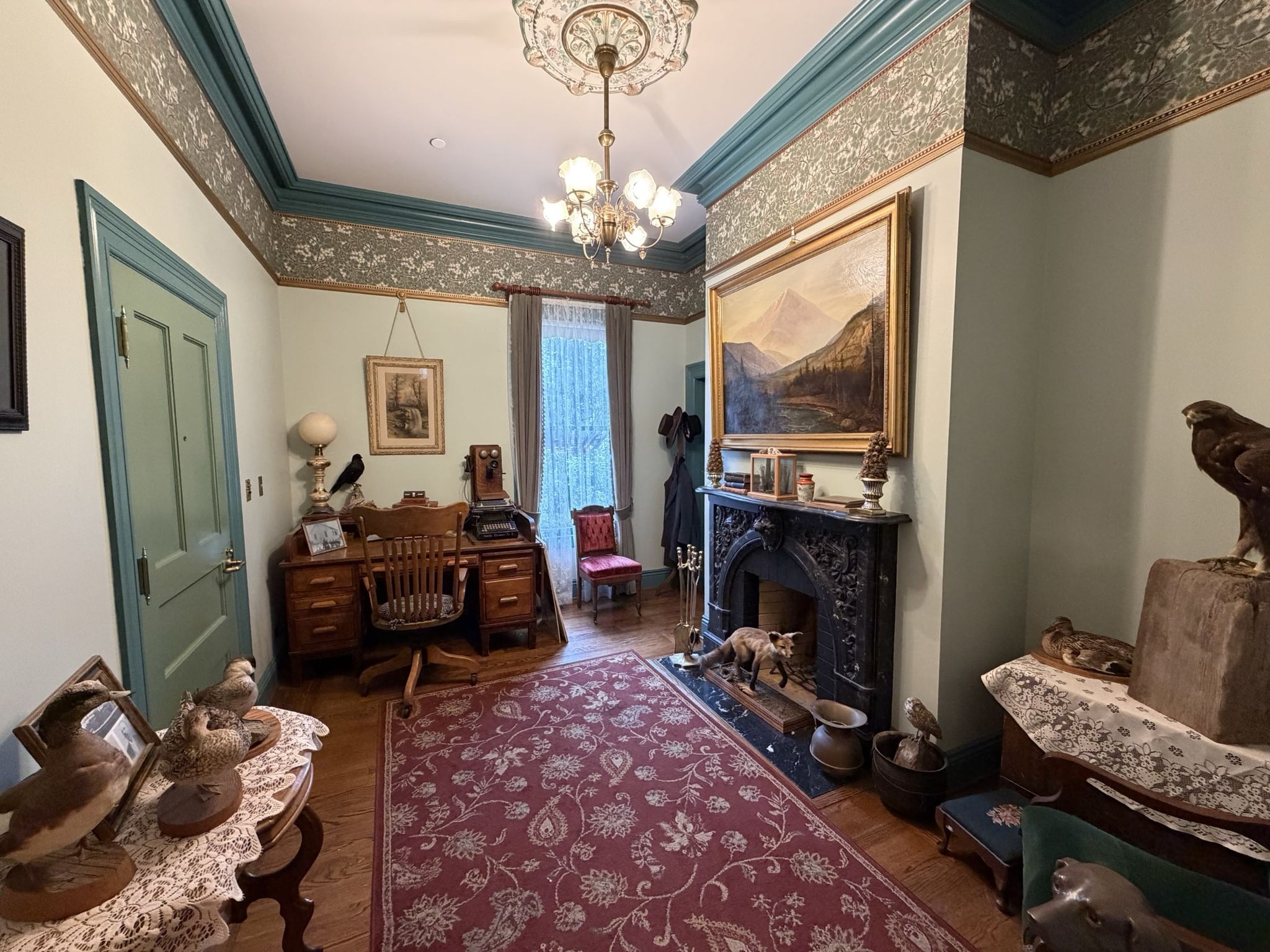
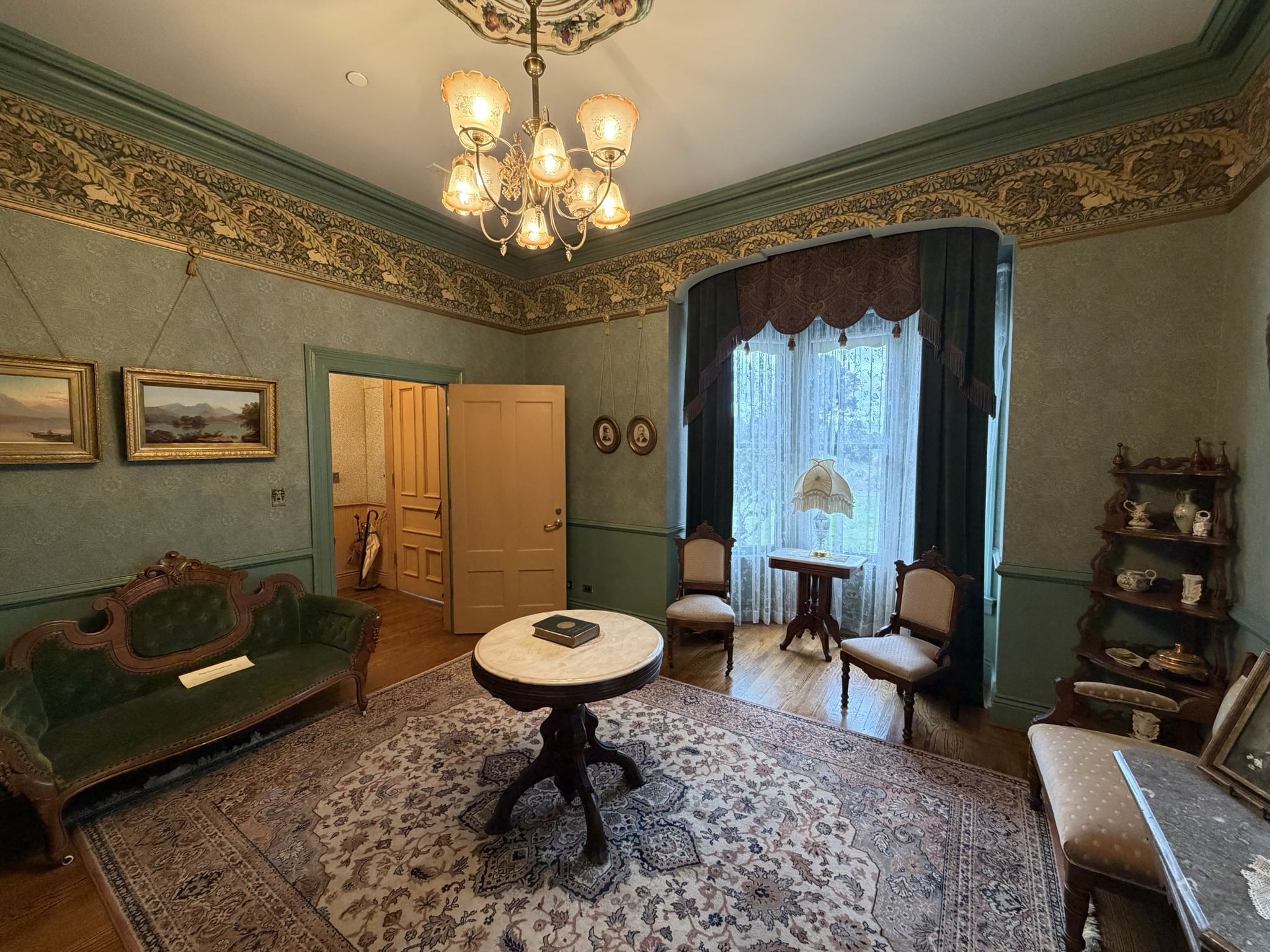
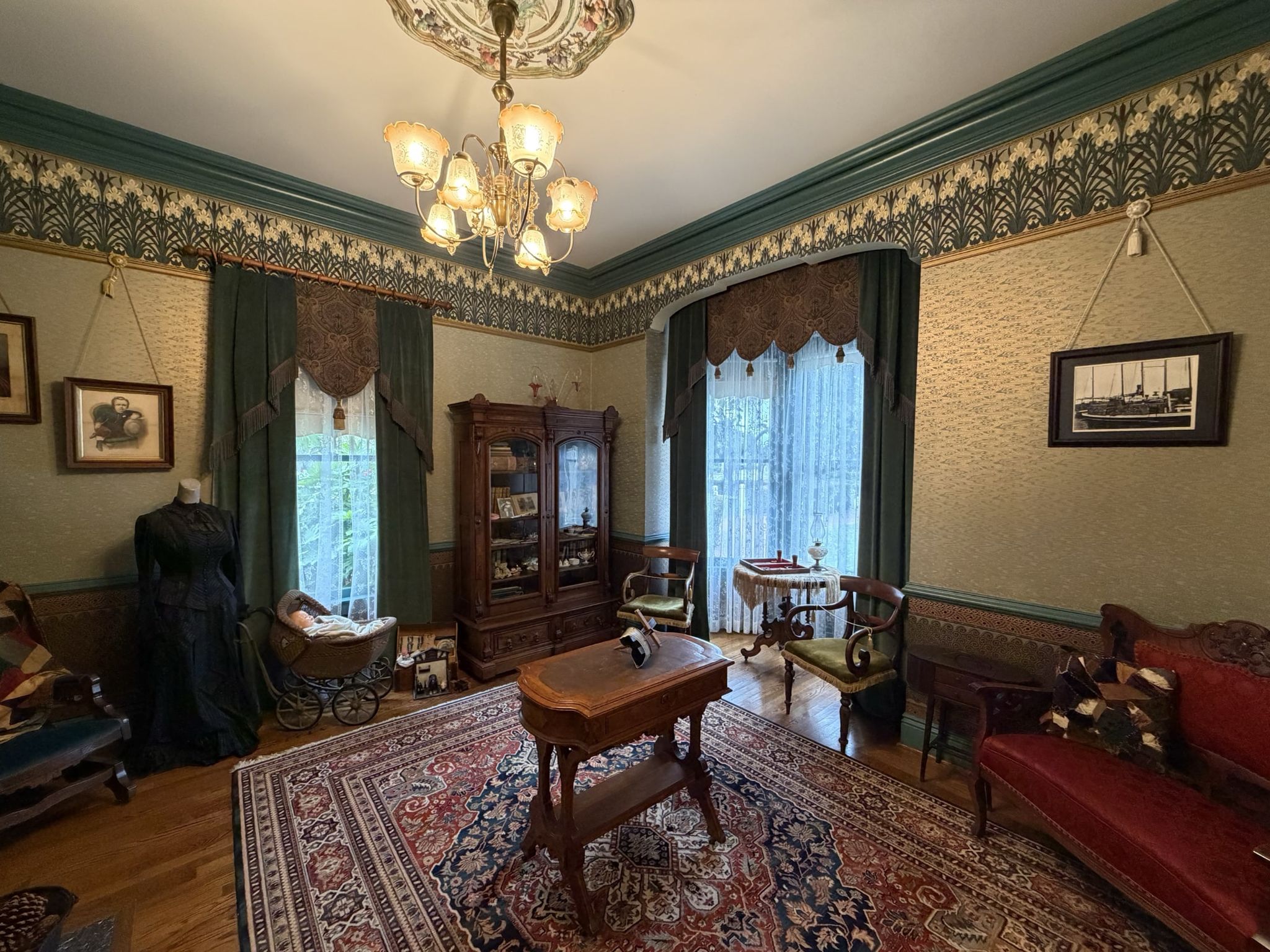
Check out the Rengstorff House Photo Gallery
Accurate Home Price Data Is Just a Click Away!

Live MLS Data
What Are Homes Actually Selling For Right Now?
Median price, days on market, and how many homes are selling over asking, pulled straight from current MLS data for your neighborhood.
See the Live Sales Data →A Young Man with Four Dollars and a Plan
The story of the Rengstorff House begins in 1850, when Henry Rengstorff sailed around Cape Horn from Germany and arrived in San Francisco at just 21 years old. Like many people of that era, he had been drawn west by the promise of gold, but he arrived too late to make any real money in the mines. With only four dollars to his name, he went to work on the Jack Robinson, a steamer that ran between San Francisco and Alviso. After that, he spent several years working as a farm laborer in San Jose.
That part of the story has always stood out to me, especially when I work with long-time Bay Area homeowners. We talk a lot about generational wealth, the difficulty of building a life here, and how much this region has changed over time. Henry Rengstorff was one of the early people who took a chance on this valley before there was any guarantee it would become valuable. His story is not just about one house; it is about the kind of persistence and timing that shaped much of early Santa Clara County.
In 1853, using squatters rights, Rengstorff acquired 290 acres of land in San Jose. Three years later, he added another 290 acres. Over time, profits from the land he farmed himself or rented to tenant farmers helped him acquire more than 10,000 acres across Los Altos, Milpitas, San Jose, and San Mateo County. Anyone who knows today’s Bay Area real estate market can appreciate how astonishing that amount of land sounds now.
Within roughly fifteen years, Rengstorff had gone from a steerage passenger with almost nothing to one of the largest landholders in Santa Clara County. In 1857, he married Christine Hassler, another German immigrant. In 1864, he bought 164 acres of land that are now part of Shoreline Business Park, located about a quarter mile north of Bayshore Freeway on Shoreline Boulevard. Around 1867, on that land, he built the house we now know as the Rengstorff House.
Access Off-Market Inventory

A Landing on the Bay That Helped Build the Peninsula
One of the things many people in Mountain View don’t realize is how important the bayfront once was to local commerce. Before Highway 101, before Caltrain, and before modern trucking routes, moving goods in and out of this part of the valley often meant using the water. Henry Rengstorff understood that opportunity and built one of the important commercial waterfront operations on the south bay. His landing became a key connection point between farms, lumber operations, markets, and the growing communities around the Peninsula.
Not far from the landing, Rengstorff built a home for his wife, Christine, and their growing family. The area where his shipping operation once stood is now Shoreline Business Park, but at the time, it was a working waterfront. Grain, lumber, and produce from the valley and nearby hills were shipped from Rengstorff Landing to market by water. Returning vessels brought back hardware, building materials, and other supplies needed by the growing region.
Rengstorff Landing played a meaningful role in the economic development of Mountain View and the Peninsula. The grain that helped feed San Francisco, the lumber used in homes and businesses, and the supplies that supported regional growth all moved through places like this. It is easy to think of Mountain View only as a tech city now, but its early growth depended on agriculture, shipping, and practical infrastructure. Rengstorff was part of that foundation.
He was also involved in civic life. He helped found the Whisman School, served as a school district trustee, and he and Christine were trustees of the Presbyterian Church. The couple raised seven children in the home: Mary, John, Elise, Helena, Christine, Henry, and Charles. The Rengstorff family lived in the house from around 1867 until 1959, which is an unusually long period for one family to remain connected to a single property in California.
The Architecture: Why This House Looks the Way It Does
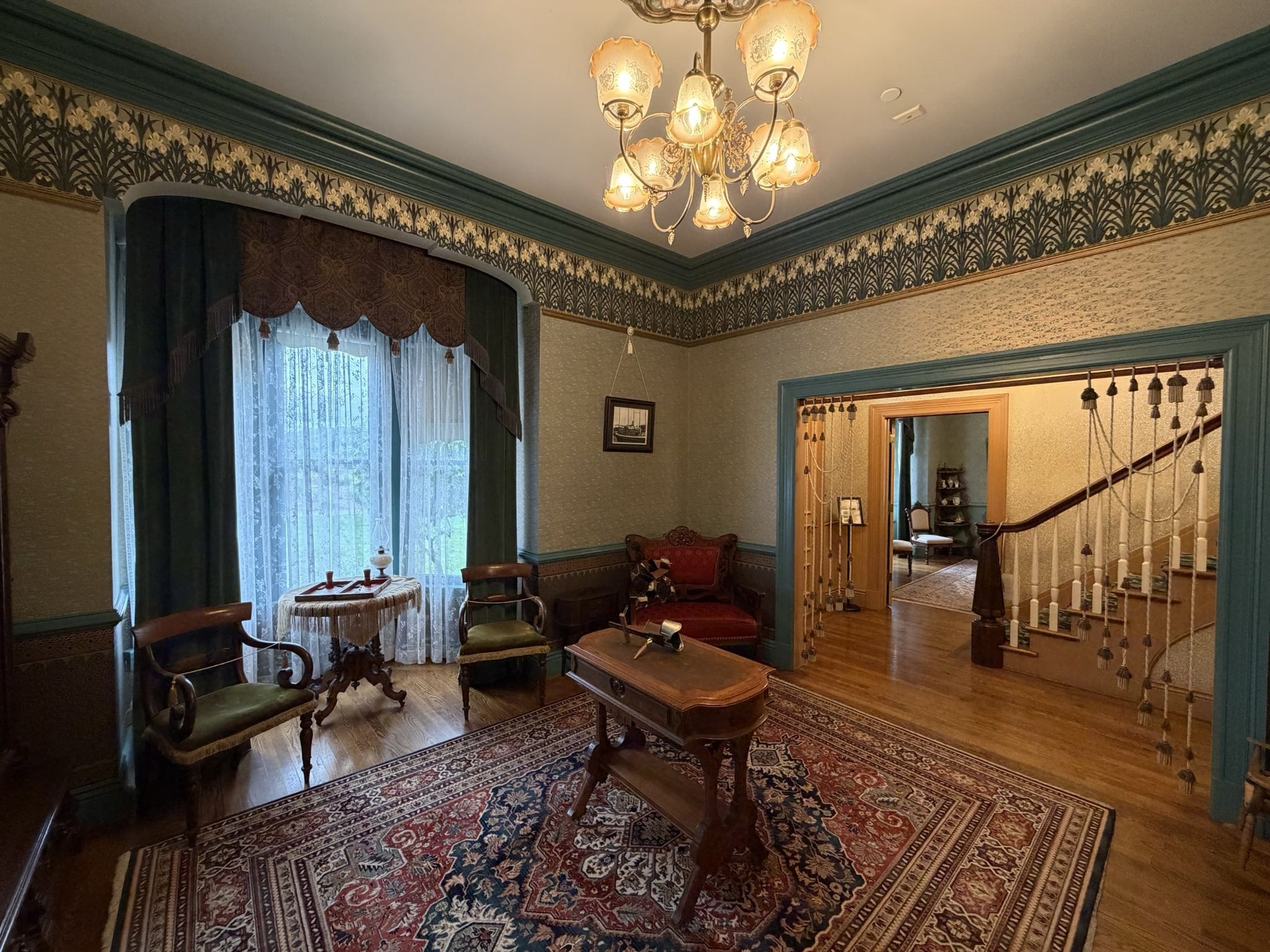
When you visit the Rengstorff House, the first thing you notice is that it has a very formal, balanced appearance. The home features Victorian Italianate design, with a hip roof, a central gable topped by a widow’s walk, a front portico, and a symmetrical room layout. The portico is framed by built-up square columns that support classical architectural details, including a capital, architrave, frieze, brackets, and cornice. Even if you are not especially interested in architectural history, the proportions and details make the house feel substantial and carefully designed.
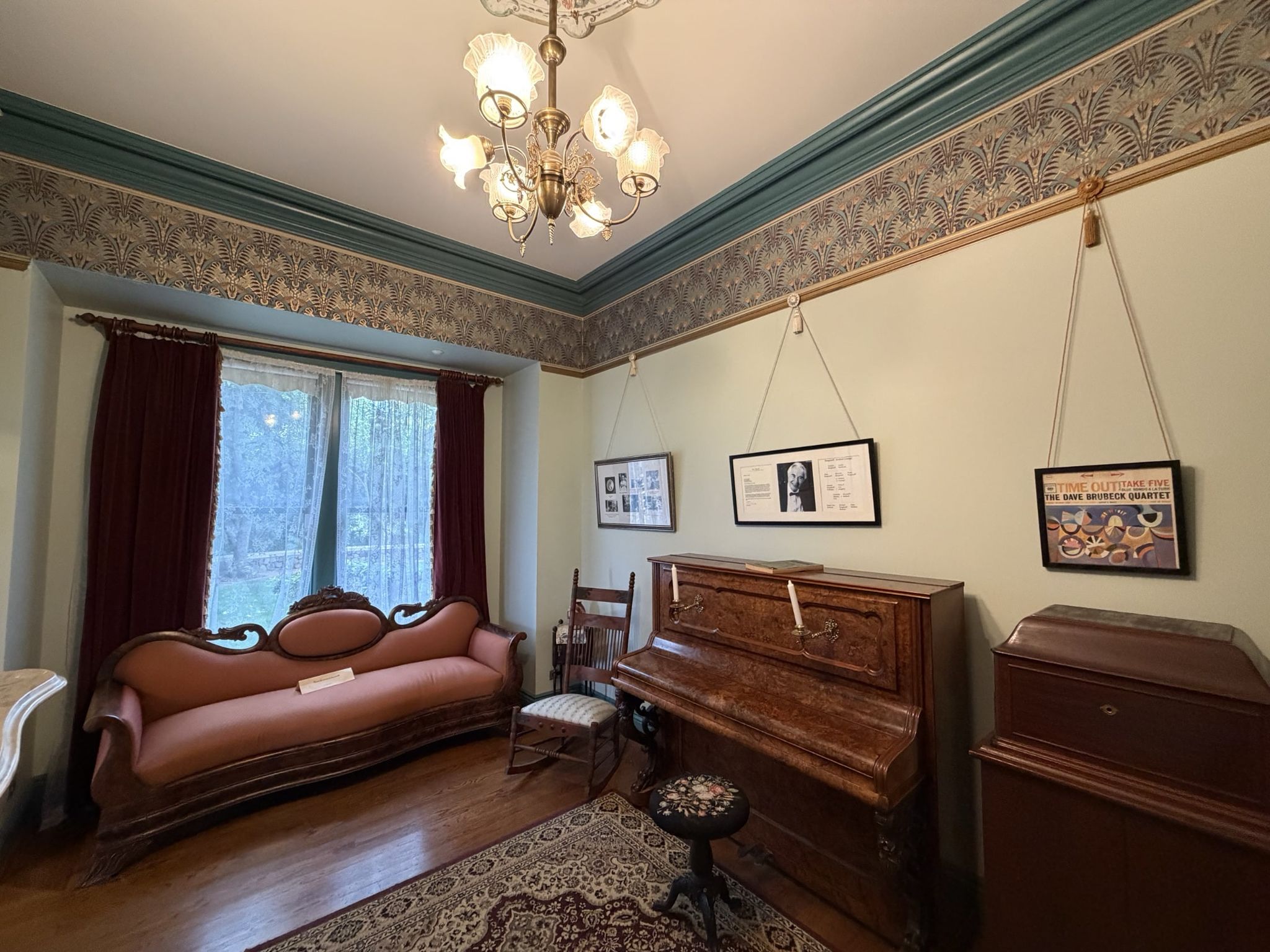
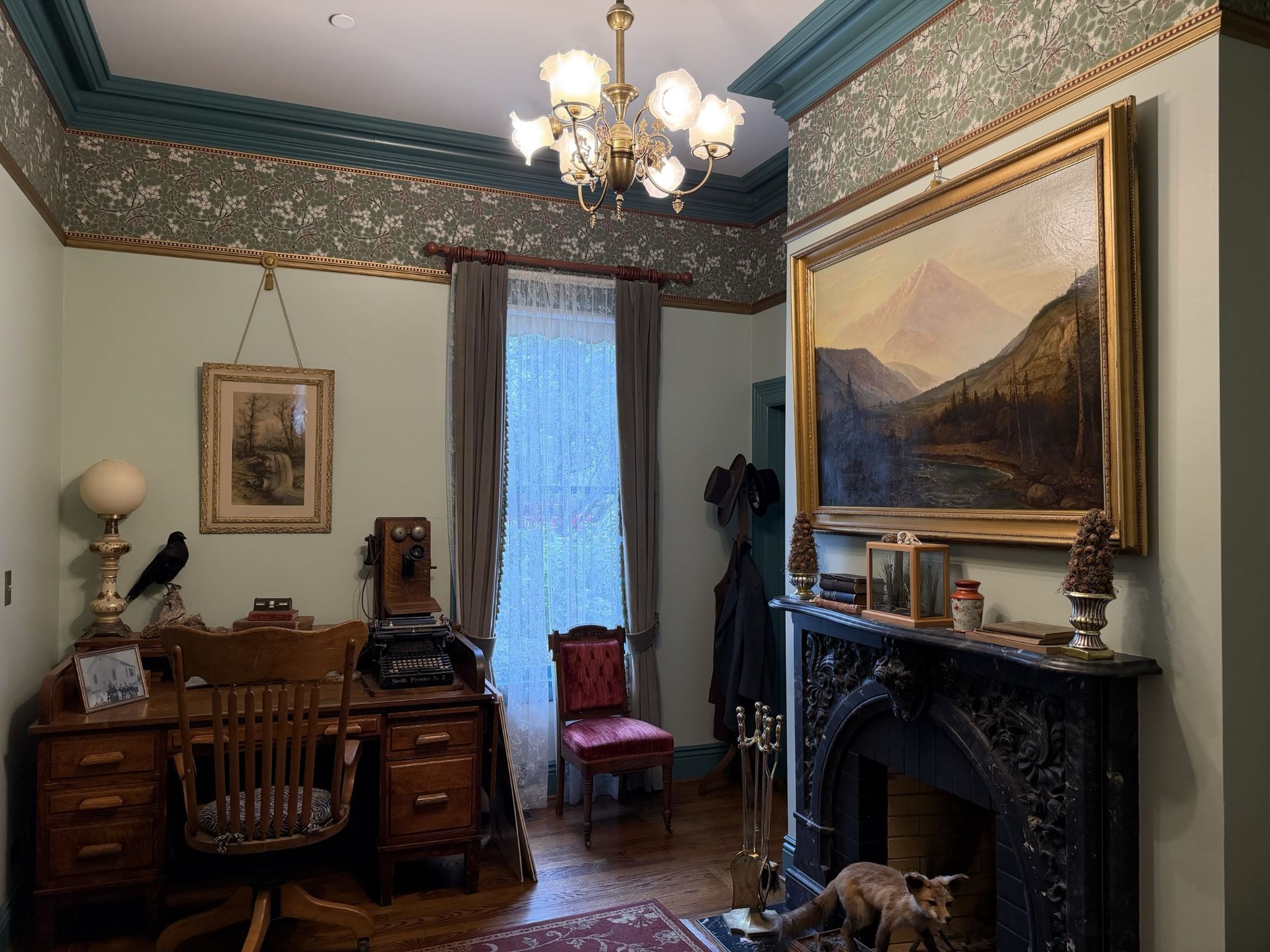
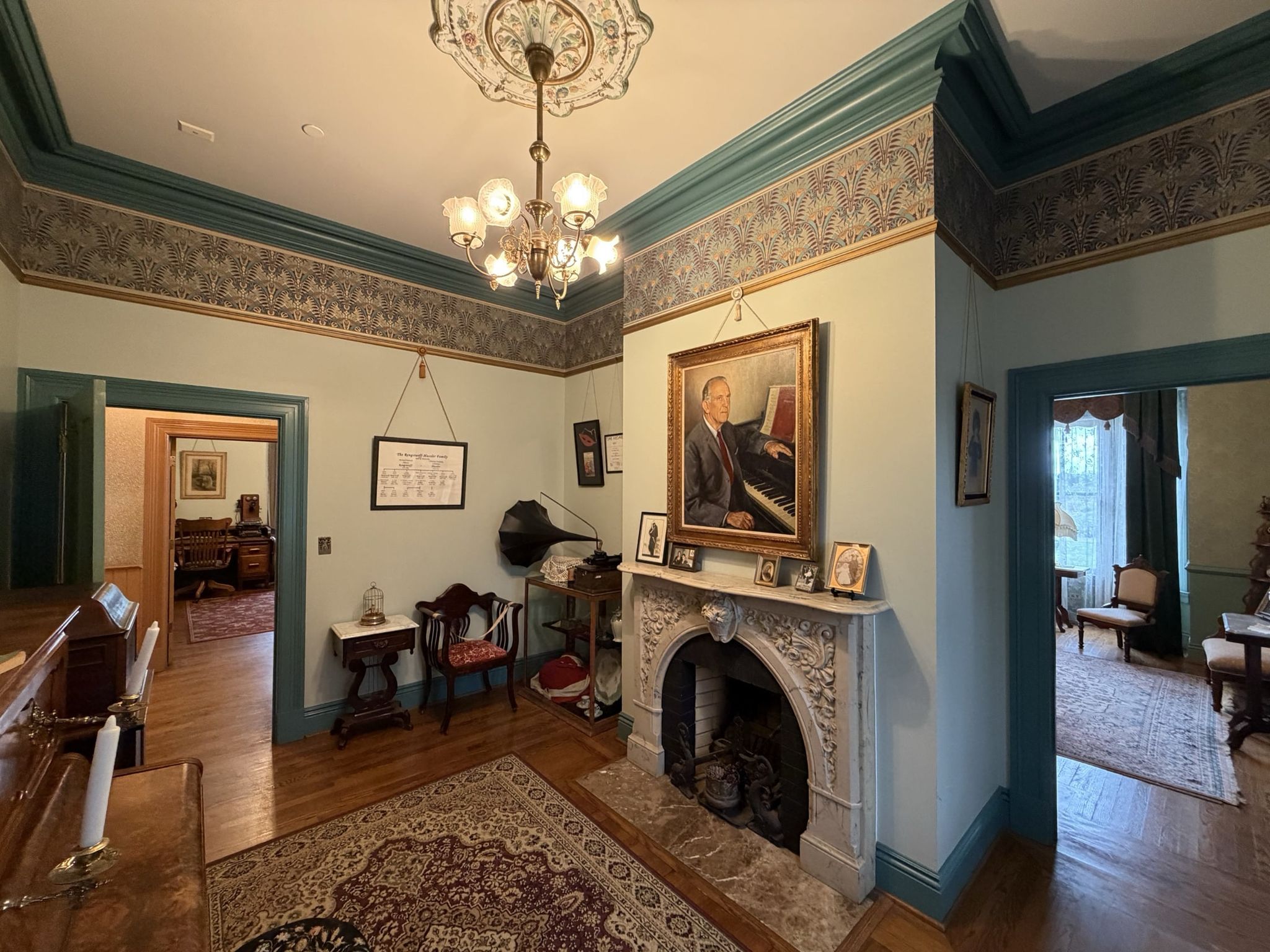
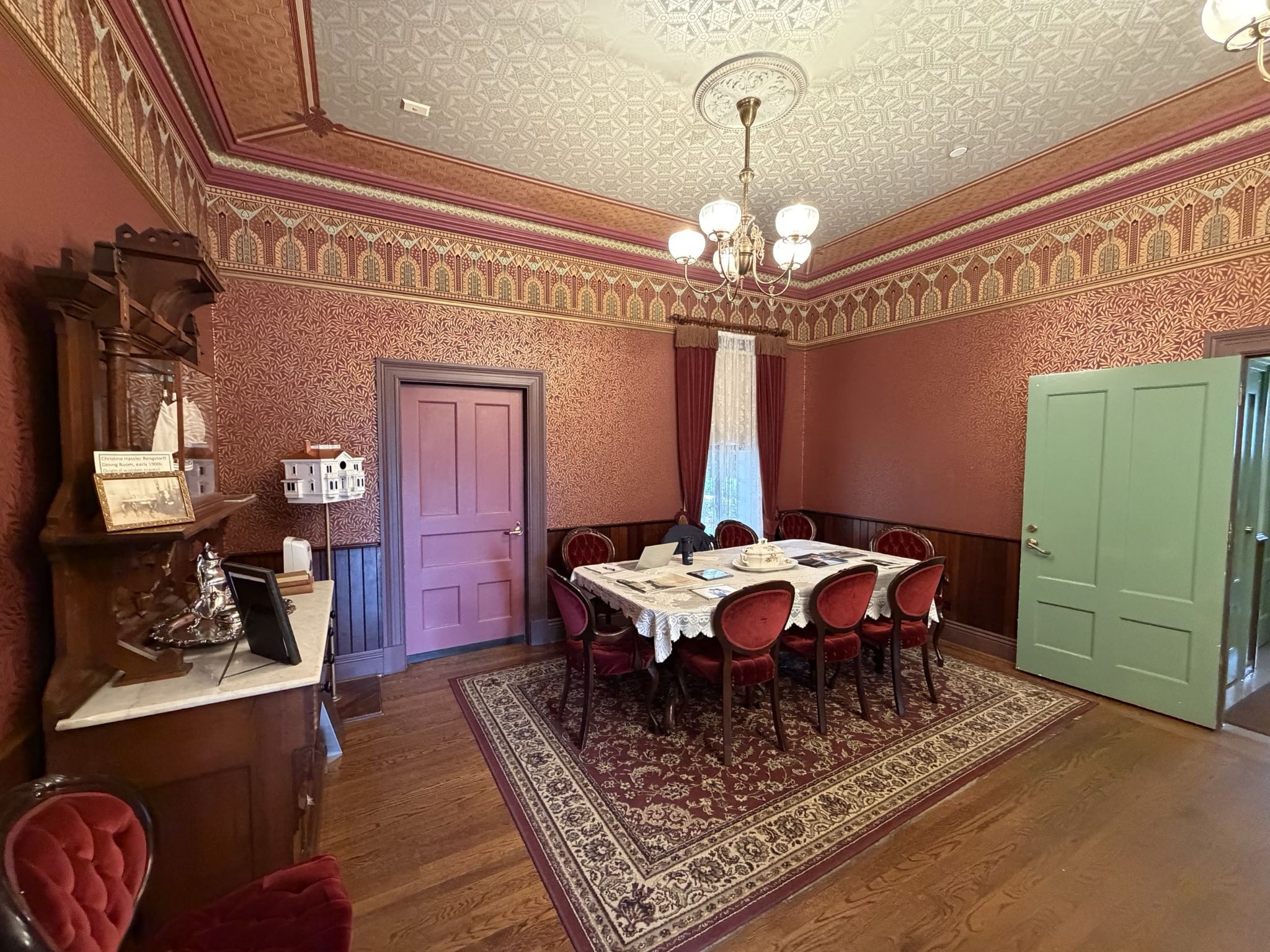
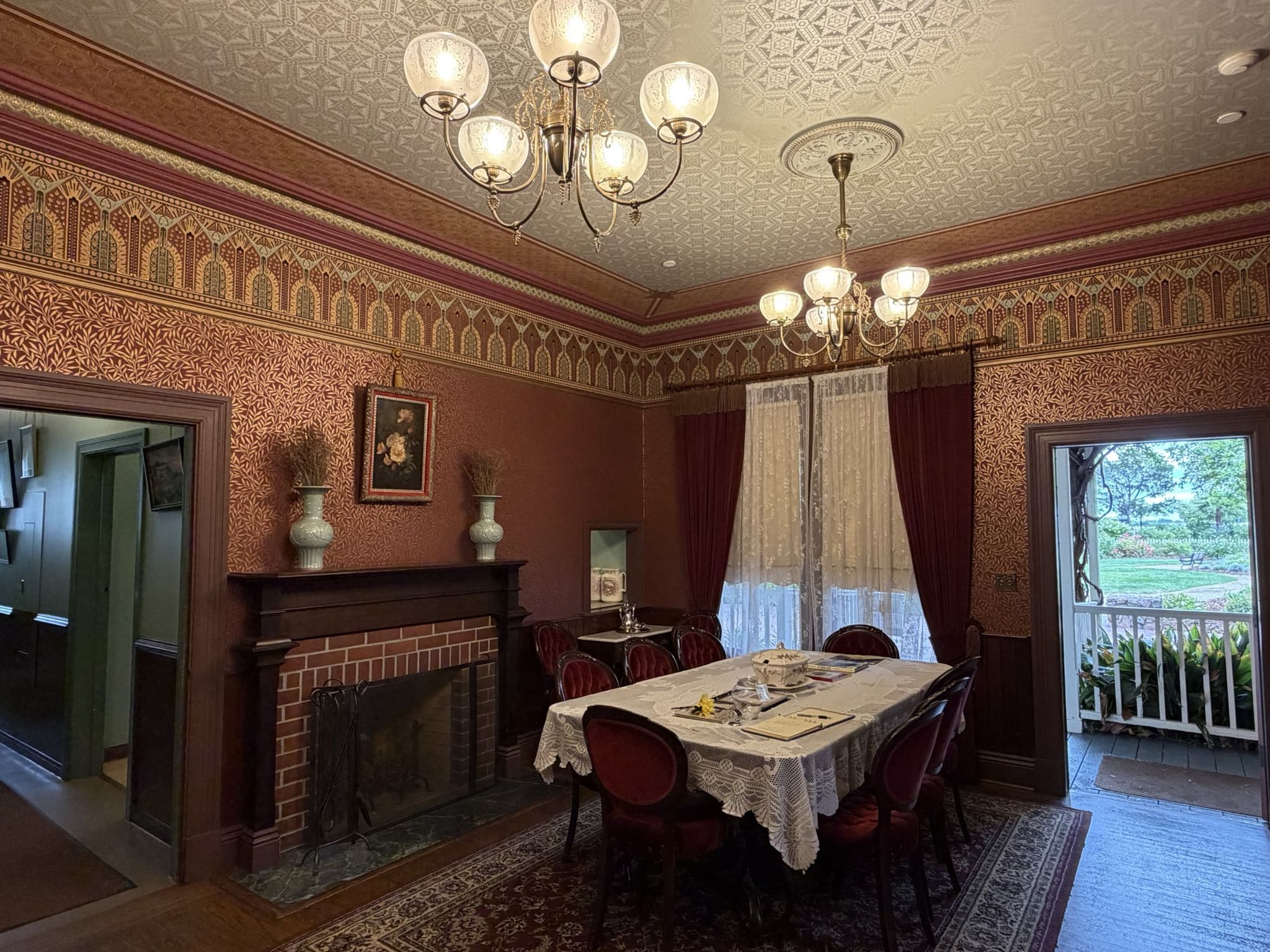
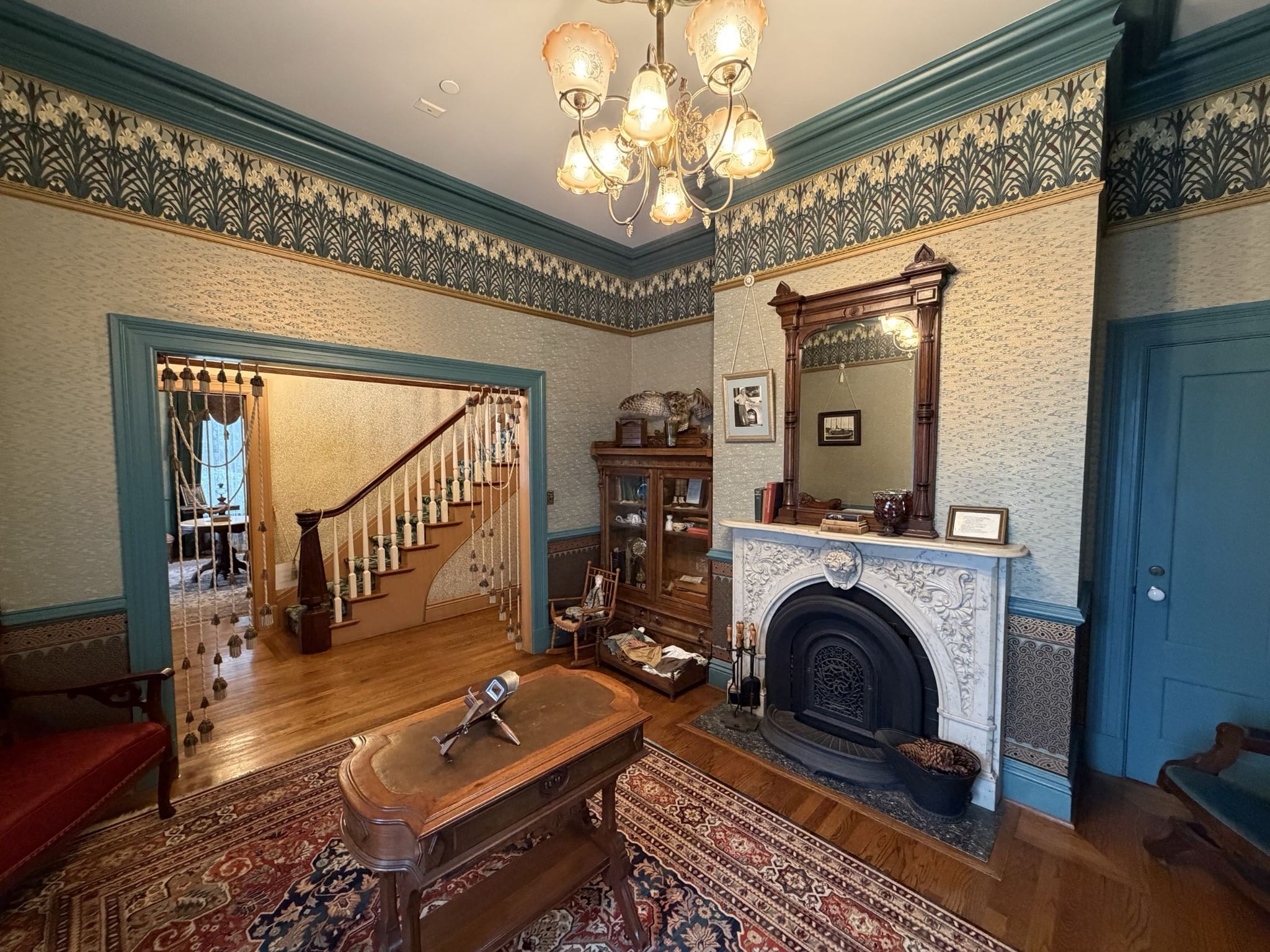
The house has 12 rooms and about 3,955 square feet. Inside, there is a marble fireplace in each of the four front parlors, along with a larger fireplace with a wooden mantel in the dining room. The downstairs rooms include Bradbury and Bradbury wallpaper, cove molding, picture rails, push-button light switches, and chair rails. These details give visitors a good sense of what a prosperous Bay Area family considered refined living in the years after the Civil War.
What I find interesting is that this was not simply a utilitarian farmhouse, even though Rengstorff made much of his money through farming and land. It was a statement home, built to reflect success, stability, and social standing. The Bradbury and Bradbury wallpaper, the marble fireplaces, and the formal parlors all point to a family that had moved well beyond survival mode. It is a reminder that Silicon Valley’s history includes not only orchards and farms, but also ambition, status, and architectural taste.
The house was originally built on 164 acres near the bay, east of today’s Shoreline Business Park. It was constructed from virgin redwood and Douglas fir from nearby Woodside. Those materials are part of the reason the house survived as long as it did, since old-growth redwood is known for its durability and resistance to rot and termites. There is something compelling about a home built from local timber that managed to survive the complete transformation of the valley around it.
Moving to Silicon Valley?
The Rough Years and the Rescue
The house did not have an easy path to preservation. After the Rengstorff family and later generations occupied it from around 1867 until 1959, the property was sold to a land holding company and became a rental. In 1972, a fire made the house unlivable. After that, it sat in serious disrepair while the surrounding land became more attractive for development.
By the late 1970s, the Rengstorff House was in rough shape. It was damaged, boarded up, and sitting on land that developers wanted to convert into an industrial park. It could easily have been demolished, and if that had happened, most people today would probably have no idea it ever existed. That is often how local history disappears: not all at once, but through neglect, delay, and development pressure.
A group of local volunteers known as the Friends of “R” House stepped in and pushed to save Mountain View’s oldest home. They organized, advocated, and helped bring enough attention to the house that it was not simply written off as an old building in the way of progress. In 1979, the City of Mountain View purchased the house for one dollar and moved it to unused property at Shoreline. It was moved again to its present site in 1986, though the restoration contract was not awarded until 1990.
The restoration was handled by Page and Turnbull as the architects, with Mayta and Jensen, Inc. as the general contractor. The total cost was just over $1,250,000. On March 2, 1991, Mountain View’s oldest house was officially dedicated and opened to the public. The fact that the city bought it for one dollar but ultimately invested more than a million dollars in restoration says a lot about how preservation often works: the building may be nearly lost before people fully understand its value.
I think this is one of the most important parts of the Rengstorff House story. Buildings like this are not saved by accident. They survive because someone decides they matter enough to protect. The Friends of “R” House still exists today as a 501(c)(3) nonprofit, and you can learn more about their work at friendsofrhouse.org.
Visiting the House Today
If you have never visited the Rengstorff House, it is worth adding to your list. It is one of those local places that many people drive past for years without ever stopping, especially if they have lived in the area for a long time. Tours generally last about 30 minutes, and docents can adapt them depending on the visitors and the situation. During open house times, you can usually arrive at any point and wait for the next docent-led tour.
The tours are conducted by volunteer docents, often in period costume. That might sound a little theatrical, but in this setting it helps bring the house to life. Visitors can see the interior furnishings, fixtures, and artifacts, hear old-time music from an Edison machine and working phonograph, and learn about early technologies such as the Smith Premier No. 2 typewriter and Magneto Box telephone. These details make the house feel less like a static museum and more like a lived-in home from another era.
I have found that older visitors often connect with the house in a very personal way. Even if they did not grow up in a Victorian mansion, many recognize the furniture styles, room layouts, household objects, or general feeling of the place. One former visitor quoted in the Los Altos Town Crier described it as “almost a piece out of my childhood,” and that reaction makes sense. The home captures a version of domestic life that still feels familiar to many older adults, even if the scale of the house is unusual.
A few practical notes are worth knowing before you go. As of 2023, the house is open to the public on Tuesdays, Wednesdays, and Saturdays for docent-led tours, and admission is free. Hours and availability can change, so it is a good idea to check the official City of Mountain View page before making a special trip. Docent-led tours cover the downstairs portion only, since the upstairs is now used for City of Mountain View Shoreline administrative offices.
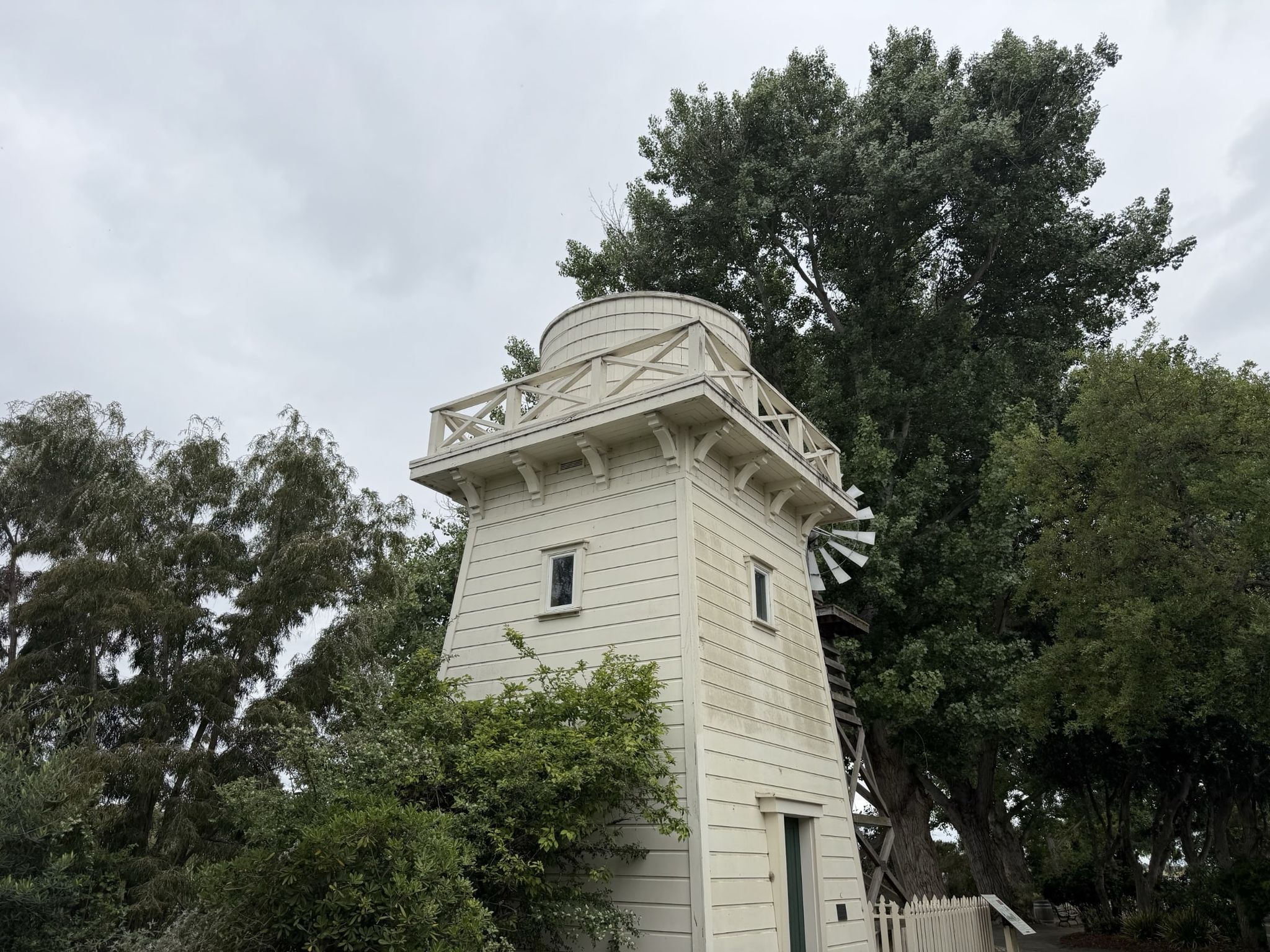
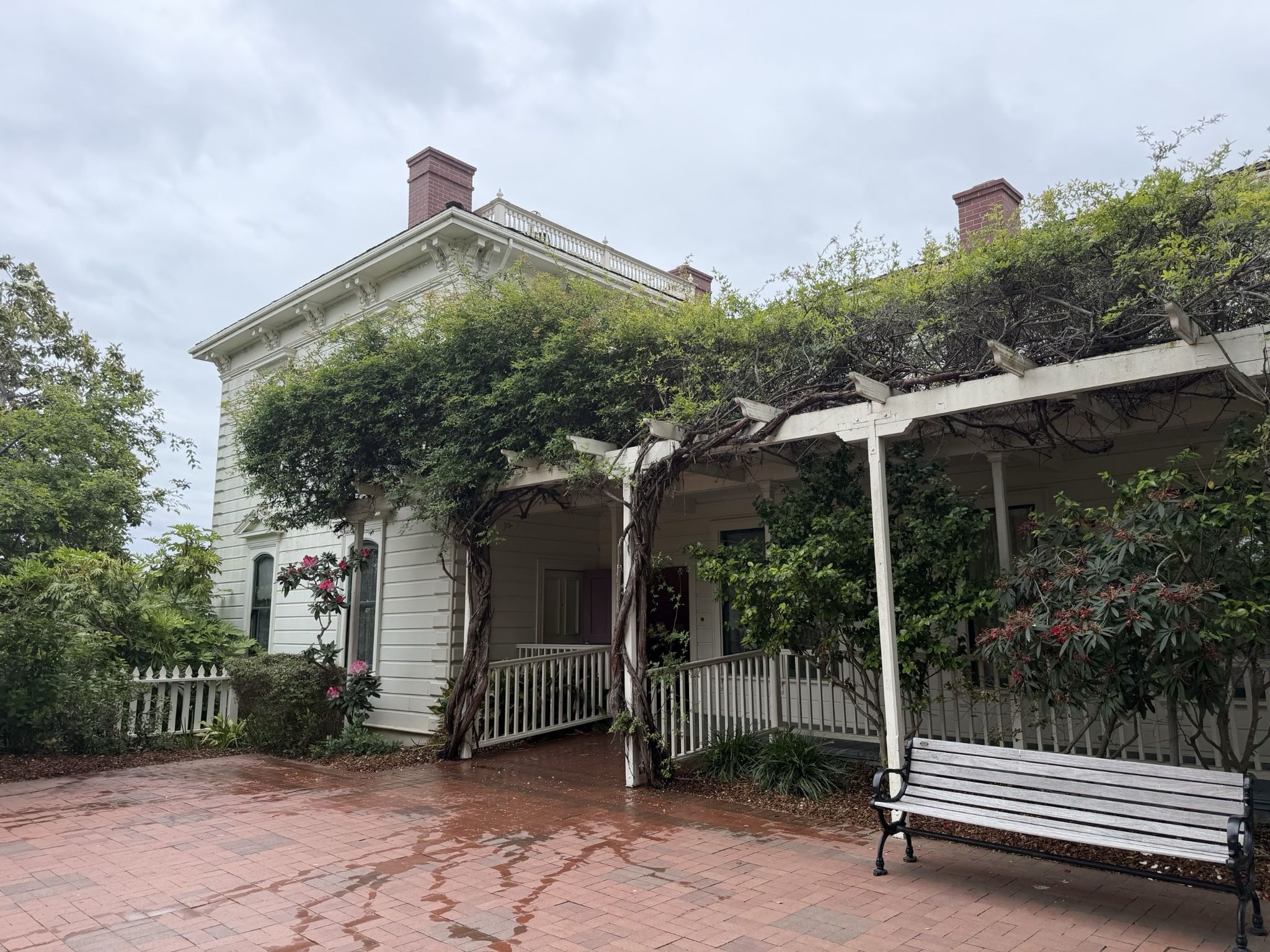
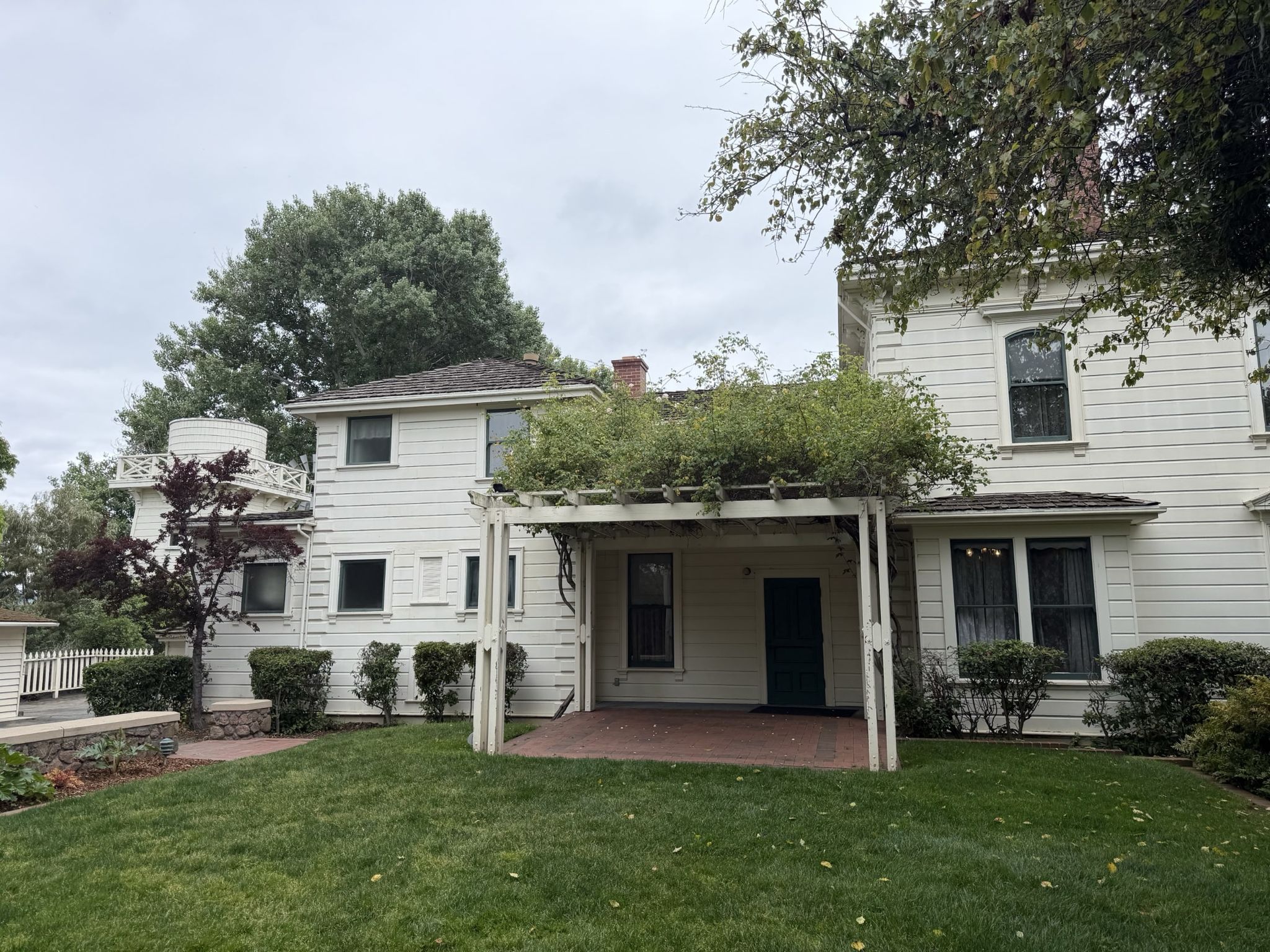
Unless the house is being rented for a private event, visitors may enjoy the exterior grounds from dawn until dusk, 364 days of the year. The grounds include grassy areas, brick patios, gardens, a restored windmill, and a replica Tank House. There are also interpretive signs that explain the history of the house and windmill. If you are already visiting Shoreline to walk around the lake, play golf, or enjoy the wildlife, the Rengstorff House is an easy detour that adds some historical context to the trip.
If you cannot visit in person, the Friends of “R” House offers a 3D virtual tour of the home on their website. I think that is especially useful for people who grew up in the area but no longer live nearby, or for anyone with mobility limitations. It is also a good way to preview the house before deciding whether to visit. For a local historic site, it is surprisingly accessible.
Hey Buyers, It’s Rough out There!

A Wedding Venue with Some Real Romance Behind It
Many people in Mountain View know the Rengstorff House as a wedding and event venue. The house is available for rent every day of the week except during public tour times, and it is especially popular for weddings from April through October. The venue also allows limited rentals from November through March. For couples who want something more distinctive than a hotel ballroom, it offers a setting with real local character.
The appeal is easy to understand once you see the property. There is the restored Victorian mansion, the gardens and patios, the windmill, the tank house, and the larger Shoreline setting around it. It feels connected to the area in a way that many standard event spaces do not. The venue works particularly well for people who want something elegant but not overly formal or generic.
The maximum capacity is 150 guests, which makes it suitable for a substantial event while still keeping the gathering fairly personal. If you are considering it for a wedding or private event, it is smart to plan early, especially for spring and fall dates. Those are the kinds of dates that tend to book well in advance. For current pricing, availability, and rental rules, contact the City of Mountain View’s Shoreline Division directly.
Why This Matters in Modern Mountain View
As someone who works in Silicon Valley real estate, I think a lot about what gets preserved and what disappears in a place that changes as quickly as this one. Mountain View has gone from a relatively quiet suburban community with a strong downtown to one of the most important real estate markets in the world. Much of what people now associate with the city is tied to technology, headquarters campuses, venture capital, and high housing prices. But places like the Rengstorff House remind us that the city had a long story before all of that.
Google’s headquarters sits on land that, not very long ago in historical terms, was orchards, farms, and open space. Long after Henry Rengstorff’s lifetime, Google came to occupy part of the same 164 acres where his Victorian home once stood. It is hard not to notice the contrast. One era used that land to move grain, lumber, produce, and building supplies; another used it to build one of the world’s most influential technology companies.
That connection does not need to be overstated to be meaningful. The same physical ground has supported very different versions of Mountain View’s economy over time. Rengstorff’s world was based on land, agriculture, shipping, and civic development. Today’s Mountain View is built around software, data, research, and global technology. The Rengstorff House gives us a rare visible link between those two chapters.
For long-time Mountain View residents, especially those thinking about downsizing or making a move into their next chapter of life, the house can also feel more personal. It is a reminder that homes are not just structures or investments. They hold family stories, community ties, and the evidence of lives lived over many decades. That is something I see all the time when I work with sellers who have been in the same home for thirty, forty, or fifty years.
Henry and Christine Rengstorff raised seven children in their home, and generations of their family remained connected to it for nearly a century. Most homes in Mountain View today are not Victorian mansions from the 1860s, but they still carry their own histories. A ranch home from the 1950s or a tract house from the 1960s may hold decades of birthdays, graduations, holidays, remodels, and major life transitions. When it comes time to sell, that history deserves to be treated with some respect.
A Few Other Resources Worth Checking Out
If this article has made you more interested in the Rengstorff House and Mountain View’s deeper history, there are several other resources worth exploring. The Mountain View Historical Association has a helpful overview of historic buildings throughout the city, including the Adobe Building, Moffett Field, Hangar One, and other local landmarks. The PAST Heritage organization in Palo Alto also has a detailed write-up on Henry Rengstorff and his family’s role in the development of the region. And of course, the Wikipedia entry on the Rengstorff House is useful if you want a more encyclopedic overview.
If you want to make a day of it, the house pairs nicely with other activities at Shoreline. You can walk around Shoreline Lake, eat at the Shoreline Lake American Bistro, visit the trails, or simply enjoy the open space and bayfront views. The larger Shoreline at Mountain View area covers about 750 acres, and many locals probably do not take advantage of it as often as they could. The Rengstorff House gives the park a historical centerpiece and makes the visit feel a little more connected to the city’s past.
Could you use a Helping Hand?

Closing Thoughts
The Rengstorff House is not the biggest or flashiest landmark in Mountain View. It is not the Computer History Museum, the Googleplex, or Castro Street on a busy night. It is quieter than that. But in some ways, that is exactly why it matters.
The house tells a story about who came here, what they built, how the local economy developed, and how close we came to losing one of the few remaining physical links to that era. It also shows what can happen when a community decides that preservation is worth the effort. Without the people who pushed to save it, the Rengstorff House would probably be gone today, replaced by another piece of commercial development that few people would remember.
If you care about Mountain View, local history, architecture, or simply understanding Silicon Valley beyond the tech headlines, the Rengstorff House is worth a visit. Take the tour, walk the grounds, talk to a docent, and spend a few minutes imagining what this part of the valley looked like before freeways, campuses, and office parks. It is free, beautiful, and easy to overlook. But it is one of the clearest reminders we have of what Mountain View was before it became Silicon Valley.
Time to talk to a REALTOR?

Amazing Mountain View Homes for Sale
2
3
4
5
6
7
8
9
10
11
12
13
14
15
16
17
18
19
20
21
22
23
24
25
Check out this article next