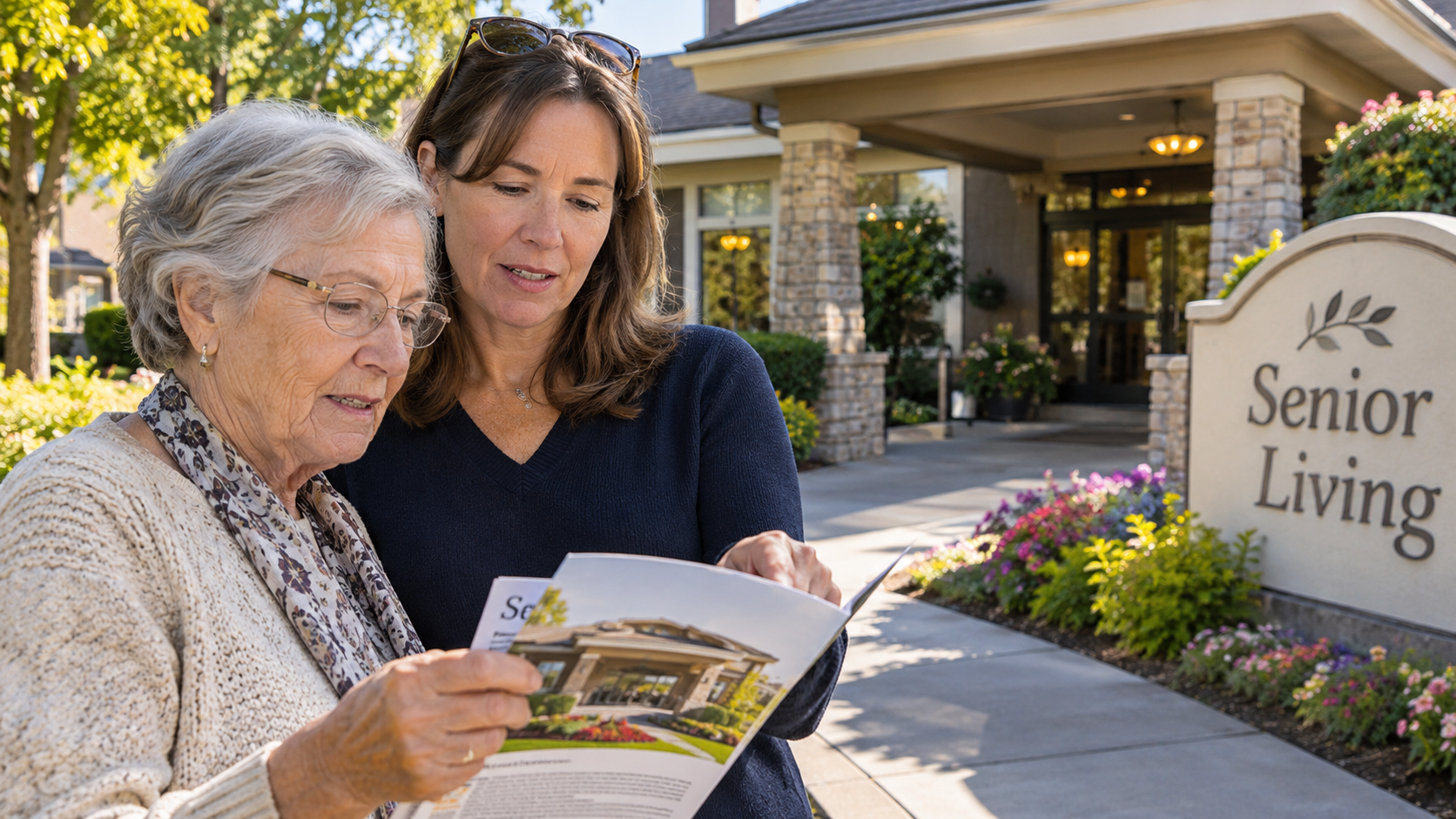
If you’re wondering whether A Place for Mom is worth calling, here’s the short version. It’s a free national senior living referral service that can give you a list of assisted living and memory care options quickly, which is helpful when you’re starting from zero. But it’s paid by the communities it recommends, its list only includes communities in its paying network, and a 2024 Washington Post investigation and a U.S. Senate inquiry both raised serious questions about how it ranks and reviews them. I’ve helped a lot of Bay Area families through the move to assisted living, so let’s walk through how it actually works, what’s good about it, what to watch out for, and how to use it without getting steered.
Key Takeaways
Summary: A Place for Mom is a free, community-paid referral service that can quickly narrow your search, but its recommendations come only from paying partners, its awards and reviews don’t reflect state inspection records, and its phone-based advisors rarely know the buildings firsthand. Use it as a starting point, then verify licenses and citations on the CDSS Care Facility Search, tour in person, and consider a well-vetted local placement specialist for the Bay Area’s smaller care homes.
What Is A Place for Mom?
A Place for Mom is a for-profit senior living referral company that started in the Seattle area around 2000 and is now headquartered in New York. Since 2017 it’s been owned by the private equity firms General Atlantic and Silver Lake. It’s the biggest name in this space by a mile, and if you’ve searched for assisted living online, you’ve almost certainly landed on one of its pages or filled out one of its forms.
The company helps families find independent living, assisted living, memory care, and in-home care. On its about page, it says it has more than 400 advisors and a network of more than 11,000 senior living communities, and that it’s paid by those communities when a family it referred moves in. It also says it’s paid by home care agencies each time it refers a family to them.
I originally wrote about A Place for Mom back in 2016, when I mostly saw it as a handy free resource. A lot has come to light since then, so I’ve rewritten this post from the ground up to give you the full picture.
How A Place for Mom Works
Here’s what usually happens when you reach out:
- You fill out a form or call. You’ll share your parent’s location, care needs, budget, and your contact info.
- An advisor calls you back. Expect a call quickly, sometimes within minutes. The advisor asks about health, memory, mobility, budget, timing, and preferences.
- You get a list. The advisor sends a handful of communities from its network that match what you described, often with pricing ranges and reviews.
- Communities reach out. Your information is typically shared with the communities on your list, so they may call or email you to schedule tours.
- You tour and choose. If your parent moves into one of the referred communities, that community pays A Place for Mom a referral fee.
The advisor usually works remotely and often isn’t based anywhere near your parent’s neighborhood. That’s a big difference from a local placement specialist who drives around to visit the places they recommend. I break down that difference in my guide to senior placement specialists.

Moving to assisted living?
Need move-in money in a hurry?
Move-in fees and first months' rent can top $20,000 within days. Compass Concierge can now cover them, repaid when the house sells.
See How It Works →Need help today? Call or text 408.413.3087
How Is A Place for Mom Paid?
A Place for Mom is free to families because the communities pay it. According to bankruptcy court documents cited in the Washington Post’s 2024 investigation, providers pay a fee equal to about a month’s fees for each successful placement. In the Bay Area, where a month of assisted living plus care can easily run well into five figures, that’s a meaningful amount of money.
This matters for two reasons. First, the list you see is limited to communities that have a contract with A Place for Mom. In a June 2024 letter, the chair of the U.S. Senate Special Committee on Aging said the listings families are shown are limited to facilities that pay A Place for Mom a commission, and that a large share of assisted living and memory care referrals were over the family’s stated budget. Second, those referral fees are a cost of doing business for the communities, and the Senate letter raised the concern that they get built into the rates residents pay. So “free” isn’t quite free.
None of that makes A Place for Mom a scam. It’s a referral business with a clear financial model. You just want to understand the model before you rely on its advice.
What A Place for Mom Does Well
To be fair, there are real reasons families use it:
- Speed. When a parent is about to be discharged from the hospital and you have days, not weeks, getting a list in an afternoon is a relief.
- Breadth. With thousands of communities nationwide, it’s helpful when your parent lives across the country and you don’t know the area.
- Education. Advisors can explain the difference between independent living, assisted living, and memory care, and give you ballpark pricing. If you want a deeper Bay Area version, my guide to independent living vs. assisted living vs. memory care covers it.
- No cost to you. You don’t sign a contract with A Place for Mom or pay it directly.
The Problems You Should Know About
Here’s where I’d slow down.
Awards and reviews don’t reflect inspection records. The Washington Post analyzed 863 communities in 28 states and, as Senior Housing News reported, found that about 37% of the communities A Place for Mom recognized as Best of Senior Living winners in 2023 and 2024 had state violations affecting resident care. Those included falls, bed sores, medication errors, slow call-light response, understaffing, and abuse. The awards are based on online review scores, and former industry employees told the Post that some communities steered which residents and families left reviews. At the time, A Place for Mom didn’t show state inspection reports on its listings.
The advisor probably hasn’t been there. A phone advisor working from a database can’t tell you how a building smells at 4 p.m., whether the caregivers look happy, or which wing the executive director steered you away from.
Small care homes are often missing. Some of the best care in the Bay Area happens in six-bed residential care homes, and many of them don’t participate in national referral networks. If you only use A Place for Mom, you may never hear about them.
Your phone will ring. Once you submit your information, expect calls and emails from the service and from communities. A Place for Mom agreed to a $6 million class action settlement over automated calls to people who filled out its web forms, and the settlement included changes to its calling practices.

Free 2-minute family assessment
Worried about Mom and Dad? See If It's Time to Have The Talk.
Answer a dozen quick questions about what you've noticed, the house itself, and who in the family is involved. You'll get an honest read on how urgent things really are and a plan for starting the conversation without a family fight.
Take the Quiz →Rather talk now? Call or text 408.413.3087
How to Use A Place for Mom Without Getting Steered
If you decide to use it, and plenty of families do, here’s how I’d approach it:
- Treat the list as a starting point. It’s a list of paying partners, not a ranking of the best care in town.
- Ask the advisor directly whether there are good options near your parent that aren’t in their network. A straight answer tells you a lot.
- Look up every community yourself on the CDSS Care Facility Search. Read the inspection reports and complaint findings, not just the star rating.
- Call the long-term care ombudsman. In Santa Clara County, that’s Catholic Charities of Santa Clara County at (408) 944-0567. It’s free and they visit facilities unannounced.
- Tour twice, once on the scheduled tour and once at a less polished time like late afternoon or a weekend.
- Stick to your budget. Tell the advisor your real number and don’t let a list drift above it. Remember that care fees usually rise as needs increase.
- Use one email and one phone number you don’t mind getting a lot of calls on for a few weeks.
My guide on how to vet an assisted living facility in the Bay Area walks through all of this step by step, including how to read Type A and Type B citations.
Alternatives to A Place for Mom
You have other options, and in the Bay Area some of them are better:
- A local placement specialist. Someone who has personally toured the communities and small care homes near your parent, and who’ll come on tours with you. Most are also paid by communities, so vet them carefully. My senior placement specialist guide shows you how.
- An Aging Life Care manager. Usually a nurse or social worker who charges by the hour, has no referral fee conflict, and can stay involved after the move.
- The hospital or rehab discharge planner. They see which places take good care of patients after discharge.
- Doing it yourself. Search the state database, call the ombudsman, and tour. It takes more time, but you control the list. My guide to senior resources in Silicon Valley has a lot of the local agencies you’d call.
If you want to see some places I’ve visited in person, start with my favorite assisted living communities in Silicon Valley.

Free Guide for Families
Selling Mom or Dad's Home to Pay for Care?
Bay Area assisted living runs $7,800 to $8,300 a month, and the house is usually the only asset big enough to cover it. This guide walks you through timing the sale, who has legal authority to sign, the capital gains rules for seniors in care, and how a sale affects Medi-Cal and VA benefits, so the decision gets made from strength instead of in a crisis.
Read the Family Guide →Paying for Assisted Living
Whichever route you take, the money question comes up fast. Medicare doesn’t pay for assisted living. Veterans and surviving spouses may qualify for the VA’s Aid and Attendance benefit, and Medi-Cal’s Assisted Living Waiver covers some care in Santa Clara and several other Bay Area counties, though it has a waitlist. For most families I work with, the family home ends up paying for care. If that’s you, read my guide on paying for assisted living while the house sells.
My Take
I’ve spent more than 23 years helping Silicon Valley families with real estate, and much of my work today is with older adults and their adult kids during exactly this kind of move. As a Certified Senior Advisor and Seniors Real Estate Specialist, I’ve seen A Place for Mom help families who were completely overwhelmed, and I’ve seen families get a list of expensive corporate communities when a great six-bed home down the street would have been a better fit for Mom.
So my advice is simple. Use A Place for Mom if it helps you get started, but don’t let it be the only voice in the room. Verify everything, tour in person, and lean on people who actually know your parent’s neighborhood. And when you’re ready to figure out the house side of the move, book a time on my calendar or call me at 408-413-3087. My goal is to help you make your parent’s next move the best one yet.
Frequently Asked Questions
Is A Place for Mom really free?
Yes, in the sense that families don’t pay A Place for Mom directly. The company is paid by the senior living communities in its network when a family it referred moves in, typically a fee of about one month’s rent and care. Critics, including a 2024 U.S. Senate letter, have raised concerns that those fees are built into what residents pay.
How does A Place for Mom make money?
A Place for Mom earns referral fees from senior living communities when a referred family moves in, and from home care agencies when it refers a family to them. It doesn’t charge families.
Is A Place for Mom legit?
Yes, it’s a real and established company that has been around since about 2000 and is owned by General Atlantic and Silver Lake. The concerns about it aren’t that it’s fake, but that its recommendations are limited to paying communities and that its awards and reviews don’t reflect state inspection records.
Does A Place for Mom show inspection reports or violations?
At the time of the 2024 Washington Post investigation, it did not show state inspection reports on its listings. In California, you can look up any assisted living community’s license, inspections, and complaint findings for free on the CDSS Care Facility Search.
Will A Place for Mom share my information with communities?
Typically, yes. Once you’re matched with communities, they’ll usually contact you to schedule tours. If you’d prefer fewer calls, ask the advisor which communities will receive your information before you agree.
Does A Place for Mom include small board and care homes?
Some, but many small six-bed residential care homes in the Bay Area don’t participate in national referral networks. A local placement specialist or your own search of the state database will usually turn up more of them.
What are the best alternatives to A Place for Mom?
A well-vetted local placement specialist, an hourly Aging Life Care manager, your parent’s hospital discharge planner, or your own research using the CDSS Care Facility Search and the local long-term care ombudsman. Many Bay Area families combine a couple of these.
Can I stop A Place for Mom from calling me?
Yes. Tell the advisor and any communities that call that you’d like to be removed from their contact lists, and ask for that to be confirmed in writing or by email. Using a separate email and phone number for your search also helps.
Free Family Strategy Session
Paying for Mom or Dad's care with the house? Find out how many months of care it will fund.
In a 30-minute call, we'll estimate your parent's net proceeds after selling costs and taxes, map that against the care costs you're looking at, and sort out timing: sell before the move, after it, or bridge the gap. You'll leave with real numbers and a clear order of operations. No listing agreement, no pressure.
Book My Family Strategy Session →Senior Friendly Homes in Silicon Valley South
2
3
4
5
6
7
8
9
10
11
12
13
14
15
16
17
18
19
20
21
22
23
24
25