If you grew up anywhere in the Bay Area, there’s a good chance your first trip to the Monterey Bay Aquarium was on a school bus, with your nose pressed against the glass of the Kelp Forest and a sack lunch you weren’t allowed to eat inside. I’m a Bay Area native, I live on the Santa Cruz side of the bay, and I’ve spent more than 23 years helping families buy and sell homes from Silicon Valley down through Monterey County. I’ve been going to the aquarium since it opened, and I still go back every year. The photos in this guide come from my own visits, a few from older trips on my phone and the rest from a recent visit with my good camera, so you’ll see exactly what you’re in for.
The aquarium sits right on the water at the end of Cannery Row, inside what used to be a sardine cannery, and it’s one of those rare places that’s just as fun at 7 or 77. It also just got a big upgrade. The brand new Ocean in Motion gallery, with a much bigger home for the African penguins, opens November 7, 2026. Here’s everything you need to plan a great day, from tickets and parking to the exhibits you shouldn’t miss and my tips for visiting with grandkids or aging parents.
Key Takeaways
Summary: The Monterey Bay Aquarium on Cannery Row is one of the best day trips from Silicon Valley, about 70 miles south of San Jose. Built on the site of an old sardine cannery and opened in 1984, it’s famous for its living Kelp Forest, Open Sea, jellies, and sea otters, and in November 2026 it opened a new family gallery with a bigger African penguin habitat. Adult tickets are $65, seniors 70 and older pay $50, and kids 4 and under get in free. Buy tickets ahead, park in a nearby garage, and give yourself at least three to four hours.
Table of Contents
- Monterey Bay Aquarium at a Glance
- From Sardine Cannery to World-Class Aquarium
- What’s New: Ocean in Motion and the Penguins
- The Must-See Exhibits
- Tickets, Hours, and Ways to Save
- Getting There from Silicon Valley and Parking
- Visiting with Older Adults and Grandkids
- My Insider Tips for a Better Visit
- Make a Day of It on the Monterey Peninsula
- Frequently Asked Questions
Monterey Bay Aquarium at a Glance
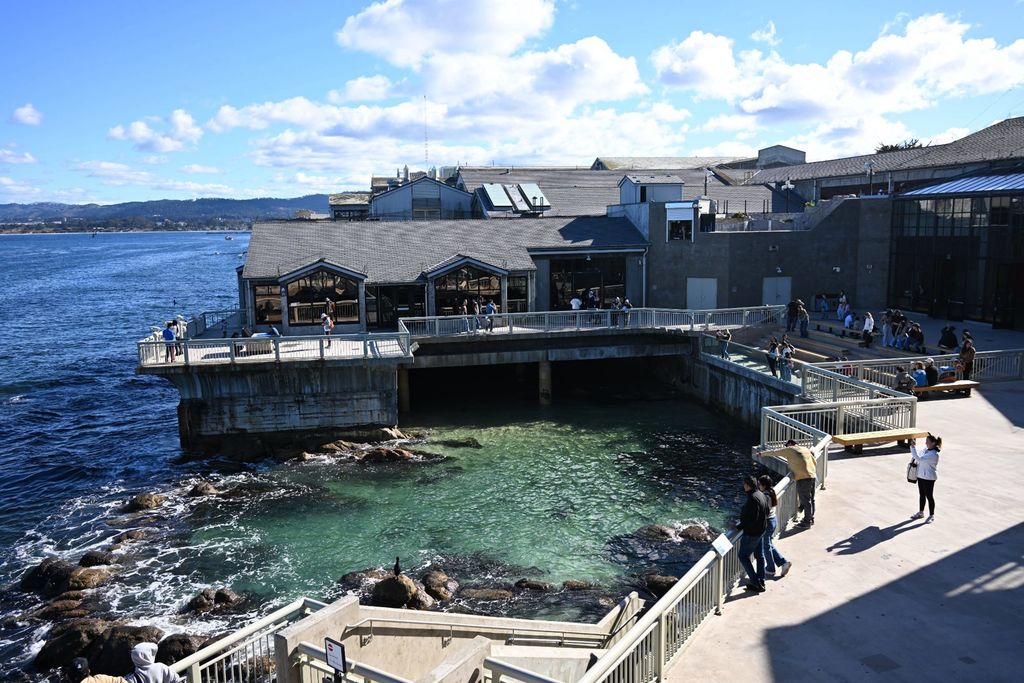
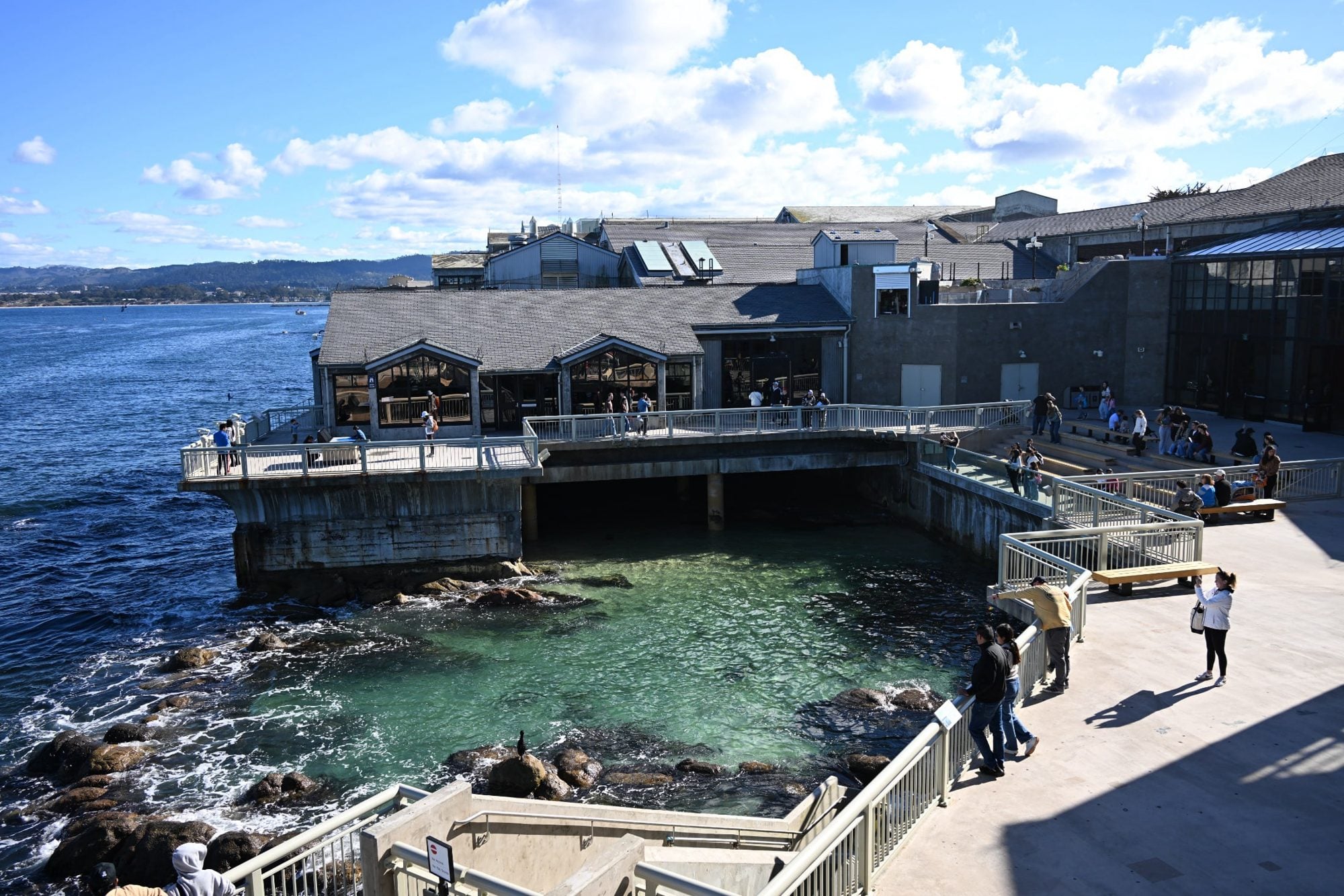
The Great Tide Pool sits right under the back decks, and it’s open to the real bay, so keep an eye out for wild sea otters, harbor seals, and cormorants.
- Address: 886 Cannery Row, Monterey, CA 93940
- Opened: October 20, 1984
- Admission: $65 adults 18 to 69, $50 seniors 70+, $50 youth 5 to 17, free for ages 4 and under (pricing for visits through December 31, 2026)
- Hours: They vary by season, so check the aquarium’s schedule before you go. Last entry is one hour before closing.
- Time to allow: Three to four hours for a good visit, or a full day if you want to catch the feedings and talks
- Getting there: About 70 miles from San Jose, usually around an hour and a half depending on Highway 17 or 101 traffic
- Parking: No public parking on site, but there are garages and lots a short walk away
Prices and policies come straight from the Monterey Bay Aquarium tickets page and visitor FAQs as of November 2026. They do change, so it’s worth a quick check before you leave the house.
From Sardine Cannery to World-Class Aquarium
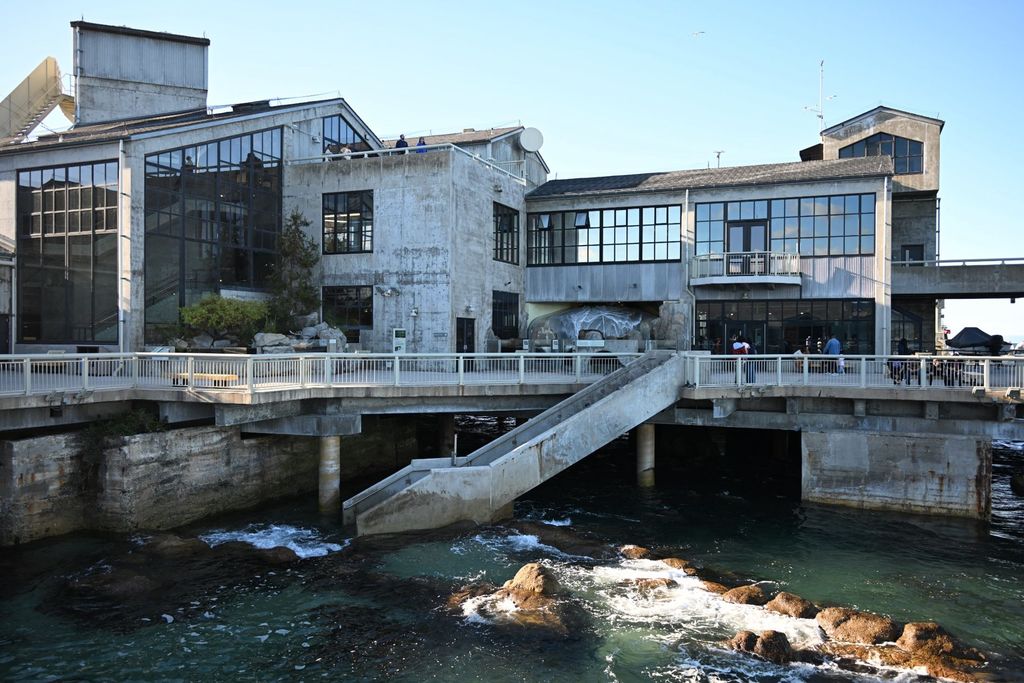
The concrete and corrugated metal you see today follow the lines of the old Hovden Cannery, and the building sits on pilings right over the rocks.
If you’ve read John Steinbeck, you already know Cannery Row was once the sardine capital of the world. The Hovden Cannery was one of the biggest operations on the Row, and it hung on until 1973, long after the sardines had mostly disappeared. A few years later, a group of marine biologists connected to Stanford’s Hopkins Marine Station (Chuck Baxter, Robin Burnett, Nancy Burnett, and Steve Webster) floated the idea of putting a public aquarium on the site. David and Lucile Packard, of Hewlett-Packard fame, got behind it, and the Monterey Bay Aquarium Foundation was formed in 1978.
The aquarium opened on October 20, 1984, and it was a big deal. It was designed by the San Francisco architecture firm EHDD to feel like part of the old waterfront instead of a shiny new box, and it pulled water straight from the bay to keep its exhibits as close to the real thing as possible. Julie Packard, David and Lucile’s daughter, ran the place as executive director for more than four decades. In 2026, leadership passed to Dr. Jenny Gray, who came over from Zoos Victoria in Australia, while Julie moved into a leadership role on the board.
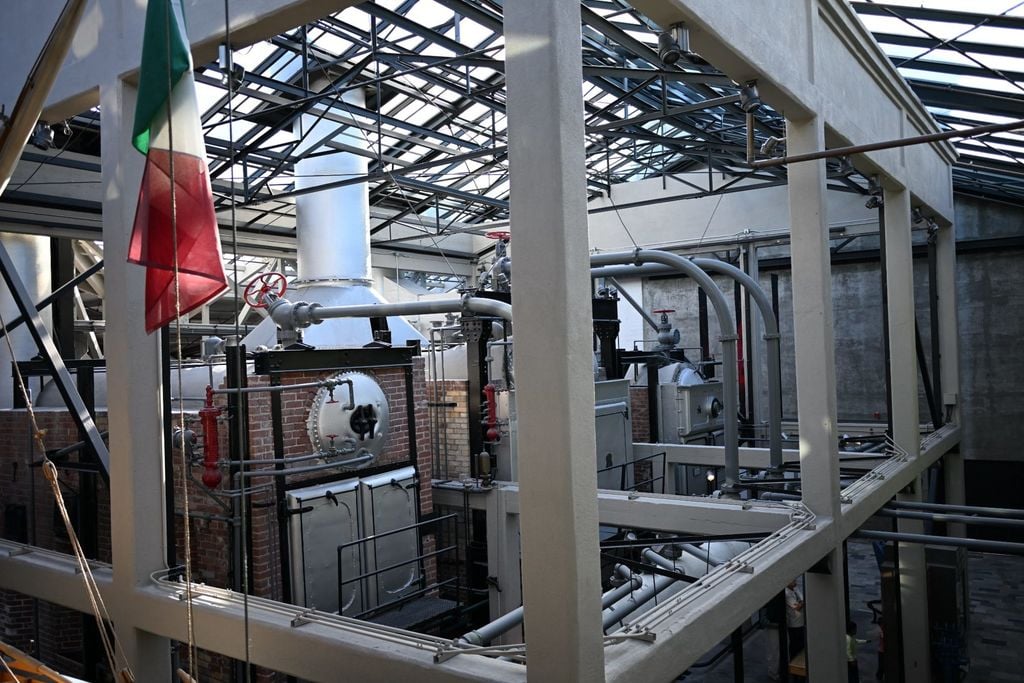
The old Hovden Cannery boilers are still standing under the glass roof, a nice reminder of the families who worked the Row long before the jellies moved in.
What I love is that they didn’t erase the history. The cannery’s original boiler house is preserved inside, with its brick fireboxes, valves, and steam pipes, and you’ll walk right past it. Over the years the aquarium also became a serious conservation force. Its sea otter research and rescue program started the year it opened, its Seafood Watch program (launched in 1999) is the reason a lot of restaurants print sustainability ratings on their menus, and it helped build the momentum for the Monterey Bay National Marine Sanctuary, which was established in 1992. Today it welcomes roughly two million visitors a year.
What’s New: Ocean in Motion and the Penguins
The biggest news of the year is Ocean in Motion / La Danza del Mar, a new bilingual gallery that opens on Saturday, November 7, 2026. It’s built for little kids, roughly ages two to six, and the whole idea is that children learn about ocean animals by moving like them. They can hold on to seagrass towers like a seahorse, sway like a garden eel, leap like a blenny, and waddle along with digital penguin silhouettes.
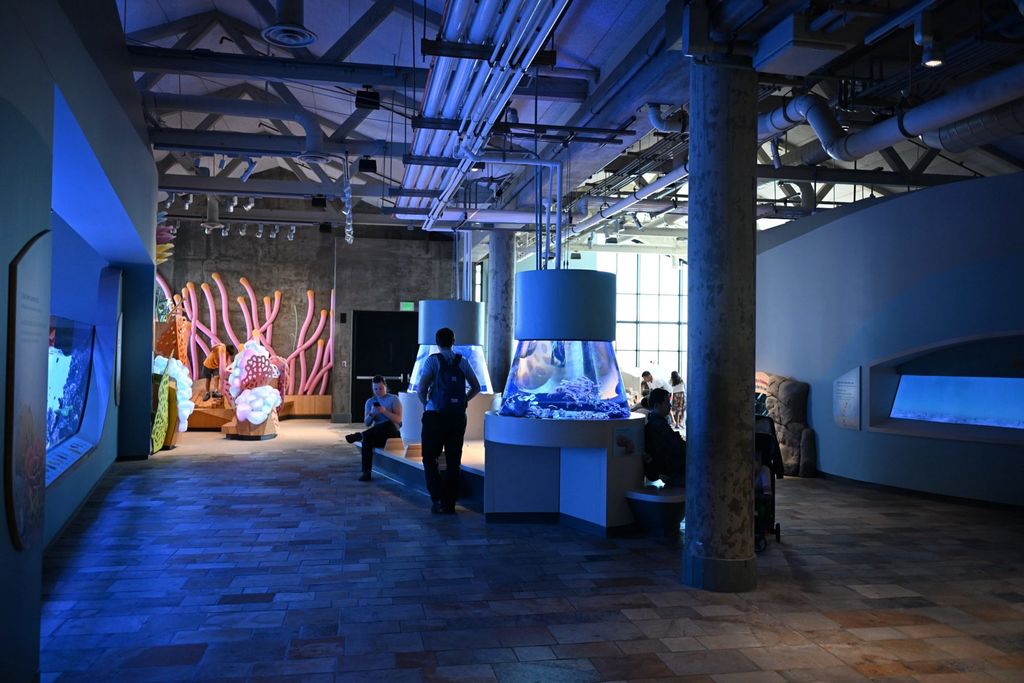
The new Ocean in Motion gallery mixes cone-shaped aquariums, soft coral climbing pieces, and plenty of benches for the grown-ups.
The labels are written like a children’s picture book, with the animals as the main characters, and everything is in English and Spanish. Even if you don’t have a preschooler in tow, it’s worth a walk through. The animal lineup includes big-belly seahorses, leaping blennies, bluespotted ribbontail rays, clownfish, cuttlefish, and garden eels, plus a 20-foot coral reef with a custom wave machine that’s one of the largest individual exhibits in the building.
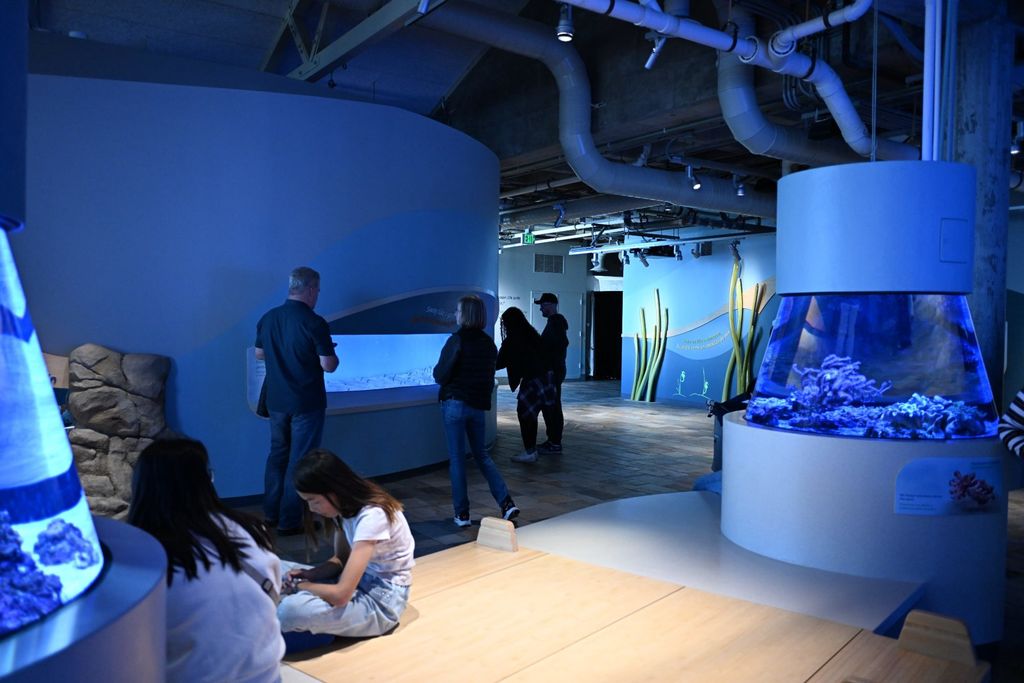
The garden eel window and the seahorse wall, where kids are invited to “hold on like a seahorse.”
The centerpiece, though, is the expanded African penguin habitat. The penguins have always been a crowd favorite, and now they’ve got a lot more room, with sculpted rockwork, a big pool, and tall windows full of natural light. The primary pathway through the gallery is fully accessible, which matters a lot if you’re pushing a stroller or a wheelchair.
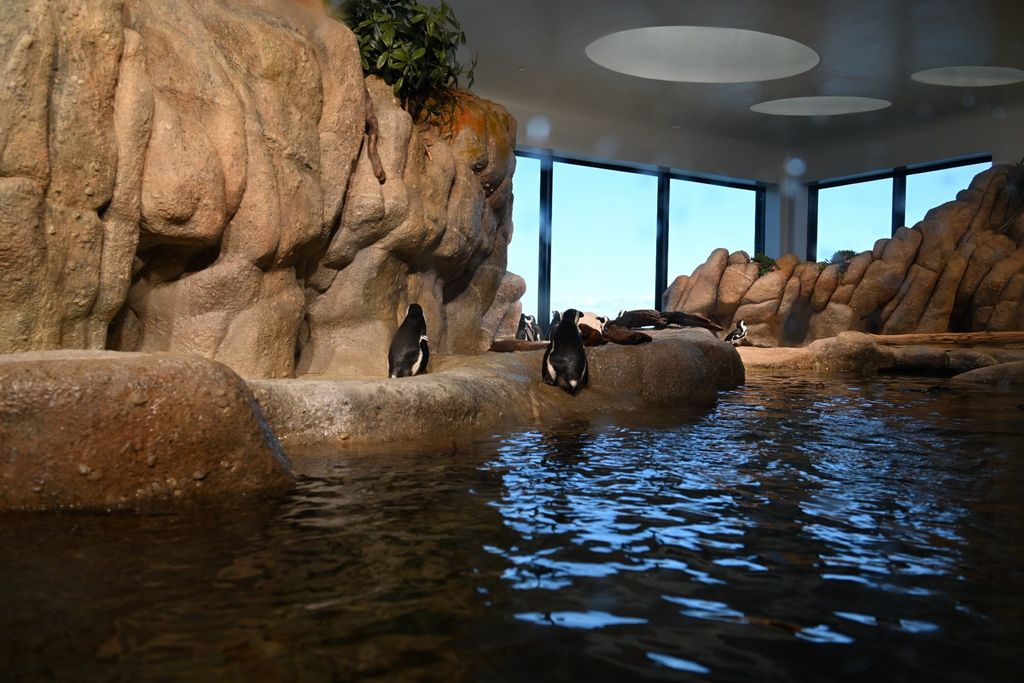
The expanded African penguin habitat has big windows and a lot more room for the colony to waddle, preen, and nap.
Try to catch a penguin feeding if you can. Watching them rocket through the water is a whole different experience from watching them stand around on the rocks looking grumpy. Feeding times are posted on the daily schedule.
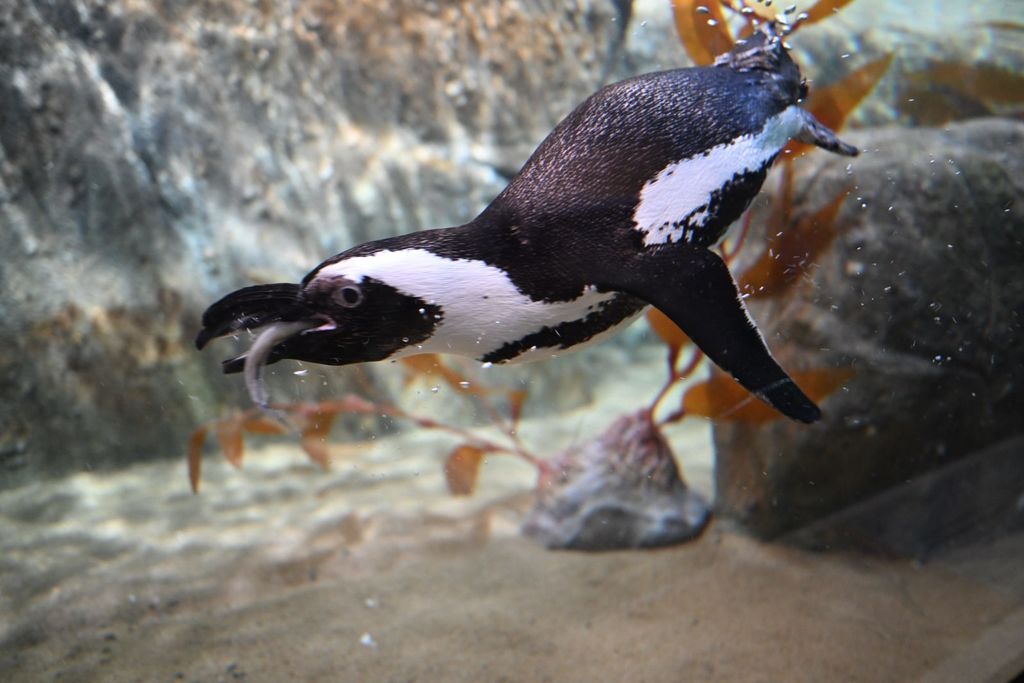
Lunch on the go. African penguins are surprisingly fast underwater, and they don’t waste any time with a fish.
The Must-See Exhibits
The aquarium is split into a few big areas, and you can easily lose track of time in any one of them. If you only have a few hours, these are the ones I’d put at the top of the list.
The Kelp Forest
This is the one everybody remembers. The Kelp Forest is about 28 feet tall, and when it opened it was the first time anyone had kept a living kelp forest growing inside an aquarium. It’s open to the sky at the top, and a wave machine keeps the water moving the way it does out in the bay, so the giant kelp sways just like it does off the coast.
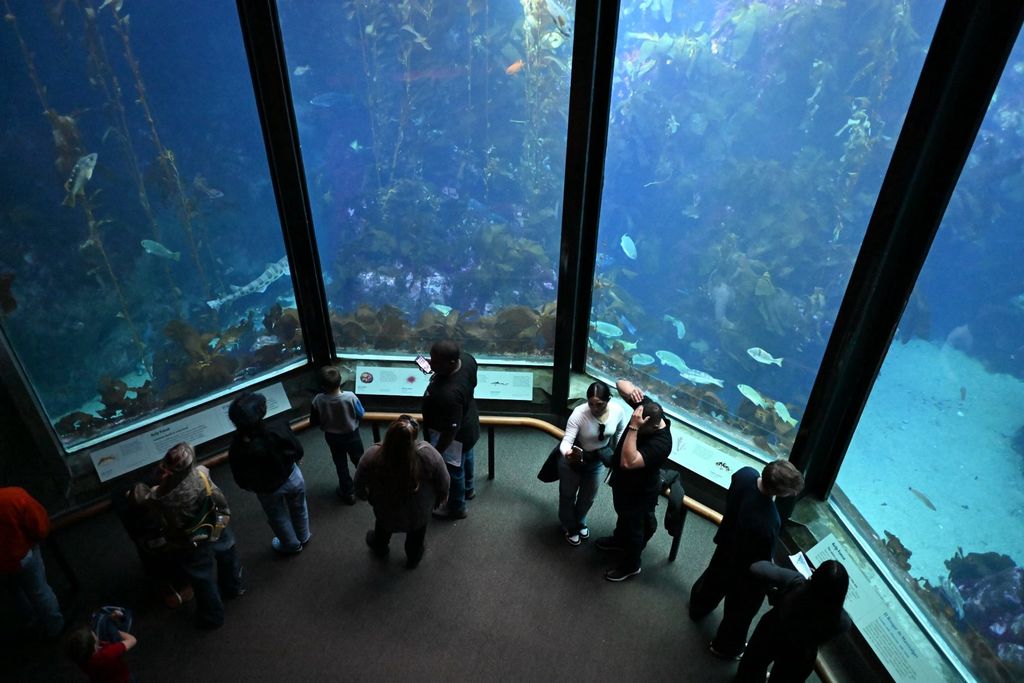
Looking down into the Kelp Forest from the upper level. That’s a leopard shark cruising by on the left.
Look for leopard sharks, rockfish, sardines schooling in silver clouds, and the occasional wolf eel tucked into the rocks. You can view it from two levels, and I like doing both. Downstairs puts you eye to eye with the fish, and upstairs you get the sunlight streaming down through the kelp.
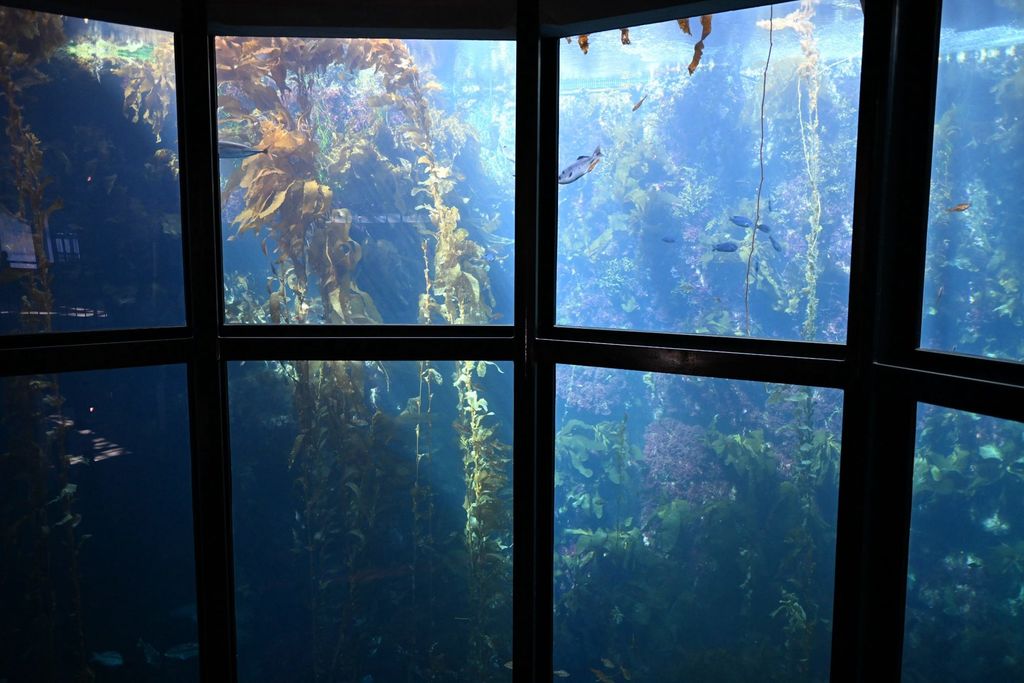
The lower windows of the Kelp Forest, with sunlight filtering down through the giant kelp.
The Jellies
The jelly galleries are like walking through a living art museum. The tanks are lit against deep blue backgrounds, and the jellies just pulse and drift. The orange Pacific sea nettles are the showstoppers, but the little crystal jellies are my favorite. They’re almost invisible until the light catches them.
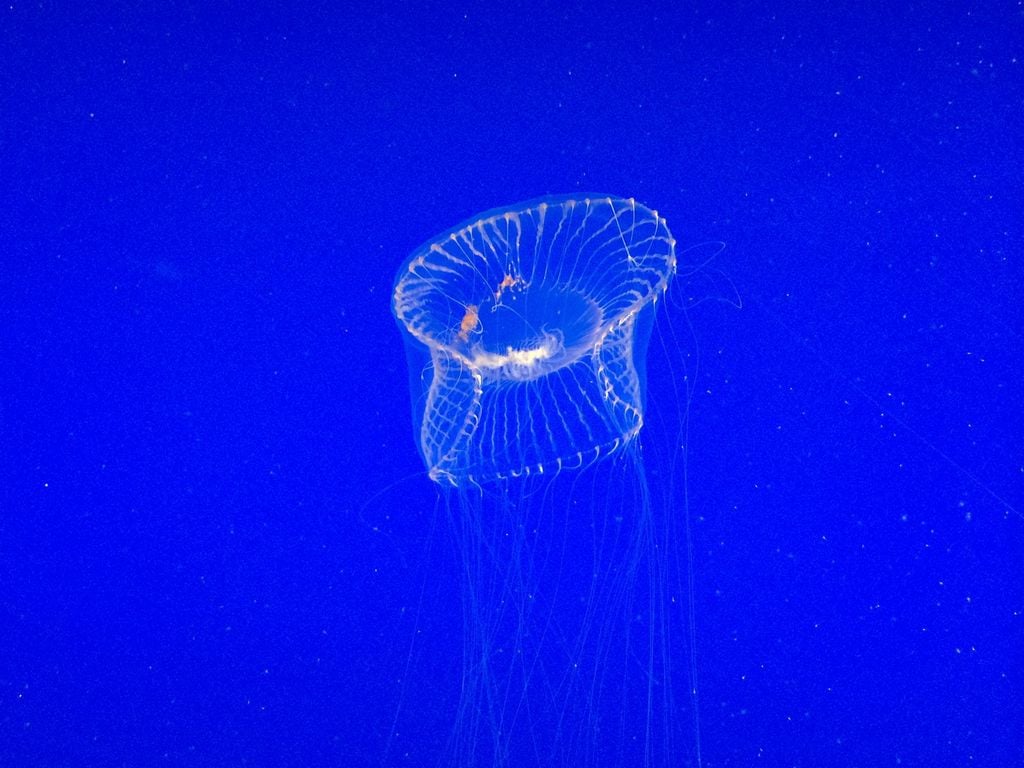
A crystal jelly glowing in the jellies gallery. In the wild they’re nearly transparent.
This is also one of the best spots in the building for anyone who needs a break. The lighting is soft, there’s usually a bench nearby, and it’s mesmerizing for kids and grown-ups alike.
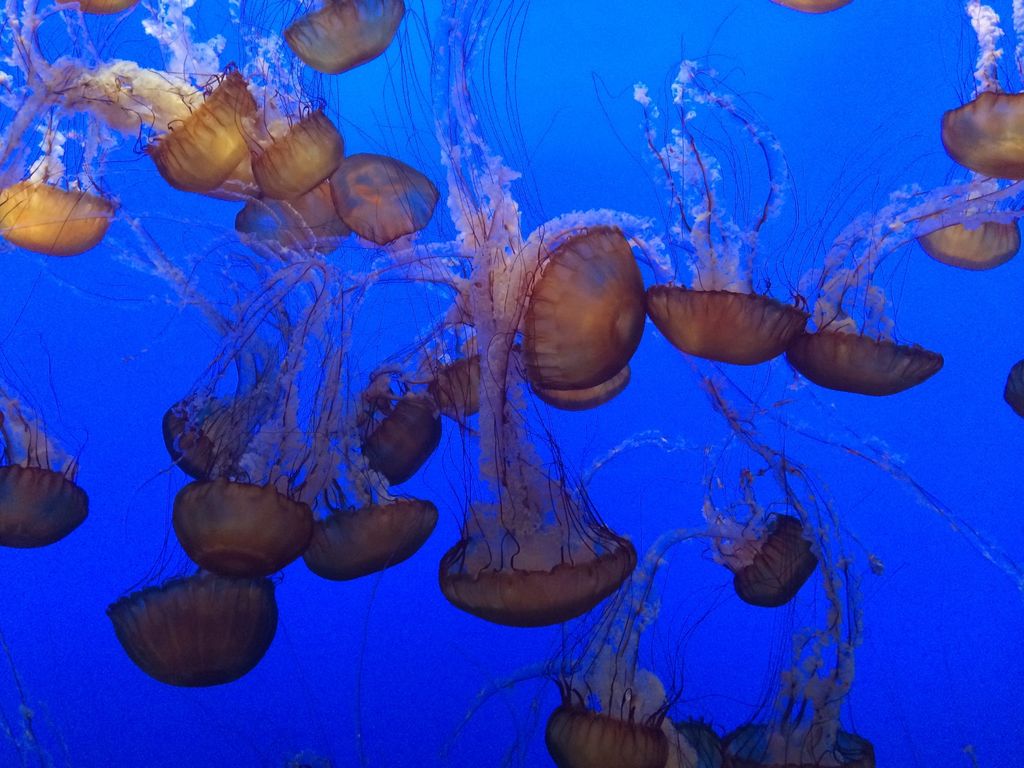
Pacific sea nettles are native to our coast, and seeing dozens of them together is one of the aquarium’s signature sights.
The Open Sea
The Open Sea is the aquarium’s largest exhibit, holding 1.2 million gallons of water behind one massive window. You’ll see schools of sardines, sea turtles, and big open-ocean fish moving through what feels like endless blue. Grab a seat on the benches in front of the glass and just watch for a while. It’s the most relaxing ten minutes you’ll spend all day.
The Sea Otters
You can’t come to Monterey without seeing the otters. The aquarium has been rescuing and caring for stranded southern sea otters since 1984, and the otter exhibit spans two levels so you can watch them dive, groom, and crack open their food. Check the schedule for the otter feedings. They draw a crowd, so get there a few minutes early.
Monterey Bay Habitats and the Touch Pools
Some of the best stuff is local. The Monterey Bay Habitats exhibits recreate the rocky reefs, sandy sea floors, and wharf pilings right outside the door, and you’ll see rockfish, anemones, and all kinds of critters you might spot on a dive or a tide pool walk.
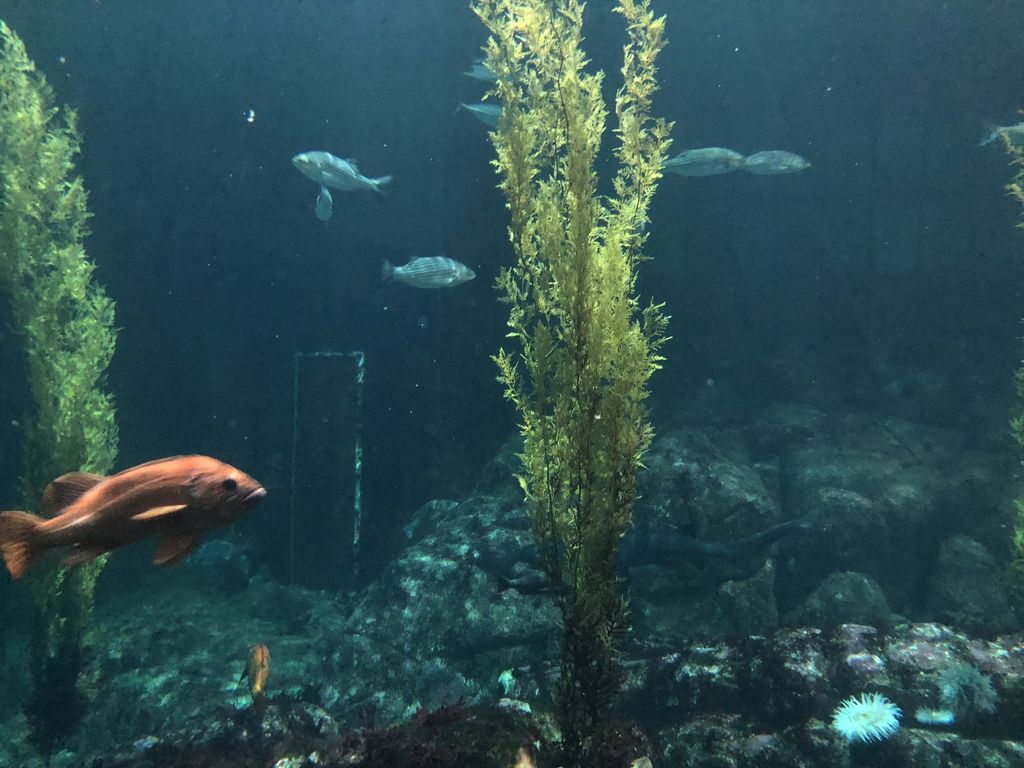
A rockfish hangs out in front of tall seaweed in one of the Monterey Bay habitat tanks.
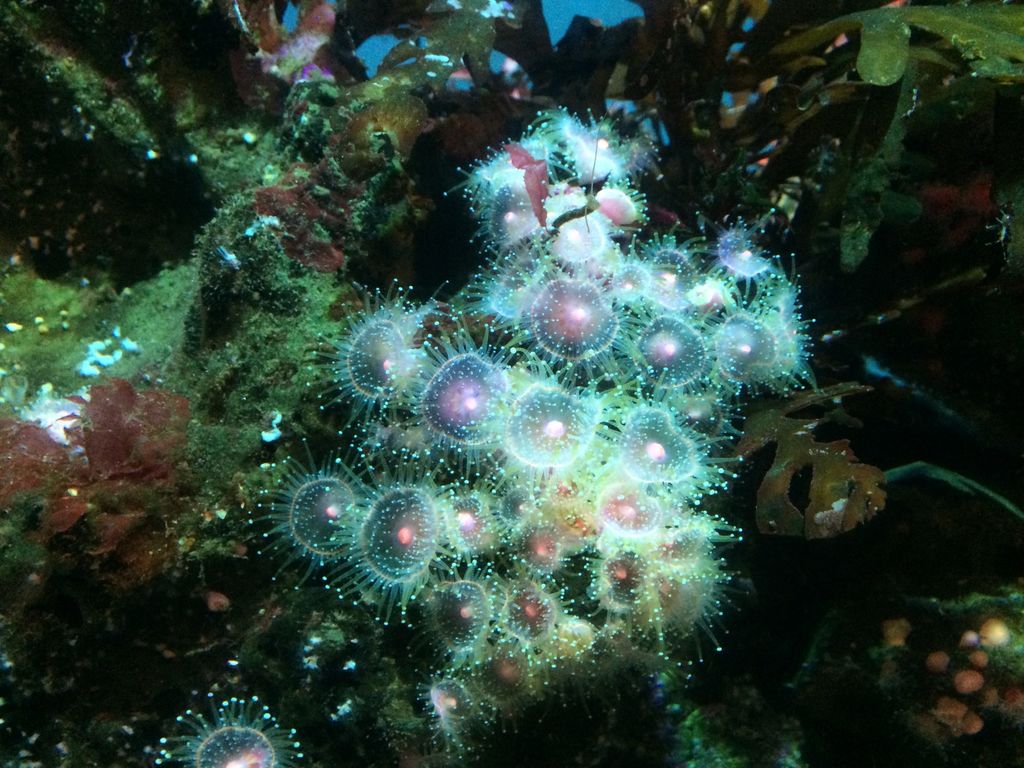
Strawberry anemones glowing on the rocks. These little guys carpet reefs up and down the Central Coast.
The Bat Ray Touch Pool is a must if you’ve got kids along, and plenty of adults enjoy it just as much. Staff and volunteers show you how to gently touch the rays with two fingers as they glide by. Right next to it you’ll find the Elkhorn Slough exhibit, which recreates the wetland near Moss Landing, and the Coastal Stream, where you can see steelhead trout in a habitat that looks like a creek in the Santa Cruz Mountains.
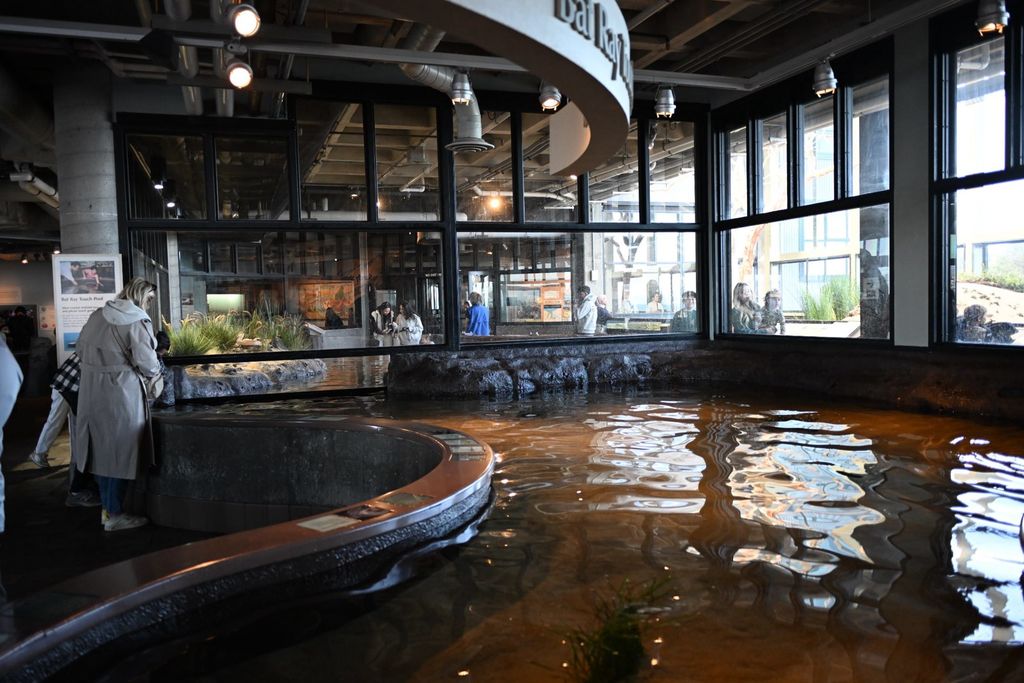
The Bat Ray Touch Pool, where you can reach in and gently touch the rays as they swim past.
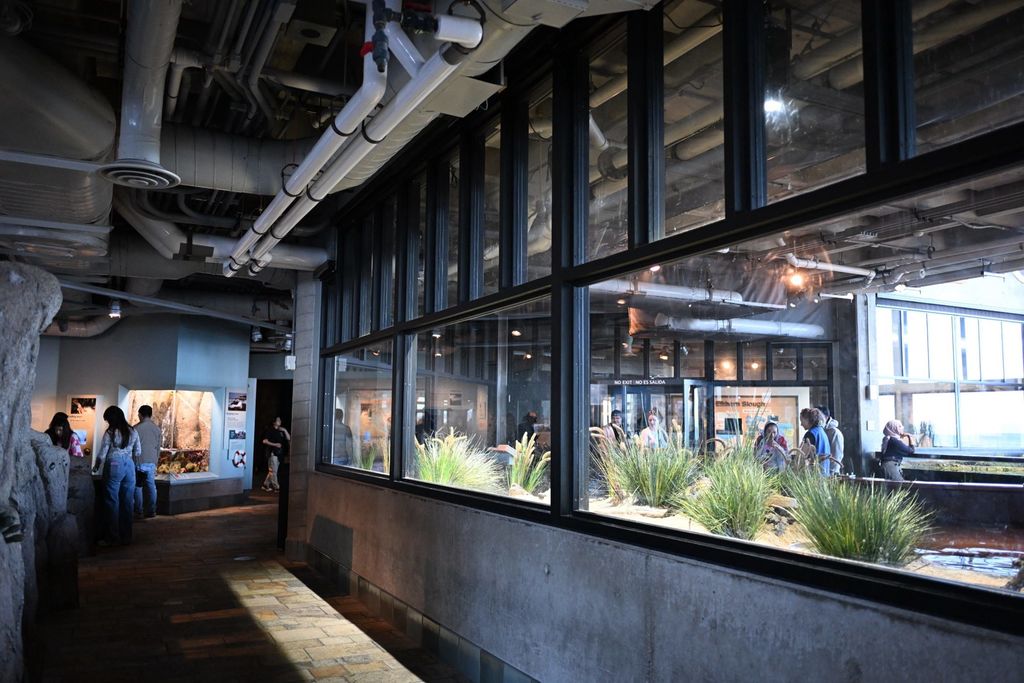
The Elkhorn Slough exhibit brings the wetland near Moss Landing indoors, marsh grasses and all.
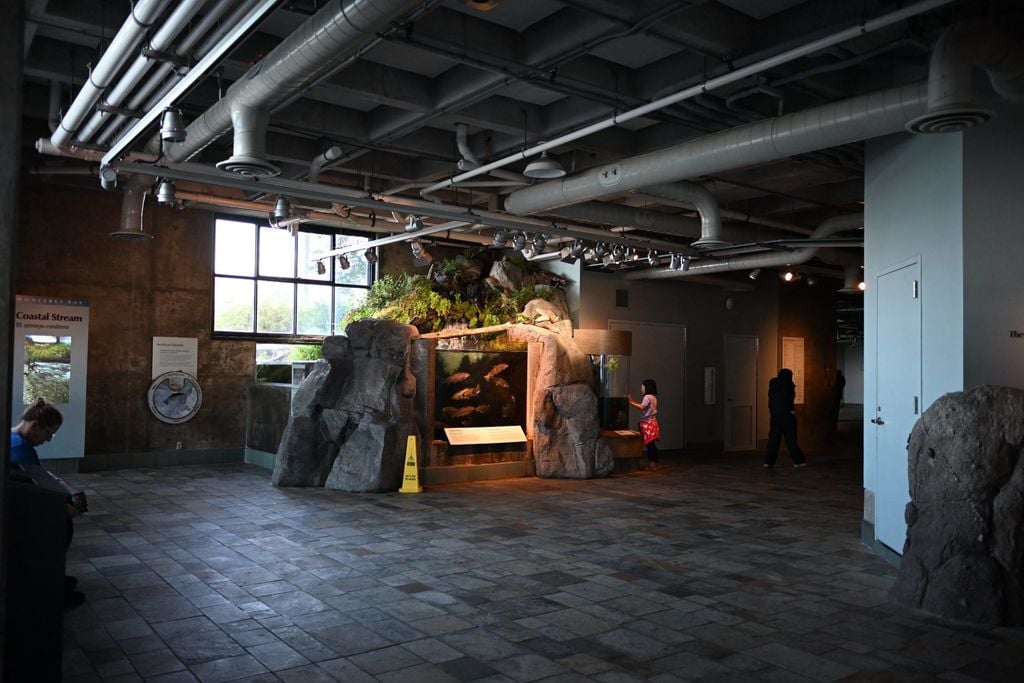
The Coastal Stream exhibit shows how steelhead trout depend on healthy creeks running down to the bay.
Don’t Skip the Small Tanks
It’s easy to rush past the smaller exhibits on the way to the big-name galleries, but some of the most colorful animals in the building are in the smaller tanks. The tropical reef displays are packed with corals, giant clams, and bright pink and yellow anthias, and they’re a great place to slow down with younger kids.
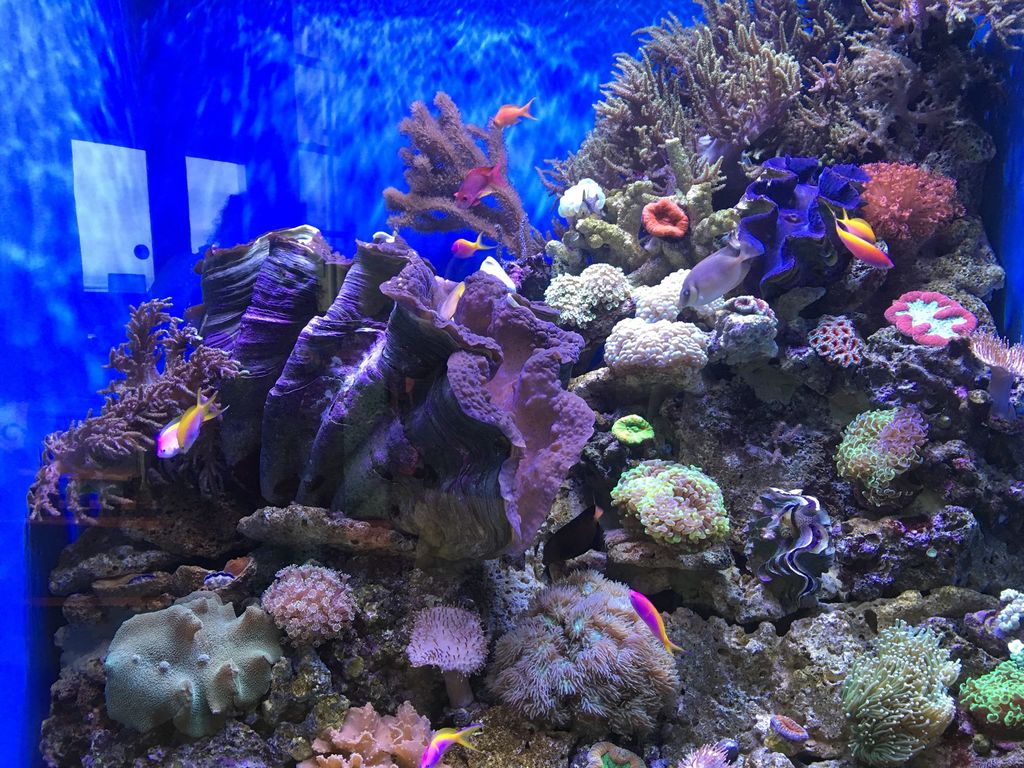
A tropical coral reef tank loaded with soft corals, giant clams, and anthias. It’s like a living paint box.
Tickets, Hours, and Ways to Save
Tickets for visits through December 31, 2026, run $65 for adults ages 18 to 69, $50 for seniors 70 and older, and $50 for youth ages 5 to 17. Kids 4 and under get in free. The aquarium recommends buying ahead online and picking your date and time, which also gets you through the front door faster on busy days.
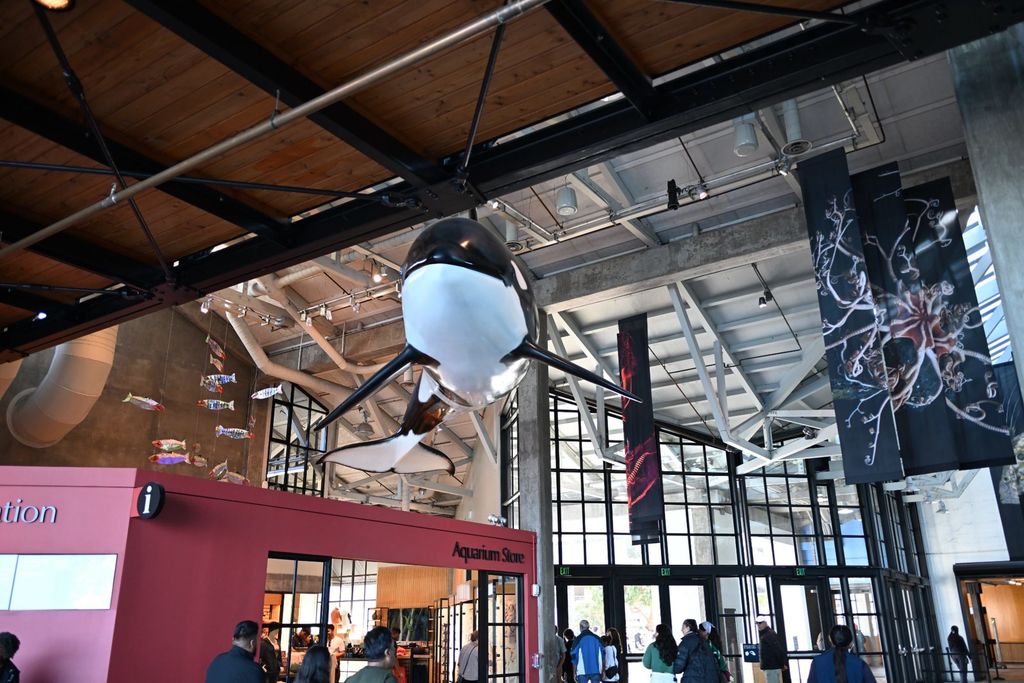
The life-size orca hanging over the entrance hall is the first thing you’ll see after you scan your ticket.
A few ways to save are worth knowing about:
- Membership. If you’ll go more than once a year, a membership usually pays for itself. Members get a year of free admission, member-only hours and events, and discounts on dining, tours, and the gift shop, and they don’t need to make a reservation.
- Museums for All. Up to four people get in free with a valid SNAP EBT card (CalFresh in California).
- Same-day re-entry. Get a hand stamp at the main exit and you can head out for lunch on Cannery Row and come back in.
- Bring a water bottle. Outside food and drink aren’t allowed, other than small snacks and medical needs, but refillable bottles are welcome and there are filling stations throughout the building. The Aquarium Cafe and a coffee bar are inside if you get hungry.
Hours vary by day and season, and the last entry is one hour before closing, so check the schedule before you go.
Getting There from Silicon Valley and Parking
From San Jose, the aquarium is about 70 miles away. Most people take Highway 101 south to Highway 156 and then Highway 1 into Monterey, or Highway 17 over the hill to Santa Cruz and then down Highway 1. Either way, it’s usually an hour and a half, give or take, but weekend traffic on 17 and summer traffic through Castroville can stretch that out. If you’re coming from Santa Cruz or Aptos, figure on 45 minutes to an hour.
There’s no public parking at the aquarium itself. The closest options are the Cannery Row Parking Garage at 601 Foam Street, Lot 7 at 160 Irving Street, and Lot 21 at 32 Cannery Row, plus metered street parking along Foam Street, Wave Street, and Ocean View Boulevard. If you have a disabled person or disabled veteran placard, you can park free at most metered spaces, just not the ones with yellow tops. There’s also a passenger drop-off zone near the entrance, which is a lifesaver if you’re bringing someone who can’t walk far. The aquarium’s directions and parking page has a map, and Monterey-Salinas Transit is an option if you’d rather leave the car at your hotel.
Visiting with Older Adults and Grandkids
A lot of the families I work with are juggling three generations at once, and the aquarium is one of the few outings that works for everybody. The grandkids are thrilled, Mom and Dad get a break, and the grandparents usually have the best stories about what Cannery Row looked like back in the day. As a Certified Senior Advisor, here’s what I’d want you to know before you go, all from the aquarium’s accessibility and inclusion guide:
- Free wheelchairs. Manual wheelchairs are lent free on a first-come, first-served basis. They don’t lend electric scooters, so bring your own if you need one.
- Every exhibit is reachable. Ramps and elevators serve all the exhibits, including the upper levels of the sea otter and Open Sea viewing areas.
- Plenty of places to sit. There are benches throughout the galleries and on the outdoor decks. The Open Sea and the jellies are great spots for a rest.
- Hearing support. The auditorium has a hearing loop, so switch your hearing aid to T-coil, and gallery videos are captioned in English and Spanish.
- Quieter times. The last hour or two before closing is usually the calmest, and free sensory bags and noise-reduction headphones are available at the Membership and Tours Center.
- Senior pricing starts at 70. That’s a later cutoff than a lot of attractions, so don’t be surprised if Grandpa at 66 pays the adult rate.
My advice is to pick three or four exhibits that matter most and plan around those, rather than trying to see everything. Build in a sit-down lunch, and you’ll have a much happier group at the end of the day.
My Insider Tips for a Better Visit
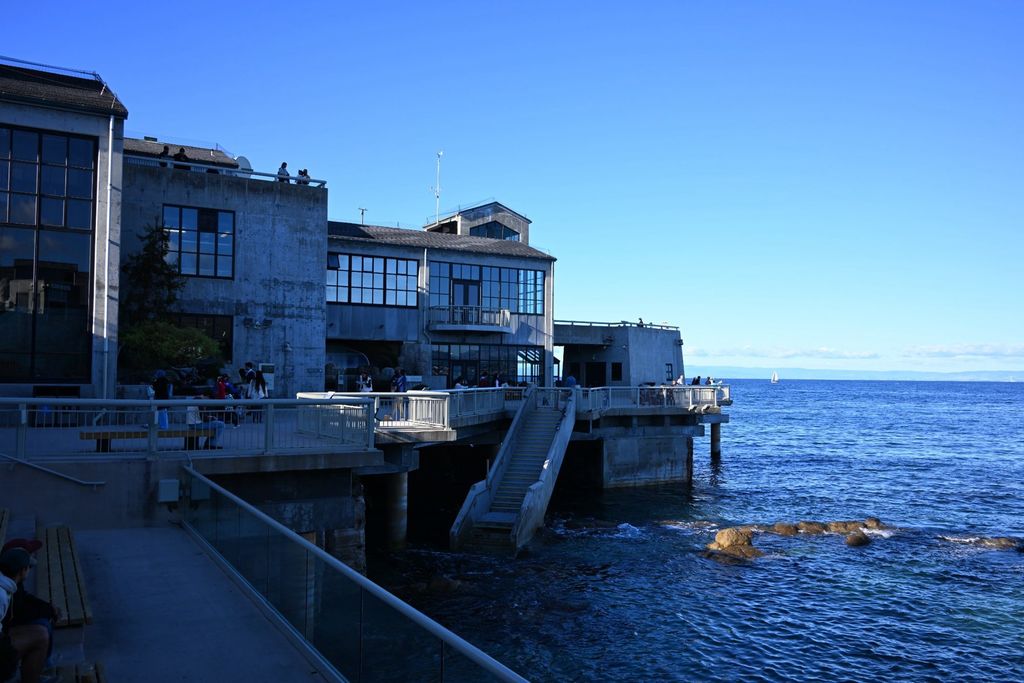
The back decks hang right out over the bay. On a clear afternoon you can see all the way across to Santa Cruz.
- Go later, not earlier. A lot of people line up right at opening, so arriving a bit later can mean a shorter wait at the door.
- Go midweek in the off-season. Summer weekends and school holidays are packed. A Tuesday in November or February feels like a different place.
- Plan around feedings. Check the daily schedule when you arrive and build your route around the otter and penguin feedings.
- Step outside. The back decks look right over the Great Tide Pool and the open bay, and wild sea otters often float just offshore. Bring binoculars if you have them.
- Bring a layer. Monterey fog is real, and the decks can be breezy even when it’s sunny in San Jose.
- Use the re-entry stamp. Step out for clam chowder on Cannery Row and come back for the afternoon feedings.
Make a Day of It on the Monterey Peninsula
Once you’re down there, it’d be a shame to turn right around and drive home. Cannery Row itself has plenty of restaurants and shops, and the Monterey Bay Coastal Recreation Trail runs right past the aquarium if you want to walk off lunch along the water. Head a few minutes west and you’re in Pacific Grove, with Lovers Point and its Victorian homes, or keep going to Carmel-by-the-Sea. I’ve written a full Carmel Village guide and a guide to visiting the Carmel Mission if you want to turn this into a weekend.
If you love this kind of outing closer to home, check out my posts on the Computer History Museum in Mountain View, History Park in San Jose, and my list of things to do for seniors in the South Bay.
Plenty of Silicon Valley families fall in love with the Monterey Bay on a day trip and eventually make it home, sometimes as a weekend place that later becomes a retirement home, and sometimes as a full move to the coast. If you’re thinking about a move like that, I’m happy to help you weigh it, from selling your Silicon Valley home and planning for capital gains to comparing towns around the bay. You can see what homes are going for on my Monterey, Santa Cruz home prices, and Aptos home prices pages. Give me a call at 408-413-3087, and I’ll help you make your next move the best one yet.
Frequently Asked Questions About the Monterey Bay Aquarium
Where is the Monterey Bay Aquarium?
How much are Monterey Bay Aquarium tickets in 2026?
Is there a senior discount at the Monterey Bay Aquarium?
How long does it take to see the Monterey Bay Aquarium?
Is the Monterey Bay Aquarium wheelchair accessible?
Where do you park for the Monterey Bay Aquarium?
What is the new Ocean in Motion exhibit?
Can you bring food into the Monterey Bay Aquarium?
What’s the best time to visit the Monterey Bay Aquarium?
Private Access
See the Bay Area Homes That Never Hit Zillow
A lot of the best homes in Silicon Valley and the Bay Area change hands quietly, before they're ever listed. Get free access to our off-market homes database and see what's available right now.
You're in. Thanks! Taking you to the off-market homes database now.
Delightful Homes For Sale in Monterey
2
3
4
5
6
7
8
9
10
11
12
13
14
15
16
17
18
19
20
21
22
23
24
25