I’d like to talk about an April 2026 study from the Center for Retirement Research at Boston College that has been getting some press lately, because it’s something that deserves serious attention. The headline number is the one that grabs everyone’s attention: when an 80-year-old sells a home, the sale price comes in roughly 5% lower than it would have for a 45-year-old selling the same property. That gap, on a typical American home, works out to tens of thousands of dollars off the top of someone’s retirement or care fund. But in Silicon Valley, that difference can easily top $100,000 – or a year’s worth of care in an assisted living community. So the question on everyone’s mind is, what’s actually going on here, and what can be done about it?
The lazy story is to simply call this an “age penalty,” as if buyers can somehow tell from the property that the seller is older and twist the knife in their back to take advantage of someone who doesn’t have much fight left in them. I don’t think that’s what’s happening, and the truth is both more boring and more useful. Let me walk through what I see on the ground, because after more than twenty years of working with families in this exact situation, the picture from inside the industry looks pretty different from the picture the headlines paint.
There’s No Real “Age Penalty,” But the Loss Is Very Real
First, I want to be careful with terminology. I don’t believe buyers are paying less simply because they know the owner is older. Buyers in Silicon Valley, and frankly anywhere with a competitive market, are paying for what they perceive about the house and the neighborhood. They’re not running background checks on the owners before they write their offer. So in that narrow sense, there’s no “penalty” being assessed by the market against age.
What I do believe, and what the research clearly demonstrates, is that older sellers end up netting less, on average, than their younger counterparts. That’s a different statement, and it points the finger at a different culprit. The market isn’t penalizing seniors; the process they’re being walked through is. And that’s a much more hopeful diagnosis, because process can be changed. The whole purpose of working with a real estate professional, particularly one who holds the Seniors Real Estate Specialist (SRES®) designation like me, is to make sure that the process actually serves the seller rather than the other way around. When the right professional is in the chair, this 5% “penalty” doesn’t have to exist at all – and, in fact, it could just as easily be a 5% premium.
What That 5% Actually Costs a Senior Homeowner
It’s worth pausing here to think about what 5% really means in dollars, because the percentage is so easy to wave off as small. The National Association of REALTORS® publishes monthly data on the median U.S. existing-home sale price, and that figure is sitting somewhere around $425,000 nationally as I’m writing this. Five percent of $425,000 is a bit over $21,000. That’s a real chunk of money.
But here in Silicon Valley, where median sale prices for a single-family home routinely run around $2 million and higher, that 5% becomes $100,000 to $125,000, easily. And the 5% number is an average, which means plenty of seniors are getting hit much harder than that. I’ve seen transactions where I believe the loss was clearly closer to 10%. We’re talking about real money coming out of a retirement nest egg that, for many families, has to last five, ten, or even twenty years plus, and cover medical costs nobody can predict. So when I tell people this conversation matters, I’m not exaggerating for effect. It really, really matters.
Does your place need a little work?
Sell As-Is. Sell for More.
No remodel, no lowball investor offer. Most Bay Area sellers net more selling as-is, and I'll show you how to get full market value without fixing a thing.
Show Me How →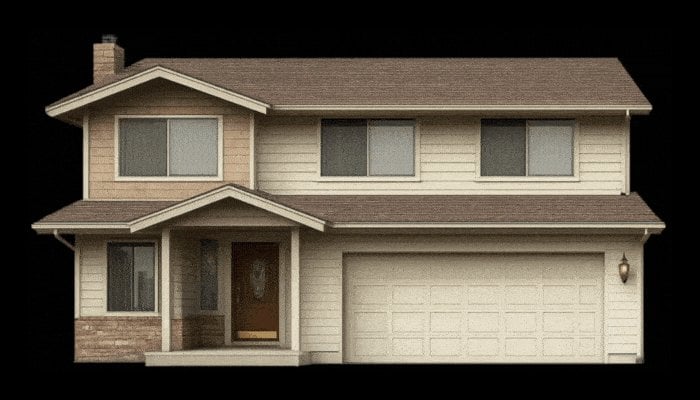
The Maintenance Excuse Doesn’t Hold Up
The most common explanation offered for the price gap is that older homeowners can’t keep up with maintenance, so their homes show their age, and buyers discount accordingly. There’s a kernel of truth in there, but it’s a much smaller kernel than people realize, and it gets used as cover for some sloppy work by real estate agents.
Here’s something that surprises a lot of homeowners: maintenance is actually the least important component of a home’s value. The big drivers, in roughly this order, are location, lot size, square footage, floor plan, and only then condition, amenities, and upgrades. A little deferred maintenance, or even a fair amount of it, doesn’t typically account for the kind of price hit the Boston College study is describing. Any REALTOR® who tells a senior client that the deferred maintenance is the reason they need to expect a discounted sale is, intentionally or not, setting up an excuse for an underwhelming outcome. I’ve seen it happen too many times, and it’s one of the main reasons families call me for a second opinion after the first agent’s plan starts to feel off.
Now, do many seniors struggle with maintenance? Of course they do, and I’d never argue otherwise. A lot of long-time homeowners are house-rich and cash-poor, and the systems in a 1970s ranch house don’t get any younger just because the people living in it are focused on their health, or caring for a spouse, or managing the dozen other things that come with later life. Maintenance taking a back seat is completely understandable.
But understandable and value-destroying are two different things, and the gap between them is where smart strategy lives.
The Fixer-Upper Trap and Why Renovation Rarely Pays
One of the biggest mistakes I see in this corner of the market is well-meaning REALTOR®s marketing senior-owned homes as “fixer-uppers” or “as-is” sales, then conditioning the family to expect a low price because of how the home is being positioned. The logic sounds reasonable on the surface, but it’s almost always wrong, and it’s wrong in a way that costs the family serious money.
The data on this is actually clear, and not from me, from the industry. The National Association of REALTORS® Remodeling Impact Report and the long-running Cost vs. Value Report from Remodeling Magazine both show, year after year, that pre-sale renovations return less in resale value than they cost to do. The numbers vary by project, but the conclusion is consistent: you almost always lose money on the project itself, even when the kitchen looks great in the listing photos. So the idea that a senior has to choose between an expensive renovation and a discounted sale is a false choice that benefits the agent more than it benefits the seller.
Selling a home that needs work, more or less as-is, is actually a perfectly smart strategy. The key is positioning the property to attract multiple offers, so the competitive dynamic squeezes the best combination of price and terms out of the market. In Silicon Valley, where there’s still real buyer demand for projects, fixer-uppers, and homes that haven’t been touched since the Reagan administration, this approach works very well. The trick is having an agent who knows how to market a property like that to the right buyer pool, not one who panics, slaps an “as-is” sticker on it, and insinuates that the family to lower their expectations.

The Real Reasons Seniors End Up Selling for Less
If maintenance isn’t really the explanation for this “age penalty” in sale price, what is? In my experience, there are three big factors at play, and once you understand them, you can start to see why the 5% gap exists and what to do about it.
Predatory Investors and Cash Flippers
This one I’m going to say plainly: there’s a whole industry of so-called “real estate investors” who specifically target older homeowners with a pitch that sounds great on paper. Fast cash, no repairs needed, no agent commissions, no inspections, sign here and we’ll close in two weeks. For a senior dealing with health concerns or grief or the simple exhaustion of a major life transition, that pitch can sound like a lifeline.
The problem is that most of these “investors” don’t hold a real estate license, which means they have no fiduciary duty to the seller and no obligation to act in the seller’s best interest. They are buying for themselves, and they’re routinely paying 20% or more below fair market value. I’ve seen families realize, sometimes years later, that their parent left $100,000 or more on the table because somebody knocked on the door with a “we buy houses” flyer at exactly the wrong moment. The Consumer Financial Protection Bureau and the Federal Trade Commission both publish good resources on elder financial exploitation, and I’d encourage anyone with an aging parent to read them. The schemes are real, they’re sophisticated, and real estate is one of the most common vectors.
Urgent Sales Driven by Health or Family Pressure
The second factor is the classic “forced sale” scenario, where a medical event pushes the timeline so hard that pricing and marketing strategy go out the window. Mom falls and breaks a hip, she’s discharged to a skilled nursing facility, the family realizes she’s never coming home, and now the house has to sell to fund care, fast. In that scenario, even a good agent can struggle to get top dollar, because time is the most expensive thing you can spend in a real estate transaction.
And honestly, family dynamics play a role here too. I’ve worked on enough estates and family situations to know that not every relative is rowing in the same direction. Sometimes one sibling wants the maximum sale price, while another wants the fastest possible cash for reasons that don’t really hold up to scrutiny. When those tensions go unaddressed, the deal often gets steered toward speed at the expense of value. A good REALTOR® can help navigate those conversations, but only if they’re brought into the picture early enough to matter.
Agent Selection, Which Is the Biggest Factor of All
And this is the one I want to spend the most time on, because it’s the factor that’s almost entirely within a family’s control. Most real estate agents don’t specialize in working with seniors, and they don’t have the patience, skill set, resources, or experience required to shepherd a family to the best possible outcome. The Senior Real Estate Specialist designation exists for a reason, and so do organizations like the National Council on Aging that focus on the broader picture of how housing decisions affect older adults.
When an agent without that specialty takes on a senior client, what often happens is they cut corners. They don’t take the fiduciary duty as seriously as they should. They don’t push back on a lowball offer the way they would for a younger seller. They don’t manage the emotional dynamic of the family with the care it deserves. They sometimes don’t even position the home aggressively, because they’re worried about putting the senior through showings and offer rounds. The intentions might be kind, but the result is real dollars lost, and seniors are the most vulnerable segment of the real estate market, so this is exactly where extra care and diligence is warranted.
Timing is Everything in Life

How to Prep an Older Home for Sale Without Overspending
So if pre-sale renovations don’t pencil out, what should a family actually do to prepare a home that’s been lived in for thirty or forty years? The answer is what I think of as the low-hanging fruit, the things that remove easy distractions for buyers without trying to remodel a property into something it isn’t.
That usually means a thorough decluttering, a deep cleaning, deodorizing, basic landscape cleanup, sometimes a coat of paint in the right rooms, and minor staging where it actually moves the needle. None of that involves tearing out a kitchen or redoing bathrooms. It’s about making sure buyers can see the house clearly, so they’re reacting to the location and the lot and the floor plan instead of getting hung up on a smell from the carpet or a yard that hasn’t seen a mower in two months.
The good news is that there are programs that can fund this work without the family having to come up with cash up front. Compass Concierge is one I use regularly with my clients, and it covers exactly this kind of pre-sale preparation with no interest and no out-of-pocket cost; the program gets paid back at closing out of the sale proceeds. There are similar programs at other brokerages, and there are also home equity products and family arrangements that can cover this work. The point is that you don’t need to write a $40,000 check to get a home market-ready in a smart way. You just need a REALTOR® who knows how to find the money and oversee the work on behalf of the client.
How to Find the Right REALTOR® for a Senior Home Sale
If you’re a senior thinking about selling, or an adult child trying to help a parent through this, the single most important decision you’ll make is who you hire to represent you. It isn’t the timing, the marketing, or even the asking price that matters most; it’s the agent sitting across from you at the kitchen table. And there are some specific things to look for that signal whether a particular REALTOR® is the right fit for this kind of transaction.
Look for the SRES® designation, but don’t treat it as the only filter, because not every SRES®-designated agent actively focuses on this work. Ask the agent how many senior-led transactions they’ve closed in the past two or three years. Ask how they handle a situation where the seller has cognitive challenges, or where the family is geographically scattered, or where there’s a Power of Attorney involved. Ask what their plan would be if a medical event happened mid-transaction. Ask about their network of senior-focused movers, downsizers, estate sale companies, elder law attorneys, and senior living advisors, because those relationships matter when the inevitable curveballs show up.
If you’re in the Bay Area and you’d like to see how I approach this work, you can read more on my senior real estate services page, where I lay out my process in more detail. I’m not the only agent in Silicon Valley who does this, but I am one of the few who’s built a practice entirely around it.
Reframing “Fair Price” Into “Maximum Equity”
I want to close on a mindset shift, because the framing of this conversation matters as much as the tactics. When the question is, “How do I make sure my mom gets a fair price for her home,” the bar is already set low. Fair is a vague target, easy to hit and easy to talk yourself into. It’s the kind of word that lets a buyer, an investor, or a lazy agent off the hook.
The better question is, “How do we maximize the equity in this home and squeeze every last dollar we can out of the sale, yet still sell quickly without a lot of hassle?” That’s a much sharper target. It changes the conversation from one about acceptance to one about strategy. It forces the family to think about pricing, positioning, market timing, buyer pool, negotiation tactics, and concession management, instead of just settling for whatever the first agent through the door thinks is reasonable.
And when you’re working with a REALTOR® who has a track record of doing exactly that in your community, who knows which levers to pull and who to call, who knows how to position the property aggressively while still treating the senior and the family with real care, you’re already most of the way to the best possible outcome.
Here’s the bigger point. I believe that with the right agent, the right preparation, and the right strategy, a senior seller can actually beat that 45-year-old’s number, not lose to it. There is nothing inherent in selling a home as an older person that means you have to accept anything less than what the market will bear. The 5% gap that Boston College documented is real, but it isn’t a law of physics. It’s a consequence of choices, mostly the choice of who to hire, and those choices can absolutely be made differently.
So if you or your parents are thinking about a sale anywhere in Silicon Valley, or the Bay Area more generally, I’d love to talk. There’s no obligation, no pressure, and no sales pitch on the first call; just an honest conversation about what your situation looks like and what your options are.

Time to talk to a REALTOR®?
Book a Call with Seb
Selling, buying or just weighing your options? Pick a time that works for you and we'll talk it through.
Pick a Time →Rather talk now? Call or text 408.413.3087
Senior Friendly Homes in Silicon Valley South
2
3
4
5
6
7
8
9
10
11
12
13
14
15
16
17
18
19
20
21
22
23
24
25