Key Takeaways
Summary: Santa Cruz County packs world-class surf, redwood forests, tide pools, whale watching and oceanfront camping into an area you can cross in under an hour. This guide from Aptos-based REALTOR® Seb Frey covers the best spots, what’s open (and what isn’t) in 2026, when to go, and which neighborhoods put you closest to the outdoor life if you’re thinking about living here.
I’ve lived and worked in the Bay Area most of my life, and these days I call Aptos home, so this isn’t a list I pulled off a travel site. Santa Cruz County gives you something that’s pretty rare, even in California. You can surf in the morning, hike under redwoods in the afternoon, and still make it to dinner on the wharf, and almost everything in this guide is within a 30-minute drive of downtown Santa Cruz.
These are the places I send friends, family and buyer clients when they ask what there is to do outside around here. I’ve also flagged what’s changed lately, since a few of the big spots were closed or limited after the 2020 CZU fire and the winter storms of the last couple of years, and I don’t want you driving over the hill for nothing.
1. Beaches and Surfing
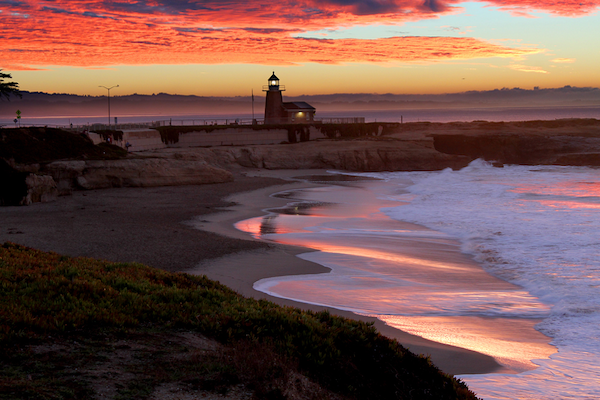
Santa Cruz is a real surf town, and the beaches here run from big-wave breaks to calm family coves. If you’re brand new to surfing, start at Cowell’s Beach right next to the wharf. The waves are gentle, and it’s where most of the local surf schools hold their lessons. Steamer Lane, just up the cliff at Lighthouse Point, and Pleasure Point over in Live Oak are world-famous breaks, but they’re crowded with experienced locals, so watch for a while before you paddle out. The little surfing museum inside the lighthouse at Lighthouse Point is a fun 20-minute stop too.
Free Relocation Guide
Thinking About a Move to Santa Cruz County?
Everything I'd tell a friend before they moved here, from Boulder Creek to Watsonville. Neighborhoods, housing, health care, beaches, the commute over the hill, and the local events worth planning your year around.
Read the Relocation Guide →For something calmer, head to Natural Bridges State Beach on the Westside. It’s named for its wave-carved sea arch, and the tide pools are a Marine Protected Area, so it’s look but don’t touch. Go at low tide (State Parks says 2 feet or lower is ideal) and you’ll see anemones, sea stars and crabs. From about mid-October to mid-February, the park’s eucalyptus grove fills up with wintering monarch butterflies, and late October through November is usually the best time to catch them. You can walk or bike there from the wharf along West Cliff Drive, roughly three miles of paved path with ocean views the whole way.
2. Hiking and Biking in the Redwoods
Hiking is where Santa Cruz County really shines. Henry Cowell Redwoods State Park in Felton has the flat, easy Redwood Grove Loop (under a mile, and great for grandparents and little kids) plus longer trails up to the observation deck and along the San Lorenzo River.
If you mountain bike, Wilder Ranch State Park is the local favorite. It’s just north of town on Highway 1, on the way to Davenport, and the trail network runs from flat coastal bluff rides to steep, technical singletrack in the hills above. The bluff trail is easy enough for a casual ride or walk, and the ocean views are worth the trip by themselves. If you want a long, flat ride by the water, the Monterey Bay Coastal Recreation Trail down in Monterey is worth the drive too.
Down in Aptos, the Forest of Nisene Marks State Park covers more than 10,000 acres of second-growth redwood forest along Aptos Creek. The main fire road is wide and shaded, so it’s great for an easy walk or bike ride, and if you’re up for a longer hike you can find the marker for the epicenter of the 1989 Loma Prieta earthquake.
What about Big Basin? Big Basin Redwoods State Park, California’s first state park, is still coming back from the 2020 CZU Lightning Complex fire. In 2026 it’s open for day use only, from 8 a.m. to sunset. Parking reservations are recommended, there’s no drinking water, and camping in the main park is still closed. Seeing the old giants sprouting green again is something else, so it’s worth the trip as long as you know what you’re getting.
Short on time? Arana Gulch is a nearly 70-acre open space between the Santa Cruz Harbor and midtown Santa Cruz, with paved and dirt paths and views of the bay. It’s an easy before-breakfast walk that doesn’t take you far out of your way.
3. The Santa Cruz Mountains
Up on Skyline Boulevard, Castle Rock State Park is the Bay Area’s go-to spot for outdoor bouldering and rock climbing on its weathered sandstone formations. Even if you never touch a rope, the hike out to the Castle Rock Falls overlook gives you a view down the valley all the way to Monterey Bay on a clear day.
The mountains are also home to dozens of small wineries, and a lot of them have outdoor tasting areas tucked into the trees. That’s a pretty nice way to finish a hike, as long as somebody else is driving down Highway 9.
Free Listing Alerts
Be First to See New Homes Before Everyone Else
Good homes rarely sit for long, and the best ones are often in contract before the weekend. Tell me where to send them and I'll email you new listings as soon as they hit the MLS.
You're all set. Thanks! New listings will start landing in your inbox. If you don't see the first one, check your promotions or spam folder.
4. Kayaking, Paddleboarding and Whale Watching from the Harbor
The Santa Cruz Harbor is where you go to get on the water. You can rent a kayak or stand-up paddleboard and head out past the jetty, where harbor seals and sea lions are regular company and the occasional sea otter pops up. Go in the morning if you can, because the water’s usually glassier before the afternoon wind kicks in.
Everything off the coast here is part of the Monterey Bay National Marine Sanctuary, one of the largest marine sanctuaries in the country, and that’s a big reason the whale watching is so good. Tour boats leave from the harbor and the wharf. Humpbacks are around for much of the year, especially spring through fall, and gray whales pass by in winter and spring. Fishing charters run out of the harbor too, if you’d rather bring home dinner.
5. The Santa Cruz Wharf
The Santa Cruz Wharf has been part of town since 1914, and it’s one of the longest wooden piers on the West Coast. It’s had a rough couple of years, though. A December 2024 storm sent a roughly 150-foot section at the end into the ocean, and the city spent about 15 months driving new pilings and reinforcing the structure before the wharf fully reopened in spring 2026. The city is still deciding whether to rebuild the lost end section.
Walk out, look down through the openings in the deck, and you’ll usually see (and definitely hear) sea lions lounging on the crossbeams below. Grab fish and chips or a bowl of chowder at one of the restaurants and enjoy the view back toward the Boardwalk. Near the foot of the wharf, the free Monterey Bay National Marine Sanctuary Exploration Center is a great half-hour stop for kids and adults who want to know what’s living out in the bay.
6. The Santa Cruz Beach Boardwalk
It’s not exactly a nature hike, but no visit is complete without the Santa Cruz Beach Boardwalk, California’s oldest surviving amusement park, open since 1907. The Giant Dipper wooden roller coaster has been rattling riders since 1924, and both the Dipper and the 1911 Looff Carousel are National Historic Landmarks. Between the rides, the arcade and the indoor mini golf, it’s an easy afternoon, and the main beach out front is one of the best in town for swimming and beach volleyball.
Santa Cruz County Home Search
Tired of falling for homesthat already sold?
The big portals are full of homes that went pending last week. My search pulls straight from the MLS across Santa Cruz and Santa Clara counties, so everything you see is actually available, and you can save a search to get new listings the day they hit.
See What's Available Today →
7. Wildlife Watching
About 20 miles up the coast, just over the San Mateo County line, Año Nuevo State Park is home to one of the largest mainland breeding colonies of northern elephant seals in the world. During breeding season, December 15 through March 31, you can only see the seals on a guided walk, and you’ll need a reservation through State Parks. It’s about a three-mile round trip over sand dunes, so wear real shoes. Watching multi-ton bulls square off on the beach is something you won’t forget.
Just south of the county line, past Watsonville, Moss Landing is my favorite place to see California sea otters up close. Rent a kayak and paddle up Elkhorn Slough and you’re almost guaranteed to see otters floating on their backs. It’s inexpensive, it’s easy exercise, and Moss Landing has some great places for lunch. The Elkhorn Slough National Estuarine Research Reserve is also one of the best birding spots on the Central Coast, with egrets, herons, pelicans and big flocks of migrating shorebirds. If you keep heading south, my Monterey Bay Aquarium guide has everything you need for that trip.
Back in Santa Cruz, the Seymour Marine Discovery Center on UC Santa Cruz’s Coastal Science Campus, out at the end of Delaware Avenue, is a hands-on marine science center with touch pools and Ms. Blue, the skeleton of an 87-foot blue whale that’s one of the largest on display anywhere.
8. Gardens
The UC Santa Cruz Arboretum and Botanic Garden is one of the most underrated spots in town. It’s known for its Australian and South African plant collections, and since so much of it blooms in winter, it’s full of hummingbirds right when the rest of the state looks pretty brown.
9. Camping
New Brighton State Beach in Capitola has campsites on the bluff above the bay with a trail down to the sand, so you really can fall asleep to the sound of the waves.
Private Access
See the Santa Cruz Homes That Never Hit Zillow
A lot of the best homes in Santa Cruz County change hands quietly, before they're ever listed. Get free access to our off-market homes database and see what's available right now.
You're in. Thanks! Taking you to the off-market homes database now.
In the redwoods, the Henry Cowell Redwoods State Park campground off Graham Hill Road reopened April 1, 2026, after a long closure for accessibility upgrades like new restrooms and paths. It has 107 sites, and it’s an easy base for hiking the park during the day and sitting around the campfire at night. Big Basin’s main campgrounds are still closed while the park rebuilds. State park campsites book through ReserveCalifornia up to six months ahead, and summer weekends at the beach go fast, so plan early.
10. Outdoor Events
Every July, thousands of runners do the Wharf to Wharf Race, a six-mile run from the Santa Cruz Wharf to the Capitola Wharf with bands playing along the course. In the spring, the Surfer’s Path Half Marathon starts near the Boardwalk and runs out past the harbor and Pleasure Point to Capitola Village and back. Natural Bridges also hosts a Migration Festival in February that celebrates the monarchs and the other animals passing through.
In late summer, the Santa Cruz Mountain Sol Festival has brought live music to Roaring Camp in Felton, with the redwoods as the backdrop. Dates and lineups change from year to year, so check the festival’s site before you plan around it.
Living in Santa Cruz County as an Outdoor Lover
A lot of the buyers I work with started as weekend visitors who kept driving over Highway 17 until somebody finally said, why don’t we just live here? If that’s you, where you buy changes your everyday life a lot, so here’s how I’d think about it.
- Westside Santa Cruz: walk or bike to Natural Bridges, West Cliff Drive and Wilder Ranch.
- Seabright: close to the harbor, Seabright Beach and Arana Gulch.
- Live Oak and Pleasure Point: surf culture, East Cliff Drive and the harbor.
- Capitola and Aptos (including Rio del Mar): beach towns with New Brighton and Nisene Marks right there.
- Scotts Valley and the San Lorenzo Valley: redwoods, Henry Cowell, and a shorter drive over the hill to Silicon Valley.
Prices vary a lot from one pocket to the next, so check my Santa Cruz home prices, Aptos home prices and Scotts Valley home prices pages for current numbers, and read my Santa Cruz relocation guide if you’re seriously thinking about a move. I’ve been selling homes around the Bay Area and Santa Cruz County for more than 23 years, with over 470 homes sold, and I’m always happy to talk through the tradeoffs. You can book a buyer strategy call with me anytime.
The Bottom Line
Santa Cruz County really is a paradise for people who love being outside. You’ve got surf breaks for every level, redwood trails from easy loops to all-day climbs, tide pools, otters, elephant seals and whales, and a beach campground or two to tie it all together. Check what’s open before you go (especially Big Basin), bring layers because the fog can roll in any time, and you’ll see why so many of us never want to leave.
Great Santa Cruz Homes for Sale
Properties
2
3
4
5
6
7
8
9
10
11
12
13
14
15
16
17
18
19
20
21
22
23
24
25
Frequently Asked Questions
What is Santa Cruz best known for outdoors?
Surfing, redwoods and the ocean. Santa Cruz has famous surf breaks like Steamer Lane and Pleasure Point, redwood parks like Henry Cowell, Nisene Marks and Big Basin, and it sits on the Monterey Bay National Marine Sanctuary, so tide pooling, kayaking and whale watching are all close to town.
Where can beginners learn to surf in Santa Cruz?
Cowell’s Beach, right next to the Santa Cruz Wharf. The waves are gentle and most local surf schools teach there. Steamer Lane and Pleasure Point are crowded with experienced surfers, so they’re better to watch than to learn on.
Is Big Basin Redwoods State Park open in 2026?
Yes, but for day use only, from 8 a.m. to sunset. Parking reservations are recommended, there’s no drinking water in the park, and camping in the main park is still closed while it recovers from the 2020 CZU fire.
When is the best time to see monarch butterflies at Natural Bridges?
The monarchs usually arrive in mid-October and leave by mid-February. Late October through November is typically the best time to see big clusters in the eucalyptus grove.
Do you need a reservation to see the elephant seals at Año Nuevo?
During breeding season, December 15 through March 31, you can only see the seals on a guided walk, and you need a reservation through California State Parks. The walk is about three miles round trip over sand dunes.
Is the Santa Cruz Wharf open?
Yes. The wharf fully reopened in spring 2026 after repairs following the December 2024 storm that collapsed about 150 feet at the end. The city is still deciding whether to rebuild that end section.
Which Santa Cruz County neighborhoods are best for outdoor lovers?
It depends on your favorite activity. The Westside is close to Natural Bridges and Wilder Ranch, Live Oak and Pleasure Point are surf neighborhoods, Aptos puts you next to Nisene Marks and the beaches, and Scotts Valley and the San Lorenzo Valley put you in the redwoods. Seb Frey can help you compare them.
Free 30-Minute Buyer Strategy Call
Not sure how to competein this market?
Most Santa Cruz County buyers who miss out didn't have a bad offer. They just didn't have a plan before the right house came up. In 30 minutes we'll go over your budget, timing and target neighborhoods, and you'll leave knowing exactly how you'd compete without overpaying. No pressure and no obligation.
Get My Buyer Game Plan →
Senior Friendly Homes in Silicon Valley South
Properties
2
3
4
5
6
7
8
9
10
11
12
13
14
15
16
17
18
19
20
21
22
23
24
25