




Free Buyer Strategy Call
Before you tour a single home,let's build your game plan.
In Silicon Valley, the buyers who win usually aren't the ones with the biggest offer. They're the ones who knew exactly how they'd compete before the right house ever came up. In 30 minutes we'll talk through your timing, how your down payment and equity comp fit together, and which neighborhoods really match the way you live, then put together a plan to win the home you want without overpaying for it.
Book My Buyer Strategy Call →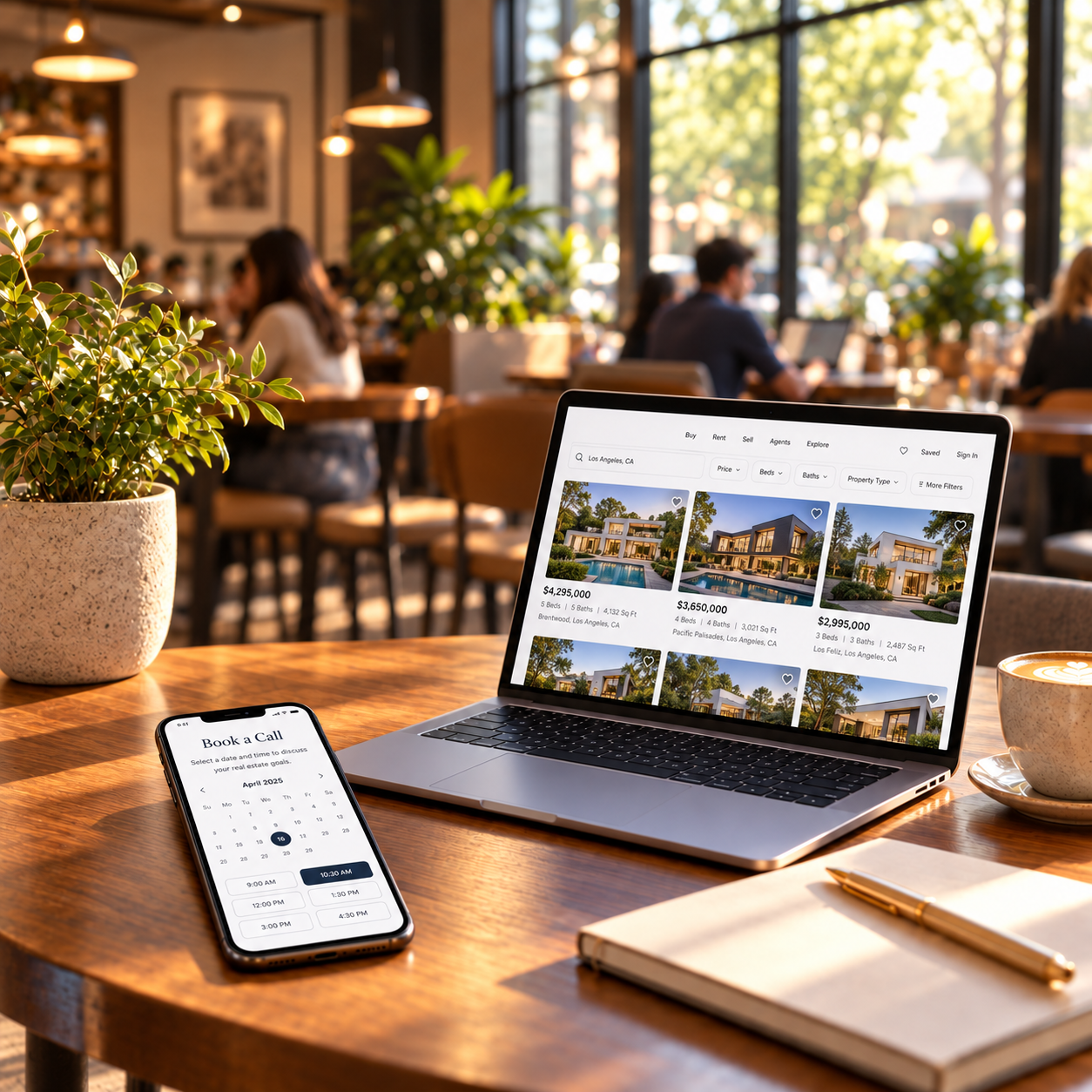
Want the full market report for Cupertino?
We want to ensure that you have all the information needed to make the best decisions when it comes to your home goals. When you enter your info below you will get instant access to the area's latest market report, complete with sales and demographic trends.

Silicon Valley Home Search
Stop scrolling stale listings.See what's really for sale today.
A lot of the homes on the big portals went pending last week, and you don't find out until you've already fallen for one. My home search pulls straight from the MLS across Santa Clara and Santa Cruz counties, so every home you see is actually available. Filter by price, neighborhood and home type, save the searches you care about, and be the buyer who already knows the inventory when the right house comes up.
Search Homes For Sale Now →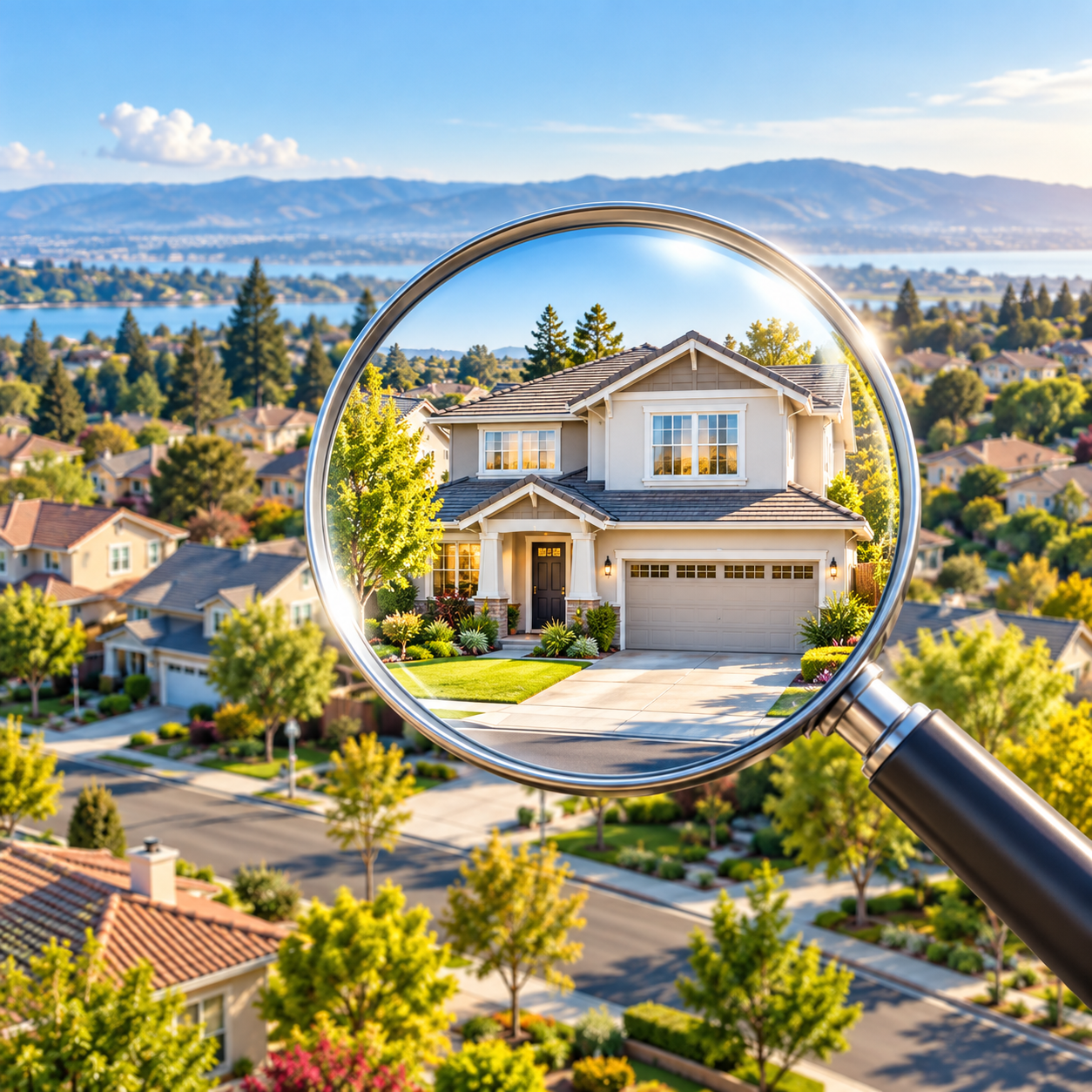
Local News & Advice
Read helpful resources and articles related to the area.
The Forum at Rancho San Antonio in Cupertino
The Forum in Cupertino is a resident-owned continuing care community where you buy a membership instead of renting,…

Cupertino: A Silicon Valley Legal Drama Shines a Spotlight on …
I have to admit, as a longtime admirer of Cupertino and seasoned Bay Area REALTOR®, I’m thrilled to…

Cupertino Memorial Park
Centrally located in the heart of Cupertino, Memorial Park spans 22 acres and stands as a testament to…
Living in Cupertino, CA
Cupertino covers about 11 square miles on the west side of the valley and holds roughly 58,700 people according to the Census Bureau’s latest estimate, down a bit from the 60,381 counted in 2020. The median age runs around 41, older than most of Silicon Valley, and a large share of my clients here are original owners who bought in the 1960s and 1970s and watched a sleepy orchard town turn into the address on the back of every iPhone. What that history means for you as an owner today is that Cupertino property is priced less on the house itself than on the school boundary it sits inside, which makes selling here a different problem than most people expect.
Cupertino History, From Vineyards to Apple
The name goes back to 1776, when Father Pedro Font of the Anza expedition named the local creek Arroyo San Jose de Cupertino after Saint Joseph of Cupertino. Captain Elisha Stephens, whose 1844 party brought the first wagons over the Sierra, later settled here and planted one of the area’s earliest vineyards along the creek that now carries his name. The crossroads settlement was known as West Side until San Francisco attorney John T. Doyle, who founded the Cupertino Wine Company in the 1880s, lent the name its staying power, and by 1904 the post office and the crossroads both went by Cupertino. Wine was the original industry and it collapsed quickly, with phylloxera arriving around 1895 and destroying roughly three quarters of the local vineyards within five years, pushing growers into the prunes, apricots and cherries that made this the Valley of Heart’s Delight.
Cupertino incorporated on October 10, 1955 as the thirteenth city in Santa Clara County, and Apple arrived in 1977. What is less obvious to outsiders is that Cupertino never built a traditional downtown. Commercial life happens at Main Street Cupertino on Stevens Creek Boulevard, at Cupertino Village near Wolfe and Homestead, and along the De Anza Boulevard corridor. The Apple Park Visitor Center on North Tantau Avenue is open to anyone, with a rooftop terrace and an augmented reality model of the campus, and it is the first thing out-of-town visitors ask to see.
The Rise at the Former Vallco Site
The biggest thing happening in Cupertino right now is the old Vallco site. The mall closed in 2018 and came down in 2019 and 2020, and Sand Hill Property Company is redeveloping the land as The Rise, a mixed-use project planned for 2,669 homes, including 356 affordable units, along with office and retail space. The first building, an all-affordable residential building, was expected to start construction before the end of 2026, so full build-out is still years away. I mention it on every listing near Wolfe Road, because buyers ask, and because any page still describing Vallco as a shopping mall is years out of date.
Community Events and Parks in Cupertino
Two events anchor the community calendar, both at Memorial Park. The Cupertino Cherry Blossom Festival runs each spring, tied to the city’s long sister city relationship with Toyokawa, Japan, and reached its forty-second year in April 2026. The Silicon Valley Fall Fest, hosted by the Cupertino Rotary and the city, fills the same park each September with free admission, and the Fourth of July celebration rounds out the year.
For a city with no downtown, the open space is exceptional. Memorial Park is the civic green, Blackberry Farm gives you a park, pools and a short golf course along Stevens Creek, and McClellan Ranch Preserve keeps a working piece of the agricultural past. Just past the western edge, Rancho San Antonio is one of the most used trail systems in the Bay Area, with flat valley loops as well as serious climbs, and Stevens Creek County Park sits above town toward the Montebello ridge.
Cupertino Schools and Attendance Boundaries
Schools are the engine of this market, and the structure catches people out. Cupertino Union School District runs kindergarten through eighth grade across roughly two dozen schools, and Fremont Union High School District runs the high schools. Neither district follows city limits. Cupertino Union reaches into Sunnyvale, Saratoga, San Jose and Los Altos, and of Fremont Union’s five high schools only Monta Vista, Cupertino and Homestead sit inside the city, with Fremont High in Sunnyvale and Lynbrook in San Jose.
Two houses a few hundred feet apart can feed different schools and carry a price difference in the hundreds of thousands. That’s why I verify the actual assignment on every single listing rather than trusting the neighborhood name.
Senior Services, Healthcare and Getting Around
The Cupertino Senior Center on Stevens Creek Boulevard serves adults 50 and over with classes, trips and social programs, and annual membership costs $25 for residents, which is about as good a value as local government offers. The Cupertino Library on Torre Avenue, part of the county library system, is one of the busiest branches in the region. There is no hospital in Cupertino, so El Camino Health in Mountain View and Kaiser Santa Clara are the nearest emergency rooms, both roughly fifteen minutes out.
Getting around means Highway 280 and Highway 85, with De Anza and Stevens Creek boulevards carrying most local traffic. VTA bus routes converge on De Anza College, but there is no light rail and no Caltrain station in the city, and the nearest train is in Sunnyvale. For an owner thinking ten years ahead, that is worth weighing carefully, because Cupertino assumes you drive in a way that Sunnyvale and Mountain View do not.
Cupertino Neighborhoods and Housing
The housing stock is mostly post-war through 1970s tract construction, and the neighborhoods have real differences worth knowing. Monta Vista on the west side is one of the area’s older neighborhoods and runs from modest valley floor lots up to acre-plus parcels in the foothills. Garden Gate dates to the 1950s and has some of the largest lots in the city. Rancho Rinconada was built in the late 1940s and 1950s as unincorporated county land and was not annexed until 1999, which is why its lots are smaller and its prices have historically been the city’s entry point.
Jollyman wraps around its namesake park between Highway 85 and De Anza, Seven Springs climbs into the southwestern hills, and Northside holds the newer townhomes and condominiums near Apple Park. The city also protects its roughly 224 Eichler homes, built in the 1950s on the east side near Miller Avenue and Bollinger Road, under its own Eichler design zoning, which is unusual and worth knowing if you own one.
Cupertino Neighborhoods
I keep a separate guide for each of the Cupertino neighborhoods I work in most, with history, schools, downsizer notes and the latest market numbers. Here is where to start, depending on what you care about.
- Rancho Rinconada, Cliff May ranches and rebuilt homes on the east side near Lawrence Expressway
- Garden Gate, 1950s homes on larger lots near Memorial Park and the civic center
- Monta Vista, valley floor ranches and foothill estates around Monta Vista High
- Seven Springs, quiet hillside streets in the southwest near Stevens Creek County Park
- Jollyman, flat streets around Jollyman Park and its all-inclusive playground
- Northside, newer condos and townhomes near Apple Park and Cupertino Village
Is Cupertino a Good Fit for Downsizers?
Most of Cupertino sits on flat valley floor, and the original 1950s and 1960s tract homes in neighborhoods like Rancho Rinconada, Jollyman and Garden Gate are often single story, though many have been rebuilt as two story homes. Condos and townhomes with an HOA are concentrated around Northside, Main Street Cupertino and the Stevens Creek corridor. For age restricted options, my guide to 55+ communities in Silicon Valley covers what is nearby. The hillside streets of western Monta Vista and Seven Springs are harder going, with steep driveways and big lots, and the city as a whole assumes you drive.
The Cupertino Senior Center on Stevens Creek Boulevard is the hub for adults 50 and over, and my guide to Silicon Valley senior centers compares it with the centers in neighboring cities. The nearest hospitals are El Camino Health in Mountain View and Kaiser Santa Clara. For longtime owners, the property tax side often decides whether a move makes sense, and Proposition 19 lets eligible owners 55 and older carry their tax base to a replacement home anywhere in California.
The Cupertino Housing Market
On price, MLSListings data put Cupertino’s median single-family sale at about $3.04 million in October 2026, down roughly fifteen percent from a year earlier, with a median of only 8 days on market. Condos and townhomes ran a median of about $1.2 million at 18 days. That combination is worth understanding: values have pulled back while good houses still sell fast, which tells me buyers are disciplined on price but still competing hard for the right property in the right attendance area. My Cupertino home prices page tracks the trend as sales close.
Frequently Asked Questions About Cupertino
What is the median home price in Cupertino?
MLSListings data put Cupertino’s median single family sale at about $3.04 million in October 2026, down roughly fifteen percent from a year earlier. Condos and townhomes ran a median of about $1.2 million. Good homes still sold fast, at a median of about 8 days.
What school districts serve Cupertino?
Cupertino Union School District covers kindergarten through eighth grade and Fremont Union High School District covers high school. Neither follows city limits, so assignments must be checked address by address.
Is Cupertino a good place to retire?
It offers flat streets, strong parks and an active senior center on Stevens Creek Boulevard. The tradeoffs are high prices, few condos outside the north and central areas, no hospital inside the city and no rail transit, so most retirees here drive.
Does Cupertino have a hospital?
No. The nearest emergency rooms are El Camino Health in Mountain View and Kaiser Permanente Santa Clara, both roughly fifteen minutes from most of the city.
How do you get around Cupertino without a car?
VTA bus routes converge on De Anza College and run along Stevens Creek and De Anza boulevards. There is no light rail or Caltrain station in Cupertino, and the nearest train is in Sunnyvale.
What is happening at the old Vallco mall site?
The mall closed in 2018 and was demolished, and the site is being redeveloped as The Rise, a mixed use project with thousands of planned homes plus office and retail. Full build out is still years away.
Planning Your Next Move in Cupertino
If you bought in Cupertino before Apple was a household name, the equity in your house is probably the largest financial decision left in front of you, and it comes tangled up with capital gains, Proposition 19 and whatever your children expect to happen. That is the conversation I have every week with older adults and their families, and I would rather have it early than after someone has already made a move that cannot be undone. Book a call with me or call 408-413-3087 for a straight read on your situation, or look at my selling process to see how I prepare a Cupertino home for this particular market.

