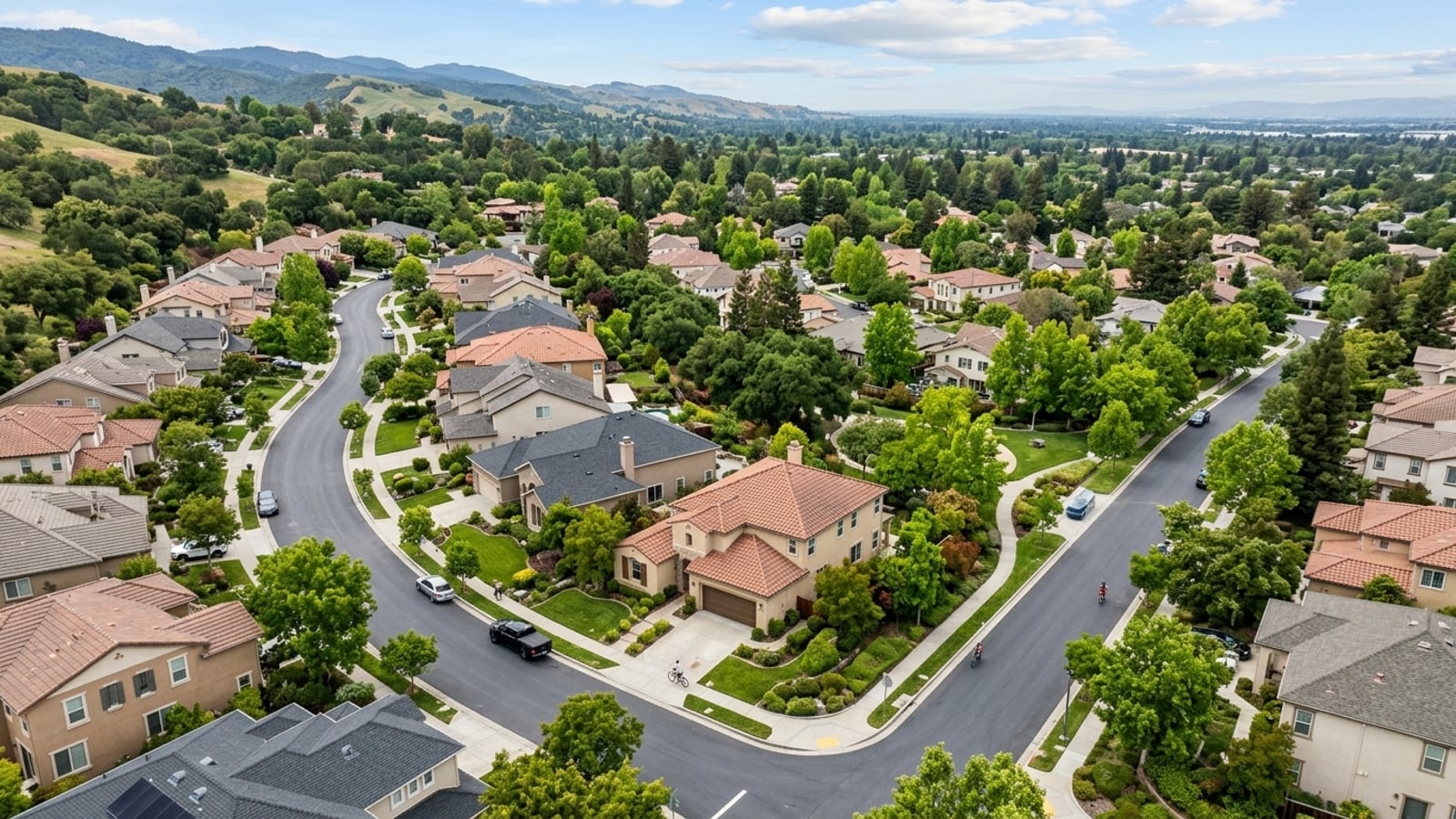
The median home sale price in Santa Clara County sits around $1.64 million, with properties spending just 18 days on the market. If you're thinking about downsizing or moving into an age-restricted community, that pace leaves very little room to figure things out as you go.
Buying into a 55+ development involves more than finding the right floor plan or deciding whether you'll actually use the fitness center. These communities run on a specific set of federal and state laws, layered on top of HOA rules that control who can live in your home, how long your grandkids can visit, and what happens to the property if your circumstances change. The time to understand all of that is before you make an offer - not during escrow.
How 55+ Community Regulations Work in Silicon Valley, CA
California's Unruh Civil Rights Act (California Civil Code §51) broadly prohibits age discrimination in housing. But it carves out a specific exception for senior housing developments that satisfy the criteria of Civil Code §51.3, which is what gives retirement communities the legal footing to enforce age restrictions in the first place.
What that means in practice is that active adult communities in Silicon Valley operate under three overlapping layers of authority. Federal law sets the baseline exemptions. California state law applies a stricter occupancy standard on top of that. And the individual HOA enforces day-to-day policy through its Covenants, Conditions, and Restrictions - the CC&Rs. You have to clear all three, not just one.
With just 1.7 months of supply currently available, the local market doesn't reward hesitation. Knowing how these three levels interact means you're ready to move when the right home comes up, rather than scrambling to understand the rules after you're already in contract.
The Housing for Older Persons Act and California Law
The federal Housing for Older Persons Act (HOPA) lets communities restrict residency by age without running afoul of the Fair Housing Act. The qualifying threshold under HOPA: at least 80% of occupied units must house at least one person who is 55 years of age or older.
California, predictably, holds communities to a tighter standard. While HOPA is satisfied with 80% compliance across the community as a whole, California Civil Code Section 51.3 requires that every individual unit be occupied by at least one senior citizen or qualifying resident. There's no community-wide averaging that lets individual units slide.
That distinction matters because it means Silicon Valley 55+ communities can't simply absorb younger buyers into the 20% buffer and call it compliant. The community has to maintain its age-restricted status across all units to preserve the Unruh Civil Rights Act exemption - and if it doesn't, it loses its legal standing as a senior housing development entirely.
The Federal 80/20 Rule Versus State Law
A lot of buyers hear "80/20 rule" and assume that means up to 20% of homes can be sold freely to younger buyers. In California, that's not how it works. The buffer exists mainly to protect the community's legal status when a qualifying resident passes away or moves out, leaving a younger spouse or other permitted resident behind.
HOAs in Santa Clara County use that margin to handle real life - not to open the front door to the general public. Selling outright to an underage buyer who doesn't meet the state's qualifying resident definitions would put the entire community's legal status at risk.
Age Verification and Compliance Requirements
Communities have to routinely verify resident ages to maintain their legal exemption. HOAs typically require government-issued identification - a driver's license or passport - during the purchase process and periodically after that.
Expect to provide documentation as part of escrow. The HOA board or property management company keeps those records on file specifically to demonstrate to federal and state regulators that the community is meeting its required occupancy thresholds. It's not bureaucratic busywork; it's how the community stays legal.
Common HOA Rules and CC&Rs for Active Adult Communities
HOA fees in Silicon Valley 55+ communities typically run about $800 to $1,400 per month - notably higher than the statewide West Coast average of $300 to $500, which reflects both the extensive amenities and the high cost of maintaining anything in this region.
Those monthly dues generally cover exterior building maintenance, roof repairs for attached units, professional landscaping, and basic utilities including water, sewer, and trash. Community features like clubhouses, fitness centers, pools, and walking trails get funded the same way.
The HOA also enforces the CC&Rs, which go well beyond collecting fees. Buyers must agree to those terms before closing, and they can govern everything from exterior paint colors to who's allowed to park in the driveway. Reading them carefully isn't optional.
Guest and Visitation Policies
Most 55+ communities cap how long underage guests - grandchildren included - can stay at the property. A common limit is 30 to 60 days per calendar year for visitors under the age of 18.
The purpose is straightforward: to prevent homes from becoming de facto primary residences for younger family members. If you're planning on hosting family for extended summer visits or long holiday stretches, verify the specific visitation cap in the CC&Rs before you make an offer.
Property Maintenance and HOA Fees
Well-known active adult neighborhoods like The Villages - located in the southeastern foothills of San Jose - offer a resort-style atmosphere, with homes ranging from the low $300,000s to $1.3 million. Keeping that standard consistent requires strict property maintenance rules.
The HOA handles many exterior repairs, but homeowners still need board approval for modifications: installing solar panels, changing out windows, updating landscaping in a private courtyard. The architectural review process exists to ensure every change stays consistent with the community's established aesthetic - so factor that approval step into your timeline if you're planning any work after closing.
Legal Considerations for Buying and Selling
California Civil Code Section 51.3 defines exactly who may live in an age-restricted unit alongside the qualifying senior citizen. That includes a qualified permanent resident, a permitted health care resident, or another person allowed under Civil Code Section 51.4(b).
These definitions do real protective work. If the primary 55+ resident passes away or needs to move into an assisted care facility, they determine who can legally remain in the home. Understanding who qualifies as a permanent resident before you buy lets you plan for long-term living arrangements without the risk of forced relocation later.
Selling also comes with specific legal obligations. California sellers are required to disclose all material facts affecting a buyer's decision - and the property's age-restricted status is squarely in that category.
Spouses and Adult Children
A younger spouse can typically live in the community as a qualified permanent resident, provided they meet the state's age minimum for spouses. Adult children may also qualify if they meet the age threshold or serve as the resident's primary medical caregiver.
If the 55+ resident passes away, the younger spouse can generally remain in the home. But if an adult child who doesn't meet the age or caregiving requirements moves in, the HOA can - and typically will - enforce the restriction and require them to vacate.
Inheritance and Estate Planning
When a non-qualifying heir inherits a property in a 55+ community, they own the home but can't legally live in it. The decision at that point is either to sell or, if the CC&Rs allow it, rent to an age-qualifying tenant.
Estate planning should account for these restrictions well in advance. Heirs inheriting homes in Santa Clara County's market - where properties sell in roughly 18 days - often find that selling is the more practical path rather than managing a rental with strict tenant eligibility requirements.
Reviewing Community Rules Before You Buy
Under California Civil Code Section 4525, sellers in a homeowners association must give prospective buyers a specific set of disclosures: the CC&Rs, bylaws, financial statements, and a formal disclosure of the community's age-restricted status.
California law gives you a protected three-day review period after you receive that complete HOA disclosure package. During those three days, you can read through everything and cancel the contract without penalty if the rules or the financial health of the association don't hold up to scrutiny.
If the seller or management company delivers the documents late, the review period shifts accordingly and your closing date can slip. Request the disclosure package as early as possible in the escrow process - you want time to actually evaluate the financial reserves and understand the daily living restrictions, not just flip through them the night before closing.
Frequently Asked Questions (FAQ)
Can someone under 55 legally buy a house in a Silicon Valley 55+ community?
Yes, a person under 55 can legally purchase the property. California law does require, however, that at least one occupant be a qualifying senior citizen. An underage buyer would need to have an age-qualifying resident living there - or rent it to a 55+ tenant if the HOA's CC&Rs permit rentals.
What happens if I inherit a home in a Silicon Valley senior community but I don't meet the age requirement?
You'll own the property, but you can't live in it as your primary residence. Your options are to sell the home or rent it to someone who meets the age requirement, provided the community's CC&Rs allow rentals.
Can my younger spouse or adult children live with me in a 55+ community in Santa Clara County?
Yes. California law allows a qualified permanent resident - such as a younger spouse - or a permitted health care resident to live with the qualifying senior citizen. Adult children can also live there if they meet the community's specific age minimums or serve as a required health care provider.
Do 55+ communities in Silicon Valley have stricter HOA rules against renting out the property?
It depends on the specific community's CC&Rs. You can own the home and rent it out, but the HOA will strictly enforce the requirement that any tenant must meet the 55+ age requirement and comply with all community rules.
What specific documents do Silicon Valley 55+ HOAs require to verify age during the closing process?
HOAs typically require government-issued identification. You'll likely need to provide a driver's license, passport, or birth certificate to the HOA board or property management company before closing.
Check out this article next