
For many Silicon Valley retirees, part of the appeal of moving near their children in Nevada, Texas, Idaho, or Arizona is leaving California’s income tax behind. That can be a real and lasting benefit. But California does not let go all at once. It still taxes the gain on the sale of your California home, it scrutinizes whether you have actually left, and the new state brings its own taxes, including property taxes that can be higher than what you pay here under Prop 13. This article covers what I tell clients before they list, and it is part of my guide to moving from Silicon Valley to be near family. It is general information, so work with a CPA on your specific situation.
Key Takeaways
Want your own number? Try my capital gains calculator to see roughly what you’d owe and how much you’d walk away with.
The Sale of Your California Home
Gain from selling California real estate is California-source income. If you sell after you have moved to Nevada, California still taxes the part of the gain that is not excluded. The federal home sale exclusion generally applies if you owned and lived in the home for two of the five years before the sale, and California follows it. For a couple with a large gain on a long-held home, that means the California share of tax does not disappear by moving first. See my worked example in how much capital gains tax you will pay.
At closing, California generally requires escrow to withhold 3 1/3 percent of the sale price unless the seller certifies an exemption on Form 593. The sale of a principal residence that qualifies under the home sale exclusion is one common exemption. If the withholding does happen, it is a prepayment, not an extra tax, and it is reconciled on the California return.
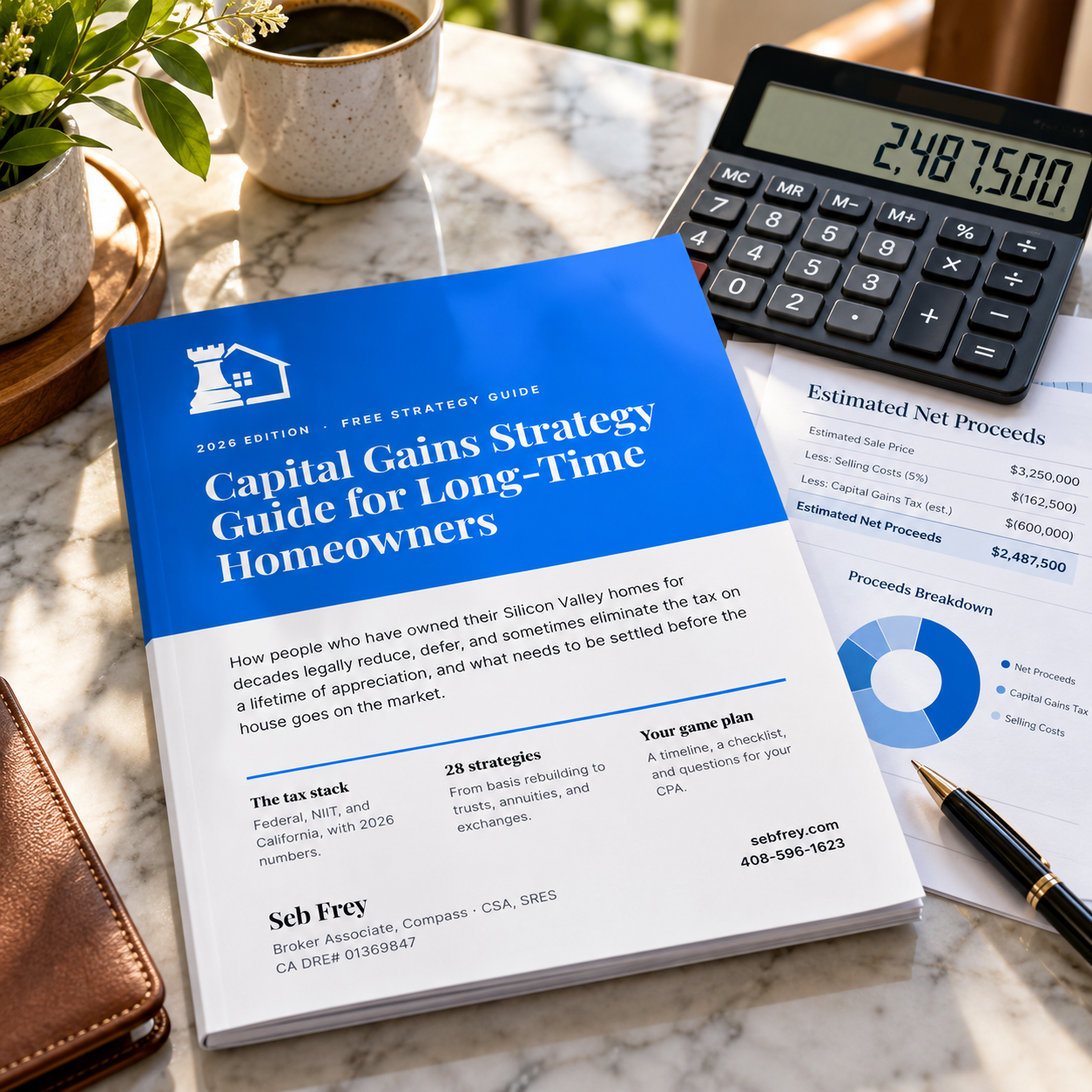
Free 2026 Strategy Guide
28 legal ways long-time owners cut their capital gains tax. Know your options before you list.
If you've owned for decades, your gain may be well past the $250,000 and $500,000 exclusions. Know your options before you list.
- All 28 strategies, explained in plain English
- A real bracket-by-bracket example
- What to settle before your home hits the market
You're all set. Thanks! Your Capital Gains Strategy Guide is on its way to your inbox. If you don't see it in a few minutes, check your promotions or spam folder.
Retirement Income After You Move
Under federal law, states generally cannot tax the retirement income of people who are not residents, including most pensions and distributions from IRAs and 401(k) plans. Once you are genuinely a resident of another state, those distributions are taxed by your new state, if at all. That is a meaningful benefit for retirees moving to states without an income tax. Timing large IRA withdrawals or Roth conversions for after the move is something to discuss with your CPA.
Proving You Have Left
California looks at the whole picture to decide residency: where you live most of the year, where your home is, your driver’s license, voter registration, car registration, doctors, bank accounts, and where your family and community ties are. Keeping your California house as a second home or spending much of the year here can create questions, especially for higher-income taxpayers. The cleaner the break, the fewer questions. Update your license, registration, voter registration, and estate planning documents in your new state promptly, and keep records of the move.
The New State’s Taxes
| Tax | What to check |
|---|---|
| Income tax | Several states have no broad income tax, including Nevada, Texas, Florida, Washington, Tennessee, South Dakota, Wyoming, and Alaska. Others, such as Idaho and Arizona, have flat or lower rates than California. Some tax Social Security and some do not. |
| Property tax | Rates and caps vary widely. Some states have higher effective property tax rates than California and no Prop 13-style cap, so a smaller home can still carry a larger tax bill. |
| Homeowner and senior exemptions | Many states offer homestead exemptions or senior freezes, but you usually have to apply. |
| Sales tax | States without income tax often rely more on sales taxes. |
| Homeowners insurance | Costs can be significant in areas with wildfire, hail, or hurricane exposure. |
| Estate or inheritance tax | A few states have their own estate or inheritance taxes, unlike California. |
Buy First or Sell First?
For taxes, the order matters less than people think, because California taxes the home sale either way. For quality of life, buying the new home first and moving once is usually easier, and it lets me sell your Silicon Valley home vacant and staged. See how to buy before you sell. Either way, bring your CPA in before you list. For the full moving picture, see my guide to moving from Silicon Valley to be near family.
Does your place need work?
Skip the remodel.Still sell for top dollar.
Before you spend months and tens of thousands fixing up the house, or take a lowball investor offer, find out what it would sell for as it sits today. I'll show you what's worth fixing, what isn't, and what you'd walk away with either way.
See What I'd Net As-Is →
When the next step is a smaller home, my complete guide to downsizing in the Bay Area lays out the whole process from first conversation to moving day.
Frequently Asked Questions
Do I pay California tax if I sell my California home after moving out of state?
Will escrow withhold California tax when I sell?
Can California tax my pension after I move?
Which states have no income tax?
How do I prove I am no longer a California resident?
Free Cash-Out Strategy Call
You've spent decades building equity. Let's make sure you take as much of it with you as possible.
Selling a long-held California home and moving somewhere new comes down to a few big questions. We'll look at what your home should sell for, what you'll actually net after taxes and costs, and how to time the sale with your next purchase so you're never stuck in between. You'll leave with real numbers and a plan, whether or not you hire me.
Book My Cash-Out Strategy Call →
Senior Friendly Homes in Silicon Valley South
Properties
2
3
4
5
6
7
8
9
10
11
12
13
14
15
16
17
18
19
20
21
22
23
24
25