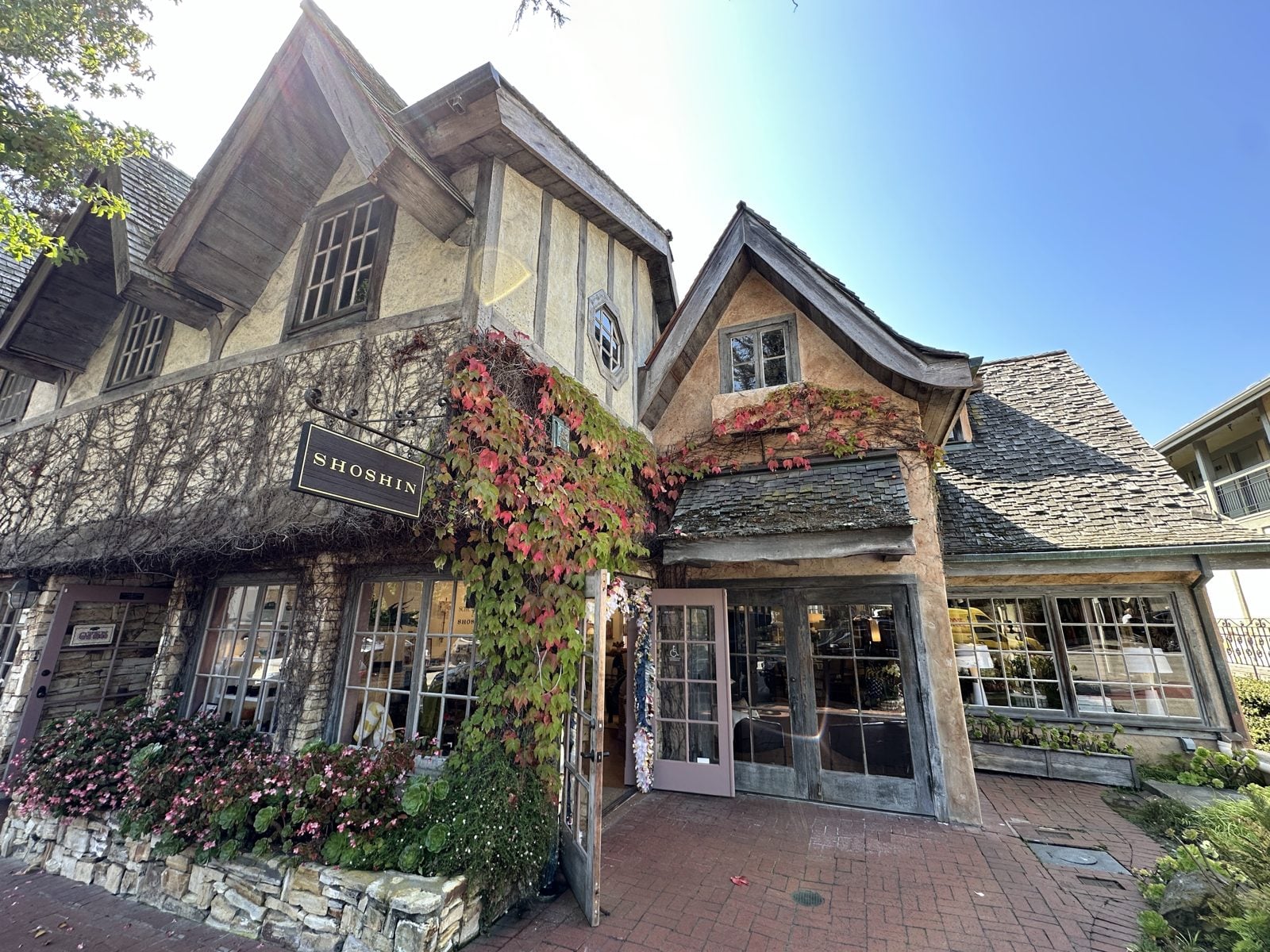
If you’ve spent any time in Silicon Valley, you’ve probably heard someone say they’re “running down to Carmel for the day.” It’s about 75 miles from San Jose, and the drive alone is half the fun, but the real reason people keep going back is the village itself: about a square mile of fairy-tale cottages, tucked-away courtyards, cozy restaurants, and a white-sand beach where your dog can run off-leash. I’ve been selling homes across Silicon Valley, Santa Cruz County, and the Monterey Peninsula for more than 23 years, and Carmel comes up a lot when longtime homeowners start talking about where they’d love to spend their next chapter. All the photos here are my own, taken on walks through the village in daylight and after dark, so you’re seeing it the way you’ll actually experience it.
Key Takeaways
Summary: Carmel village is the compact, walkable heart of Carmel-by-the-Sea on the Monterey Peninsula, known for storybook cottages built in the 1920s, hidden courtyards, independent shops, and restaurants like La Bicyclette, Seventh & Dolores, and Enzo Ristorante Italiano. Founded as an artists’ colony after 1902 and incorporated in 1916, the town still has no home mail delivery and only adopted standard street addresses in September 2026. Visitors can stroll Ocean Avenue and Carmel Plaza, explore Mission Ranch and the Carmel Mission, and walk dog-friendly Carmel Beach, while older visitors should plan around hills, uneven sidewalks, and dark streets at night. For homeowners 55 and over considering a move, Carmel’s typical home value of about $2.43 million makes Prop 19’s base-year transfer an important part of the math.
Table of Contents
- Carmel Village at a Glance
- A Short History of Carmel Village
- The Carmel Quirks Everyone Asks About
- Strolling Ocean Avenue and Carmel Plaza
- The Hidden Courtyards and Passageways
- Shopping in Carmel Village
- Where to Eat in Carmel Village
- Mission Ranch and the Carmel Mission
- Carmel Beach and Scenic Road
- Tips for Visiting Carmel Village After 60
- Thinking About Living in Carmel?
- Frequently Asked Questions
Carmel Village at a Glance
When locals say “the village,” they mean the commercial core of Carmel-by-the-Sea, roughly the blocks around Ocean Avenue between Junipero Street and the beach. Here’s the quick picture before we start walking:
- Where it is: On the Monterey Peninsula in Monterey County, about 75 miles south of San Jose. Plan on roughly an hour and a half each way, longer on summer weekends.
- How big it is: The whole city covers about 1.06 square miles, so you can walk from one end of downtown to the other in well under half an hour.
- Who lives there: About 3,220 residents as of the 2020 Census, with a median age of 63, according to Census Reporter. That’s one of the older populations you’ll find anywhere in California, and it shapes the whole feel of the place.
- What it costs to live there: Zillow’s home value index put the typical Carmel-by-the-Sea home at about $2.43 million as of September 30, 2026, up 6.9% from a year earlier.
- Best time to go: Weekday mornings and early evenings are calmest. September and October often bring the sunniest, warmest weather on this part of the coast, after the summer fog burns off.
A Short History of Carmel Village
Long before there was a village, there was the mission. Father Junípero Serra moved Mission San Carlos Borromeo to the mouth of the Carmel River in 1771, and it’s still standing just south of town today. The village came much later. In 1902, James Franklin Devendorf and Frank Hubbard Powers filed the subdivision map for the Carmel Development Company, and they marketed lots to teachers, writers, and artists. That’s how Carmel became a bohemian art colony, with poets and painters setting up in little cottages under the pines.
The town incorporated on October 31, 1916, and a lot of what makes Carmel feel like Carmel dates to the next decade or two. The Forest Theater opened in 1910 as one of the first outdoor theaters west of the Mississippi. Hugh Comstock built his first storybook cottage, “Hansel,” in 1924 to display his wife Mayotta’s handmade dolls, and that whimsical style spread all over town. The Tuck Box went up in 1926 as Comstock’s only fairy-tale commercial building, and Bernard Maybeck designed the Harrison Memorial Library that same year. Early city leaders also passed zoning rules that kept out billboards and chain restaurants, which is why the village still feels so different from everywhere else.
And yes, Clint Eastwood really was the mayor. He served from 1986 to 1988, and in 1986, the same year he was elected, he bought Mission Ranch to save it from a condo development. More on that below.
The Carmel Quirks Everyone Asks About
Carmel has a reputation for charming oddities, and most of them are true. For more than a century, homes here didn’t have street numbers at all. People gave their houses names like “Sea Urchin” or “Hansel,” and everyone picked up mail at the downtown post office. That finally changed in 2026. The City Council approved a standard address map on June 2, 2026, and the new addresses officially went live in September 2026, mainly so 911 dispatchers and paramedics can find people faster in a town where the median age is in the 60s. Mail delivery hasn’t changed, though. The new physical addresses don’t support USPS delivery, so residents still use their post office boxes, and plenty of folks are keeping their house names too. The city’s street addresses page has the details.
The famous high heel rule is real too. Under Chapter 8.44 of the city code, shoes with heels more than two inches tall and less than one square inch of bearing surface technically need a permit from the City Clerk. It was written to protect the city from trip-and-fall claims on the uneven sidewalks and tree roots, and nobody’s going to chase you down the street, but it tells you something useful: wear comfortable, flat shoes. You’ll also notice the residential streets get very dark at night because there are so few streetlights, so a small flashlight or your phone light is a smart thing to carry after dinner.
Strolling Ocean Avenue and Carmel Plaza
Ocean Avenue is the spine of the village. It runs downhill from Highway 1 all the way to the beach, with a tree-lined median, art galleries, wine tasting rooms, clothing boutiques, and bakeries on both sides. Most people park once and walk the whole thing, ending with the view of the water at the bottom of the hill.
At the top of the shopping district, on the corner of Ocean Avenue and Junipero Street, you’ll find Carmel Plaza. It’s an open-air, two-level shopping center with a sunny central courtyard, a fire pit, and plenty of outdoor seating, so it’s a great place to sit down for a few minutes, grab a coffee, and let your legs rest before heading down the hill.
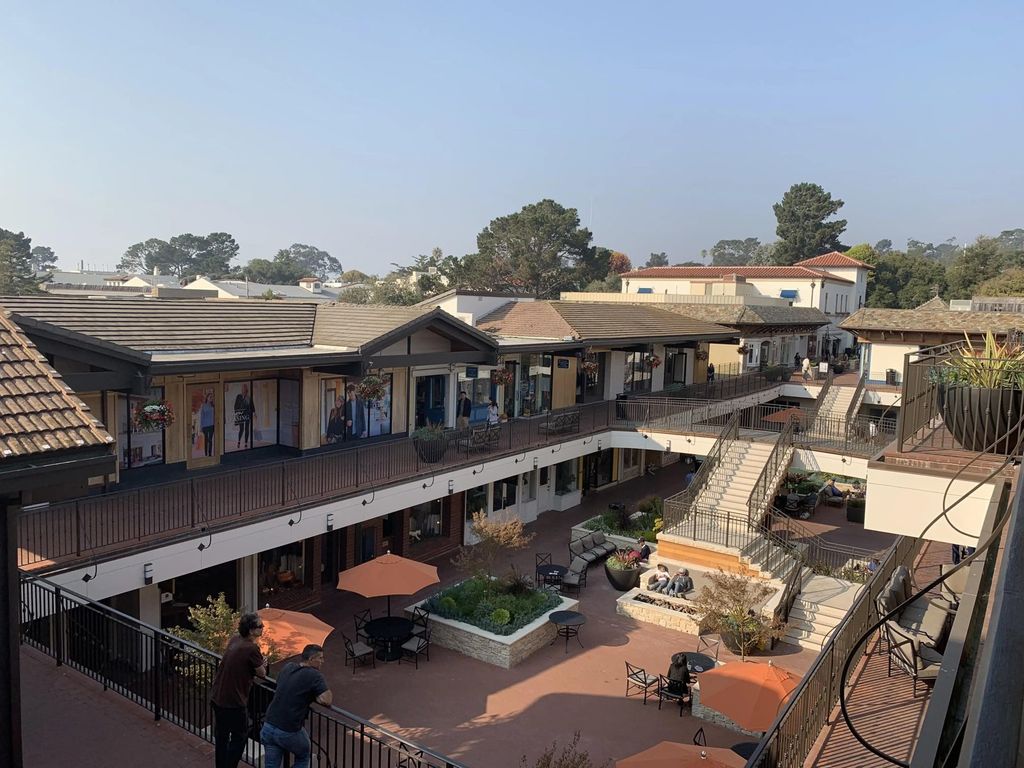
The central courtyard at Carmel Plaza, a good spot to sit and regroup before walking down Ocean Avenue.
The Hidden Courtyards and Passageways
Here’s the thing first-time visitors miss: half of Carmel’s charm is behind the storefronts. The village is full of little brick courtyards and passageways that cut between buildings and open up into patios, fountains, galleries, and tiny shops. If you see a narrow walkway between two buildings, follow it. Some of my favorite spots are along San Carlos Street and Dolores Street between Ocean and Seventh, where you can wander from one courtyard to the next almost without touching the main sidewalk.
They’re especially pretty at night, when the string lights come on and the patio heaters glow. It’s a completely different feeling from the busy daytime crowd on Ocean Avenue.
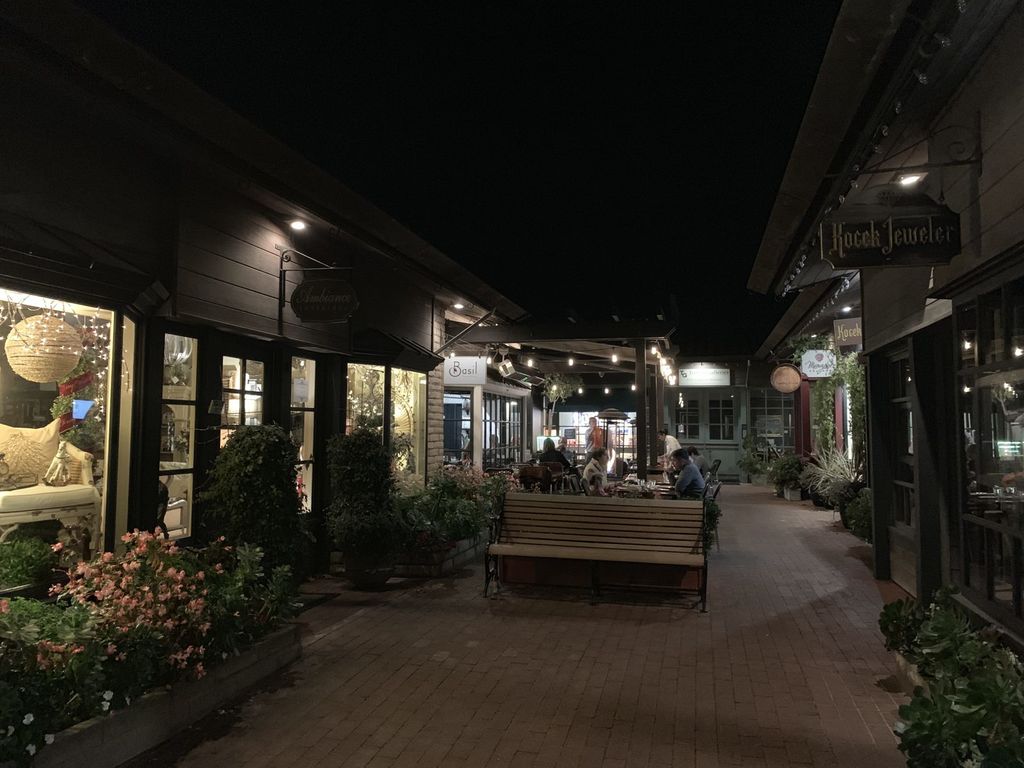
One of the village’s brick courtyards after dark, with shop windows glowing and diners out on the patio.
The details are part of the fun. Look for hand-painted Spanish tile, wrought iron, little stairways leading to second-floor shops, and the occasional surprise, like this cherry-red Italian scooter parked against the white stucco.
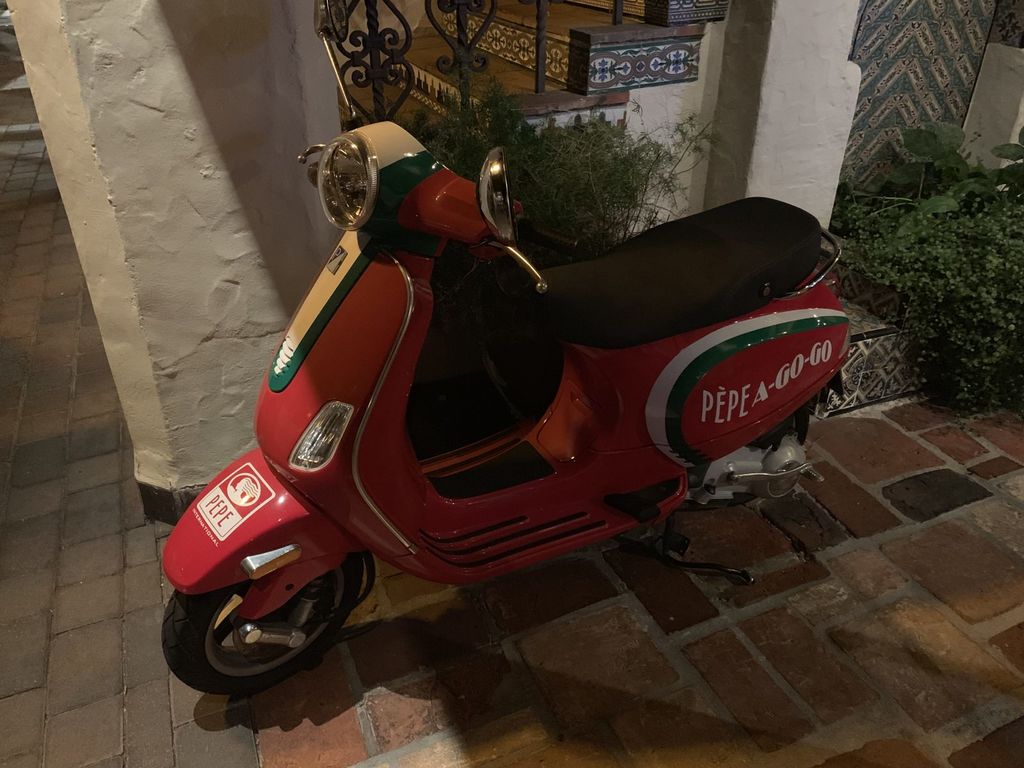
Spanish tile, white stucco, and a red Vespa. You’ll find little scenes like this all over the village.
Shopping in Carmel Village
Because Carmel has worked so hard to keep chains out, most of the shops are independent, and many are owner-operated. Expect art galleries (there are dozens), home decor, jewelry, clothing boutiques, wine tasting rooms, and specialty food shops.
One of the most photographed buildings in town is the storybook storefront that houses Shoshin on San Carlos Street between Fifth and Sixth avenues. It’s the home decor shop of interior designer Alexis Smith’s Studio Shoshin, and the building itself, with its steep rooflines, octagonal window, and fall-colored ivy, is classic Carmel.
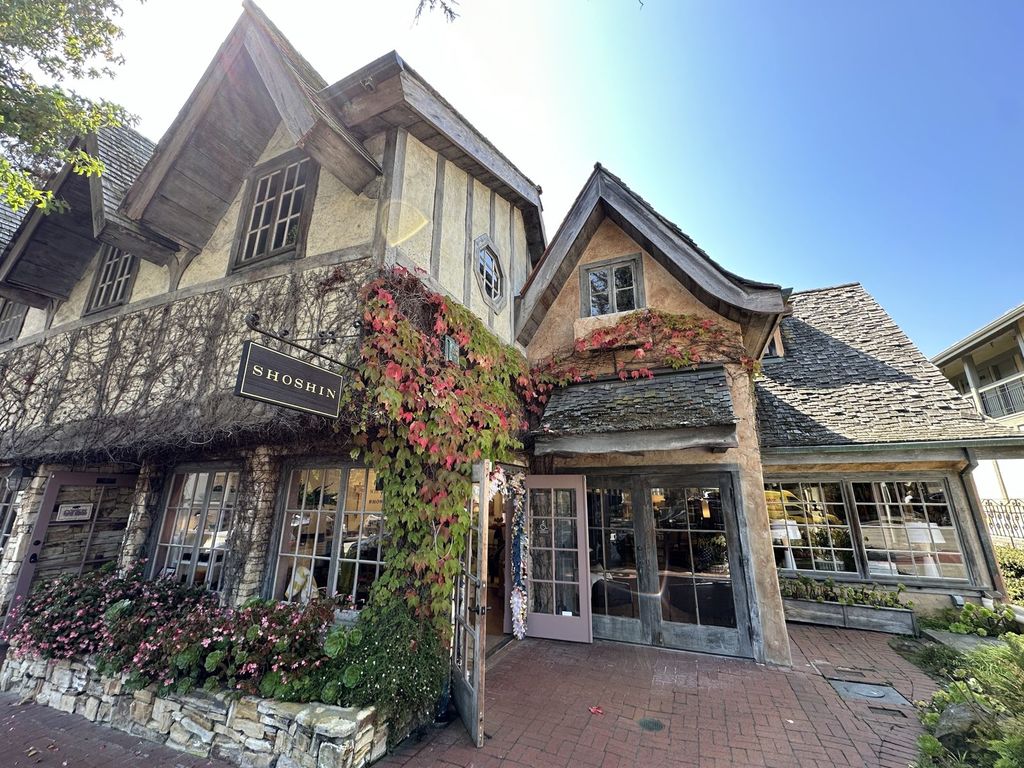
The storybook building that’s home to Shoshin on San Carlos Street, wrapped in autumn ivy.
If you’re bringing grandkids along (or you just have a sweet tooth, no judgment), the village has candy shops with walls of jars, saltwater taffy, retro candy boxes, and chocolate. It’s the kind of place where everybody walks out with a little bag of something.
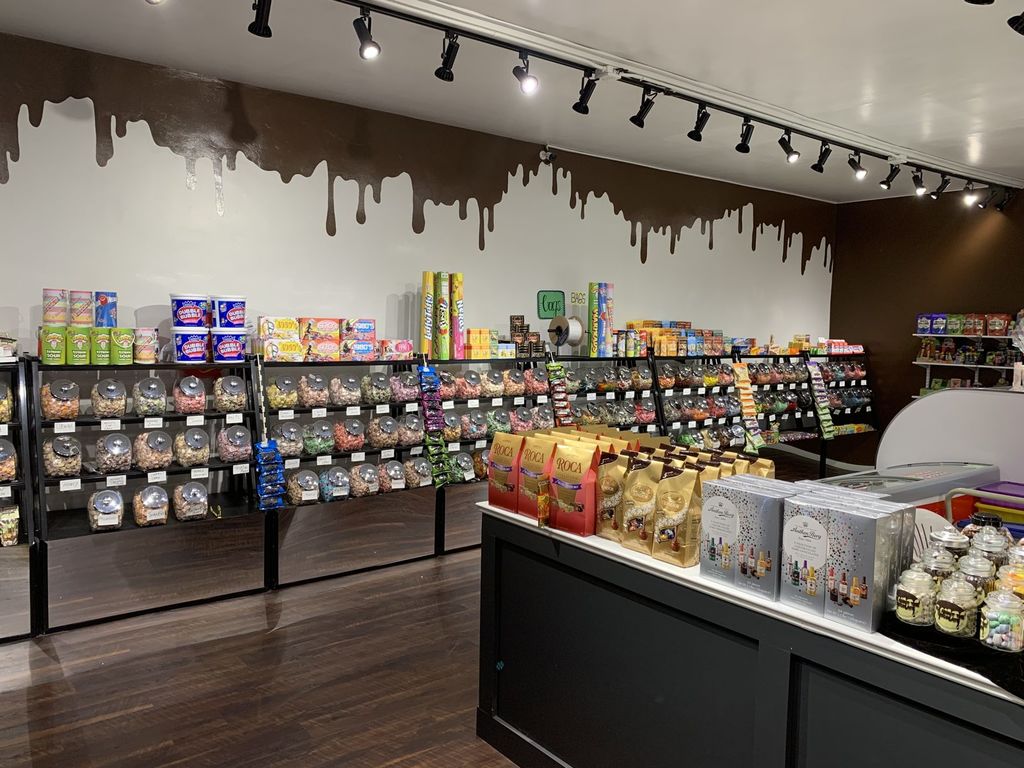
Jars of taffy and candy under a painted chocolate drip wall. Good luck leaving empty-handed.
And then there are the shops that stop you in your tracks. This one is filled floor to ceiling with Turkish mosaic glass lamps, and walking in at dusk feels like stepping into a lantern market on the other side of the world.
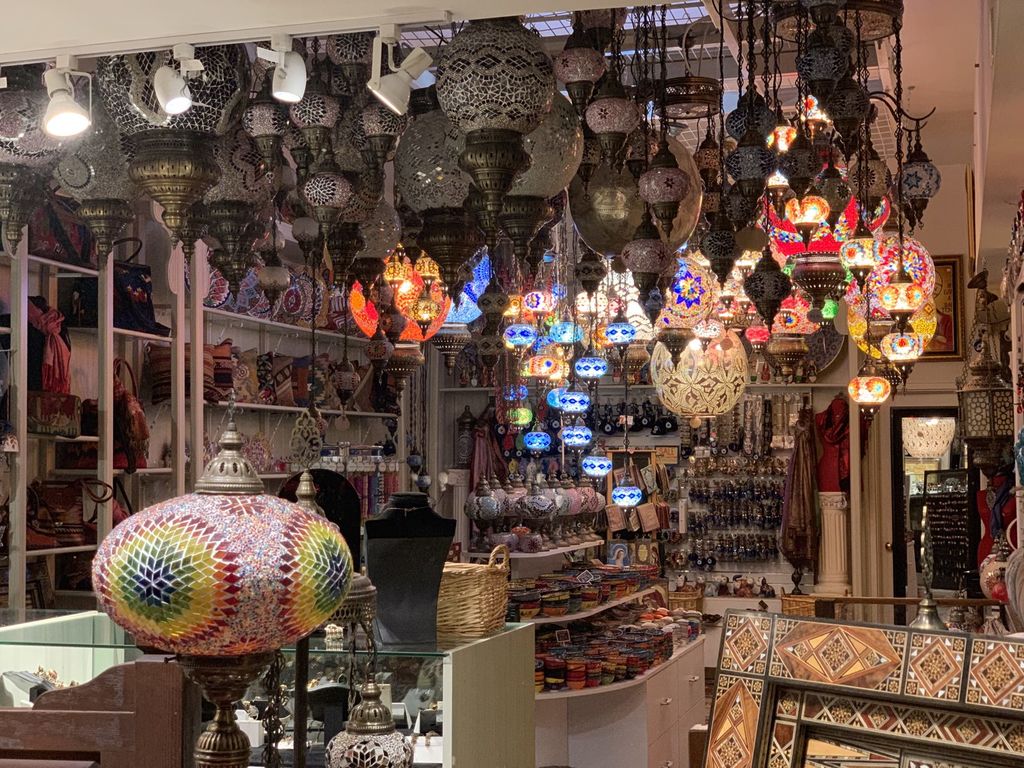
Hundreds of mosaic glass lamps hanging in one of Carmel’s gift shops.
Where to Eat in Carmel Village
For a town of a few thousand people, Carmel has an amazing number of restaurants, and most of them are small, personal, and walkable from each other. Reservations are a good idea on weekends, especially for dinner. A few that I keep coming back to:
La Bicyclette. This European-style bistro sits in a gorgeous white Spanish-style building at the corner of Dolores Street and Seventh Avenue, with arched windows, colorful tile, and flags out front. It’s cozy, busy, and known for wood-fired cooking, and Monterey County Now (formerly the Monterey County Weekly) named it the best French restaurant in its Best of Monterey County 2025 awards.
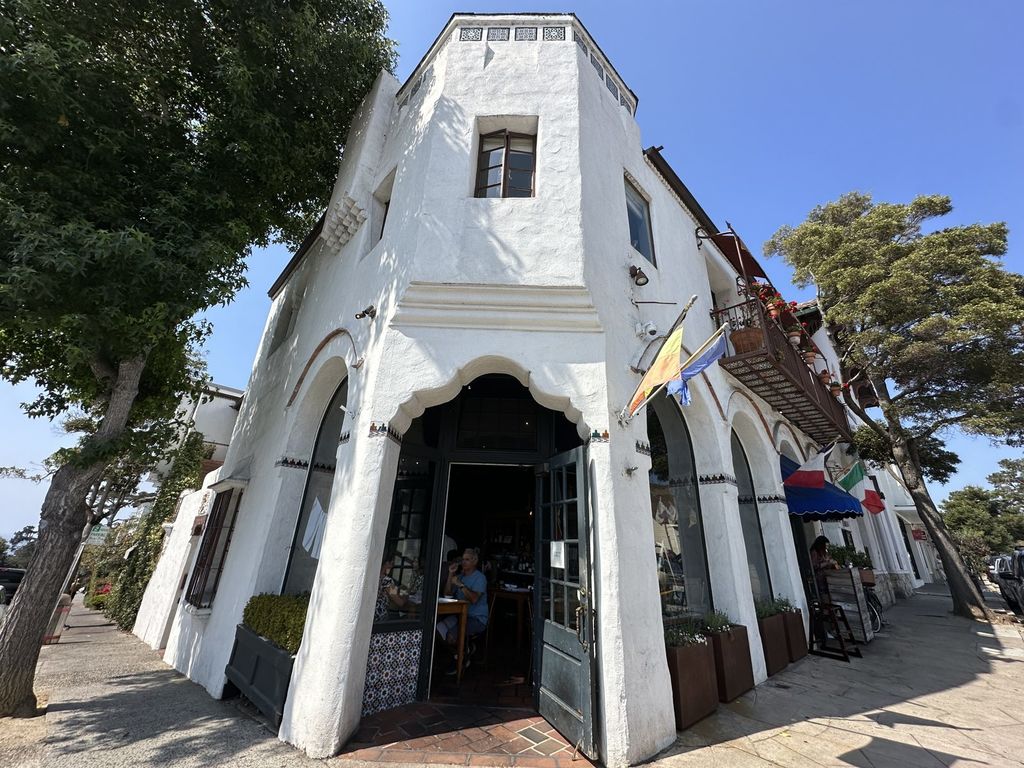
The corner of Dolores and Seventh on a sunny afternoon, doors open and lunch underway.
The same corner looks completely different after dark, when the windows glow and people gather out front waiting for their tables. If you can’t get a reservation, it’s worth walking by anyway just to see it lit up.
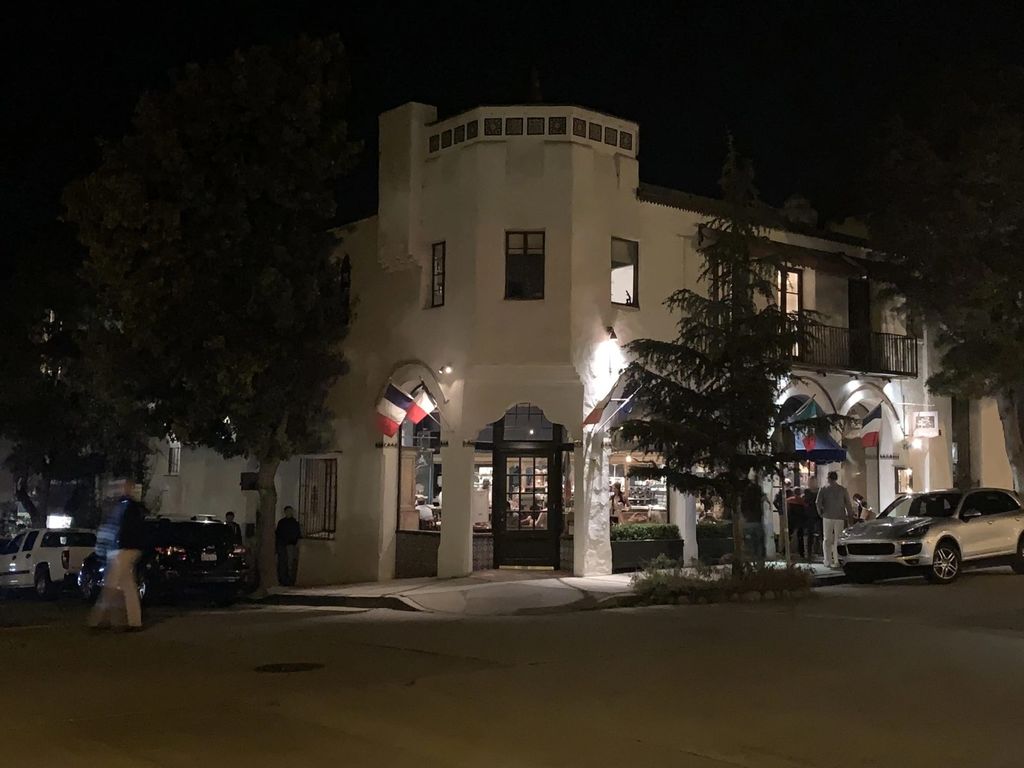
La Bicyclette lit up at night on Dolores and Seventh.
Seventh & Dolores. Right across the intersection, on the southeast corner, Seventh & Dolores is the village’s classic steakhouse, with a sleek modern dining room and a great bar. It’s a special-occasion kind of place, and it’s worth saving room for the sides.
Enzo Ristorante Italiano. On San Carlos Street between Ocean and Seventh, Enzo is a casual, family-run Italian spot. Owner Enzo Pagano is from Calabria, and the menu leans on southern Italian home cooking, with a crab ravioli that’s been a favorite for years. The covered patio with its string lights is lovely on a mild evening.
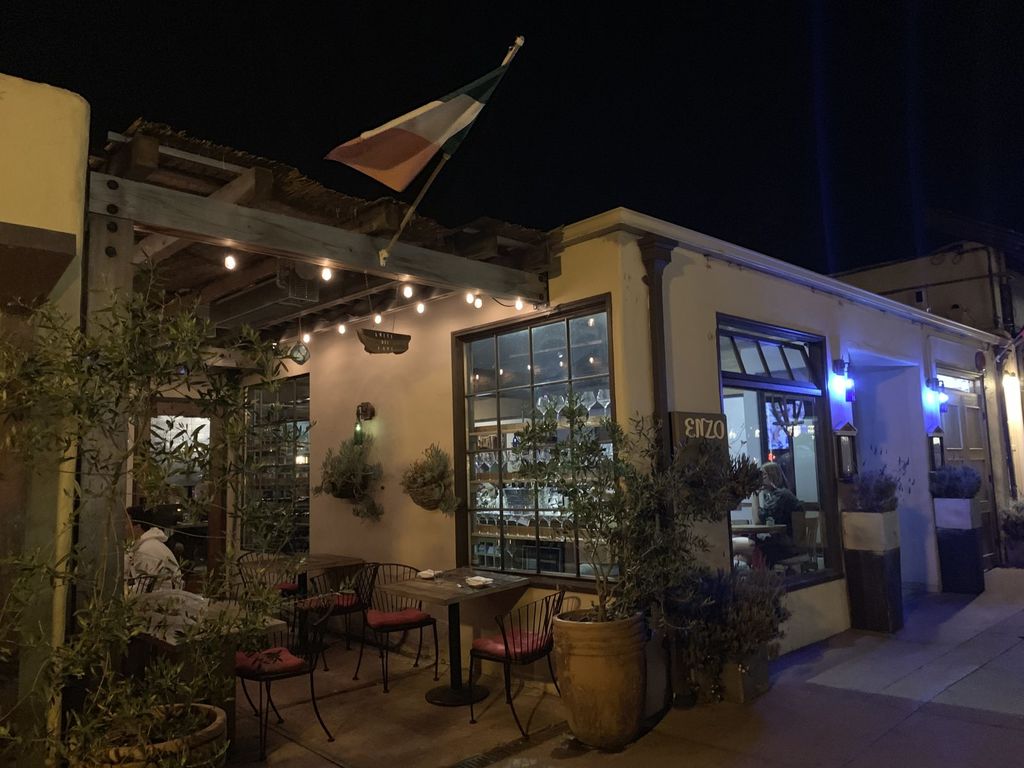
Enzo’s covered patio on San Carlos Street, string lights on and the Italian flag flying.
Beyond those three, you’ll find everything from bakeries and cafés to bright, airy dining rooms with ocean art on the walls. Lunch is a great way to try a fancier spot for a lot less money, and it means you’re back on the road before dark.
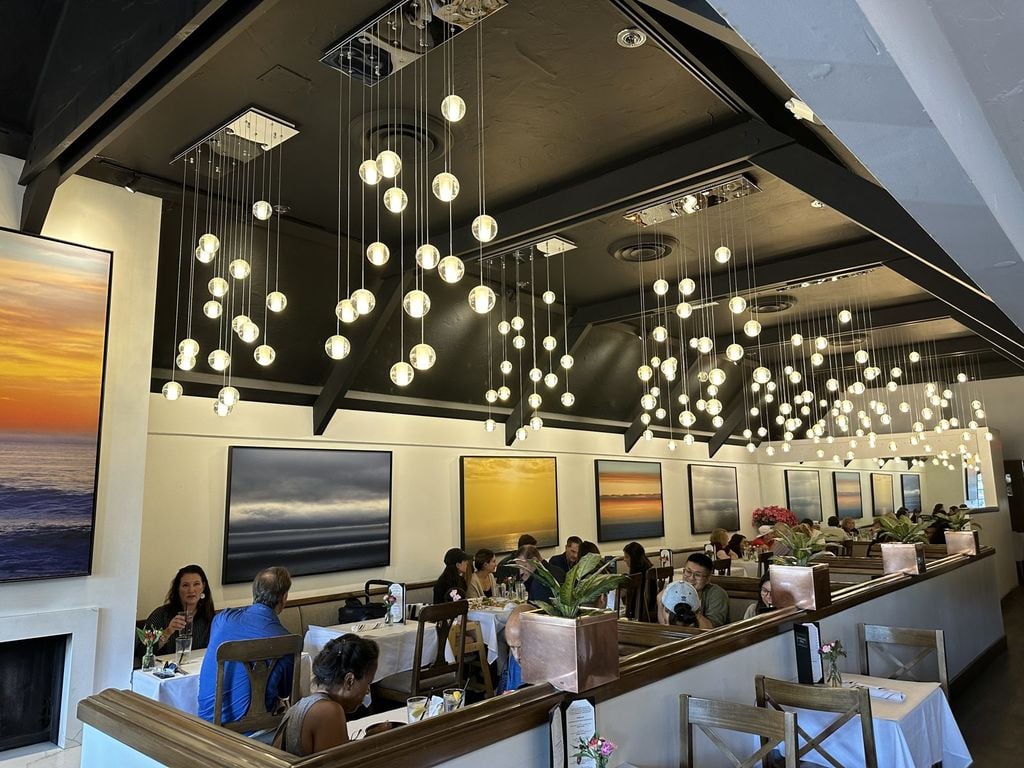
A busy Carmel lunch crowd under hanging glass globe lights and big ocean sunset photographs.
Mission Ranch and the Carmel Mission
Just south of the village, a short drive or a longer walk down Dolores Street, you’ll find two of the area’s most meaningful stops. Mission Ranch dates back to the 1850s, when it was a working dairy and farm. Clint Eastwood bought it in 1986 to keep it from becoming condos and restored the buildings in their original style. Today it’s a hotel and restaurant with meadow views out toward Point Lobos, and grabbing a drink on the patio at sunset is a Peninsula tradition. (Fun side note: I wrote about how a REALTOR® earned an $800,000 commission on the sale of Eastwood’s former Carmel home, if you’re curious.)
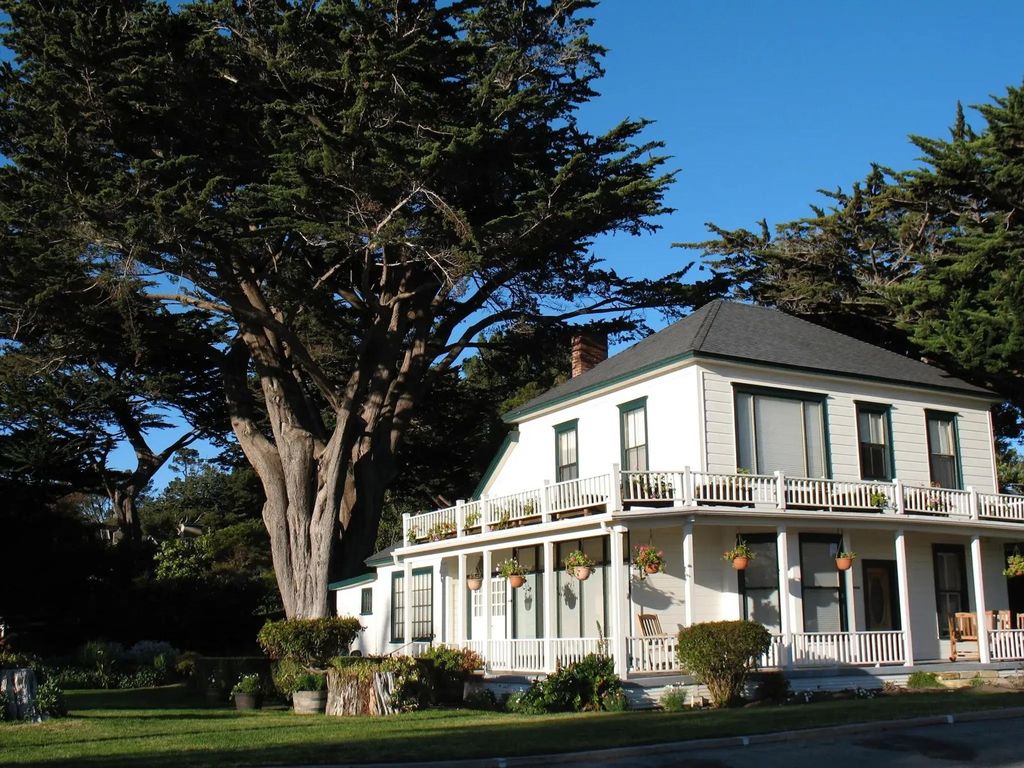
The historic white farmhouse at Mission Ranch, framed by old Monterey cypress trees.
A few minutes away is the Carmel Mission, officially Mission San Carlos Borromeo del Río Carmelo, where Father Serra is buried. The basilica, the gardens, and the museum rooms are peaceful and easy to explore at your own pace, and it’s one of the most beautiful of California’s 21 missions. Check the Carmel Mission website for visiting hours before you go, since services and events can affect access.
Carmel Beach and Scenic Road
Walk to the bottom of Ocean Avenue and you’ll hit Carmel Beach, a wide sweep of white sand framed by cypress trees. It’s one of the most dog-friendly beaches in California. According to the city’s beach rules, dogs can be off-leash on the sand as long as they’re under voice control, but they need to be leashed again at the bottom of the stairs and everywhere else in town, including the Scenic Pathway.
A few other rules worth knowing: wood fires and bonfires aren’t allowed, propane fire devices are only permitted south of 10th Avenue, smoking is prohibited, and there are no lifeguards, so stay well back from the waves and watch for rip currents. If stairs are tough on your knees, the Scenic Pathway along Scenic Road gives you the same gorgeous views from a paved path above the sand, with benches along the way.
Tips for Visiting Carmel Village After 60
Carmel is a wonderful day out at any age, but a little planning makes it a lot more comfortable. These are the things I’d tell my own parents:
- Wear real walking shoes. Sidewalks are uneven, tree roots push up the pavement, and Ocean Avenue is a steady hill. Walk down first and take a rest before heading back up.
- Bring a light for the evening. With so few streetlights, the residential blocks get very dark after sunset. Your phone’s flashlight works fine.
- Plan your parking. Downtown street parking is time-limited and fills up fast on weekends. Check posted signs and the city’s parking information, and if someone in your group has a disabled placard, bring it.
- Go midweek if you can. Tuesday through Thursday is much calmer than a summer Saturday, and it’s easier to get a table.
- Dress in layers. Coastal fog can roll in any time, and it can be 20 degrees cooler than San Jose.
- Make it a Peninsula day. Pair the village with a drive along 17-Mile Drive, a stop at Point Lobos, or a lunch in Carmel Valley, where it’s often sunnier.
Of course, you don’t have to drive to Carmel to have a great day out. If you’re looking for more ways to stay active and social closer to home, my guide to things to do for seniors in Silicon Valley is packed with clubs, classes, and groups.
Thinking About Living in Carmel?
A lot of people fall in love with the village on a day trip and start wondering what it would be like to live there. It’s a fair question, especially for longtime Silicon Valley homeowners who’ve built up a lot of equity. Carmel is walkable, quiet, and full of people in the same stage of life, which is a big deal when you’re thinking about staying social and independent for the long haul.
It’s also expensive and a little old-fashioned. Lots are small, many homes are older cottages with stairs and narrow layouts, and inventory is tight. With Zillow’s typical home value around $2.43 million, a move from the South Bay often isn’t a downsize in price at all. It’s a lifestyle move. That’s where California’s Prop 19 matters. If you’re 55 or older, you can transfer your current property tax base to a replacement primary home anywhere in California, up to three times, as long as you buy within two years of selling. If the new home costs more than the one you sold, the difference gets added to your transferred tax value, so it’s worth running the numbers carefully.
There’s also the question of what daily life looks like over the next 10 or 20 years: how far you’d be from family, from your doctors, and from the support you might need later. Those are exactly the conversations behind my Best Move Method, which starts with what you want your life to look like and works backward to the house. And if Carmel turns out to be the dream but not the right fit, my guide to senior living communities around the greater Bay Area is a good place to compare options, including a few on the Monterey Peninsula.
Free 3-minute decision check
Stay, downsize, or move away? Find out which one costs you the least.
For longtime Bay Area owners, the wrong call can cost six figures in taxes, remodeling, or years of higher living costs. Answer a dozen quick questions and see all three paths side by side, with a rough dollar figure for what each one would cost you or free up.
See My Best Path →Rather talk now? Call or text 408.413.3087
If you’d like to talk through whether a move to the Monterey Peninsula makes sense, from selling your Silicon Valley home to finding the right spot in Carmel, you can book a call with me or call 408-413-3087. I’ll help you make your next move the best one yet.
Frequently Asked Questions About Carmel Village
What is Carmel village?
How far is Carmel-by-the-Sea from San Jose?
Does Carmel-by-the-Sea have street addresses now?
Do you really need a permit to wear high heels in Carmel?
Are dogs allowed on Carmel Beach?
Is Carmel-by-the-Sea a good place to retire?
How much does a home in Carmel-by-the-Sea cost?
Can I use Prop 19 to move from Silicon Valley to Carmel?
When is the best time to visit Carmel village?
Free Downsizing Strategy Call
Before you start sorting decades of belongings or call a moving company... let's figure out where you're headed and how to get there.
Most downsizing regrets come from doing things in the wrong order. In 30 minutes, we’ll talk through what your home may be worth, whether to buy or sell first, how Prop 19 could affect your property taxes, what the house actually needs before listing, and a realistic timeline for your move—so the process feels manageable, not overwhelming.
Book My Downsizing Strategy Call →Santa Cruz County Luxury Homes For Sale
2
3
4
5
6
7
8
9
10
11
12
13
14
15
16
17
18
19
20
21
22
23
24
25