Key takeaways
Summary: ADUs offer a practical and increasingly accessible option for multigenerational living, especially in Silicon Valley where housing costs and proximity to family are key considerations. Their success depends on clear expectations, thoughtful design, and careful financial planning, particularly given the significant build costs. Many families use home equity to fund construction, but it’s important to look beyond the build and consider long-term care needs. An ADU can be a strong solution, but it works best as part of a broader, forward-looking plan.
It’s one of the most common conversations I have with Bay Area families: “We’re thinking about building an ADU in our backyard so my parents can move in. Does that make sense?” Sometimes it comes from the adult child. Sometimes it comes from the parent. Sometimes it comes from both at once, as an idea they’ve been circling around for years without quite knowing how to make it real.
Multigenerational living is having a significant renaissance in Silicon Valley, driven by a combination of rising senior care costs, extraordinary home values that make independent senior housing financially challenging, recent state legislation that has dramatically simplified the ADU permitting process, and — honestly — the recognition that proximity matters when someone you love is aging. An ADU on your property keeps your parent close, preserves their independence, and allows you to provide informal support without the logistical burden of visiting a separate location across town.
As someone who works with older Bay Area homeowners and their families on exactly these transitions, here is my honest, experience-based assessment of ADUs as an aging-in-place solution: what works, what doesn’t, what it costs, and what to think through before you commit.
Free 2-minute family assessment
Worried about Mom and Dad? See If It's Time to Have The Talk.
Answer a dozen quick questions about what you've noticed, the house itself, and who in the family is involved. You'll get an honest read on how urgent things really are and a plan for starting the conversation without a family fight.
Take the Quiz →Rather talk now? Call or text 408.413.3087
If an ADU doesn’t fit and selling makes more sense, here’s how I help as a Silicon Valley senior real estate specialist.
What California Law Now Allows
The ADU landscape in California has changed dramatically since 2020, when a series of state laws significantly streamlined the permitting and approval process. If you haven’t looked at the ADU rules recently, the current landscape is much more favorable than you might assume.
Key provisions under current California law:
- ADUs are permitted by right in most single-family residential zones. Local jurisdictions can no longer simply deny ADU applications for reasons that amount to “we don’t want them here.” This is a significant change from pre-2020 rules.
- Junior ADUs (JADUs) up to 500 square feet can be created within the existing footprint of a single-family home — including garage conversions — with simplified permitting.
- Detached ADUs up to 1,200 square feet (and in some cases larger, depending on lot size and local ordinances) can be built as separate structures on the property.
- Owner-occupancy requirements have been suspended for many ADU types through 2025, meaning investors can build them without living on site. (For family aging-in-place purposes this matters less, but it signals the direction of policy.)
- Impact fees are capped or waived for smaller ADUs, reducing one of the previously significant cost barriers.
Individual cities in Silicon Valley have their own specific rules and procedures within the state framework. Los Gatos, Saratoga, San Jose, Cupertino, and other cities each have different setback requirements, height limits, and design standards. Working with a local architect or ADU specialist who knows your specific city’s requirements is essential before you get too far into planning.
Free 2026 Checklist for Families
The Parent's Home Transition Plan
Moving Mom or Dad into assisted living or memory care usually happens faster than anyone planned, and the house ends up being the biggest decision on the table. This checklist walks Silicon Valley families through every step in order, from the first conversation and the legal paperwork to paying for care, the cleanout, the sale of the house and the taxes, so nothing important gets missed while you're focused on your parent.
You're all set. Thanks! The Parent's Home Transition Plan is on its way to your inbox. If you don't see it in a few minutes, check your promotions or spam folder.
The Three Main ADU Approaches for Multigenerational Families
Garage Conversion
Converting an attached or detached garage into a living unit is one of the most cost-effective ADU approaches in Silicon Valley. A well-executed garage conversion can create a comfortable 400 to 600 square foot studio or one-bedroom unit at a lower cost per square foot than new construction — typically in the $100,000 to $200,000 range for a quality conversion, though costs vary widely based on the scope of work and the contractor.
The advantages: cost-efficiency, relatively simple permitting as a Junior ADU or small ADU conversion, and existing utility connections that reduce the infrastructure cost. The tradeage: you lose the garage, which matters if off-street parking is at a premium in your neighborhood or important to your parent for practical reasons.
New Detached Structure
Building a new detached ADU at the back of the property provides the most independence, the best soundproofing, and the most flexibility in design — it can be purpose-built with aging-in-place features like zero-threshold entry, wide doorways, a roll-in shower, and single-floor living from the start. The cost is higher: expect $250,000 to $500,000 or more for a quality 600 to 1,000 square foot new detached ADU in the Bay Area, depending on site conditions, finishes, and contractor costs.
For families where the parent’s home sale will fund the build, a new detached ADU is often the right choice — it produces the best long-term living environment and maximizes the investment from the sale proceeds.
Internal Conversion
Converting an unused portion of the primary home — a large bonus room, an in-law suite, a ground-floor bedroom with separate entrance — into a JADU can be the lowest-cost option and the fastest to complete. The tradeoff is reduced independence: shared walls, potentially shared access points, and less of the separation that both generations often want and need for the arrangement to work long-term.
Does your place need a little work?
Sell As-Is. Sell for More.
No remodel, no lowball investor offer. Most Bay Area sellers net more selling as-is, and I'll show you how to get full market value without fixing a thing.
Show Me How →
The Financial Case: Selling the Parent’s Home to Fund the ADU
One of the most common and often financially sound strategies I work with: the parent sells their existing home, uses a portion of the proceeds to fund the ADU build on the adult child’s property, and the remainder goes into savings or investments to fund ongoing living expenses and eventually care costs.
Here’s why this often makes strong financial sense in Silicon Valley:
- A parent’s long-held home might sell for $1.5 million to $3 million or more. After capital gains taxes (for which the primary residence exclusion applies up to $500,000 for married filers), the net proceeds are often substantial.
- Building an ADU on the adult child’s property at a cost of $250,000 to $400,000 leaves significant liquid assets for living expenses and future care needs.
- The parent no longer carries the cost of homeownership — property taxes, maintenance, insurance, utilities on a large property — which can free up meaningful monthly cash flow.
- The ADU itself adds value to the adult child’s property. Bay Area ADUs typically add $300,000 to $600,000 or more in home value, depending on size and quality — meaning the family’s aggregate real estate wealth is largely preserved even after the parent’s home is sold.
This analysis needs to be run carefully with a financial planner and tax advisor, because the specifics vary enormously. But the broad strokes often work out favorably. A free home valuation on the parent’s existing property is always a good starting point for understanding what the sale proceeds would actually look like.
Accurate Home Price Data Is Just a Click Away!
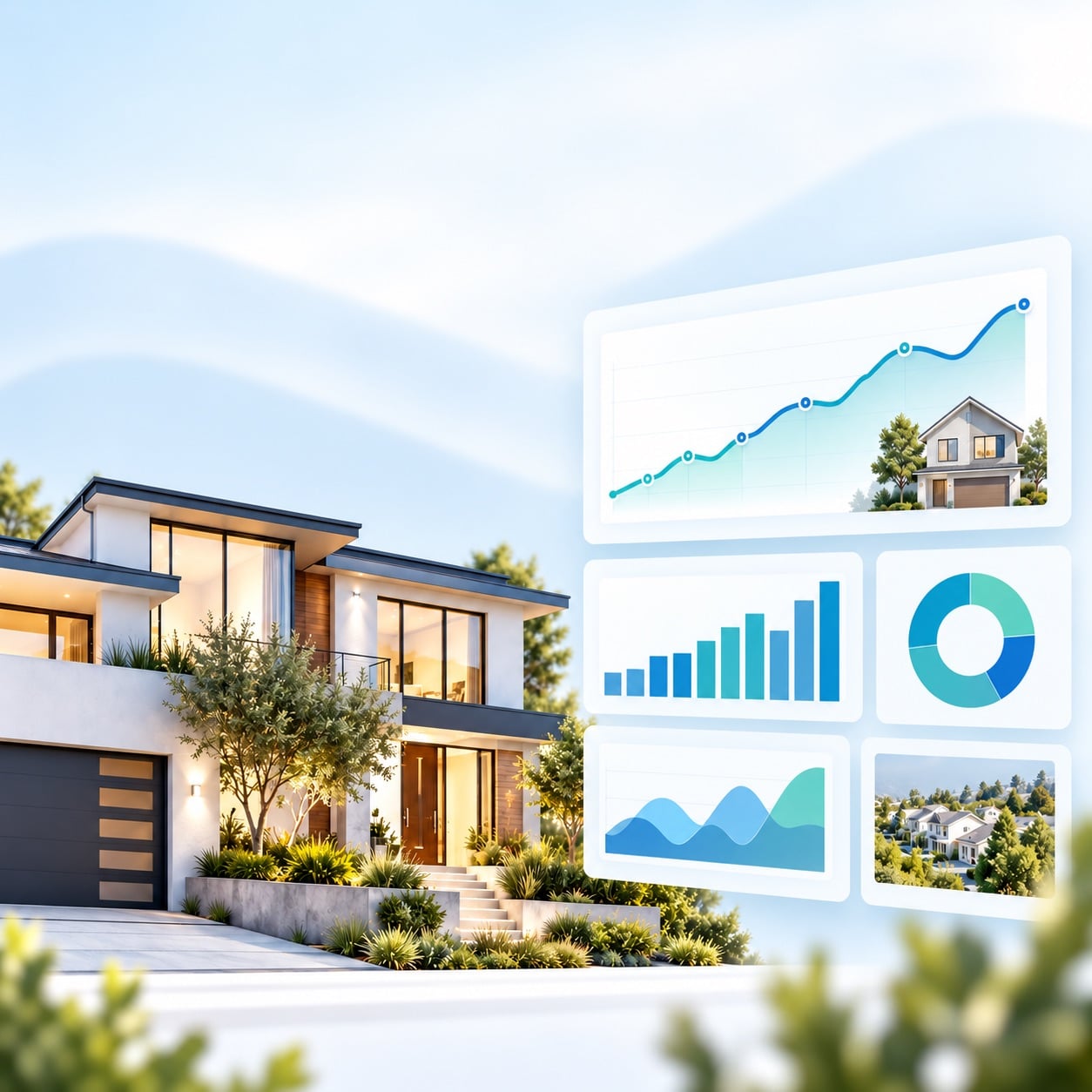
Live MLS Data
What Are Homes Actually Selling For Right Now?
Median price, days on market, and how many homes are selling over asking, pulled straight from current MLS data for your neighborhood.
See the Live Sales Data →What Makes the Living Arrangement Actually Work
In my experience, the physical structure of an ADU is often the easiest part. The harder part is the family dynamics and expectations that need to be established before anyone moves in. The ADU arrangements that work long-term have several things in common:
- Clear physical separation. Separate entrance, separate outdoor space if possible, no requirement for either party to pass through the other’s living space to access their own. The separation that feels redundant on a good day is the separation that preserves the relationship on a hard day.
- Explicit conversations about privacy. Does the adult child knock before entering? Does the parent? What are the boundaries around shared outdoor space, shared parking, shared laundry? These feel like small questions until they’re not being respected — and then they become big ones.
- A shared understanding of what “help” looks like. The parent is moving to the property partly because they need or will need more support. But how much support? Who provides it? At what point does a hired caregiver come in versus the adult child taking on more? Having this conversation before the move — not as a crisis — is essential.
- A plan for when care needs increase. An ADU is a great solution for an independently functioning senior who benefits from proximity to family. It becomes more complicated when someone needs significant daily care, and it may not be the right solution for someone who needs memory care or skilled nursing. Building with this in mind — designing the ADU for maximum accessibility, choosing a layout that could accommodate a live-in caregiver if needed — extends the usefulness of the arrangement.
- A financial agreement in writing. Who paid for the build? Does the parent have any equity in the adult child’s property? What happens if the relationship breaks down? What happens when the parent passes and the ADU is no longer needed? These questions have real answers that should be documented, ideally with attorney involvement.
Timing is Everything in Life
Aging-in-Place Design Features Worth Building In From the Start
If you’re building a new ADU specifically for an aging parent, the marginal cost of incorporating universal design and aging-in-place features is small relative to the total build cost — and retrofitting later is significantly more expensive. Features worth including from the start:
- Zero-threshold entry (no step at the front door)
- Thirty-six inch doorways throughout to accommodate a walker or wheelchair
- Walk-in or roll-in shower with bench seating and blocking in walls for future grab bar installation
- Lever-style door handles and single-lever faucets throughout
- Single-floor plan with no interior stairs
- Adequate lighting throughout, especially in bathroom and kitchen
- Reinforced blocking in bathroom walls for grab bars even if grab bars are not installed initially
- Wider hallways (42 inches if possible)
- Outlets and switches at accessible heights
These features cost relatively little to incorporate during construction — perhaps $5,000 to $15,000 in additional design and material costs. Retrofitting them later after the space is finished can cost two to three times as much and requires disruptive renovation work.

Does your home need some work first?
Let's get it market-ready, and pay for it at closing.
Paint, repairs, flooring and staging, all handled for you through Compass Concierge with nothing out of pocket up front and no contractors for you or your family to manage.
See How It Works →Rather talk now? Call or text 408.413.3087
When an ADU Might Not Be the Right Answer
ADUs are a great solution in the right circumstances. They’re not the right solution in all circumstances. Some situations where I’d encourage families to think carefully before committing:
- When the adult child’s lot doesn’t support a quality ADU. Small lots, difficult site conditions, heavily constrained setback requirements, or a layout that produces an ADU with no privacy or no outdoor access can result in a living environment that doesn’t serve anyone well.
- When the parent needs more care than proximity can provide. An ADU is not an assisted living facility. If your parent currently needs significant daily help with activities of daily living, medication management, or has cognitive impairment that requires supervision, a well-staffed assisted living or memory care community may actually serve them better — even though it feels less intimate than being on your property.
- When the family relationship can’t bear the proximity. Not every parent-adult child relationship improves with daily proximity. Be honest with yourself about this. A loving, healthy relationship maintained across town sometimes works better than a strained one maintained across a backyard.
- When the timeline doesn’t work. A full ADU build typically takes 12 to 24 months from permitting to move-in. If the need is more urgent than that, alternative arrangements need to bridge the gap.
If you’re exploring an ADU as part of a broader senior transition plan, I’m happy to help you think through the full picture — including whether it makes sense for your specific situation, what the parent’s existing home might sell for, and what the financial picture looks like. Reach out any time.
Frequently Asked Questions
How long does it take to get an ADU permitted and built in Silicon Valley?
Typical timelines run 12 to 24 months from initial planning through occupancy. Design and engineering generally takes two to four months. Permitting can take one to six months depending on the city and project complexity. Construction typically takes four to twelve months depending on the approach. Garage conversions and internal conversions tend to be faster; new detached structures take longer. Working with a contractor or design-build firm experienced in your specific city’s ADU process can significantly reduce delays.
Does building an ADU require the parent to sell their existing home?
Not necessarily — but selling the parent’s existing home is a common and often financially logical approach to funding the build. Families also fund ADU construction through home equity loans or HELOCs on the adult child’s property, through the parent’s savings, or through a combination. A financial planner can help model the right funding approach for your specific situation.
Will an ADU affect my property taxes?
Yes — adding an ADU will trigger a reassessment of the added square footage, increasing your property tax bill proportionally. The existing assessed value of the primary residence is not reassessed (Prop 13 protections remain). Only the new structure is assessed at current market rates. Your county assessor’s office can provide specific information on how ADU additions are assessed in your county.
Can the parent own the ADU separately from my main home?
Under California law, an ADU is part of the parcel on which it sits — it cannot be sold separately from the primary residence. There are emerging mechanisms for condominiumizing ADUs in some circumstances, but this is still relatively new and legally complex territory. An estate planning attorney can help structure the financial arrangements between family members appropriately even though the property cannot be separately owned.
What happens to the ADU when my parent no longer needs it?
An ADU is a permanent improvement to the property with significant value. It can be rented to generate income, used by other family members, used as a home office or studio, or simply retained as additional living space. Bay Area ADUs typically add substantial resale value to the primary property. The “what happens next” question is worth thinking through before building — a well-designed ADU serves multiple purposes over a property’s lifetime.
Thinking About an ADU? Let’s Talk.
I work with families navigating exactly this kind of multigenerational transition regularly — from figuring out whether an ADU makes financial sense, to selling the parent’s existing home to fund the build. Book a free call with Seb →
Time to talk to a REALTOR?

Senior Friendly Homes in Silicon Valley South
2
3
4
5
6
7
8
9
10
11
12
13
14
15
16
17
18
19
20
21
22
23
24
25