The May 2026 Silicon Valley real estate update is mostly a story of more of the same. Prices in Santa Clara County are flat year over year, inventory is doing what spring inventory always does, and the market continues to grind along at roughly the same pace it had twelve months ago. None of that is dramatic. But if you’ve owned your home here for two or three decades, a flat year still has implications worth thinking through, because the math of holding versus selling looks different in a market that’s pausing than it does in one that’s climbing.
I’m Seb Frey with Compass, the Seasoned Living Strategist for Silicon Valley. In this update, I’ll walk you through the April 2026 numbers for Santa Clara County single family homes, give you some national context that matters for how this all plays out, and then talk about what it means for someone sitting on a lot of equity in a long-held home.
Prices Are Exactly Flat Year Over Year
The median sold price for a Santa Clara County single family home in April was $2,100,000. That’s up 2.4% from March, the usual seasonal lift, but year over year it’s exactly flat. Zero percent change in twelve months. What’s old is new, again!
For a market that’s appreciated reliably for decades, a flat year is a notable data point. If you bought your home in the late 1980s or 1990s, you’ve watched this market double, triple, and double again, with some painful drawdowns along the way that always recovered. A flat year in the context of your timeline is a small comma in a very long sentence. But it’s also a signal worth understanding, because the strategy that makes sense in an appreciating market isn’t always the strategy that makes sense in a flat one. Really, the market has been more or less flat for years now, as pricing appears to be, in fact, returning to mean.
Here’s a more telling number. The median price per square foot in April came in at $1,128, which is down 3.1% from March and down 2.7% from a year ago. So while the headline price is flat, when you account for the size of homes actually changing hands, prices have softened slightly. Buyers are getting a bit more square footage for their dollar than they were last spring. The market isn’t crashing, far from it, but it isn’t galloping either.
What Buyers and Sellers Are Doing
We finished April with 1,219 single family homes for sale in Santa Clara County, up 14% from March but only up about nine-tenths of a percent compared to April of last year. That month-over-month jump is normal for spring. The year-over-year number is the one I’d pay attention to. We’re essentially flat with where we were a year ago, and a lot of people, myself included, expected inventory to be building faster than this. There’s a narrative out there that a wave of longtime homeowners is about to flood the market and tank prices. The data simply isn’t showing that. People are staying put, by and large, which means if you do decide to sell, you’re not walking into a crowded field. That’s a real advantage in a market like this one.
Closed sales in April came in at 843, up 15% from March and up about four-tenths of a percent year over year. The forward-looking number worth watching is pending sales, which came in at 884, up 7.8% from April of last year. Buyer demand is showing up in real numbers out there. People are looking, touring, and writing offers. This market isn’t asleep, even if the price headlines suggest otherwise.
Months of inventory sits at 1.4, which means that if no new homes came on the market, we’d run out at the current pace of sales in about six weeks. By any traditional measure, that’s firmly a seller’s market. For context, a balanced market is somewhere between three and four months of inventory. We’re nowhere close to balanced, and that’s how we’re maintaining pricing in the face of stubbornly high interest rates.
Median days on market crept up to 11 days in April, up 23% from March and up 10% from a year ago. Eleven days is still very fast by any reasonable standard, and that 23% jump is well within the margin of error. I really wouldn’t read too much into it.

Tech, AI, and Why Your Block Matters More Than the County Number
Three things are tugging on this market right now, and they’re all connected.
The first is the tech economy, which has been generating headlines all year. Layoffs at Amazon, Meta, Salesforce, Oracle, Intel, and a long list of others. Joint Venture Silicon Valley has been tracking how this affects the region, and their CEO Russell Hancock has described the current environment as one where companies are still working through the dismantling of pandemic-era hiring. Some of those layoffs are starting to push homeowners toward listing, but most Silicon Valley homeowners with real equity aren’t panic selling over a single layoff. You’ve been here long enough to know that layoffs come and go, and we’re more in a boom phase overall than a bust phase.
Speaking of boom, Google’s continued investment in San Jose is part of that picture too. Even with the company pausing its Downtown West project near Diridon Station, it’s now pouring resources into the Meadow Point research campus in Alviso, where it has spent $452 million acquiring land for AI-focused research facilities. AI is the single most consequential force in the Silicon Valley economy right now, and it cuts both ways. Companies that get AI right will need more office space, more engineers, more housing for those engineers. The ones that don’t are going to shrink and point the finger at “AI productivity gains” to justify the cuts.
That mixed picture explains why our housing data looks the way it does. The economy isn’t crashing, but it isn’t booming uniformly either. If your neighborhood is one where Google or Apple people are buying in, you’re sitting on a different market than your friend across town. The range across our local neighborhoods is enormous: Old Palo Alto’s median sale price is over $9 million, Palo Alto sits at $5.7 million, while Milpitas comes in at $1.4 million and Berryessa at $1.65 million. That’s the spread within a single county. The headline “Santa Clara County median” hides enormous variation block by block, which is why a generic county number doesn’t really tell you what your own house is worth.
The National Picture Underneath Our Local Numbers
Silicon Valley doesn’t operate in a vacuum, so the macro backdrop matters too. April 2026 added 115,000 jobs nationally, modest but a real improvement over much of 2025, when we saw multiple months of outright job losses. The hiring rate ticked up to 3.5% in March, which matters because people moving for work is one of the biggest drivers of housing demand. Initial jobless claims came in at 190,000 on April 25, matching pre-2020 lows.
Foreclosures came in at 52,800 in Q2 2025, very low by historical standards. That matters because when foreclosures stay low, distressed inventory doesn’t flood the market and pull prices down. Between high homeowner equity, low locked-in mortgage rates, and low unemployment, foreclosures are likely to stay low through 2026 and into 2027.
The negative piece is inflation. The latest CPI print came in at 3.3%, the highest reading in nearly two years, and the Fed’s preferred PCE measure printed at 3.5%. Energy is a big part of that story; oil hit a four-year high in April, with tariffs and geopolitical uncertainty pushing prices higher. Higher inflation paired with strengthening employment isn’t the setup that pushes interest rates lower, so don’t look to the Fed for cuts any time soon.
On the supply side, home building has slowed noticeably. April permits came in at 895,000 nationally, and the number of homes under construction has collapsed to 587,000, down 24% from its peak. The new construction supply that helped buffer existing-home prices over the last few years is fading, which puts a floor under prices over the medium term.
Does your place need a little work?
Sell As-Is. Sell for More.
No remodel, no lowball investor offer. Most Bay Area sellers net more selling as-is, and I'll show you how to get full market value without fixing a thing.
Show Me How →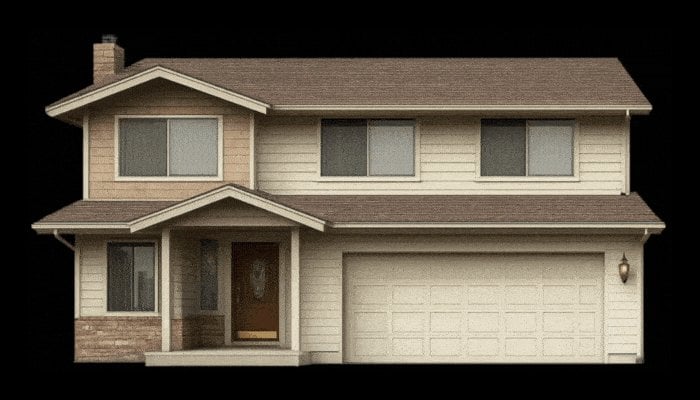
The Mortgage Rate Paradox
National 30-year rates are sitting around 6.1 to 6.4%, which is 60 to 70 basis points lower than a year ago. On the surface, that’s great news for buyers, and it absolutely is. But here’s the thing nobody really wants to say out loud. Rates fall when the bond market thinks the broader economy is weakening, because investors flee to safer assets like treasuries, and that pushes yields down, which drags mortgage rates along.
So yes, lower rates help affordability. But they’re also a flashing yellow light that the economy is softening. In Silicon Valley, where home values track the local job market closely, that’s the paradox we’re sitting in. Cheaper money helps, but only if the jobs that pay the mortgages stick around. For a longtime homeowner thinking about whether to sell this year or hold for another five, that paradox is the thing to watch.
There’s also a national mortgage rate lock-in dynamic, where the gap between the outstanding rate on existing mortgages (around 4.5%) and the current market rate (around 6.1%) keeps a lot of homeowners frozen in place. For many longtime Silicon Valley homeowners, that lock-in is less of a factor, especially if you’ve paid off your mortgage or you’re sitting on so much equity that the rate on any remaining loan isn’t really driving your decision.
What This Means If You’ve Owned Your Home a Long Time
The Silicon Valley market in May 2026 is doing what you’d expect from a market working through real, complicated crosscurrents. It isn’t crashing, and it isn’t booming. It’s continuing to adjust to higher rates, mixed tech employment news, and a national economy that’s giving off conflicting signals.
Whether that adjustment is an opportunity for you depends entirely on your specific situation. The longer you’ve owned your home, the more options you actually have. You can stay where you are. You can sell into a flat but still firmly seller-favored market. You can downsize and pull substantial equity out of a house that’s gotten larger than your current chapter requires. You can move to a different California county and bring your property tax base with you under Proposition 19, which I wrote a complete explainer on for anyone unfamiliar with the rules. You can hold and pass the asset to your kids, though the rules around that changed significantly under Prop 19 and are worth understanding before you assume anything.
The real question isn’t whether to sell. It’s whether the next move you make takes the equity you’ve built and puts it to work harder for the next chapter than it’s working right now. That’s actually the question worth thinking about in a flat year, because flat years are unusually good moments to make strategic moves without feeling like you’re either chasing a rising market or fleeing a falling one. The pressure is off. The numbers aren’t running away from you in either direction. You get to think clearly about what you actually want next.
If you’ve got a home in the Bay Area and you’re trying to figure out whether to sell now, sell later, or just sit tight and let things play out, I’d genuinely love to have a real conversation with you about it. No pitch, no pressure, just honest analysis based on your house, your block, and your specific numbers. Call me direct at 408-596-1623. I’d love to chat about your situation, your needs, goals, and timelines, and how I can help you make your next move the best one yet.

Time to talk to a REALTOR®?
Book a Call with Seb
Selling, buying or just weighing your options? Pick a time that works for you and we'll talk it through.
Pick a Time →Rather talk now? Call or text 408.413.3087
Senior Friendly Homes in Silicon Valley South
2
3
4
5
6
7
8
9
10
11
12
13
14
15
16
17
18
19
20
21
22
23
24
25