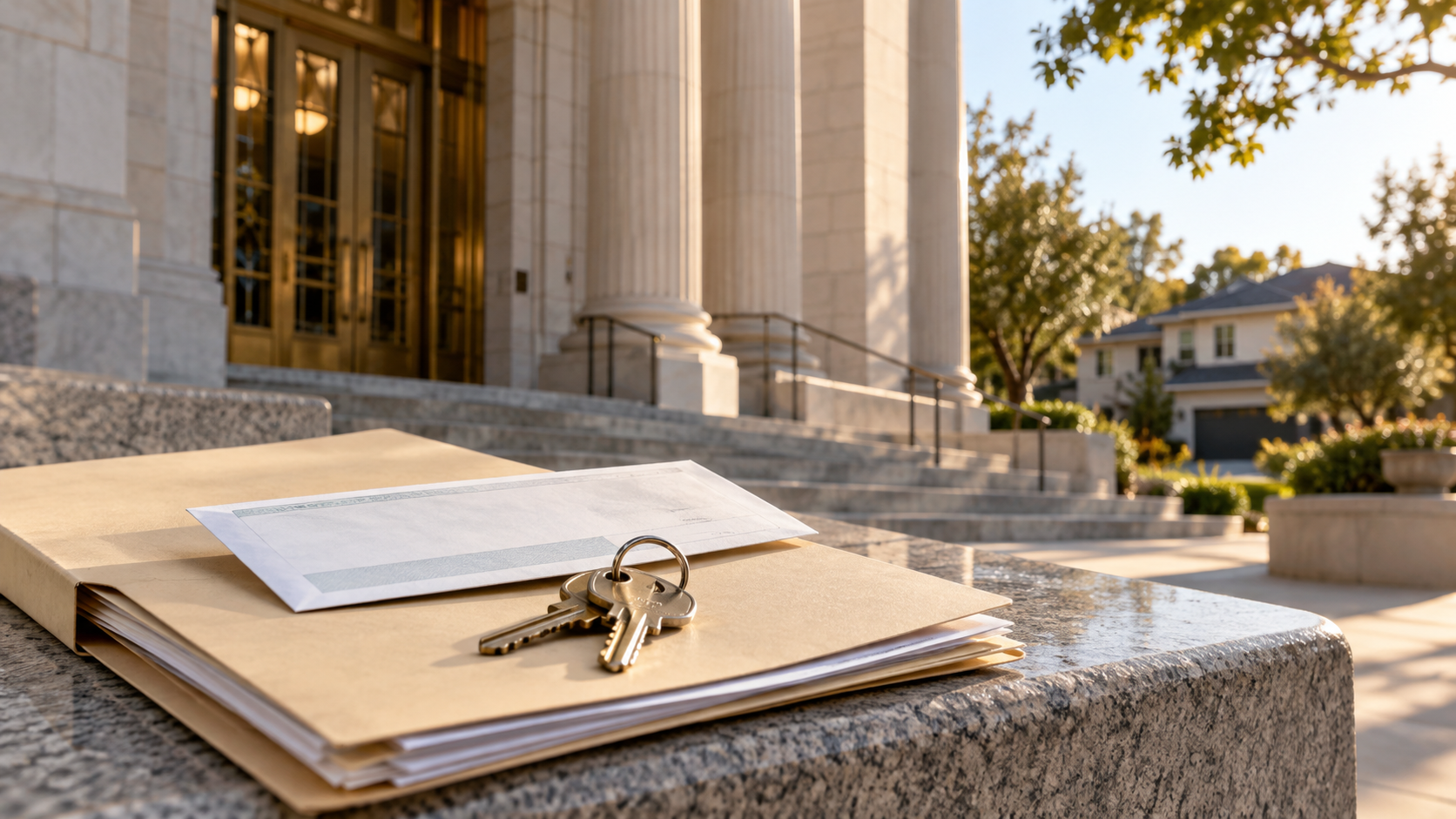
The probate confirmation hearing is the part of the process that makes executors and buyers the most nervous, mostly because nobody explains ahead of time what actually happens in that courtroom. I have sat through these hearings with clients many times at the Downtown Superior Court in San Jose, and once you understand the mechanics, it’s far less mysterious than it sounds. This article covers the overbid rules, the math, what to bring, and how the commission gets handled. It’s part of my complete guide to selling a house in probate in Santa Clara County.
Key Takeaways
Summary: When a probate sale needs court confirmation in Santa Clara County, the accepted offer becomes the opening bid and other buyers can overbid right in the courtroom. Knowing the overbid formula, the deposit requirement, and the 90 percent of appraisal rule helps executors and buyers walk in prepared.
From my practice: In one probate sale, the estate’s full authority meant we could avoid a confirmation hearing, but only if the price stayed close enough to the probate appraisal. When six offers came in, I screened out anything low enough to trigger court confirmation, and the estate sold for $700,000 all cash, 98.6% of the $710,000 appraisal, with no court date and no overbid.
Why a Sale Ends Up in Court
There are two main routes into a confirmation hearing. The first is that the executor only has limited authority under the Independent Administration of Estates Act, so the law requires court confirmation of any real estate sale. The second is that the executor had full authority, sent a Notice of Proposed Action, and an heir objected. I explain both paths in IAEA full authority vs. court confirmation. Either way, once the sale is headed to court, the playbook changes.
Before the Hearing
After the executor accepts an offer, the attorney files a Report of Sale and Petition for Order Confirming Sale (form DE-260) with a copy of the purchase contract. Santa Clara County’s local rules ask that this petition be filed within 30 days of accepting the offer. Heirs get notice of the hearing, and unless the will grants a power of sale, a notice of the sale also has to be published. The hearing date depends on the court’s calendar, and in my experience it’s commonly four to eight weeks after filing.
The probate examiners review the petition before the hearing and post notes and tentative rulings online a few days ahead. If the examiner flags a problem, such as a stale appraisal or a missing document, it can lead to a continuance, and every continuance is another few weeks that the buyer has to wait. A good attorney clears those issues before the hearing date.
During this waiting period, I keep marketing the property. That sounds strange to people, since the house is already under contract, but the whole point of the hearing is to give other buyers a chance to bid. I keep the listing active as a court confirmation sale, share the hearing date and the minimum overbid with agents who ask, and make sure interested buyers understand the terms.
Free Executor Checklist
Inherited a Home in Silicon Valley? The Executor's First 30 Days
A plain-English checklist for adult children and executors that covers how to secure the house, what not to throw away, whether you're dealing with a trust or probate, and the tax questions to ask before anything gets listed or cleared out.
You're all set. The Executor's First 30 Days checklist is on its way to your inbox. If you don't see it in a few minutes, check your promotions or spam folder. And if you have questions in the meantime, you're welcome to call or text Seb at 408.413.3087.
The Overbid Math
Probate Code section 10311 sets the minimum first overbid at 10 percent more on the first $10,000 of the original bid and 5 percent more on the amount above $10,000. The court calculates this without regard to any commission. Here is what it looks like at typical Santa Clara County price points.
| Accepted offer | Minimum first overbid | Increase required |
|---|---|---|
| $950,000 | $998,000 | $48,000 |
| $1,400,000 | $1,470,500 | $70,500 |
| $1,650,000 | $1,733,000 | $83,000 |
| $2,200,000 | $2,310,500 | $110,500 |
| $3,000,000 | $3,150,500 | $150,500 |
That first jump is large, roughly 5 percent, and it’s the reason many court sales don’t draw an overbid at all. When they do, it’s usually because the original accepted price was conservative, often because the house needed work or the buyer pool was thin during the marketing period.
What Happens in the Courtroom
When the case is called, the judge confirms the basic facts: the accepted price, the appraisal, and that notice was given. Then the judge asks whether anyone in the courtroom wishes to overbid. If nobody speaks up, the judge usually confirms the sale to the original buyer on the spot. If someone does, they must make a bid at or above the statutory minimum, and the judge then sets the increments for the rest of the bidding, often a few thousand dollars at a time, sometimes more on higher-priced homes. The original buyer is allowed to bid too. Bidding continues until nobody goes higher, and the judge confirms the sale to the highest bidder.
A few practical details that matter:
- Bring the money. Overbidders are typically required to show a cashier’s check for 10 percent of their bid, payable to the estate. Bring a check for a round number that comfortably covers your maximum.
- Same terms, as-is. An overbidder buys on substantially the same terms as the original contract, and in practice that means no inspection or loan contingencies.
- Show up in person or through counsel. The bidding happens live in court. You can’t phone in a bid.
- The 90 percent rule still applies. The court won’t confirm a sale below 90 percent of the probate referee’s appraised value, and the appraisal generally needs to be within a year of the hearing.
Free Executor Strategy Call
Before you clear out the house or sign a listing, let's map out what comes next.
When a parent's home is left in your hands, the most expensive mistakes tend to happen in the first few weeks, long before anyone has a plan. Paperwork gets tossed, the insurance on a vacant house lapses without anyone noticing, or the home gets listed before anyone knows whether the sale needs court confirmation. In 30 minutes we'll talk through whether you're working with a trust or probate, what the house really needs before it sells and what it doesn't, how to keep everyone in the family on the same page, and a realistic timeline, so you can make good decisions without feeling rushed.
Book My Executor Strategy Call →
A real example: Here’s the math that sends a sale to the courtroom. On a probate co-op I sold, the referee appraised the shares at $755,000, and the best the market would pay was $679,000, just under 90% of that appraisal. In a court confirmation sale, that price would have run into the 90% rule and an open overbid at the hearing. Because the executor had full IAEA authority, no confirmation was needed, and the cash buyer closed without ever having to worry about being outbid in court.
How the Commission Is Handled
In a court confirmation sale, the judge approves the real estate commission, and the commission is paid on the final confirmed price. When an overbidder is represented by a different agent, the court divides the commission among the agents under the rules in Probate Code sections 10160 through 10166. One example is section 10162: when the original bidder had no agent and the winning overbidder does, that agent’s share is capped at half the difference between the original bid and the winning bid, unless the agent holds the exclusive listing. Your attorney and listing agent should explain the split before the hearing so there are no surprises for the estate or for the buyers’ agents who are bringing clients.
After the Judge Confirms
The attorney prepares the Order Confirming Sale of Real Property (form DE-265), the judge signs it, and a certified copy goes to escrow. Title will require the certified order and certified Letters. Closing usually happens within about 30 days of the order. If the original buyer was overbid, their deposit is returned. If the winning bidder fails to close, the court can vacate the sale, and the estate may keep the deposit to cover its damages.
My Advice for Each Side
For executors: price the house to attract a strong opening offer, because a lowball contract is the price the estate is stuck with if nobody overbids. Keep marketing through the hearing, stay in touch with every buyer who showed interest, and keep the heirs informed so there are no objections at the hearing itself.
For buyers: decide your absolute maximum before you walk in, bring a cashier’s check that covers 10 percent of it, and do your inspections before the hearing, because you’ll be buying as-is. If you’re the original buyer, remember you can bid at the hearing too.
For the full process from petition to distribution, see my guide to selling a house in probate in Santa Clara County, and for timing, see how long it takes to sell a house in probate in Santa Clara County.
Sources and Further Reading
- California Courts Self-Help Guide: Property After Someone Dies
- California Probate Code § 10503 (sales under independent administration authority)
- California Probate Code § 10300 (notice of sale for court-supervised sales)
- California Probate Code § 10311 (overbids at confirmation)
- IRS Publication 559, Survivors, Executors, and Administrators

Does your home need some work first?
Let's get it market-ready, and pay for it at closing.
Paint, repairs, flooring and staging, all handled for you through Compass Concierge with nothing out of pocket up front and no contractors for you or your family to manage.
See How It Works →Rather talk now? Call or text 408.413.3087
Frequently Asked Questions
How is the minimum overbid calculated in a California probate sale?
Under Probate Code section 10311, the first overbid must be at least 10 percent of the first $10,000 of the accepted bid plus 5 percent of the amount over $10,000. For a $1,650,000 accepted offer, the minimum first overbid is $1,733,000.
Do I need a deposit to overbid in probate court?
Overbidders are typically expected to bring a cashier’s check for 10 percent of their bid, payable to the estate. Confirm the exact requirement with the estate attorney before the hearing.
Can the original buyer bid at the confirmation hearing?
Yes. The original buyer can respond to an overbid and continue bidding in the increments set by the judge.
How long after the confirmation hearing does escrow close?
Usually within about 30 days after the judge signs the order confirming sale, once a certified copy is delivered to escrow.
Can you have contingencies in a court confirmation sale?
In practice, no. Buyers in court confirmation sales generally need to close as-is without loan or inspection contingencies, so inspections should be done before the hearing.

Free 9-Step Guide for Heirs
The Guide to Selling an Inherited Property with Ease
Nine steps from the day you inherit to the day you close: settling the debts and utilities, clearing the house without losing the keepsakes, getting a real number on value, knowing when you need a probate attorney and a CPA, and which repairs actually pay you back. Every month you hold the house costs property tax, insurance and utilities, so it pays to have a plan before you start.
You're all set. Thanks! The Guide to Selling an Inherited Property with Ease is on its way to your inbox. If you don't see it in a few minutes, check your promotions or spam folder.
Senior Friendly Homes in Silicon Valley South
2
3
4
5
6
7
8
9
10
11
12
13
14
15
16
17
18
19
20
21
22
23
24
25