Key takeaways
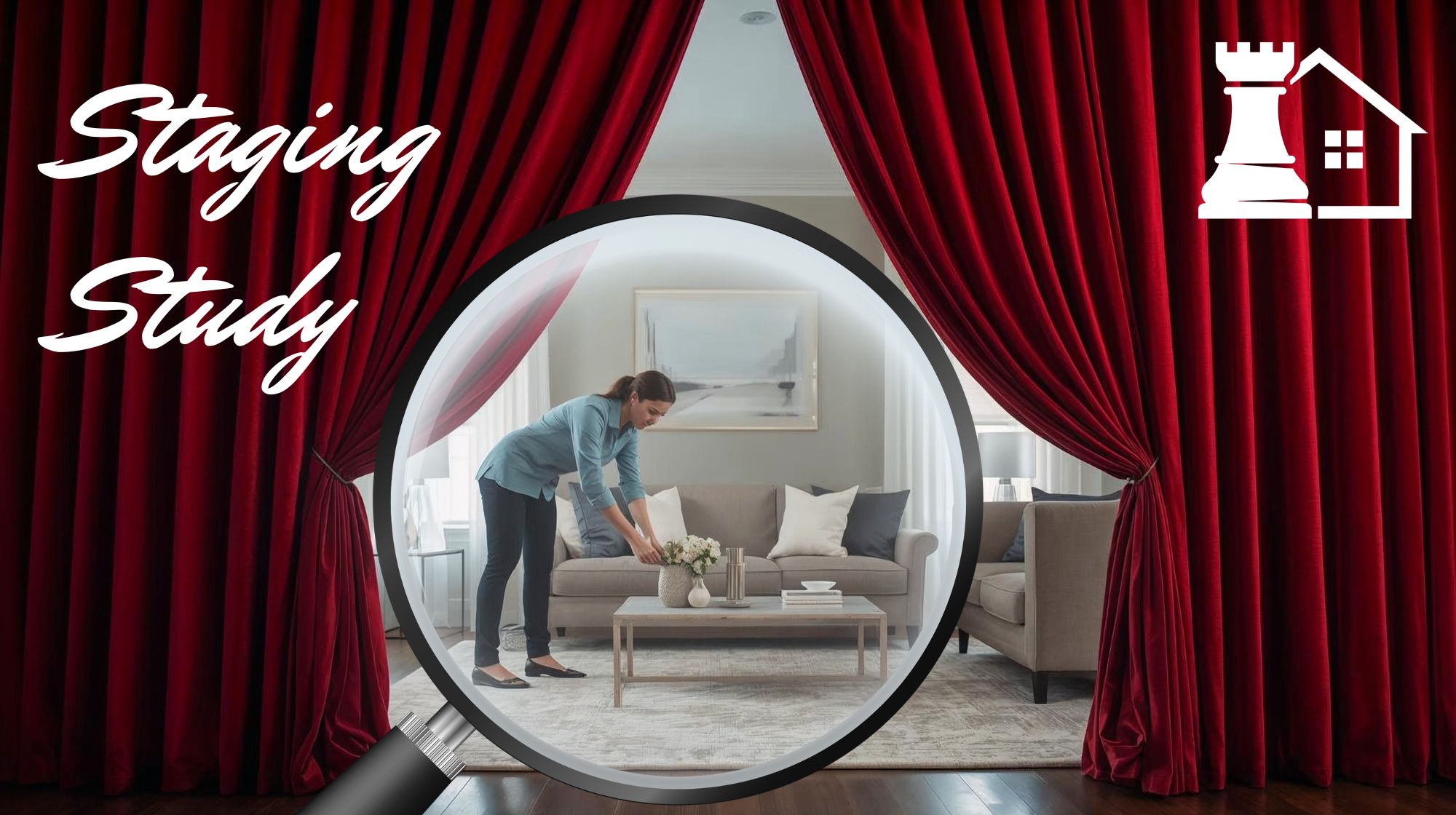
A controlled academic study found that staging with rented furniture and décor did not produce statistically significant increases in buyers’ price valuations, even though both buyers and agents believe staging changes what buyers will pay.
Staging can improve a buyer’s overall impression and perceived livability of a home, but that doesn’t translate into higher sale prices—so its value is primarily marketing, not valuation.
The biggest practical danger of staging isn’t cost alone—it’s tempting sellers to overprice their home based on staging’s look, which can actually reduce sales success by deterring buyers and increasing time on market.
Summary: Research shows staging with rented furniture changes perception but not buyers’ willingness to pay—so treat staging as marketing, not a value-boosting investment, and avoid letting it justify an inflated list price.
If you’ve been anywhere near Bay Area real estate for more than five minutes, you’ve heard the drumbeat: Stage the home. It will sell for more. It’s practically treated like a law of nature. Sellers budget for it. Agents recommend it. Stagers promise it. And plenty of people walk through a beautifully furnished house and think, “Yep—this feels expensive.”
But here’s the question that actually matters if you’re the one paying for it: does staging (meaning rented furniture and décor) reliably increase the final sale price—or is it mostly a marketing tool that improves how the home feels without changing what buyers will pay?
A peer-reviewed paper in the Journal of Housing Research set out to test that exact question in a way most “staging discussions” never do: by isolating staging and measuring what people actually valued. The authors describe their work as the first study to examine the debated merits of staging, and their core finding is blunt: buyers did not significantly change their valuations based on staging conditions, even though both buyers and real estate agents believed staging would matter.
What follows is my take on the findings, what they do and don’t prove (especially on “time to sell”), and how I think Bay Area homeowners should use this research so they don’t make the most expensive mistake of all: overpricing a home because it looks nice.
What the researchers mean by “staging” in this study
Before we go any further, we need to be precise—because “staging” gets used to describe a dozen different things.
In this study, staging is narrowly defined around two presentation variables:
- Furnishings: nicely furnished vs. poorly furnished (“ugly”) vs. not furnished (empty)
- Wall color: neutral tan vs. unattractive purple in the main living area
That’s it. No talk about landscaping. No words about a new roof (unless the current roof is leaking, or would make it difficult for a buyer to get insurance). No kitchen remodel. No “fixed the cracked driveway.” No mention of deep cleaning. The point was to isolate the presentation layer—the stuff sellers often pay for because they believe it changes value.
The researchers created six experimental treatments (3 furniture setups × 2 wall colors). Participants were randomly shown one version of the same home through a virtual tour and asked to provide a market value opinion, along with ratings like overall impression and livability (how much they could see themselves living there).
This design matters because, in the real world, it’s hard to isolate staging. MLS data usually doesn’t track it cleanly, and “vacant” isn’t the same thing as “staged,” which the paper points out in detail. So the authors intentionally used an experimental method to hold everything constant except staging.
Sell As-Is. Sell Easy. Sell Smart!
The headline finding: staging did not change what buyers were willing to pay
Here’s the big one.
Across all six versions of the home—good furniture, ugly furniture, empty; neutral walls or unattractive walls—participants’ estimated home values did not differ in a statistically significant way. The paper’s abstract says it plainly: homeowners (buyers) “rationally do not significantly differ in their valuations based on staging conditions.”
And the results table that compares the “revealed” price preferences is even clearer. It shows mean values across treatments and then the differences between them, and it notes: none of the sets tested were significantly different at the 10% level.
So if your working assumption has been “staging makes buyers pay more,” this study challenges that assumption.
Not because buyers don’t notice staging. They do. But noticing something and paying more for the house are two different behaviors.
The weird part: everyone believes staging affects price (even when it doesn’t)
This is the part I think is most useful for real sellers and real agents, because it explains why the staging conversation gets so emotional.
The authors found that both homeowners and real estate agents believed staging conditions would significantly impact willingness to pay. Yet the measured valuations didn’t support that belief. That gap—between what people say they do and what they actually do in value formation—is a major theme of the paper.
They even ran a robustness check with a group of 77 real estate agents, and those agents overwhelmingly believed buyers would be swayed by staging conditions. The authors’ conclusion is direct: both agents and homebuyers were incorrect about staging’s impact on price opinion formation.
Why would that happen?
The paper offers a practical explanation that feels very real-world: buyers understand they don’t get to keep the furniture, and paint is relatively inexpensive compared to the cost of a home. That makes it rational that furnishings and paint color shouldn’t dramatically affect a valuation—even if they affect how the home feels.
What staging does change: impression and “livability”
Now, to be fair to staging: the study does not say presentation is meaningless. It just says presentation doesn’t carry through to a higher willingness to pay.
The abstract captures this nicely: staging conditions “do influence the process,” and neutral walls and good furnishings significantly influence a buyer’s perceived livability and overall opinion of the home—yet staging “is not enough to result in a higher selling price.”
In the conclusion section, the authors repeat the same idea: properly staged homes with neutral wall colors can significantly add to “overall impression” and “livability,” but neither translates into a greater revealed willingness to pay.
Their regression results back that up. When explaining “revealed opinion of home price,” none of the staging conditions were statistically significant, but an ugly paint color and an empty home significantly detracted from the overall impression score, and empty homes also negatively impacted livability.
Here’s the way I translate that into normal English: staging can make a home feel better without making it worth more—at least in this controlled study of value perception.
And that’s exactly where sellers get tripped up.
Your Neighbor Sold their House too Cheap!

The hidden risk of staging: it tempts sellers into overpricing (and that’s a cardinal mistake)
I’ve watched this happen more times than I can count, and this study helps explain why.
The paper shows a statistically significant discrepancy between stated preferences and revealed preferences. In other words, people (including agents) believe staging should change price, even when it doesn’t show up in the valuation behavior measured here.
That belief has consequences.
Because when a home is freshly staged, sellers often feel—very naturally—that they should therefore list it for sale at a higher price. The house looks like a magazine. The photos are perfect. The living room feels like a model home. The emotional conclusion is, “We’ve elevated the product; we should elevate the price.”
This is where the trap snaps shut.
Pricing is not an award ceremony for effort. Buyers don’t pay more because you tried harder. Buyers pay based on alternatives: comparable homes, location, floor plan, condition, and the monthly payment reality in front of them. If staging doesn’t move willingness to pay (as this study found), then staging also doesn’t justify pricing above the market.
And overpricing is the mistake that costs the most money – because it doesn’t just risk a lower final price; it risks the entire trajectory of the listing. When you overprice, you miss the most motivated buyer pool in the first couple weeks, you rack up days on market, and buyers start asking, “What’s wrong with it?” Then price reductions feel like “discounts,” even when you’re simply coming back to reality.
I’m not claiming the study directly measured “overpricing behavior.” It didn’t. What it does provide is the behavioral ingredient that leads to overpricing: a widespread, confident belief that staging should raise value, even when measured valuations don’t reflect it. If you believe staging raises value, you’ll be tempted to bake that belief into the list price. That’s the danger.
So if you stage, the mindset has to be: staging is marketing, not valuation.
What about time to sell? This study can’t answer that (and it says so)
A lot of sellers don’t only care about price—they care about how long the process takes. Especially older homeowners. Especially families juggling a transition. Especially anyone trying to coordinate a purchase, a move, or a care decision.
The authors are very clear that sellers care about two primary components: selling at the highest price and in the shortest time possible. They also clearly demonstrate that revealed willingness to pay wasn’t impacted by staging conditions.
But then they state the key limitation: their experimental design does not allow them to examine the “time on market” component. So we should not misuse this study to claim, “Staging doesn’t help your home sell faster.” That’s not what they tested.
What the paper does say—very fairly—is that staging influences the process metrics (impression, livability) that are necessary conditions for purchase. It’s reasonable to infer that improved impressions could impact buyer urgency or the number of people who stay engaged through a showing. But that’s an inference, not a measured outcome here.
Concierge Services

Why this matters more in the Bay Area than many other places
In Silicon Valley and the broader Bay Area, buyers are not casual. Even when the market is hot, most serious buyers are doing the math and reading disclosures. And in a higher-rate environment, the monthly payment becomes the loudest voice in the negotiation.
That reality puts staging in its place.
Staging doesn’t change the school district, the commute, the lot, the natural light, the floor plan, the permitting story, the roof age, the foundation, the quality of the remodel, the neighborhood feel, or the comps that appraisers and buyers will use. Those are the drivers of value. And this study’s “no significant difference in valuations” result aligns with that common-sense point: staging is transitory and cosmetic, and buyers price the underlying asset.
Where staging can still help in the Bay Area is the scroll-stopping moment online. Better photos can get more eyeballs. More eyeballs can mean more showings. More showings can mean better odds of the right buyer showing up at the right time.
But again: that’s marketing, not magic.
Stop the Scroll Without Staging
Speaking of stopping the scroll, virtual staging can be a smart way to do this (especially for vacant homes) because it helps buyers instantly understand scale and how a room could live. The key is doing it transparently. California’s new law AB 723 (effective Jan 1, 2026) requires a clear disclosure when listing images are digitally altered in a way that materially changes what a property looks like, and if the images are posted online you generally need to also provide the original, unaltered version (often shown alongside or linked). My practical approach: keep edits limited to furniture/decor (no “hiding” defects), label images as digitally altered/virtually staged, and make the originals easy to see.
The Money Shot That Matters
But aside from virtually staged photos, then there’s the photo that matters most: the first one. That “hero” image is usually your exterior curb-appeal shot, and it has to be a real photo—not a rendering—because buyers use it to decide whether they’re clicking, saving, or booking a showing. A great first image starts with the real-world basics: clean lines, good light, a tidy entry, sharp landscaping, great lighting, and a house that reads “cared for.” You can absolutely do normal photo cleanup (brightness/color correction), but the exterior itself needs to show well, because that first impression sets the tone for everything that follows. Curb appeal actually does matter, so this is something worth paying attention to, and spending money on.
So what should sellers do with this information?
If you’re deciding how to spend money before listing, this study suggests a simple framework: prioritize what impacts value and reduces buyer objection before you spend heavily on rented furniture.
The authors basically underline the logic: because buyers don’t get to keep the furniture and paint is relatively inexpensive, it appears rational that these things don’t change opinions of home values. That’s not a moral statement about staging. It’s a pricing statement.
If a home is lived in, reasonably tidy, and has decent light, you often get most of the benefit simply by editing the space. Declutter. Depersonalize the loud stuff. Create breathing room. Make the home feel calm. That kind of preparation isn’t “staging” in the rented furniture sense; it’s positioning.
If the home is empty, oddly laid out, or hard to read in photos, some light staging may help the marketing. But the objective should be: “make it photograph and show cleanly,” not “raise the comps.”
And if you do stage, you have to guard against the psychological trap we just talked about: the temptation to list higher because the home looks better. The study shows that belief in staging’s pricing power is common, even when revealed valuation doesn’t support it. That makes overpricing more likely. Overpricing is the thing you can’t afford.
What I’d tell a Bay Area homeowner in One Conversation
If we were sitting at your kitchen table, here’s the honest version:
Staging can absolutely make your home feel more appealing. This study found it can improve overall impression and perceived livability. But the same research found buyers didn’t reliably increase their value estimate based on staging conditions.
That means staging is best treated as a marketing decision. Sometimes it may be worth it, but usually it is completley unnecessary. And sometimes it backfires – it can make small rooms appear smaller and more cramped, for example. But more often, it backfires because sellers start believing the staging itself justifies a higher list price, which then costs them buy narrowing the pool of buyers (since lower prices always attract more buyers, thanks to the law of supply and demand).
So the smartest way to use staging is restrained: make the home easy to understand, easy to like, and easy to say yes to—without letting the décor talk you into an unrealistic price.
Downsizing Done Right
A quick note about “industry claims” and why this study is so refreshing
One reason this paper is worth writing about is that the authors explicitly call out the lack of rigorous quantitative staging studies, partly because of data constraints. They also note that the staging industry includes many participants and that stagers often make undocumented claims about staging being “necessary” to sell and cheaper than a price reduction.
The study doesn’t call staging a scam. It simply tests the key promise: “Will buyers pay more?” And in this experiment, the answer was: not in a statistically meaningful way.
Bottom line: how I’d summarize the findings
This study found four things that matter to a seller:
- Buyers and agents believe staging affects willingness to pay.
- Measured valuations didn’t change in a statistically significant way across staging treatments.
- Staging improves “process” factors like overall impression and perceived livability, but the effect doesn’t carry through to the bottom line price in the experiment.
- The study cannot evaluate time on market, so it doesn’t prove staging doesn’t help a home sell faster.
And here’s the practical Bay Area takeaway I’d want you to remember:
If staging means renting furniture and décor, don’t assume it increases your sale price. If you stage, treat it as marketing—not as a reason to list higher. Overpricing will cost you far more than staging will ever earn back.
Frequently Asked Questions
Does renting furniture and décor (traditional staging) reliably raise the sale price?
Not reliably. Staging can improve how a home looks and feels, but the evidence discussed on this page suggests it does not consistently increase what buyers are willing to pay. In other words: staging may improve presentation without increasing valuation.
If staging doesn’t raise the price, why do people still do it?
Because staging can improve first impressions and help a listing look better online and during showings. That can matter for attention and engagement. The key is treating staging as marketing—not as a justification to raise the list price.
Can staging help a home sell faster?
Possibly, but this page’s main research discussion emphasizes a limitation: the study it references measured buyer valuation behavior, not time on market. So it’s fair to say staging can help the “process” (impression, livability), but you should be careful about claiming it will shorten selling time in every case.
What’s the biggest risk of staging?
The biggest risk is psychological: staging can tempt sellers to overprice because the home “feels” elevated. Overpricing often creates longer market time and weaker leverage. If you stage, keep the mindset that it’s a marketing expense, not a value-creation event.
When might staging still be worth it?
Staging can be useful when a space is hard to understand, very empty, has awkward scale, or when presentation is likely to increase showings. The best test is practical: will furniture help buyers understand how rooms function and help your photos communicate the layout clearly?
If my budget is limited, what should I do instead of staging?
Put money into the things buyers punish quickly: deep cleaning, lighting, eliminating odors, simple cosmetic touch-ups, and clear preparation that reduces “uh-oh” reactions. Those fixes tend to improve buyer confidence and reduce discounting during negotiation.
Is virtual staging allowed, and do I need to disclose it?
Virtual staging can be a smart alternative, especially for vacant homes, but disclosures may be required when images are digitally altered. If you’re using altered images in marketing, follow the applicable rules for disclosure and providing access to original, unaltered photos.
Time to talk to a REALTOR?

Senior Friendly Homes in Silicon Valley South
2
3
4
5
6
7
8
9
10
11
12
13
14
15
16
17
18
19
20
21
22
23
24
25