
Not every downsizer should buy their next home. Some of my happiest clients sold a longtime Silicon Valley house and chose to rent, whether that meant an apartment near their kids, a unit in an independent living community, or a furnished place for a year while they figured out what came next. Others would have been far better off buying, and a few learned that the expensive way. After 23 years and more than 460 closed sales, most of them with older homeowners and their families, I’ve watched both choices play out, so this article compares the two paths with real numbers, the California rules that change the math, and the questions I use to help older homeowners decide. It’s part of my ultimate downsizing guide for Bay Area seniors.
Key Takeaways
Summary: Renting after you sell your Silicon Valley home frees all of your equity and removes maintenance and property tax, while buying locks in your housing costs and can carry over your Prop 19 tax base. The numbers are often close in year one, so the real answer depends on how long you’ll stay, your health outlook, how much you value flexibility, and what you want to leave your heirs.
The Basic Tradeoff
| Rent | Buy | |
|---|---|---|
| Cash freed from your sale | All of it | What remains after the purchase |
| Monthly housing cost | Rent, which usually rises every year | Property tax, HOA dues, insurance, and maintenance |
| Protection from rising costs | Partial, since state law caps annual increases on many (not all) rentals | Strong, since Prop 13 limits increases in your assessed value to 2 percent a year, though HOA dues and insurance can still climb |
| Flexibility to move again | High, usually with 30 to 60 days’ notice | Lower, since selling again takes months and typically costs 6 to 8 percent of the price |
| Maintenance | The landlord’s job | Yours or the HOA’s |
| Who controls your housing | The landlord, who can sell, move in, or remodel | You |
| What heirs receive | The invested proceeds (appreciated investments in a taxable account also get a stepped-up basis at death) | The home, with a stepped-up basis at death |
An Example With Real Numbers
A widow sells her longtime Santa Clara home and nets about $1,700,000 after selling costs and taxes. She’s choosing between buying a $1,100,000 two-bedroom condo, using Prop 19 to keep her old low assessed value, and renting a two-bedroom apartment for about $4,000 a month. Here’s what her first year looks like if she invests whatever cash she doesn’t spend on housing and earns an assumed 4 percent on it.
| First-year picture | Buy the condo | Rent |
|---|---|---|
| Cash left to invest | About $600,000 | About $1,700,000 |
| Investment income at 4 percent | About $24,000 | About $68,000 |
| Housing cost for the year | About $16,000 (property tax on her carried-over base, HOA dues, HO-6 insurance, upkeep) | About $48,000 in rent |
| Income left after housing | About $8,000 | About $20,000 |
On paper, renting comes out about $12,000 ahead in year one. That edge shrinks fast once you look closer, though. The extra $44,000 of investment income is taxable, and at combined federal and California rates a good chunk of it goes to taxes. Any appreciation on the condo goes to her (and to her heirs with a stepped-up basis), and even 1 percent a year on $1,100,000 is $11,000. So year one is close to a wash, and the decision turns on what happens over the next decade. The figures are illustrative, and your financial advisor or CPA should run your real numbers.
What Changes the Answer Over Time
The longer she stays, the more buying tends to win, mostly because rent compounds. If her rent rises 5 percent a year, her $4,000 apartment costs about $6,200 a month by year ten, while the condo’s property tax can only rise 2 percent a year under Prop 13. On the other hand, buying and then selling again isn’t free. Closing costs on the purchase plus commissions, prep, and escrow on a future sale typically add up to 6 to 8 percent of the price, which is $65,000 to $90,000 on this condo. If there’s a real chance she’ll move to assisted living or closer to family within about five years, those transaction costs usually tip the math toward renting.
Her health outlook matters just as much as the market. A move into a care setting a few years from now means selling a condo, which is more work for her family at exactly the wrong time. That’s why I always ask about the next ten years before I ask about the next home. My article on how much money downsizing frees up walks through the cash-flow side in more detail.

Simple Strategy Guide
The Downsizing Guide for Bay Area Seniors
What to keep, what to let go, and how to get your home ready for today's buyers without a costly remodel, so you protect your equity and move on your own timeline.
You're all set. Thanks! The Downsizing Guide is on its way to your inbox. If you don't see it in a few minutes, check your promotions or spam folder.
How Much Protection Renters Really Have in California
A lot of my clients assume rent control will protect them, and the real answer is that it depends on the building. The state’s Tenant Protection Act (AB 1482, California Civil Code 1947.12) limits annual increases to 5 percent plus the regional rate of inflation, and never more than 10 percent, for most apartments more than 15 years old. After the first year, a landlord generally needs a legal reason to end the tenancy, and for no-fault reasons like an owner moving in or a major remodel, the tenant gets one month’s rent in relocation help.
The catch is what isn’t covered. Single-family homes and condos owned by individuals are usually exempt if the lease includes the required notice, and so are newer buildings. That’s exactly the kind of rental many older adults want, so read the lease carefully. The state cap is also scheduled to sunset on January 1, 2030 unless the Legislature extends it, and some cities, including San Jose and Mountain View, have their own stricter rules for older apartment buildings.
Independent Living and Continuing Care Communities
For many older adults, the rental that makes the most sense isn’t an ordinary apartment at all but a senior community. Independent living communities typically charge a monthly fee that covers the apartment plus some meals, activities, transportation, and housekeeping, and they usually don’t require a large entrance fee. Continuing care retirement communities, also called life plan communities, add an entrance fee, commonly several hundred thousand dollars and well over $1,000,000 at some Silicon Valley campuses, in exchange for access to assisted living and skilled nursing on the same campus as your needs change. Many entrance fees are partly refundable to you or your estate, and the refundable versions cost more up front.
Two things are worth knowing before you sign. First, part of a CCRC’s entrance fee and monthly fees is often treated as prepaid medical care, and under IRS Publication 502 that portion can count toward the medical expense deduction if you itemize and your medical costs exceed 7.5 percent of your adjusted gross income. The community tells you the deductible percentage each year. Second, CCRCs in California are licensed and overseen by the California Department of Social Services Continuing Care Contracts Bureau, which reviews their finances, so ask any community you’re considering for its most recent disclosure statement and audited financials.
Silicon Valley has several well-established communities, including The Forum at Rancho San Antonio in Cupertino, Vi and Channing House in Palo Alto, and The Terraces at Los Altos, and most have waiting lists, so it’s worth touring and getting on lists before you need them. The sale of the house usually funds the entrance fee. For more, see what a CCRC is and whether it’s worth it in the Bay Area, the best independent living communities in the Bay Area, and independent living vs. assisted living vs. memory care.
A real example: The parents in one sale I handled had already moved into a senior community before we listed their home, which they held in a living trust. They were sharp but didn’t want to manage a sale, so their daughter and son-in-law took it on while I handled the vendors, the money and the surprises. The house sold all cash for $1,275,000 after 14 days on the market, and the owners signed at their community with a mobile notary.
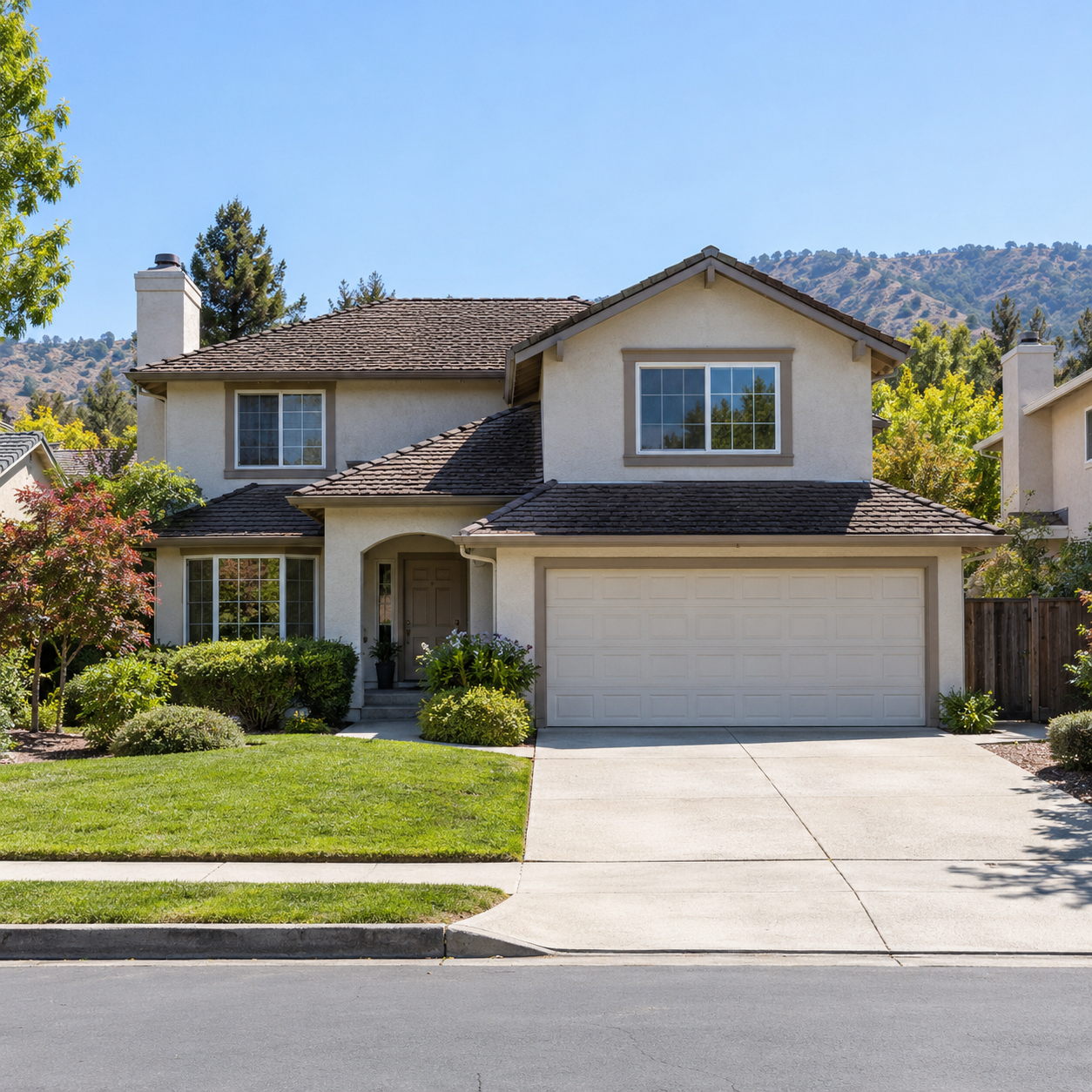
Free 3-minute decision check
Stay, downsize, or move away? Find out which one costs you the least.
For longtime Bay Area owners, the wrong call can cost six figures in taxes, remodeling, or years of higher living costs. Answer a dozen quick questions and see all three paths side by side, with a rough dollar figure for what each one would cost you or free up.
See My Best Path →Rather talk now? Call or text 408.413.3087
Your Capital Gains Tax Is the Same Whether You Rent or Buy
This one surprises a lot of people who remember the old rules. Before 1997, you could roll your gain into a more expensive replacement home and defer the tax, and owners 55 and older had a one-time exclusion. Neither exists anymore. Today, under the rules in IRS Publication 523, you can exclude up to $250,000 of gain if you’re single, or $500,000 if you’re married filing jointly, as long as you owned and lived in the home for two of the last five years. A surviving spouse can generally still use the $500,000 exclusion if the home sells within two years of the spouse’s death.
Any gain above that is taxed the year you sell, no matter what you do with the money afterward. Buying a new home doesn’t defer it, and renting doesn’t make it worse. If your gain is large, the bigger question may be whether to sell now or hold the house so your heirs get a stepped-up basis, which I cover in sell now or let the kids inherit and my guide to capital gains tax when selling a Silicon Valley home.
Renting as a Bridge
Some clients aren’t sure where they want to live, or they want to try being near their children before committing. Renting for a year after selling is a smart way to find out. If you’re 55 or older, the Prop 19 base-year transfer still works as long as you buy a replacement primary residence anywhere in California within two years of selling. You keep your old assessed value if the new home costs no more than 105 percent of your sale price when you buy within the first year after the sale, or 110 percent in the second year, and if it costs more, only the difference is added to your assessed value. You can use the transfer up to three times, and you claim it on form BOE-19-B with the assessor in the county where you buy. See my article on the Prop 19 base-year transfer for the details, and just keep an eye on the calendar, because the two-year window runs from your sale date, not from when your lease ends.
If you only need a few weeks or a couple of months, a rent-back after closing lets you stay in your own home after the sale while you sort out the next move. And if family is the reason you’re thinking about relocating, read moving closer to family in retirement and how Prop 19 works when you move to another county.
Questions I Ask
- How long do you expect to stay in the next home?
- How likely is it that you’ll need assisted living or more care in the next five to ten years?
- Do you want to leave a home to your children, or would they rather inherit investments?
- How would you feel about a landlord selling the building or raising the rent every year?
- How much do you value not having to deal with repairs and property management?
- Do you know where you want to live, or do you need time to try a new area first?
When a family answers those honestly, the rent-or-buy decision usually makes itself. For the full picture, see my ultimate downsizing guide for Bay Area seniors.
Sources and Further Reading
- IRS Publication 523, Selling Your Home
- IRS Publication 502, Medical and Dental Expenses
- California State Board of Equalization: Proposition 19
- California Civil Code 1947.12 (Tenant Protection Act rent cap)
- California Department of Social Services: Continuing Care Contracts Bureau
Free Downsizing Strategy Call
Before you start sorting decades of belongings or call a moving company... let's figure out where you're headed and how to get there.
Most downsizing regrets come from doing things in the wrong order. In 30 minutes, we’ll talk through what your home may be worth, whether to buy or sell first, how Prop 19 could affect your property taxes, what the house actually needs before listing, and a realistic timeline for your move—so the process feels manageable, not overwhelming.
Book My Downsizing Strategy Call →Frequently Asked Questions
Should seniors rent or buy after selling their home?
It depends on how long you expect to stay, your health outlook, investment returns, and whether you value flexibility or stable costs. In many Silicon Valley examples the first-year numbers are close, buying tends to win for stays of more than about five years because rents keep rising, and renting tends to win if another move is likely soon.
Can I still use the Prop 19 base-year transfer if I rent first?
Yes. If you’re 55 or older and buy a replacement primary residence anywhere in California within two years of selling, you can transfer your assessed value. You keep it fully if the new home costs no more than 105 percent of your sale price in the first year or 110 percent in the second; above that, the difference is added to your assessed value.
Will I pay more capital gains tax if I rent instead of buying?
No. Since 1997 there’s no rollover of gain into a new home. You can exclude up to $250,000 of gain ($500,000 for married couples and, in most cases, a surviving spouse who sells within two years), and anything above that is taxed the year you sell whether you rent or buy afterward.
What is the difference between independent living and a CCRC?
Independent living typically charges a monthly fee for housing and services with little or no entrance fee. A continuing care retirement community usually adds a large entrance fee in exchange for access to assisted living and skilled nursing on the same campus as your needs change.
Are CCRC fees tax deductible?
Partly, in many cases. The share of the entrance fee and monthly fees that pays for future medical care can count toward the medical expense deduction if you itemize and your medical costs exceed 7.5 percent of your adjusted gross income. The community reports the deductible percentage each year, and your CPA should confirm it.
Are rent increases limited in California?
Many rentals are covered by the state cap of 5 percent plus inflation, never more than 10 percent a year. Single-family homes and condos owned by individuals and buildings less than 15 years old are often exempt, the state cap is set to expire in 2030, and cities like San Jose and Mountain View have stricter local rules for some older apartments.
Is renting after selling a good way to decide where to live?
Yes. Renting for a year lets you test a new area or life near family before buying, and the Prop 19 transfer remains available as long as you buy within two years of your sale date.

Free 10-Strategy Guide
The Moving Guide for Long-Time Bay Area Homeowners
How to plan your move in the right order, set a realistic timeline, and get your home ready to sell while protecting your equity and your peace of mind.
You're all set. Thanks! The Moving Guide is on its way to your inbox. If you don't see it in a few minutes, check your promotions or spam folder.
Senior Friendly Homes in Silicon Valley South
2
3
4
5
6
7
8
9
10
11
12
13
14
15
16
17
18
19
20
21
22
23
24
25