
A trust sale doesn’t need a judge, but it does need a title company willing to insure it, and title officers are careful people. The most common source of last-minute stress I see in trust sales isn’t the buyer or the inspection. It’s a missing affidavit, a certification of trust that doesn’t match the deed, or a co-trustee who is traveling when documents need to be signed. This article is the checklist I give successor trustees in Santa Clara County so closing day is uneventful. It’s part of my guide to selling a house in a trust after a death in Santa Clara County.
Key Takeaways
Summary: To sell a trust house in California, title and escrow will ask for an Affidavit of Death of Trustee, a Certification of Trust, and signatures and ID from every trustee who needs to act. Gathering these early, along with a tax ID for the trust, keeps the closing from stalling.
From my practice: On a trust sale for parents who had moved into senior living, the only copy of the trust the family could find was 3 of its 10 pages, and it referred to a house the owners had sold years before. I opened escrow the day we signed the listing in July and started the trust review right away, so by the time we had the complete trust and a ruling from title, we still had weeks to spare before launch. The owners signed by DocuSign with a mobile notary at their community, and the house sold all cash with a 10-day close.
The Trust Sale Closing Checklist
| Document | What it is | When to handle it |
|---|---|---|
| Certified death certificates | Order several copies | Immediately |
| Affidavit of Death of Trustee | Notarized affidavit, recorded with a death certificate at the County Recorder, showing the successor trustee has taken over | Before listing if possible |
| Certification of Trust | A summary of the trust’s key terms and the trustee’s powers, signed by the trustee | Before opening escrow |
| Trust taxpayer ID number | The EIN for the now-irrevocable trust | Soon after the death |
| Statement of Information | Title’s identity form for each signing trustee | At the start of escrow |
| Government ID | For every trustee signing documents | At signing |
| Payoff information | Mortgage, reverse mortgage, or home equity line account numbers | At the start of escrow |
| HOA documents | For condos and townhomes, the HOA packet required for the buyer | Order early, as they take time |
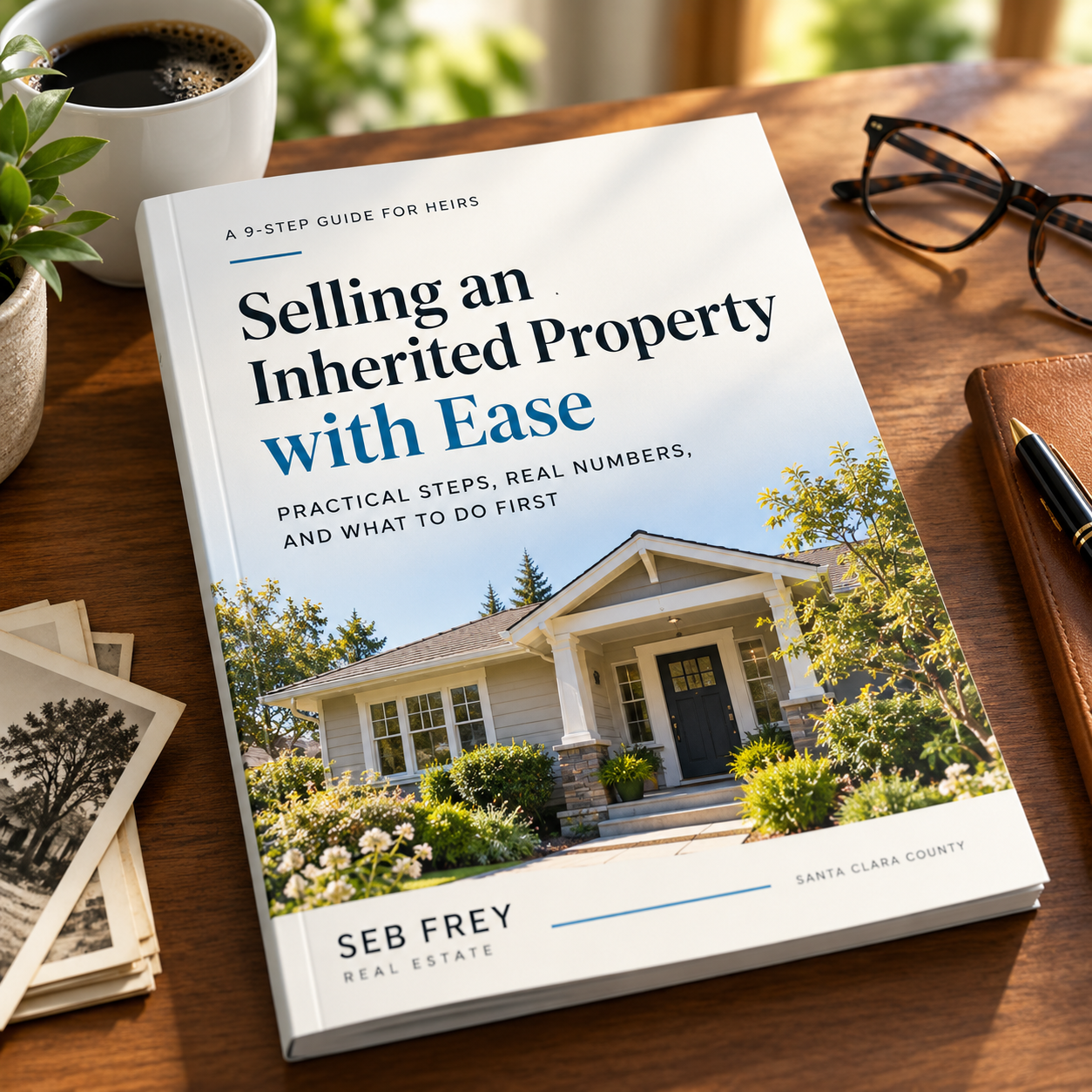
Free 9-Step Guide for Heirs
The Guide to Selling an Inherited Property with Ease
Nine steps from the day you inherit to the day you close: settling the debts and utilities, clearing the house without losing the keepsakes, getting a real number on value, knowing when you need a probate attorney and a CPA, and which repairs actually pay you back. Every month you hold the house costs property tax, insurance and utilities, so it pays to have a plan before you start.
You're all set. Thanks! The Guide to Selling an Inherited Property with Ease is on its way to your inbox. If you don't see it in a few minutes, check your promotions or spam folder.
The Certification of Trust
Buyers, lenders, and title companies aren’t entitled to read the whole trust, and most families don’t want them to. Probate Code section 18100.5 solves that with a certification of trust, a document signed by the trustee that confirms the trust exists and its date, who created it, who the current trustees are, what powers the trustees have, whether the trust is revocable, whether co-trustees must all sign, and how title is held. Title may still ask for specific pages, such as the page naming the successor trustee and the signature page. Your trust attorney usually prepares the certification, and it’s worth having it done before you list.
The Affidavit of Death of Trustee
When the original trustee dies, the record still shows them as trustee on title. The successor trustee fixes that by signing an Affidavit of Death of Trustee before a notary and recording it with a certified copy of the death certificate. In Santa Clara County, recording is handled by the Clerk-Recorder’s Office at the County Government Center, 70 West Hedding Street in San Jose. A Preliminary Change of Ownership Report generally accompanies it, and the separate Change in Ownership Statement for the Assessor is due within 150 days of the death, which I cover in the BOE-502-D after a death.
Co-Trustees and Signing Logistics
Parents often name two or three children as co-trustees. The trust will say whether they can act independently or must act together. If all must sign, that includes the listing agreement, the purchase contract, every counteroffer, and the closing documents. With siblings in different time zones, I set up electronic signing for everything that allows it, and I schedule the notarized closing documents well in advance, including mobile notaries or out-of-state signing where needed. If a co-trustee lives abroad, start early, because notarization through a consulate can take weeks.
A real example: On one trust sale, the owner had moved out of state and a family member handled nearly everything remotely. I raised the trust paperwork with the title company in the first week of the listing instead of the last week of escrow, and a mobile notary met the seller for signing. That mattered, because the all-cash buyer removed every contingency at signing and escrow closed just 13 days after acceptance, at $1,200,000. Signing logistics are easy when they’re planned early and painful when they’re discovered late.
Tax Reporting and California Withholding
At closing, escrow reports the sale to the IRS on Form 1099-S, typically under the trust’s taxpayer identification number. California also generally requires withholding of 3 1/3 percent of the sale price on many real estate sales unless an exemption applies. Because inherited property receives a stepped-up basis at the date of death, a trust sale soon after the death often produces little or no gain, and that can support an exemption from withholding. Escrow will provide Form 593, and the trust’s CPA should review it before closing, because withholding on a $1,800,000 sale would be $60,000 held back until the trust’s tax return is filed.
Free Inherited Home Strategy Session
Inherited Mom or Dad's house? Find out what it will net each heir, and what to do first.
In a 30-minute call, we'll estimate what the house will sell for and what each heir walks away with after selling costs. We'll also sort out whether to sell as-is or do some light prep, and how probate or the trust affects your timing. I'll flag the tax questions to take to your CPA, like the step-up in basis and whether Prop 19 makes keeping it worthwhile. You'll leave with real numbers and a clear order of operations. No listing agreement, no pressure.
Book My Inherited Home Strategy Session →
A Typical Trust Sale Timeline
Here’s how a clean trust sale usually unfolds in Silicon Valley once a successor trustee is ready to act. In the first two weeks, gather certified death certificates, sign the certification of trust, and record the affidavit of death of trustee. Within 60 days of the death, the trustee also has to send the notice required by Probate Code §16061.7 to beneficiaries and heirs, which starts a 120-day window to contest the trust. Weeks three through six are usually clean-out, inspections and disclosures. Then the home goes on the market, and a well-priced home here often has an accepted offer within a week or two and closes on a 21 to 30 day escrow. Title can be cleared in parallel with all of this if the documents above are ready, which is the whole point of having the checklist done early.
Title Problems I See Most Often
- An old loan that was paid off but never reconveyed. Title will need proof of payoff or a reconveyance from the old lender.
- The house isn’t actually in the trust. Discovered too late, this derails escrow. See what to do when the house was never put in the trust.
- A reverse mortgage. The payoff must be ordered early, and interest continues to accrue until closing.
- Name mismatches. The trust name on the deed doesn’t exactly match the trust document, which may require an additional declaration.
- A prior spouse’s interest. An earlier spouse’s death that was never cleared from title.
I order a preliminary title report as soon as a trustee hires me, before we list, precisely to find these issues while there’s still time to fix them quietly. For the full sale process, see my guide to selling a house in a trust after a death in Santa Clara County.
Sources and Further Reading
- California Probate Code § 16061.7 (trustee notification)
- California Probate Code § 16061.8 (120-day contest period)
- California Probate Code § 850 (petitions involving property, including Heggstad petitions)
- IRS Publication 551, Basis of Assets
- California State Board of Equalization: Change in Ownership FAQ
Frequently Asked Questions
What documents does a successor trustee need to sell a house in California?
Typically a certified death certificate, a recorded Affidavit of Death of Trustee, a Certification of Trust, identification and a statement of information for each signing trustee, and the trust’s taxpayer identification number.
What is a certification of trust?
A document under Probate Code section 18100.5, signed by the trustee, confirming the trust exists, who the trustees are, and their powers, so third parties can rely on it without reading the entire trust.
Do all co-trustees have to sign to sell a trust house?
If the trust requires co-trustees to act together, yes. Every co-trustee must sign the listing, contract, and closing documents.
Is there withholding on a trust home sale in California?
California generally requires 3 1/3 percent withholding on real estate sales unless an exemption applies. Because of the stepped-up basis, a trust sale soon after death often qualifies for an exemption. Review Form 593 with a CPA.
Where do you record an affidavit of death of trustee in Santa Clara County?
At the Santa Clara County Clerk-Recorder’s Office at the County Government Center, 70 West Hedding Street, San Jose, with a certified death certificate attached.
Free Executor Checklist
Inherited a Home in Silicon Valley? The Executor's First 30 Days
A plain-English checklist for adult children and executors that covers how to secure the house, what not to throw away, whether you're dealing with a trust or probate, and the tax questions to ask before anything gets listed or cleared out.
You're all set. The Executor's First 30 Days checklist is on its way to your inbox. If you don't see it in a few minutes, check your promotions or spam folder. And if you have questions in the meantime, you're welcome to call or text Seb at 408.413.3087.
Senior Friendly Homes in Silicon Valley South
2
3
4
5
6
7
8
9
10
11
12
13
14
15
16
17
18
19
20
21
22
23
24
25