Santa Clara County's median home sale price sits around $1,645,000 as of mid-2026, and properties spend roughly 18 days on the market. Over half of all homes in the county sell above list price. That's the baseline reality before you add a single layer of laws and rules around 55+ communities.
Finding or selling a home in a 55+ community involves a different set of rules than the broader market. Buyers looking at senior living need to factor in entrance fees and age minimums, while families handling estate sales in these communities face specific HOA restrictions on top of everything else. The sooner you understand how those layers interact, the fewer surprises you'll hit at the closing table.
55+ and Retirement Communities in Silicon Valley at a Glance
The overall cost of living in San Jose runs 84% higher than the national average. That single fact shapes nearly every decision in the age-restricted housing market here - what gets built, what gets priced out, and who ends up in what kind of community.
Buyers and renters will find everything from subsidized apartments to high-end life plan communities across Santa Clara County. The rules governing who can live in these developments come from specific federal and state housing laws, and they have real teeth. Younger relatives who inherit a property here can get caught off guard by those rules, which is exactly why it helps to know them before you need them.
Types of Communities in Silicon Valley
Age-restricted housing ranges from standalone single-family homes with shared amenities to massive multi-tiered campuses. Some prioritize independent living; others integrate medical care directly into the monthly fee structure. Whether you're looking at a standard real estate transaction or a buy-in contract makes a significant difference in how you budget and plan.
Who Qualifies (The 80/20 Age Rule in California)
Under the Housing for Older Persons Act (HOPA), a retirement community must ensure at least 80% of its occupied units have at least one resident who is 55 or older. California enforces this rule to maintain a community's age-restricted legal status.
If a younger spouse or adult child wants to live in the home, they can usually do so as long as the primary 55+ resident occupies the unit. HOAs track these demographics carefully and will block sales or rentals that push the community below that 80% threshold - so if you're an heir trying to move in, don't assume it'll be straightforward.
Types of Senior Living in Silicon Valley
Santa Clara County currently has around 2,084 active homes for sale across all property types. Within senior housing, properties fall into a few distinct categories based on care levels and ownership models.
The right setup depends on your medical needs and your preferred financial structure. Some facilities operate purely as rentals; others require purchasing a deeded property. That distinction matters more than most buyers realize when they're first shopping, because the long-term cost profiles look very different.
Active-Adult Communities
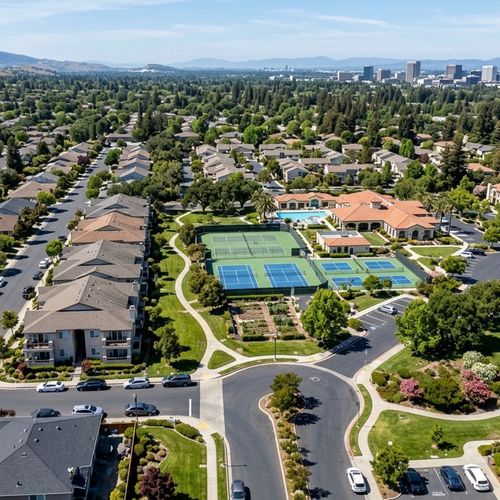
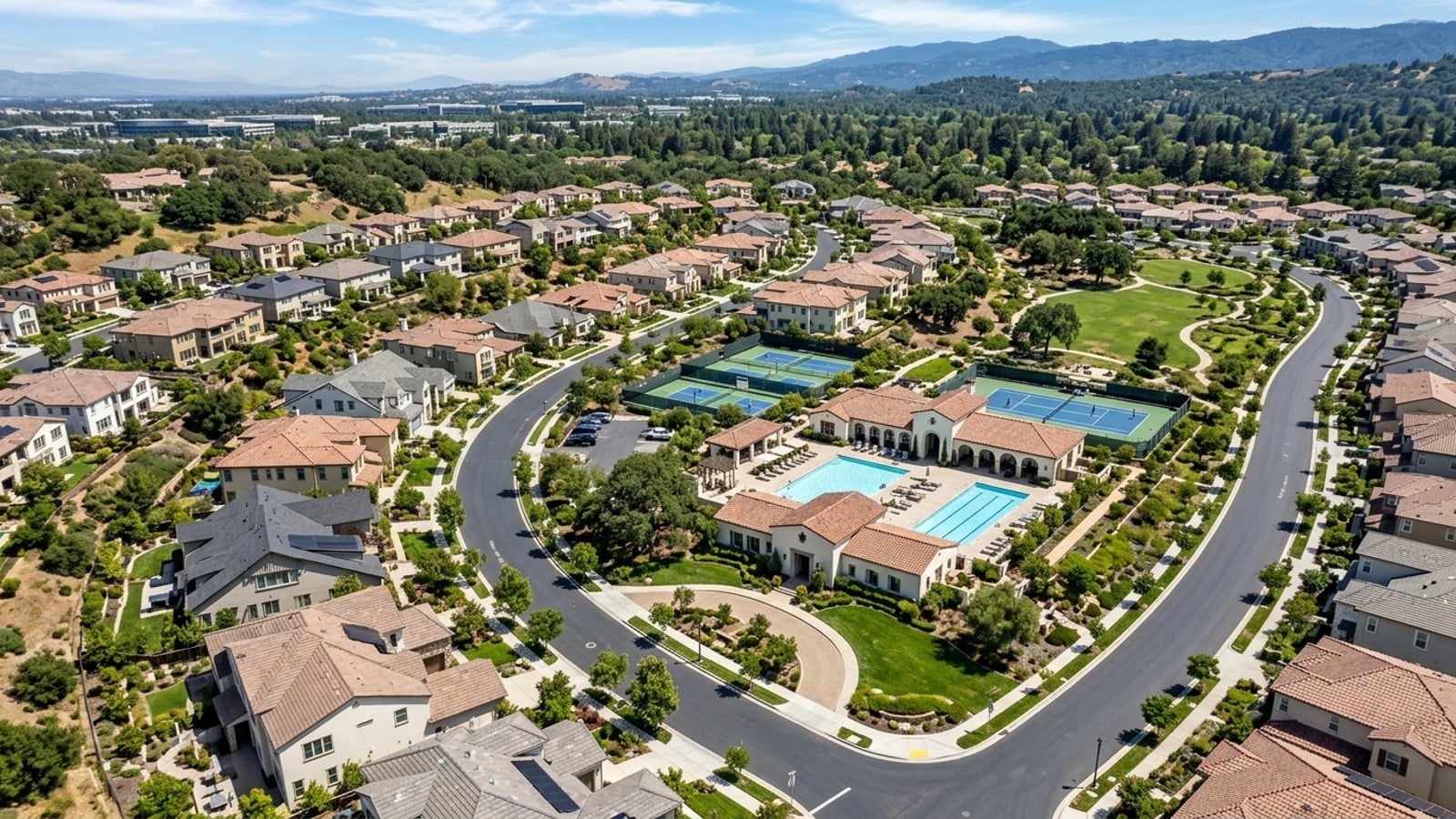
These neighborhoods function like standard subdivisions but restrict residency by age. Residents own their homes, pay monthly HOA dues for shared amenities like pools or clubhouses, and handle their own maintenance and meals.
Independent Living
Independent living setups often look like apartment complexes or condo buildings. The monthly fee usually covers exterior maintenance, some housekeeping, and access to communal dining rooms - but residents don't receive direct medical care.
Assisted Living
When residents need help with daily activities like dressing or medication management, assisted living facilities provide 24-hour staff support. These are almost exclusively rental models, and the monthly cost scales with the level of care required.
Continuing Care Retirement Communities (CCRC)
CCRCs offer a tiered approach, letting residents move from independent living to assisted living or memory care on the same campus as their needs change. You pay a large upfront entrance fee and then ongoing monthly charges - it's a significant financial commitment, and the numbers here are not small.
Senior Apartments and Mobile-Home Communities
Senior apartments provide age-restricted rental units, often with income caps for affordability. Mobile-home parks offer another accessible entry point, where residents own the manufactured home but pay space rent to the park owner.
Featured Age-Restricted Communities in the Area
The senior housing market here includes both high-end campuses and income-capped developments. Inventory stays tight - roughly 1,199 total homes sold across the county in a single recent month - so knowing where to look matters.
Location drives price. Facilities near Stanford University or the western foothills command premiums. Looking further east or south often turns up lower monthly fees and more accessible entry points. The market accommodates both high-net-worth retirees and those on fixed government incomes, but you have to know where each type of community tends to cluster.
Luxury Communities
Vi at Palo Alto operates as a Type A CCRC near major academic institutions. The Forum at Rancho San Antonio in Cupertino offers extensive amenities and ranks highly in local reader polls. Ellore is a newer high-end option, featuring penthouse suites and spa-like bathrooms alongside memory care services.
Affordable and Low-Income Options
Shires Memorial Center provides independent living in San Jose with studios listed around $1,595 per month. Valley Village Senior Apartments in Santa Clara operates as a non-profit and pays all utilities to keep costs lower for residents. Another income-restricted property on South 7th Street in San Jose offers units starting at $1,599 per month.
For Sale vs. For Rent
Renting gives you flexibility and sidesteps the steep property taxes that come with a $1.64 million median home price. Buying a deeded property in an active-adult neighborhood lets owners build equity, though they stay responsible for maintenance and special assessments. Neither option is universally better - it depends on your timeline and your tolerance for variable costs.
Communities in San Jose, Palo Alto, and Sunnyvale
San Jose holds the largest concentration of senior apartments and mobile home parks. Palo Alto caters heavily to the luxury CCRC market. Sunnyvale offers a mix of mid-tier independent living facilities and smaller residential care homes.
What Does 55+ Living Cost in Silicon Valley?
Retirement cost analyses give San Jose a Cost of Living Index of roughly 298 compared to the national average of 100. Put plainly, every $1,000 in retirement income effectively yields only $336 in local buying power.
Housing takes up the largest share of a retirement budget in this region, and costs vary widely depending on whether you choose a subsidized apartment, a market-rate rental, or a buy-in care facility. When you're projecting long-term expenses, factor in annual fee increases - and make sure you get a clear, itemized breakdown of what monthly dues actually cover before you sign anything.
Average Rent for 55+ Apartments
The overall average apartment rent in San Jose is approximately $3,301. Market-rate senior communities in Santa Clara typically list between $3,000 and $5,000 per month. Income-restricted 55+ units offer real relief, with some properties in San Jose charging around $1,595 per month.
Entrance Fees and HOA Dues
Most CCRCs in California require an entrance fee ranging from $100,000 to $1,000,000. In the Bay Area, these buy-ins typically run between $200,000 and $800,000, accompanied by monthly fees of $4,000 to over $10,000. Luxury facilities in Palo Alto generally sit at the top of that spectrum.
Renting vs. Buying
Purchasing a home locks in your housing costs, minus variable HOA dues and property taxes. Renting shields you from unexpected maintenance bills and market downturns, which appeals to retirees who want predictable monthly outflows. There's no single right answer - it comes down to how long you plan to stay and how much financial flexibility you need.
Does Medicare or Medi-Cal Help Pay?
Medicare does not cover long-term custodial care or monthly rent in assisted living facilities. Medi-Cal will sometimes help cover specific medical services provided within a facility, but it rarely pays for the room and board itself.
Is Silicon Valley a Good Place to Retire?
The Santa Clara County Area Median Income for 2026 is $205,500. If you're on a fixed income, that number tells you something important about who else is competing for services, housing, and medical appointments in this market.
Despite the costs, many seniors choose to stay for the mild climate and established social networks. The region also offers top-tier medical facilities and specialized care centers. And for retirees whose adult children work in the local tech industry, proximity to family is often the deciding factor that keeps them here regardless of the price.
Cost of Living for Retirees
Living in San Jose costs 28% more than the California state average. Utilities, groceries, and state taxes all reflect a high local price floor, so budget for those carefully - the cost gap shows up in everyday spending, not just in rent.
Healthcare and Walkability
The area provides access to renowned hospital systems like Stanford Health Care and Kaiser Permanente. Many senior communities are built near flat, paved walking trails and transit hubs to help residents run errands without driving.
Best Areas for Seniors
Los Gatos offers a walkable downtown with flat streets and numerous dining options. Cupertino attracts retirees who want suburban quiet while staying close to major medical centers and retail corridors.
Pros and Cons of 55+ Communities
Homes in Santa Clara County sell in an average of 18 days. That pace reflects strong demand, but it doesn't mean age-restricted properties are simple to buy, sell, or inherit. The restrictive covenants here dictate how you use, modify, and eventually exit a property - and families handling an estate often discover those rules at the worst possible moment.
Benefits of 55+ Living
Residents get quiet streets, tailored amenities, and a peer group at a similar life stage. The HOA typically handles exterior maintenance, freeing owners from landscaping and roof repairs. For a lot of retirees, that tradeoff alone is worth the monthly dues.
Common Downsides
HOA fees can increase annually, cutting into fixed budgets. The strict age rules also complicate estate planning - younger heirs generally can't move into the property if they inherit it, which limits their options considerably.
Options if You Cannot Afford Assisted Living
For 2026, Santa Clara County sets the "Low Income" threshold at $113,700 for a single person and $129,950 for a two-person household. Seniors falling below this 80% AMI mark should look into county-subsidized housing programs or non-profit facilities that cap rents based on income.
How to Choose and Tour a Facility
With over 1,199 homes sold in the county recently, there are options - but you still need a clear strategy for evaluating them. Don't rely on brochures or websites to make a decision this significant.
Walk the grounds. Talk to current residents, not just the sales director. A facility that looks pristine on a Tuesday morning can feel understaffed during a weekend dinner service. Visit at different times of day and you'll get a much more accurate read on how the place actually operates.
Questions to Ask
Ask the sales director about the history of HOA fee increases over the last five years. Also get the specifics on overnight guest policies, pet restrictions, and the exact process for selling the unit later - those details tend to matter more than anyone expects when it's time to move on.
Reviews and Vetting
Check the facility's state licensing records for any recent citations or health code violations. Read independent reviews to see if residents flag understaffing or delayed repairs. The pattern of complaints tells you more than any single review.
Booking a Tour
Schedule visits during meal times or community events so you can see residents actually interacting. A midday visit gives you a more accurate picture of the community's energy than a quiet morning walkthrough.
Frequently Asked Questions
Can I inherit and keep a home in a Silicon Valley 55+ community if I am under 55?
Yes, you can usually inherit and own the property, but you likely cannot live in it. California's 80/20 rule requires the community to maintain its senior demographic, so younger heirs typically must sell or rent the unit to an age-qualifying tenant.
Do age-restricted communities in Silicon Valley generally allow public estate liquidation sales to clear out the house?
It depends on the specific HOA bylaws. Many 55+ communities prohibit public estate sales to limit neighborhood traffic, requiring families to use private buyouts or off-site auctions to clear the home.
Is the estate responsible for paying the monthly HOA dues while a 55+ property is sitting in probate?
Yes, the estate must continue paying all HOA dues and assessments until the property officially changes hands. In the Bay Area, where monthly CCRC or community fees can range from $4,000 to over $10,000, those carrying costs can drain estate funds quickly.
Can we sell an inherited senior community home to a buyer if only one spouse meets the 55+ age requirement?
Yes, most communities allow the sale as long as one occupant is 55 or older. The Housing for Older Persons Act (HOPA) only requires that at least one person in the household meets the age minimum.
How does California Proposition 19 affect property taxes when inheriting a 55+ community home in Santa Clara County?
Under Proposition 19, children inheriting a property must use it as their primary residence to keep the parent's lower tax base. Since younger heirs usually can't live in a 55+ community, the home will likely be reassessed to its current market value - which in Santa Clara County averages around $1.64 million.
Do estate properties in Silicon Valley senior communities sell better as-is, or should we renovate before listing?
It depends on the community's buyer pool and the home's condition. With Santa Clara County homes averaging just 18 days on market, clean as-is properties sell quickly, but updating flooring and paint often helps attract retirees who don't want to manage a remodel.
Check out this article next