The median single-family home price in Santa Clara County sits around $1,645,000 as of mid-2026. Against that backdrop, a lot of older buyers start looking at age-restricted neighborhoods - smaller footprints, organized amenities, and a little more predictability than the broader market offers. Before making an offer, buyers should review the local laws and rules around 55+ communities.
Condos and single-family homes in these communities often operate under a federal guideline known as the 80/20 rule. How your local homeowners association interprets that rule matters more than most buyers realize, and finding out after closing is not the way you want to learn it.
The Basics of Age-Restricted Housing Laws
The federal government sets the floor for who can live in age-restricted neighborhoods. The Department of Housing and Urban Development (HUD) oversees these regulations - the idea being to prevent general housing discrimination while carving out a specific, legal exception for older adults.
The 80/20 rule itself is straightforward: at least 80 percent of the occupied units in a designated community must have at least one resident who is 55 or older. The remaining 20 percent can theoretically house younger residents. Notice the word "occupied" - the law cares about who lives there, not whose name is on the deed.
Federal Guidelines Under HOPA
The Housing for Older Persons Act (HOPA) is the specific legislation behind all of this. It's what allows a community to legally market itself as 55+ without running into federal age-discrimination law.
HOPA also requires associations to verify resident ages on a regular basis. In practice, boards collect government-issued identification every two years to prove they still clear the 80 percent threshold. If they can't prove it, they risk losing their protected status - which is why boards take this paperwork seriously.
Exemptions to Fair Housing Protections
The Fair Housing Act generally prohibits discrimination based on familial status, which is the protection that keeps landlords from turning away families with children. HOPA punches a legal hole in that rule, allowing age-restricted developments to turn away younger applicants without violating federal law.
Keeping that exemption isn't automatic. The community must publish and follow policies that demonstrate an intent to operate as housing for older persons. Drop below the 80 percent mark, and the exemption goes with it.
How Silicon Valley Associations Apply the 20 Percent Allowance
Here's where buyers get tripped up: the 20 percent allowance is not a guaranteed right. Federal law is just the minimum. Local associations can - and frequently do - draw a much tighter line.
A lot of boards in this area simply require 100 percent 55+ occupancy and skip the administrative headache of tracking a mixed-age ratio. Before you make an offer anywhere, read the specific Covenants, Conditions, and Restrictions (CC&Rs). That document tells you what the association actually requires, not what federal law permits.
Where California Law Meets Federal Rules
California adds its own layer on top of the federal framework. The Unruh Civil Rights Act and the California Department of Civil Rights set out additional protections against arbitrary discrimination in business establishments, and HOAs fall under that umbrella.
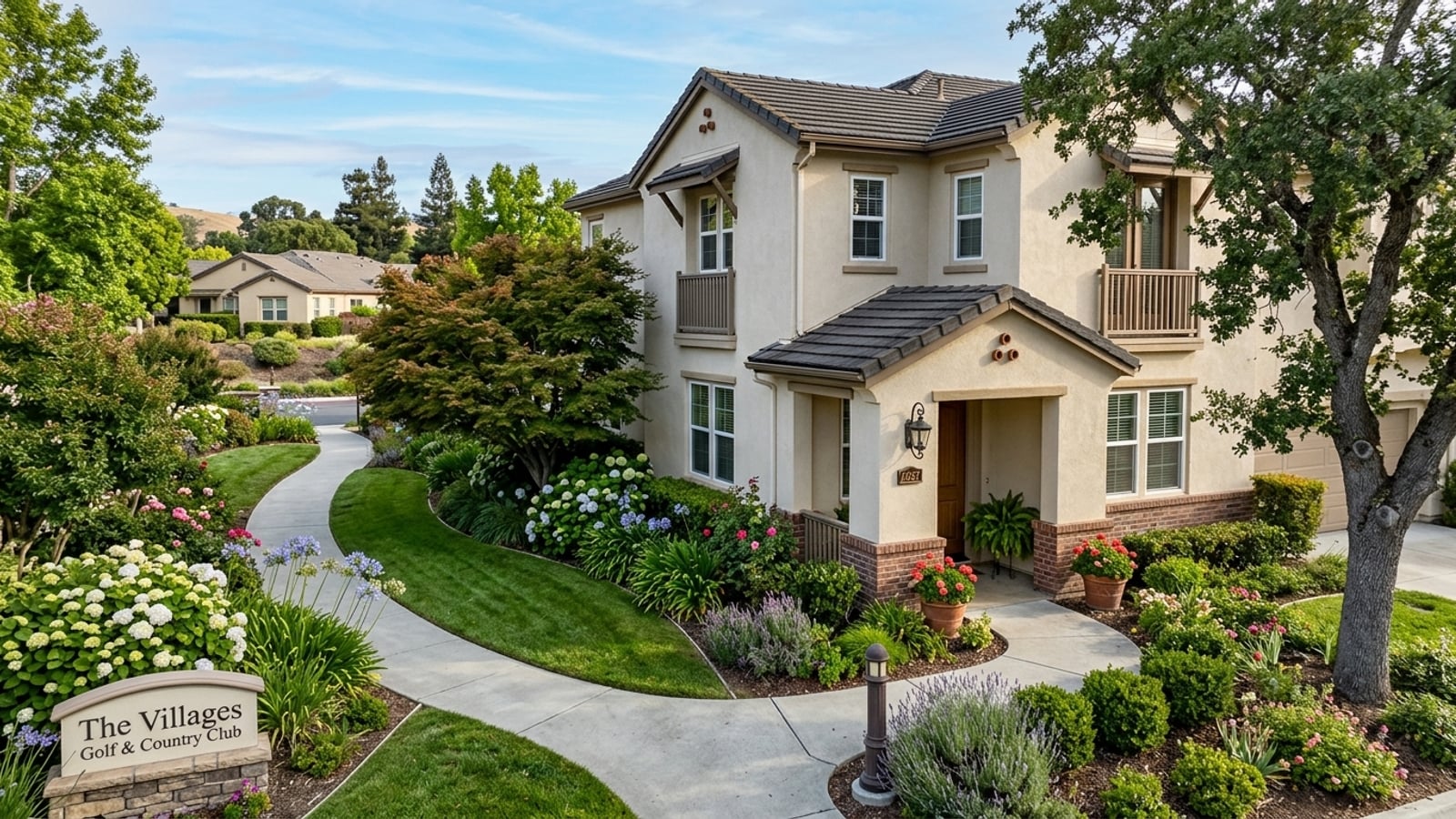
The Villages Golf & Country Club in San Jose is a clear illustration of how firm local compliance can look. Operating under California Civil Code 51.3 as a Senior Citizen Housing development, this Evergreen Valley community requires all residents to be 55 or older - full stop - across its 2,309 condos and 227 single-family homes. There's no 20 percent allowance in play there.
Who Fills the Remaining Allowance
When a board does use the 20 percent allowance, it doesn't mean anyone of any age can walk in. Associations almost always set their own age floors for those remaining units - requiring secondary residents to be at least 45 years old is common.
Rossmoor in Walnut Creek is a useful reference point. That large Northern California age-qualified community requires at least one resident to be 55+ but allows additional residents who are 45 or older. They make exceptions for qualified caregivers and explicitly bar anyone under 18 from living on the premises. Every community structures this a little differently, which is why reading the CC&Rs isn't optional.
Purchasing a Home in a Senior Community
Age-restricted neighborhoods in this region often present different price points than the broader Santa Clara County market. Resale inventory ranges from 1,000-square-foot condos to 2,000-square-foot detached houses, with some single-story options starting around $450,000.
At the other end of the range, communities like Foster Square in Sunnyvale list homes from $1,260,000 to over $1,600,000. The broader county market isn't slow either - Santa Clara County homes are currently spending roughly 18 days on the market before selling, and age-restricted properties see similar pressure from downsizing locals who know exactly what they want.
Checking the Current Occupancy Ratios
If you're hoping to use a community's 20 percent allowance - meaning you or someone moving in with you doesn't meet the age requirement - ask the HOA for their current occupancy numbers before you go any further. Associations don't publish this data online. Your agent will need to contact the property manager directly.
A community hovering right at the 80 percent threshold will automatically reject applications from younger occupants to protect its legal status. Finding that out before you're emotionally invested in a property saves everyone time.
Pricing and Resale Timelines
Santa Clara County homes are currently selling at about 102 percent of list price. Secure your financing early and expect cash offers from retirees who just sold larger homes and aren't waiting on a loan.
The other side of that coin is resale. A restricted buyer pool can sometimes stretch the listing period compared to standard neighborhoods. If you're selling, price it accurately and make the community amenities obvious - you're marketing to a specific demographic, and they know what they're looking for.
Handling Inheritances and Younger Spouses
Life doesn't always cooperate with HOA rules. When a younger spouse survives a 55+ resident, most local associations allow that spouse to remain in the home - provided the community stays above its 80 percent threshold. It's not guaranteed, but it's the common practice.
Inheritance works differently. An adult child can inherit the deed to a home in a Silicon Valley 55+ neighborhood without any issue. Moving in is a separate question entirely. If the inheritor doesn't meet the community's age requirements, they can't occupy the property.
That leaves two practical options: sell the home, or rent it to an age-qualified tenant. Renting is only on the table if the CC&Rs allow leasing - and many boards restrict it. Check that before you assume it's a viable path.
Frequently Asked Questions
Can my younger spouse or adult child live with me in a Silicon Valley 55+ community under the 80/20 rule?
It depends entirely on the specific association's rules. Federal law allows up to 20 percent of units to house younger residents, but local boards often set their own age minimums - requiring all additional occupants to be at least 45 years old is a common example.
Do all Silicon Valley 55+ communities actually allow younger residents under the 20 percent exception?
No. Many local neighborhoods, including The Villages Golf & Country Club in San Jose, require 100 percent of their units to be occupied by adults 55 and older. The federal rule is a minimum standard, and individual HOAs can choose to be more restrictive.
What happens to an under-55 surviving spouse if the qualifying senior passes away in a California retirement community?
Associations typically allow an underage surviving spouse to stay in the home. That's only possible, though, if the community's overall occupancy ratio remains above the legally required 80 percent threshold.
Can an under-55 investor buy a home in a Silicon Valley senior community and rent it out to qualifying older tenants?
Yes - younger buyers can own the deed to a property in an age-restricted neighborhood. They can't live there themselves, and they must make sure their tenants meet the community's age and leasing requirements.
How does the 80/20 age restriction impact the resale timeline and property value of Silicon Valley retirement homes?
Limiting the buyer pool to older adults can extend the time a home sits on the market. That said, with the median Santa Clara County home selling in just 18 days, well-priced units in desirable areas still move quickly.
How do local HOAs legally track and enforce the 80/20 age requirement without violating fair housing laws?
The Housing for Older Persons Act requires associations to maintain reliable age records. Boards typically ask residents to provide government-issued identification every two years to prove they still meet the legal occupancy threshold.
Check out this article next