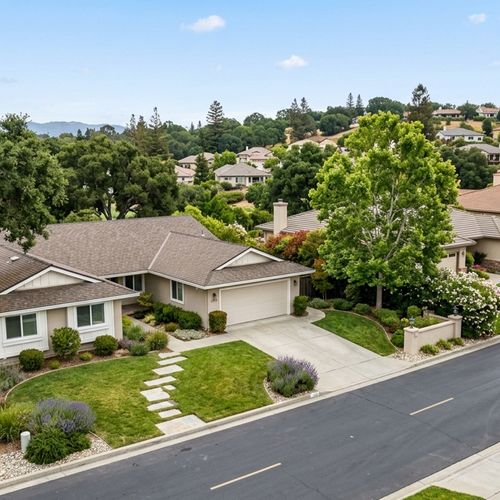
Santa Clara County's median home sale price sits at roughly $1.64 million as of mid-2026. That number alone tells you how serious a financial decision this is for anyone looking to downsize, especially given the specific laws and rules of a 55+ community in Silicon Valley, CA. Homes here sell in an average of 18 days, which means you don't have the luxury of circling back after you've thought it over for a week.
A lot of older buyers are drawn to age-restricted neighborhoods for good reason - the environment is tailored to a specific stage of life, and the amenities reflect that. But a HOPA 55+ community in Silicon Valley, CA, comes with its own legal framework, its own financial quirks, and rules that can surprise buyers who haven't done their homework. Knowing how these developments actually work before you start touring puts you in a much stronger position.
What to Know About Age-Restricted Housing in Santa Clara County
These neighborhoods operate under federal guidelines that legally allow them to restrict who can buy and live there. Before you set foot in an open house, it's worth understanding what those guidelines actually require - because the rules aren't just suggestions, and the consequences of a community falling out of compliance are real.
The Housing for Older Persons Act (HOPA) is a federal law that carves out an exemption to the Fair Housing Act's familial status protections, allowing communities to legally enforce age minimums. To keep that exemption, the community has to publish and actively follow policies that demonstrate its intent to operate as housing for older persons. The homeowners association carries the responsibility for enforcing those age requirements and maintaining accurate residency records.
The Housing for Older Persons Act Explained
Under the Department of Housing and Urban Development (HUD), HOPA sets out exactly how a neighborhood qualifies for age-restricted status. It requires the community to actively enforce its age rules through verified census surveys of current residents.
Let that lapse, and the development can lose its HOPA status entirely. When you're in the purchase process, ask the HOA directly for proof of their current compliance. It's a straightforward request, and any well-run association should have that documentation ready.
How the 80/20 Rule Works
The 80/20 rule is the part of HOPA most buyers have heard of. It requires that at least 80 percent of the occupied units in the community have at least one resident who is 55 years of age or older.
The remaining 20 percent can theoretically house residents under 55, but the community isn't required to allow it. Many local associations take it a step further and write their Covenants, Conditions, and Restrictions (CC&Rs) to require that 100 percent of homes meet the age requirement. Don't assume you know which category a particular community falls into - read the CC&Rs.
Silicon Valley Real Estate Trends for 55+ Buyers
Downsizing into a 55+ community here doesn't mean stepping out of a competitive market - it means stepping into a slightly different corner of the same one. Resale prices in these age-restricted enclaves generally track the broader Silicon Valley market rather than moving independently.
The median listing price for homes in 55+ communities in San Jose is about $1.25 million, though that number moves considerably depending on the specific neighborhood, the size of the unit, and what amenities are included. More than half of the homes in Santa Clara County are currently selling above list price. That's the market you're buying into, and the 55+ segment isn't insulated from it.
Home Styles and Pricing
The region's flagship age-restricted neighborhood, The Villages Golf & Country Club, offers a wide range of property types - from smaller condos starting at roughly $375,000 up to larger single-family layouts at $1.3 million.
Condominiums and townhomes attract buyers who want to leave exterior maintenance behind. Single-family homes offer more space, but they sit at the higher end of that price range. Neither is the obvious right answer; it comes down to what you actually want to be responsible for day to day.
Factoring in HOA Fees
Monthly association dues are a real line item here, not a footnote. At The Villages Golf & Country Club, fees are calculated based on unit square footage and can run over $1,400 per month for larger homes. One recent listing showed a $1,497 monthly fee covering the golf course, pools, security, water, cable TV, clubhouse, and gym.
Fees also vary by individual village within the master plan, since each village manages its own budget separately. What you see in one listing doesn't necessarily tell you what you'd pay in the village next door.
Popular Age-Restricted Neighborhoods in the Area
Age-restricted options in Silicon Valley are concentrated primarily in San Jose, and the choices range from a large master-planned community to specialized apartment complexes. It's a shorter list than some buyers expect.
The Evergreen Hills area of East San Jose is a hub for gated living. Communities like Renaissance at Evergreen and Silver Creek Valley Country Club draw buyers to the area, though neither carries the 55+ age restriction. For buyers specifically seeking HOPA-compliant housing, the region offers a mix of ownership and rental options. The Cottages at Village Grove is another name you'll come across when searching locally.
The Villages Golf & Country Club
The Villages Golf & Country Club in San Jose is the largest and most prominent 55+ community in the area - a master-planned, guard-gated development spanning over 1,200 acres in the Evergreen Hills area. It includes more than 2,500 homes spread across 12 distinct villages, with amenities that cover golf courses, swimming pools, and a wide range of social clubs.
It's the benchmark that most buyers in this segment end up comparing everything else to, for better or worse.
Summercrest Villas and Rental Options
Not every age-restricted property here is structured for ownership. Summercrest Villas in San Jose is a well-known 55+ senior apartment community near downtown on Almaden Road - rental housing, not for-sale properties.
Amenities at Summercrest Villas include a fitness center, a computer lab, and shared community spaces. For buyers who aren't ready to commit to a purchase or who want to test the lifestyle first, it's worth knowing the rental option exists.
Steps for Buying in a Local 55+ Neighborhood
Buying in an age-restricted community involves a few extra steps that don't come up in a standard transaction. The most important thing you can do is read the governing documents - all of them - before you're too far in to course-correct.
The CC&Rs dictate everything from pet policies to whether adult children can live in the home. You'll receive those documents during the escrow period and have a set number of days to review them; don't treat it as a formality. It's also smart to verify the community's HOPA status directly with the association management. If compliance has lapsed, that has real implications for what you're buying into.
Reviewing the Association Rules
Every 55+ community sets its own occupancy rules - who can live in the home, how long guests under a certain age can stay, and under what circumstances exceptions are made. These details vary more than most buyers realize.
Beyond the occupancy rules, review the association's financial health during the disclosure period. A well-funded reserve account is what stands between you and a surprise special assessment when the roof needs replacing or roads need repaving. It's not exciting reading, but it matters.
Property Tax Transfers Under Proposition 19
California's Proposition 19 is one of the more significant financial tools available to older buyers relocating within the state. If you're 55 or older, you can transfer your primary residence's Proposition 13 property tax base year value to a replacement home of any value, anywhere in California. You can use that transfer up to three times.
If the new home's market value exceeds the original home's value, the difference gets added to the transferred base year value rather than wiping it out. Separately, the State Controller's Property Tax Postponement Program lets qualifying senior, blind, and disabled homeowners who meet income limits defer property taxes on their principal residence. For buyers applying for Prop 19 in Santa Clara County, there's a non-refundable $110 processing fee.
Frequently Asked Questions
Can my adult children or a younger spouse live with me in a Silicon Valley 55+ community?
It depends on the community's specific CC&Rs. Under the 80/20 rule, HOPA requires at least 80 percent of units to have one resident 55 or older, but individual HOAs can set rules banning younger residents entirely.
Are HOA fees generally higher in Silicon Valley 55+ communities compared to regular condos?
Yes, they often are, because they cover extensive amenities. At The Villages Golf & Country Club, monthly fees can reach $1,497 to cover golf courses, pools, security, and clubhouse maintenance.
What happens if I inherit a 55+ community home in Silicon Valley but I don't meet the age requirement?
You can usually own the property, but you may not be allowed to live in it. The community's HOA rules will dictate whether you must sell the home, leave it vacant, or rent it to an age-qualifying tenant.
Do age-restricted homes in Silicon Valley appreciate at the same rate as traditional real estate?
Yes, resale prices in communities like The Villages generally track the broader Silicon Valley market. They do not typically move independently of the county's overall real estate trends.
Where are the main HOPA-approved 55+ communities actually located within Silicon Valley?
They are primarily concentrated in San Jose. The Villages Golf & Country Club is located in the Evergreen Hills area, while rental options like Summercrest Villas are near downtown on Almaden Road.
Can I buy a home in a Silicon Valley 55+ community now and rent it out until I retire?
It depends on the homeowners association rules. Many 55+ communities restrict rentals to ensure compliance with the HOPA 80/20 occupancy requirements, so you should review the CC&Rs before purchasing.
Check out this article next