Key takeaways
Summary: Sunnyvale blends Silicon Valley access with everyday livability—diverse neighborhoods, a walkable downtown feel around Murphy Avenue, strong parks, and a climate that makes it easy to be outdoors year-round.
Sunnyvale, the heart of Silicon Valley, embodies that classic California vibe – tech-savvy, diverse, and oh-so-scenic. It’s not just about tech, though. This city’s got history, a vibrant community, and a bunch of stories to tell – which we’re diving into right here! If you want to discover what living in Sunnyvale is all about, please keep reading!
Sunnyvale’s Population
Let’s talk about who actually lives here.
Sunnyvale’s population sits at roughly 145,000 residents, based on the latest available census estimates. What stands out immediately is the diversity. This isn’t a buzzword situation—it’s visible in the neighborhoods, the schools, and especially the restaurants.
Asian Americans make up about 47% of the population, with strong roots in China, India, the Philippines, Vietnam, and other parts of Asia. That influence shows up in language, cultural traditions, community events, and a food scene that ranges from low-key family-run spots to some of the best regional cuisine in the Bay Area. The result is a city that feels globally connected without losing its neighborhood feel.
The rest of the population includes a mix of White, Hispanic, African American, and other communities, contributing to a broad cross-section of backgrounds and experiences. It’s a place where cultural diversity isn’t just tolerated—it’s normal.
Demographically, Sunnyvale trends younger than many surrounding communities. The median age is around 35, driven in large part by the concentration of tech jobs and proximity to major employers throughout Silicon Valley. You’ll find engineers, startup founders, and young families who moved here for opportunity.
That said, it’s not exclusively a twenty- and thirty-something enclave. There’s a growing population of older adults and retirees who appreciate the walkability, healthcare access, and strong sense of community. The mix of early-career professionals, established families, and seasoned residents gives Sunnyvale a balanced, multi-generational feel rather than a one-note tech bubble. That mix shows up in what homes in Sunnyvale sell for as well.
In short, it’s diverse, economically dynamic, and more age-balanced than people often assume.
Murphy Avenue in Sunnyvale Video Tour
Sunnyvale’s Geography
Sunnyvale covers about 22.7 square miles. On paper, that’s relatively compact by California standards. In practice, it’s a highly efficient slice of Silicon Valley.
The city is thoughtfully laid out, with residential neighborhoods, commercial corridors, office campuses, and public spaces woven together rather than isolated from one another. You don’t feel like you’re driving from one disconnected zone to the next. It functions as a cohesive environment where people can live, work, shop, and unwind without crossing half the county.
Location is one of its strongest advantages. Sunnyvale sits in the heart of Silicon Valley, with direct access to major highways like 101, 237, and Central Expressway. That connectivity makes commuting to nearby tech hubs—Mountain View, Cupertino, Santa Clara, San Jose—relatively straightforward. For professionals working in tech or adjacent industries, that proximity is a significant draw.
Despite the concentration of business and infrastructure, the city hasn’t ignored livability. Parks and green spaces are integrated throughout the community, offering room for recreation, walking, and outdoor gathering. The balance between development and open space is intentional, and it contributes to the city’s overall quality of life.
Sunnyvale may not be sprawling, but it’s strategically positioned and carefully planned—compact, connected, and functional in a way that supports both career ambition and everyday living.
Moving to Silicon Valley?
What makes Sunnyvale “famous”?
Sunnyvale’s economy is deeply rooted in technology. Major global companies and a steady stream of startups operate here, drawing engineers, founders, and specialists from around the world. The job base is sophisticated, high-paying, and highly educated. That concentration of talent shapes everything from the housing market to the school system to the local business climate.
But Sunnyvale isn’t just office parks and server rooms. The cultural diversity that fuels its workforce also defines its community life. Festivals, neighborhood events, and an unusually broad range of international cuisine reflect the city’s global makeup. You see it in the grocery stores, hear it in the languages spoken at the park, and taste it on almost every commercial block.
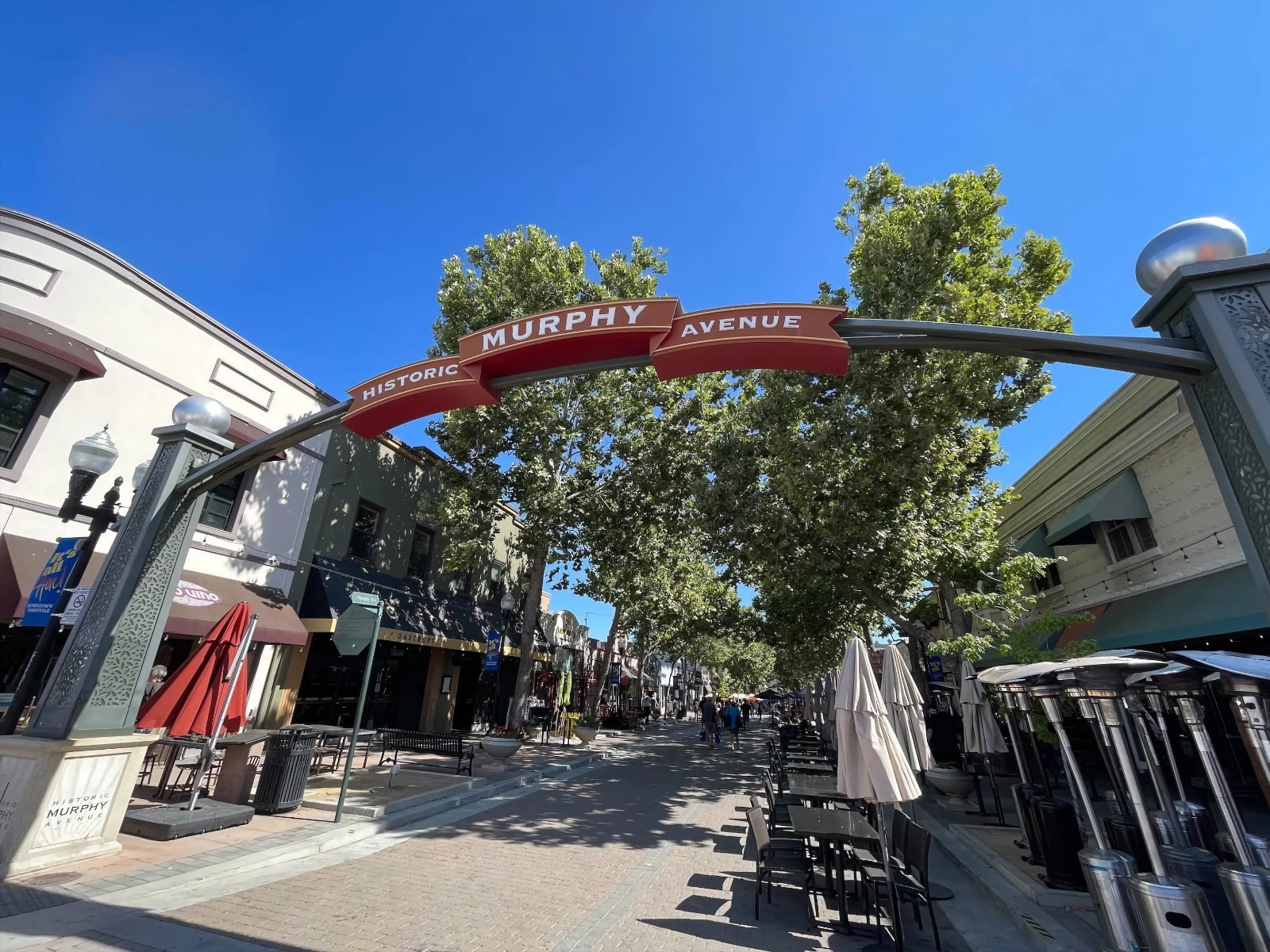
For a glimpse of the city’s historic side, Murphy Avenue is the place to go. The Historic Murphy Avenue District preserves a piece of Sunnyvale’s earlier identity, before the rise of Silicon Valley transformed the region. The street features preserved façades, pedestrian-friendly sidewalks, and a mix of independent restaurants, cafés, and small retail shops.
Today, Murphy Avenue functions as a social and dining hub. The restaurants span multiple cuisines, and outdoor seating gives the area an active, communal feel, especially in the evenings. It’s one of the few places in the city where you can park once and comfortably spend a few hours walking, dining, and meeting friends.
Sunnyvale, taken as a whole, is a study in contrast: cutting-edge industry alongside preserved history, global talent alongside local neighborhood life. It’s economically driven, culturally layered, and more textured than its tech reputation alone would suggest.
Sunnyvale’s History
Sunnyvale’s story starts long before server farms and semiconductor labs.
In the 19th century, this area was agricultural land in the heart of the Santa Clara Valley—an expanse of orchards producing cherries, apricots, plums, and other stone fruits. Spanish explorers passed through earlier, and European settlers later established farms that turned the region into one of California’s most productive agricultural zones.
The arrival of the railroad in the late 1800s changed everything. It connected Sunnyvale to San Francisco and other markets, making it easier to ship fruit across the state and beyond. With rail access—and later U.S. Highway 101—the local economy accelerated. What had been farmland became a well-connected agricultural hub.
The 20th century marked a more dramatic shift. During World War II, defense and aerospace industries expanded into the region. Companies such as Lockheed established major operations in Sunnyvale, bringing engineering talent and industrial infrastructure. That move laid the groundwork for a long-term transition from agriculture to advanced technology.
After the war, population growth followed the jobs. New neighborhoods, schools, and commercial centers were developed to support the expanding workforce. Sunnyvale evolved into a suburban community with strong ties to defense, aerospace, and emerging electronics industries.
By the mid-20th century, the semiconductor revolution was underway. Companies like Fairchild Semiconductor played a pivotal role in shaping what would become Silicon Valley. The broader region gave rise to firms such as Intel and AMD, and Sunnyvale became firmly embedded in the technology ecosystem that transformed the global economy.
Despite that transformation, the city has preserved elements of its past. The Murphy Avenue Historic District reflects Sunnyvale’s earlier downtown character, while the Sunnyvale Heritage Park Museum documents its evolution from orchard country to aerospace center to technology hub.
The arc is clear: farmland to rail town, rail town to defense center, defense center to Silicon Valley. Few cities illustrate California’s economic evolution as cleanly as Sunnyvale does.
Sunnyvale’s Top Employers
Sunnyvale’s economy is anchored by technology companies that operate on a global scale, and a few stand out for their historical and ongoing impact.
Finisar, founded in 1988, became one of the world’s leading providers of optical communication components—specifically in photonics and fiber-optic systems that move massive amounts of data at high speed. Its products support telecommunications networks, data centers, and cloud infrastructure worldwide. At its peak, the company employed thousands of people globally and maintained a significant presence in Sunnyvale. In 2019, Finisar was acquired by II-VI Incorporated (now Coherent Corp.), but its legacy remains tied to the region’s role in building the backbone of the modern internet.
NetApp is another major player with deep roots in Sunnyvale. Specializing in data storage, cloud data services, and enterprise infrastructure, NetApp has long been part of the city’s corporate landscape. The company employs thousands of people globally and has helped shape how organizations manage, secure, and scale their data. Its presence reinforces Sunnyvale’s reputation as more than just a startup ecosystem—it’s also home to established, publicly traded technology firms with international reach.
Companies like these illustrate a broader pattern. Sunnyvale isn’t dependent on a single employer or niche. It supports firms involved in networking, semiconductors, cloud computing, data infrastructure, and advanced hardware. The workforce is highly technical, and the economic base is deeply integrated into the global technology supply chain.
The result is a city whose identity is closely tied to innovation—not in an abstract sense, but in the practical infrastructure that powers communication networks, enterprise systems, and the digital economy.
Find your Place

Sunnyvale’s Top Schools
Education in Sunnyvale reflects the same practical, future-focused mindset that defines the local economy.
The North County Regional Occupational Program (ROP) serves high school students—typically grades 9 through 12—by offering career-oriented coursework alongside traditional academics. Programs span areas such as healthcare, information technology, engineering, public safety, and other in-demand fields. The goal isn’t abstract theory; it’s hands-on exposure to real industries. Students graduate with practical skills, certifications in some cases, and a clearer sense of career direction. In a region driven by technology and innovation, that kind of applied training carries real value.
At the elementary level, schools such as Louis E. Stocklmeir Elementary are consistently recognized for strong academic performance. Serving grades K through 5, the school emphasizes core academic fundamentals while also focusing on social development and character education. Like many high-performing schools in the area, it benefits from engaged families, experienced educators, and a community that places a high priority on education.
Sunnyvale keeps its high school situation interesting because the city is split between two different school districts. Geography matters here. Most of Sunnyvale is served by the Fremont Union High School District. The main high schools within Sunnyvale city limits under that district are:
Fremont High School – Right in central Sunnyvale. Solid academics, strong athletics, and a diverse student body. It’s the original Sunnyvale high school.
Homestead High School – Technically in Cupertino, but it serves parts of Sunnyvale. Known for strong academic performance and competitive programs.
Cupertino High School – Also in Cupertino, but some Sunnyvale neighborhoods are assigned here depending on boundaries.
In the northern portion of Sunnyvale, students may fall under the Santa Clara Unified School District. Those high schools include:
Wilcox High School – Located in Santa Clara, but it serves students from north Sunnyvale. Offers International Baccalaureate (IB) programs and a range of career pathways.
There are also specialized and alternative options:
The Fremont Union District operates Sunnyvale Middle School but not a separate public continuation high school within the city itself; students needing continuation programs typically attend Fremont Union’s Fremont Adult & Continuing Education or other district-run programs.
There are private options as well, including The King’s Academy (a well-known private Christian college-prep school located in Sunnyvale).
Because attendance boundaries shift and housing decisions often hinge on school assignment, it’s always smart to confirm the exact district zoning for a specific address. In Sunnyvale, a few blocks can make a meaningful difference in which high school a student attends.
Taken together, Sunnyvale’s educational landscape is structured and performance-driven. From early learning through career pathways in high school, the system reflects the broader culture of the region: academically rigorous, forward-looking, and closely aligned with real-world opportunity.
Sunnyvale’s Climate
Sunnyvale’s climate is one of its most consistent selling points.
Located in the heart of Silicon Valley, the city benefits from a Mediterranean pattern: warm, dry summers and mild, relatively wet winters. Summer temperatures typically range from the high 70s to mid-80s Fahrenheit (roughly 25–30°C). Periodic heat waves can push temperatures into the 90s, but extended extreme heat is less common than in inland parts of California.
Winters are generally moderate. Daytime highs often fall in the mid-50s to low 60s Fahrenheit (about 12–17°C). Overnight lows can dip into the 40s, but freezing temperatures are uncommon, and snowfall is exceptionally rare. Rainfall is concentrated primarily between late fall and early spring, with long dry stretches during the summer months.
Overall, the climate supports year-round outdoor activity—walking, biking, and park use are viable in nearly every season. For many residents, especially those relocating from regions with harsher winters or humid summers, the weather is a meaningful quality-of-life advantage.
Sunnyvale’s Parks and Recreation
Now let’s talk parks and recreation,where Sunnyvale plays a strong game. Baylands Park? It’s a nature lover’s haven, complete with trails and wildlife galore. And then, Fair Oaks Park? It’s all about family fun with epic playgrounds!
But you know what Sunnyvale’s really proud of? Enter Serra Park! Serra Park isn’t just a park; it’s a community treasure chest! Think of vast green fields, sports hubs, and playground paradises. With its sprawling grassy areas, picnic nooks, tennis courts, and scenic trails, this place is THE go-to for families and anyone craving fresh air and good vibes.
Las Palmas Park is another Sunnyvale favorite. It’s popular because it’s one of Sunnyvale’s largest and most versatile parks, with sports fields, tennis courts, playgrounds, picnic areas, and a well-loved dog park all in one place. It’s easy to spend a full afternoon there thanks to the open green space, shaded seating, and family-friendly layout. It feels functional without being crowded, which is a rare trick in Silicon Valley.
And that’s just the beginning! From picnics and hikes at Baylands Park and Las Palmas Park to perfecting your swing at Sunken Gardens Golf Course or making a splash at Serra Park’s pool, Sunnyvale has it all. It’s a city that invites you to embrace the outdoors, dive into cultural fiestas, and have a blast all year round!
Sunnyvale’s famous Restaurants
There’s a lot of great eats in Sunnyvale, but here are a few that locals and visitors rave about — each with its own flavor and vibe, and all worth a visit:
Dishdash Middle Eastern Cuisine sits right on Murphy Avenue and consistently ranks as one of Sunnyvale’s favorite dinner spots. It’s beloved for authentic, beautifully seasoned Middle Eastern dishes — think rich mezze plates, grilled lamb, and house-made baklava — and a warm, welcoming atmosphere that works for family meals, date nights, or special occasions.
Valley Goat is a newer standout with a bit more flair. Led by acclaimed chefs and inspired by globally creative small plates using seasonal California ingredients, this restaurant has quickly become a go-to for a more elevated night out — excellent for cocktails, shared dishes, and celebrations.
Meyhouse Sunnyvale brings Mediterranean and Turkish flavors to the downtown scene. It’s a great choice if you’re craving a relaxed, flavorful meal with grilled fish, mezze spreads, and hearty, ingredient-forward dishes in a cozy setting.
California Momo Kitchen is a local favorite for Himalayan and Southeast Asian comfort food, especially if you love momos (steamed dumplings), flavorful curries, and friendly service — casual, delicious, and highly rated among Sunnyvale diners.
Access Off-Market Inventory

Sunnyvale’s Shopping Locations
Sunnyvale’s shopping scene is a curious mix of practical, local, and pleasantly surprising. You won’t find cavernous mega-malls like in some suburbs, but what you do get are walkable districts and spots where neighborhood life really happens — a kind of “retail that actually fits into daily life.”
Downtown Murphy Avenue is the city’s unofficial main street for shopping. Tree-lined sidewalks and historic storefronts house an assortment of boutiques, specialty stores, and artisan shops alongside cafés and bakeries. It’s the place locals stroll on weekends, browse for gifts or unique finds, and then grab a coffee or meal without hopping back in the car.
Cityline Sunnyvale is the big new thing in downtown Sunnyvale — basically what replaced the old Sunnyvale Town Center mall and reinvented the way people shop, eat, live, and hang out in the heart of the city. It’s a 36-acre mixed-use development with modern apartments, retail, dining, entertainment, offices, and public spaces all woven into the historic downtown grid rather than a traditional enclosed mall.
A bit east, The Mercado Shopping Center combines familiar tenants with neighborhood favorites. If you’re running errands or grabbing dinner after work, this is the kind of center that makes that easy — a blend of familiar retail and casual dining with plenty of parking.
Annual Festivals and Events in Sunnyvale
Sunnyvale sure knows how to treat the art and wine enthusiasts, and nothing screams celebration like the Sunnyvale Art & Wine Festival! Picture this: a fantastic fusion of creativity and lip-smacking culinary wonders. This annual bash is an explosion of color, live tunes, and a wine and food paradise! Can you feel the buzz?
But hold your wine glass, folks! If you’re all about arts and crafts but not much into wine sipping, Sunnyvale’s got something special for you—the Sunnyvale Holiday Craft Fair! It’s the perfect holiday treat, showcasing local artisans’ craftsmanship that’s straight out of a creative wonderland. Imagine strolling through aisles filled with one-of-a-kind gifts, dazzling decorations, and oh-so-tasty treats!
And guess what? The festivity doesn’t stop there! From quirky art installations to fun wine-tasting tours and craft workshops that’ll awaken the artist in you, this city’s bursting with things to do, see, and create memories that sparkle brighter than holiday lights!
So, art and wine lovers, craft enthusiasts, and anyone up for a good ol’ merry time—Sunnyvale’s got a slice of festive heaven for everyone!
Best Walkable Neighborhoods in Sunnyvale
Step right into Sunnyvale’s delightful neighborhoods, and let’s talk walkable wonders! Ever heard of the Heritage District? It’s like stepping into a time capsule, mixing history with a bit of modern zest. You’ve got it all—quirky boutiques, cozy cafes, and oh-so-charming cultural spots. Take a leisurely stroll and soak up the vibes; these streets aren’t just walkable. They’re a pedestrian’s dream come true!
Now, let’s swing by Lakewood Village, Sunnyvale’s walkability champion! It’s not just about convenience; it’s a serene paradise! Imagine this: you step out, and boom! Parks, schools, and every amenity are just a hop, skip, and jump away. Trails that lead you to diverse delights—it’s like a neighborhood designed for the ultimate walk-loving resident. Who wouldn’t fall in love with that, right?
Ortega Park is one of Sunnyvale’s most walkable residential neighborhoods, especially by suburban Silicon Valley standards. Streets are laid out in a practical grid, sidewalks are consistent, and daily errands don’t always require getting in the car. Residents can walk to Ortega Park itself, local schools, neighborhood shopping centers, and even Caltrain from certain sections. The area also connects easily to bike lanes and major corridors without feeling dominated by traffic. It’s the kind of neighborhood where evening walks, dog strolls, and quick coffee runs actually feel realistic—not aspirational.
Ponderosa Park is another Sunnyvale neighborhood where walkability isn’t just a perk—it’s part of daily life. The tree-lined streets and connected sidewalks make it easy to wander to nearby parks, schools, and local shops without relying on a car. From many blocks you can comfortably stroll to Ponderosa Park itself, neighborhood cafés, and community services. Bike routes and pedestrian crossings are thoughtfully placed, which helps make errands and after-dinner walks feel relaxed and natural. It’s the kind of neighborhood where “just walking around” isn’t a chore, it’s how people actually move through their day.
Birdland is another of those neighborhoods where you actually notice you can walk places without feeling like you’re dodging traffic. The layout feels comfortable on foot or bike, with local services and green space just a short walk away. Even evening walks or weekend meanders feel natural here, which isn’t something you can say for every Silicon Valley suburb. It’s a neighborhood that quietly rewards people who like to move around under their own steam.
What do people most like about living in Sunnyvale?
People who live in Sunnyvale often talk about a few things with genuine enthusiasm: first, the location — it’s dead-center in Silicon Valley, so tech jobs, transit options, and other Bay Area hubs are surprisingly accessible. That translates into shorter commutes and more real life, which in this region feels like winning the lottery.
Another favorite is the walkable, neighborhood feel. Whether it’s Murphy Avenue, Cityline, or the smaller residential enclaves like Birdland and Ortega Park, there’s a real sense of community you can physically feel on foot. Sidewalks, parks, and local shops make daily life feel more *human-scaled* than the typical tech campus sprawl.
People also rave about the diversity and culture — Sunnyvale isn’t a monoculture. You’ll hear multiple languages walking down the street, find food from every corner of the world, and see a blend of traditions that keeps the social calendar and palates interesting.
Finally, the quality of life rings true for many: excellent schools, plenty of green space, low crime, and weather that’s “pleasant, not dramatic.” It’s not perfect — housing is expensive everywhere around here — but if you want a place that feels both rooted and forward-looking, Sunnyvale hits that balance better than most.
Frequently Asked Questions
Is Sunnyvale a good place to live?
For many people, yes—Sunnyvale combines a strong Silicon Valley job base with a more relaxed, neighborhood feel. The city is known for convenience (commuting and access to major roads), lots of parks, and a diverse community that works well for both families and long-time residents.
What is Sunnyvale best known for?
Sunnyvale is best known as a central Silicon Valley city with major employers nearby and a practical, easy-to-live-in layout. It’s also known for its community vibe, parks, and a downtown feel around the Heritage District/Murphy Avenue area.
What are the top employers in Sunnyvale?
Sunnyvale has long been associated with major Silicon Valley employers. Examples often cited locally include companies like Finisar and NetApp, along with the broader ecosystem of tech and innovation throughout the area.
What parks and outdoor spots do people love in Sunnyvale?
Sunnyvale has several well-known green spaces. Popular mentions include Baylands Park, Las Palmas Park, and Serra Park—great for walking, casual workouts, and getting outside without leaving town.
What are some favorite restaurants in Sunnyvale?
Sunnyvale’s food scene is surprisingly broad. Two frequently mentioned spots are Kabul Afghan Cuisine and DishDash, both known for bold flavors and a strong local following.
Where do people shop in Sunnyvale?
For fresh produce and local goods, the Sunnyvale Farmers Market is a go-to. For a larger retail experience, many residents head to Westfield Valley Fair for a wide range of stores and dining options.
What annual events happen in Sunnyvale?
Sunnyvale’s best-known annual events include the Sunnyvale Art & Wine Festival and the Sunnyvale Holiday Craft Fair, plus smaller community events and seasonal activities throughout the year.
What are the most walkable areas in Sunnyvale?
If walkability is a priority, many people start around the Heritage District (with shops, cafes, and a more traditional “downtown” feel). Lakewood Village is also often mentioned as a convenient, amenity-close neighborhood with parks and daily needs nearby.
What do people most like about living in Sunnyvale?
A common theme is that Sunnyvale feels calmer than you’d expect for a core Silicon Valley city. Residents often point to the parks, the community feel, and the ability to enjoy a high-quality day-to-day lifestyle while still being close to major employers.
Terrific Sunnyvale Homes for Sale
2
3
4
5
6
7
8
9
10
11
12
13
14
15
16
17
18
19
20
21
22
23
24
25
For Best Results