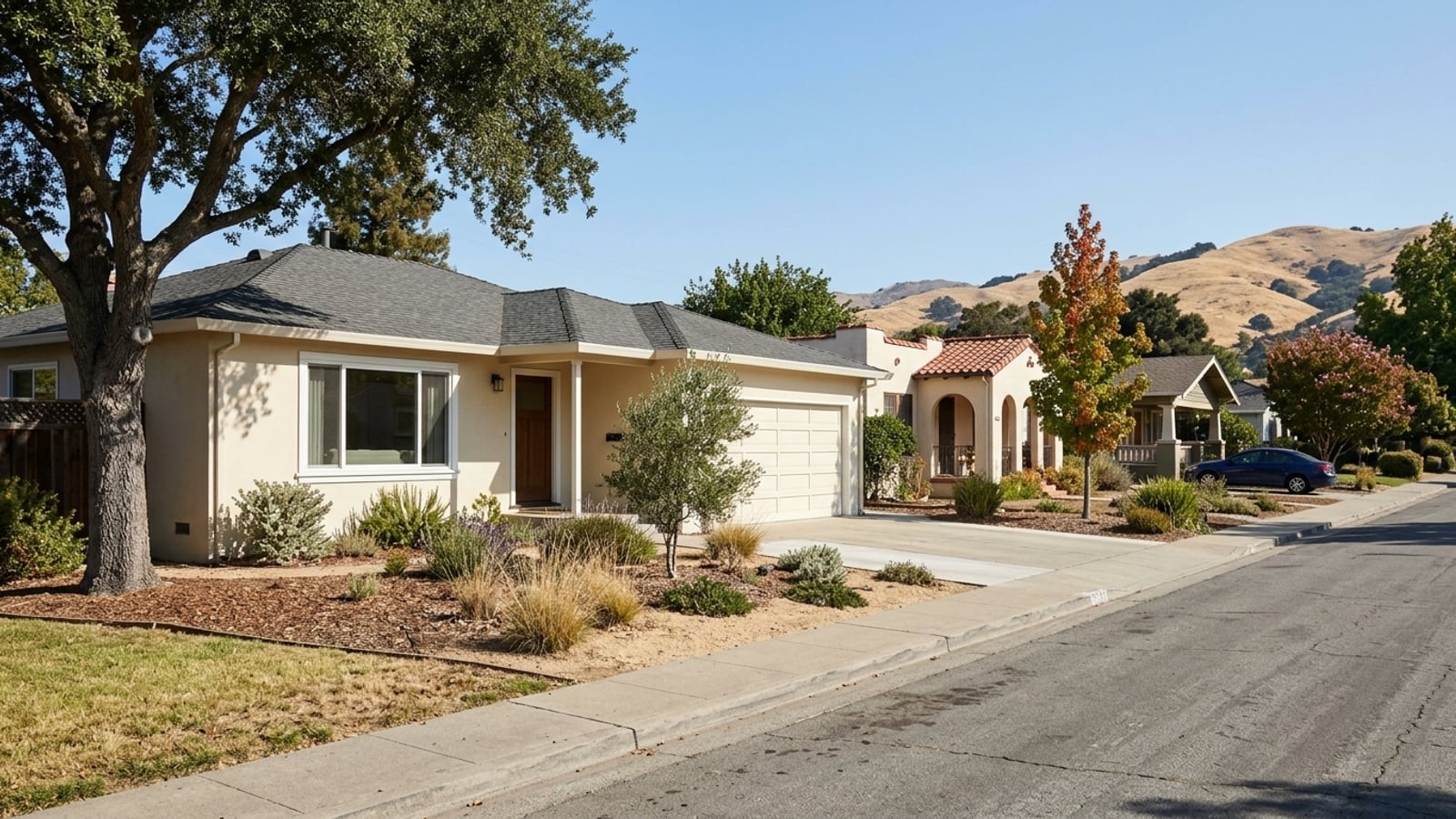
The median single-family home in Santa Clara County recently sold for around $1.87 million, while a typical condo went for about $667,000. That gap shapes everything about how you plan a move from a larger house to something smaller.
Selling a long-time home involves more than putting a sign in the yard. You have to decide whether to fix aging systems, time the sale to protect your equity, and sequence the move so you're not carrying two properties at once.
Key Takeaway
Silicon Valley houses still sell quickly and often above asking, while condo prices fell 12.1% over the past year. If you're trading a long-held house for something smaller, price the house at today's sales, sell it first, and negotiate on your next home. If you're selling a condo, plan for a longer sale where price does the work.
Who This Guide Is For
You've owned your Silicon Valley home for many years and are deciding when to sell it, what it will realistically net, and whether to line up your next home before or after.
Why Houses and Condos Are Selling Differently in Silicon Valley
A long-held Silicon Valley house is selling into the tightest part of the market right now, with about 1.7 months of supply and roughly 55% of homes selling above list price. Condos, the usual next stop for downsizers, are sitting longer, at 46 days on market, and closing just under asking after that year-over-year price drop.
If you're trading down, the strategy follows from that gap: price the house at today's comparable sales, sell it first, then negotiate on the next place. Selling a condo is a different exercise entirely. It calls for a longer, price-led plan.
The median house now sells for about 2.8 times the median condo. These are regional medians for Redfin's Silicon Valley area, so check sales on your own street before drawing conclusions about your specific property.
A few questions worth settling before you go further. Are you selling a single-family house, a townhouse, or a condo? Each is behaving differently right now, so start with your profile under how your property type affects price and timing. Will you need the proceeds from this sale to buy your next home? If yes, read the section on whether to sell first or buy first and its example before you list. Has the house gone years without a new roof, updated systems, or a kitchen refresh? See the preparation section and compare a cash offer to an as-is sale before deciding whether to fix anything. Finally, if you've owned the home long enough that your gain could be substantial, or you plan to buy again in California, settle the tax and benefit questions with a professional before you do anything else.
How Your Home Type Affects Price and Timing
Buyers approach different property types with different expectations and timelines. Single-family homes draw the heaviest competition. Condos and townhouses attract buyers who are more sensitive to monthly carrying costs, HOA financials, and building eligibility for financing.
The time it takes to secure an offer and clear escrow depends on what you're selling. A pricing strategy that works for a detached house will leave a condo sitting.
Selling a Single-Family House
List at a price backed by recent sales and let competition push the final number up. Values are about 4.3% lower than a year ago, which means a neighbor's sale from last spring overstates today's price. More than half of Silicon Valley houses sold for over asking in the 30 days ending September 30, 2026, even with prices down year over year.
A realistic list price draws multiple offers. An aspirational one wastes the first weeks on market, when buyer interest peaks and doesn't come back. Buyers paying over list still inspect closely, so a house with original systems will draw repair requests or lower offers. Decide up front whether to fix or price for condition.
Selling a Townhouse
Townhouse prices reset harder than houses, falling more than twice as much over the year. About half still sold above asking, so buyers are still competing at this lower price level. Price off the last few months of sales, not last year's numbers.
The complication is escrow. A fast, clean close gets complicated if your HOA is slow with paperwork. California requires sellers to provide HOA documents to buyers, so request current dues, the reserve study, and any pending special assessments from the association before you list. Delays here stall escrow.
Selling a Condo
In the 30 days ending September 30, 2026, the median condo took about 46 days to sell, roughly three times as long as a typical house, and closed just under list price. Plan your move and your finances around a longer sale, price to the most recent comparable sales from the start, and expect to negotiate.
There's an additional wrinkle: your buyer's loan can depend on the building, not just on your unit. Confirm whether the complex is FHA-approved on HUD's condominium search and have HOA documents ready before listing. A building that doesn't qualify narrows the buyer pool considerably, so review your timeline options if you need to move quickly.
Should You Sell First or Buy First?
When houses have low inventory and condos are softer, selling first turns your equity into a clean position. You can negotiate on the next home from cash in hand rather than from a contingent offer.
The cost of selling first is a possible gap between closing and your next home. A rent-back after closing can bridge that gap, letting you stay in the home while you shop. Agree to the rent-back length and terms in writing in the purchase contract.
Buying first with a contingent offer is harder against competing house buyers but more workable on condos that are sitting longer. If you're not buying a conventional home, you can review senior living options and costs and 55+ community living arrangements separately.
Trading a House for a Condo: How the Numbers Work
At September 2026 medians, selling a typical Silicon Valley house and buying a typical condo frees up about $1.2 million before costs and taxes. Taking the single-family median of $1,868,636 minus the condo median of $667,393 leaves $1,201,243 before selling costs, taxes, and any loan payoff.
That figure shrinks once commissions, transfer taxes, escrow fees, any mortgage payoff, and capital gains tax come out. Medians are not your exact home either. Request a seller net sheet for your address and a gain estimate from a tax professional using your original purchase price and documented improvements.
A long-held home's gain may exceed the standard exclusion, so review the tax implications for senior home sellers before you list.
Taxes, Prop 19, and Benefits to Check Before You List
Selling a home you've owned for decades triggers tax events that require advance planning, not afterthought. Your capital gains on a long-held home might exceed the federal exclusion, which you can explore in our capital gains tax guide for senior sellers.
You may be able to carry a low property tax base to a replacement home under Prop 19, so check the specific property tax base transfer rules. A large taxable gain can also affect Medicare premiums or Medi-Cal eligibility, which the FAQ below addresses directly.
Confirm all of this with a tax professional or elder law attorney before listing. Timing the sale across a calendar year can change the financial outcome in ways that are worth understanding ahead of time.
Preparing a Long-Held Home and Choosing Help
Clearing out decades of belongings from a long-held home typically takes several weeks before a list date is realistic. Start before you choose a list date. Review our decluttering steps and downsizing checklist to map out the work, and get two or three written bids if you hire senior move managers for the sorting and packing.
Pull your deed or trust documents now to confirm how title is held and who must sign the sale documents. This matters especially for a trust or power-of-attorney sale, and it's the kind of thing that can stall a transaction if it surfaces late. Timing the market matters less than timing your own readiness, which our timing a downsize overview addresses.
Working with an agent who understands these moving parts reduces friction considerably. Review what an SRES is and our tips for choosing a senior real estate agent to see how specialized training fits this kind of transaction.
Related guides: What Is a Seniors Real Estate Specialist (SRES) Silicon Valley, Buying senior real estate Silicon Valley, Senior living options Silicon Valley.
At a Glance
- All homes, Silicon Valley (30 days ending 2026-09-30): median sale price $1,568,490, down 4.7% year over year; 1,045 homes sold; median 19 days on market
- All homes (30 days ending 2026-09-30): 102.3% sale-to-list; 49.5% sold above list; 2.2 months of supply; 2,303 homes for sale; median $955 per square foot
- Single-family homes (30 days ending 2026-09-30): median sale price $1,868,636, down 4.3% year over year; 747 sold; median 15 days on market
- Single-family homes (30 days ending 2026-09-30): 103.3% sale-to-list; 55.2% sold above list; 1.7 months of supply; 1,249 for sale; median $1,091 per square foot
- Townhouses (30 days ending 2026-09-30): median sale price $1,158,024, down 9.5% year over year; 122 sold; median 19 days on market
- Townhouses (30 days ending 2026-09-30): 101% sale-to-list; 52.2% sold above list; 2.9 months of supply; 349 for sale; median $785 per square foot
- Condos (30 days ending 2026-09-30): median sale price $667,393, down 12.1% year over year; 152 sold; median 46 days on market
- Condos (30 days ending 2026-09-30): 99.3% sale-to-list; 23.9% sold above list; 3.6 months of supply; 548 for sale; median $628 per square foot
Silicon Valley Senior Home Selling FAQs
How Much Is My Silicon Valley Home Worth in 2026?
It depends on your property type, condition, and exact location. As a starting yardstick, recent median prices per square foot were $1,091 for single-family homes, $785 for townhouses, and $628 for condos in the 30 days ending September 30, 2026. Look up recent sales of your own property type on your street or in your complex rather than relying on regional medians, or request a comparative market analysis.
Do Seniors Get a Capital Gains Tax Break When Selling a House in California?
No, there's no age-based tax break for capital gains in California. Under Section 121, you may exclude up to $250,000 of capital gain ($500,000 for married couples filing jointly) if you owned and used the home as your principal residence for at least two of the five years before the sale. California taxes the remaining gain as ordinary income at regular personal income tax rates, though documented improvements raise your basis. Confirm these details with a tax professional, as this is not tax advice.
Can I Keep My Low Property Tax Base If I Buy Another Home in California?
Yes. Under Proposition 19, homeowners 55 and older can transfer their primary residence's tax base to a replacement home anywhere in California up to three times. You must generally purchase or construct the replacement home within two years of selling the original property. The clock runs from the sale or purchase date, so sequencing matters. Confirm the filing deadline with the county assessor.
Will Selling My House Affect My Medicare Premiums or Medi-Cal?
It depends on your gain and current program enrollment. A taxable gain counts as income and can raise Medicare Part B and D premiums through IRMAA surcharges, which use a two-year lookback based on your tax returns. Starting in 2026, California reinstated a $130,000 asset limit for non-MAGI Medi-Cal programs, so sale proceeds can affect eligibility. Speak with an elder law attorney before closing, or contact California's HICAP program at (800) 434-0222 for free Medicare counseling.
How Long Does It Take to Sell a House in Silicon Valley Right Now?
About two to three weeks to secure an offer for a house, with the single-family median at 15 days on market and the townhouse median at 19 days. Escrow comes after those days on market. Ask your agent how long escrow has taken on recent comparable sales. Clearing out a long-held home often takes longer than the sale itself.
Do I Still Have to Make Disclosures If I Sell My House As-Is in California?
Yes. Selling as-is limits your repair obligations but does not waive your legal duty to disclose known material defects. California's seller disclosure duties apply regardless.
Can a House in a Living Trust or Under a Power of Attorney Be Sold the Usual Way in California?
Yes, but the paperwork is different. A trustee can usually sell trust property and may provide a certification of trust instead of the full trust document to establish their authority. An agent under a power of attorney needs a document that explicitly covers real estate, and it typically must be notarized and recorded with the county. Have an estate attorney and the title company review the documents before listing.
Sources
- Redfin: Data Center
- California Legislative Information: Civil Code 4525
- California Association of REALTORS: Form RLAS
- IRS: Topic No. 701, Sale of Your Home
- California Legislative Information: Revenue and Taxation Code 18662
- California Board of Equalization: Proposition 19
- Medicare Advocates: IRMAA Brackets 2026
- California Department of Aging: HICAP
- California Legislative Information: Probate Code 18100.5
- California Legislative Information: Civil Code 2933
Check out this article next