The median home sale price in Santa Clara County, CA sits at roughly $1,645,000 as of mid-2026. Older adults looking to downsize into the best 55+ communities in Silicon Valley, CA are dealing with high property values and inventory that moves fast - homes are selling in about 18 days. The core decision you're facing isn't just about what kind of home you want. It's about how you want to handle ownership and what happens when your healthcare needs change.
Choosing between a 55+ community and a CCRC in Silicon Valley comes down to two fundamentally different structures: one gives you a deed, the other gives you a contract. Both exist throughout the region. They just require very different financial commitments, and they're not interchangeable.Defining the Real Estate and Care Options in Santa Clara County
Santa Clara County has two distinct housing models for older adults, and they work nothing alike. A 55+ neighborhood is essentially a standard residential subdivision with age restrictions bolted on. You buy a home, you own it, you manage your own life and your own healthcare. A Continuing Care Retirement Community - also called a Life Plan Community - is a campus where independent living, assisted living, and skilled nursing all exist on the same property. When your needs change, you move through those levels of care without having to relocate entirely.Characteristics of an Age-Restricted Community
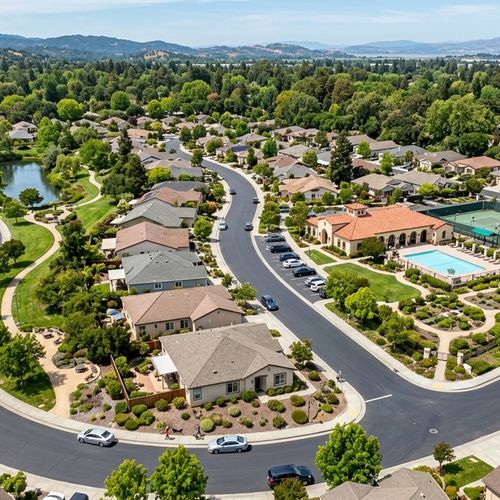
The most prominent age-restricted development in the immediate area is The Villages Golf & Country Club in San Jose, CA. It's a gated community covering 1,200 acres in the Evergreen foothills, with over 4,000 residents spread across 13 distinct neighborhoods. Properties run the range from condos and attached villas to detached single-family homes, all built around an 18-hole championship golf course. Buyers looking slightly outside the core county might also consider Trilogy San Juan Oaks near Hollister, CA. That Shea Homes development is heavily marketed to Silicon Valley buyers who want a traditional age-restricted environment without the CCRC structure.How Continuing Care Retirement Communities Work
CCRCs function as integrated healthcare and housing campuses, not real estate transactions. Vi at Palo Alto is a prominent Type A community situated on 23 acres of Stanford property. It offers upscale independent living with guaranteed access to higher levels of care built into the contract. Other notable facilities in the region include The Terraces at Los Altos, operated by HumanGood and named a 2026 U.S. News Best CCRC, and The Sequoias Portola Valley, managed by Sequoia Living. These aren't places where you buy property. You buy continuous care.Could you use a Helping Hand?

Property Ownership and Contract Differences
The dividing line between these two paths is simple: the deed. In a 55+ neighborhood, you own real estate. In a CCRC, you hold a contract for housing and services. That distinction shapes how you build equity, what you can leave to your heirs, and how exposed you are to future market swings. With local inventory sitting around 2,084 available homes, you're also deciding whether you want to compete in one of the most aggressive real estate markets in the country. Buying traditionally means you can capture future appreciation. A CCRC contract gives you predictable long-term care in exchange for a significant upfront commitment.Purchasing a Home in a 55+ Neighborhood
Buying in a community like The Villages is fee-simple ownership. You hold the deed, you build equity as local values shift, and you can sell the home or pass it to your heirs whenever you choose. The transaction works exactly like buying any other house in San Jose, CA, and working with a Seniors Real Estate Specialist (SRES) can help you coordinate the purchase with the tax and estate planning issues that come with it. That ownership cuts both ways. You pay property taxes on the assessed value, you handle interior maintenance, and you're responsible for any repairs the HOA doesn't cover. The association manages shared grounds, but the dwelling is yours.CCRC Entrance Fees and Contract Types
Rather than purchasing real estate, CCRC residents pay a one-time entrance fee. At Vi at Palo Alto, that means signing a Type A life care contract guaranteeing access to assisted living and skilled nursing. You don't hold a deed to the unit. The entrance fee isn't necessarily gone for good, though. Vi at Palo Alto offers repayment options of 0%, 50%, or 75% - that percentage of your entrance fee is returned to you or your chosen beneficiary when the contract ends. That structure is how a CCRC replaces traditional real estate equity.Find your Place

Comparing Upfront and Ongoing Costs
About 50% of homes in Santa Clara County sell above list price. If you're planning a traditional purchase, you need strong financing or cash reserves - and you should budget for the real possibility of closing above asking. That's the baseline before you even think about ongoing costs. Ongoing costs look completely different depending on which path you take. A traditional homeowner pays an HOA due each month plus separate utility and grocery bills. A CCRC resident pays one comprehensive monthly fee that bundles housing, food, and future medical care together.Down Payments vs. Entrance Fees
Homes at The Villages in San Jose range from the low $300,000s to $1,300,000 depending on configuration. Because listing site prices can lag behind current market conditions, resale prices will likely track the broader Silicon Valley market. A 20% down payment on a higher-end unit requires serious liquid capital. CCRCs front-load that capital differently. Vi at Palo Alto sets its minimum entrance fee at $559,100, which varies based on floor plan and the repayment option you choose. That figure sits above the national CCRC average of $480,000 - not surprising given local costs.HOA Dues vs. Monthly Maintenance Packages
At The Villages, HOA fees are calculated based on the home's square footage plus half the garage square footage. Those dues cover exterior building maintenance, groundskeeping, cable TV, and access to the golf course, pools, and tennis courts. Everything else - meals, interior upkeep, medical care - you handle separately. The CCRC monthly fee covers far more ground. The minimum monthly fee at Vi at Palo Alto is $4,110, which is close to the national independent living average of $4,246. That single fee bundles dining, housekeeping, transportation, and access to higher levels of care - without a major price jump if you eventually move to the skilled nursing wing.The Premiere Real Estate Network for Older Adults

Property Styles and Long-Term Care Planning
Floor plans matter more than most buyers initially admit. What works at 65 may not work at 80, and the cost of retrofitting a standard home for mobility changes is real. Traditional neighborhoods give you more space. Care campuses give you accessibility that's already built in. The bigger fork in the road is what happens when your health changes. A traditional home requires you to either bring care to you or move out when things shift. A continuing care campus is designed to absorb that transition without uprooting you.Home Designs in Age-Restricted Neighborhoods
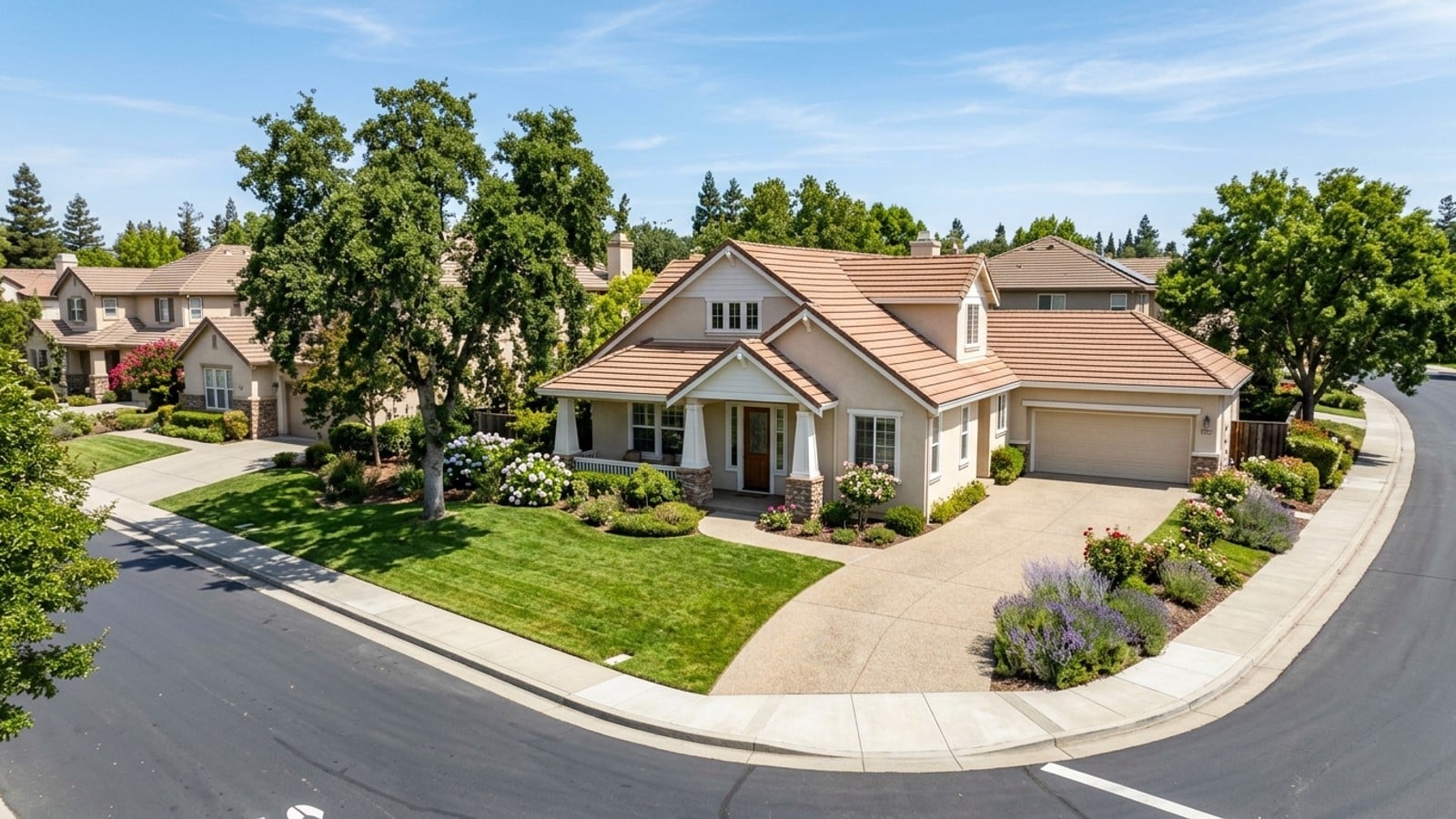
Properties at The Villages range from 1,203 to 2,165 square feet across a mix of condos, attached villas, and detached single-family homes. These are standard residential layouts built for independent adults. If you eventually need mobility modifications, you hire the contractors and you pay for the work. The homeowner controls interior upgrades entirely, subject to the community's architectural guidelines. It functions just like any other private residence in Santa Clara County.Campus Layouts and Transitioning Care
Life Plan Communities are built from the ground up around aging in place. Independent living units at facilities like Vi at Palo Alto include accessibility features and emergency response systems from day one. The campus layout puts dining halls and residential wings within easy reach of each other. When a resident needs more help, the move to on-site assisted living or skilled nursing happens within the same community. The Type A contract at Vi at Palo Alto means that transition doesn't require sourcing a new facility or absorbing a sudden spike in monthly expenses. The housing and the healthcare are permanently linked.Frequently Asked Questions
How do the upfront entrance fees for a Silicon Valley CCRC compare to the cost of buying a home in a local 55+ community?
It depends on the specific property and community. Homes at The Villages in San Jose range from the low $300,000s to $1,300,000, while Vi at Palo Alto requires a minimum entrance fee of $559,100. Both options require significant upfront capital, but one buys you real estate and the other buys you a service contract.Do I actually own the real estate when I move into a Silicon Valley CCRC, or is the contract different from buying a 55+ condo?
No, you don't own the real estate in a CCRC. You pay an entrance fee for a life care contract that guarantees housing and care. Buying a condo in a 55+ community gives you traditional fee-simple ownership of the property.Do both spouses have to be 55 or older to qualify for an age-restricted neighborhood in Santa Clara County?
It depends on the specific HOA regulations of the community. Standard age-restricted housing rules under the Housing for Older Persons Act (HOPA) typically require at least one resident in the household to be 55 or older. Check the governing documents for communities like The Villages to confirm spouse eligibility before you assume anything.What happens if I choose a standard 55+ community in San Jose but eventually need assisted living or memory care?
You'll have to arrange and pay for private in-home care or move out to a separate assisted living facility. HOA dues at a standard 55+ community cover exterior maintenance and amenities - not personal healthcare or skilled nursing.How long are the typical waitlists for top-tier CCRCs in the area compared to finding an available 55+ home?
Waitlists for CCRCs vary widely based on the specific facility and floor plan. Finding a 55+ home depends on the open real estate market, where Santa Clara County currently sees an average of 18 days on the market and 1.7 months of supply.Are there California property tax or medical deduction advantages for choosing a CCRC over a traditional 55+ community?
It depends on the financial structure of your specific contract. Owning a home in a 55+ community means you pay standard California property taxes on the real estate - though sellers 55 and older may be able to transfer their existing tax base to the new home under Proposition 19. CCRC residents don't own the real estate, and you should consult a tax professional to determine whether any portion of your fees qualifies for medical deductions.
Time to talk to a REALTOR?

Senior Friendly Homes in Silicon Valley South
1
2
3
4
5
6
7
8
9
10
11
12
13
14
15
16
17
18
19
20
21
22
23
24
25
2
3
4
5
6
7
8
9
10
11
12
13
14
15
16
17
18
19
20
21
22
23
24
25
Check out this article next