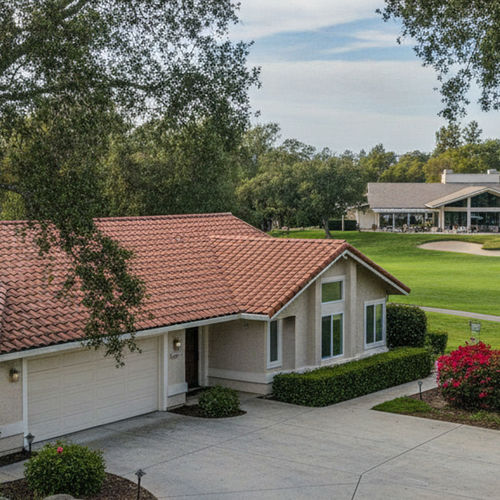
The median single-family home price across Santa Clara and San Mateo counties routinely exceeds $1.8 million in 2026. For homeowners aged 55 and older looking to downsize, moving into an age-restricted neighborhood often means trading a large estate for a more manageable property. Local tax rates and homeowner association dues determine the carrying costs of these properties.
California law provides specific tax advantages for older adults who want to relocate without giving up their current, often lower, property tax base. Moving into a 55+ community allows buyers to access specialized amenities while using state tax transfer rules. State legislation and county-level assessments shape your 55+ Community Property Taxes Silicon Valley, CA.
How Property Assessments Work in Santa Clara and San Mateo Counties
California Proposition 13 limits the base property tax rate to 1 percent of a home's assessed market value. Local voter-approved bonds and parcel taxes add to this base rate across the region, pushing the effective 2025-2026 rate in Santa Clara County to between 1.15 and 1.31 percent. San Mateo County sees similar effective rates, spanning from 1.08 to 1.52 percent depending on the specific city and school district.
Certain newer developments and specific neighborhoods also carry Mello-Roos fees. These special tax districts fund local infrastructure like roads, transit hubs, and emergency services. Buyers looking at newly constructed age-restricted communities should ask a real estate agent experienced in senior transactions if a Mello-Roos assessment applies to the property, as this additional tax directly increases the total carrying cost of the home.
When a home changes hands, the county assessor issues a supplemental tax bill based on the new purchase price. This bill covers the difference between the seller's old assessed value and the buyer's new market value for the remainder of the tax year. Buyers should budget for this one-time expense during their first year of ownership.
Moving Your Current Tax Base Under Proposition 19
California Proposition 19 allows homeowners aged 55 years old or older to transfer their primary residence's existing tax base to a replacement property. Eligible homeowners can use this base year value transfer up to three times during their lifetime. This rule applies anywhere within California state lines, meaning a seller can move from Los Angeles, CA, to San Jose, CA, and retain their lower tax assessment.
The calculation depends on the purchase price of the new home compared to the sale price of the original property. If the replacement home is of equal or lesser value, the original tax base transfers completely - and "equal or lesser" gets some breathing room based on timing, allowing up to 105 percent of the original sale price if you buy within the first year after selling, or 110 percent within the second year. If the replacement home is of greater value beyond those thresholds, the county assessor calculates a blended tax base by adding the price difference to the original property's assessed value.
County assessors treat primary residences differently than investment properties. The replacement home must serve as the owner's primary residence to qualify for the Proposition 19 tax transfer. Second homes, vacation properties, and rentals do not meet the legal requirements for this specific tax benefit.
Could you use a Helping Hand?

Housing Options Available in Local Age-Restricted Neighborhoods
As of the second quarter of 2026, entry-level condominiums in Silicon Valley age-restricted communities start in the mid $400,000s. Larger, single-story detached homes in premium developments easily surpass $1.5 million. Many of these communities sit near major medical facilities like Stanford Health Care and El Camino Health, providing quick access to medical services.
Location directly impacts the purchase price and subsequent tax assessment of these age-restricted properties. Homes situated near local golf courses or premium transit hubs maintain higher market values than units on the perimeter of a development. Buyers should compare the amenities of different neighborhoods to verify they are paying for features they will actively use.
Buyers typically choose between two main property styles when entering this market. Each option carries different maintenance expectations and purchase prices.
- Condominiums and Townhomes: These units range from 900 to 1,500 square feet and share common walls. They offer the lowest purchase price and require minimal exterior upkeep.
- Single-Story Detached Homes: These properties provide private yards, attached garages, and no shared walls. They command higher prices and often feature open floor plans designed for aging in place.
Find your Place

Factoring in Monthly Homeowner Association Fees
At communities like The Villages Golf and Country Club in San Jose, CA, monthly HOA fees vary widely by property type, square footage, and the specific subdivision within the larger community, with typical 55+ community dues across the region running between $800 and $1,400 per month. Condominium owners generally pay higher monthly dues than owners of detached homes because their fees cover exterior building maintenance and roof replacement.
These monthly fees fund shared amenities like golf courses, tennis courts, security gates, and community transit services. When calculating a housing budget, buyers should combine the monthly property tax assessment with the HOA dues. A lower purchase price on a condominium might look appealing until a $1,400 monthly HOA fee is factored into the long-term carrying cost.
Beyond standard monthly dues, homeowner associations occasionally levy special assessments to cover unexpected repairs. These one-time charges fund major projects like repaving private roads or upgrading communal plumbing systems. Buyers should request a copy of the community's reserve study to see if the association has enough funds to avoid future special assessments.
Filing the Paperwork for Your Base Year Value Transfer
Two different clocks govern this benefit, and they're easy to confuse. The first is the transaction window: the replacement home must be purchased within two years before or after the sale of the original residence, and missing that window permanently disqualifies the transaction. The second is the claim itself. The county assessor does not automatically apply the savings when the deed records - the homeowner must file a claim, and filing within three years of purchasing the replacement home secures relief retroactive to the transfer date.
Homeowners who file after that three-year mark can still apply for prospective relief. This means the county assessor, following State Board of Equalization guidance, will adjust the base year value for future tax years, but the homeowner will not receive a refund for the years they overpaid. Securing the services of a tax professional early in the buying process helps avoid these costly administrative errors.
- File Form BOE-19-B: This is the official claim form for transferring the base year value to a replacement primary residence.
- Provide Proof of Age: A driver's license or birth certificate verifies the applicant is at least 55 years old.
- Submit Closing Documents: The assessor requires the final settlement statements from both the sale of the original home and the purchase of the new property.
The Premiere Real Estate Network for Older Adults

Frequently Asked Questions
Do assessors go inside your home for property tax assessments?
County assessors rarely go inside a home to determine its market value for tax purposes. They typically rely on exterior inspections, building permits, and recent sales data of similar properties in the neighborhood. An interior inspection usually only happens if the homeowner files a formal appeal and invites the assessor inside to prove the home's condition is worse than recorded.
Is it good to buy a house with Mello-Roos in a 55+ community?
Purchasing a home with a Mello-Roos assessment means paying an additional tax on top of the standard county rate. These fees fund new infrastructure like roads and fire stations, which can improve the immediate area. Buyers should weigh the benefit of newer community amenities against the increase in their fixed monthly expenses for the life of the assessment.
How many times can I transfer my property tax base under Proposition 19?
California law allows eligible homeowners aged 55 and older to transfer their property tax base up to three times. Each transfer requires selling a primary residence and purchasing a new one within a two-year timeframe. The new home must also serve as the buyer's primary residence to qualify for the ongoing tax savings.
Time to talk to a REALTOR?

Senior Friendly Homes in Silicon Valley South
2
3
4
5
6
7
8
9
10
11
12
13
14
15
16
17
18
19
20
21
22
23
24
25
Check out this article next