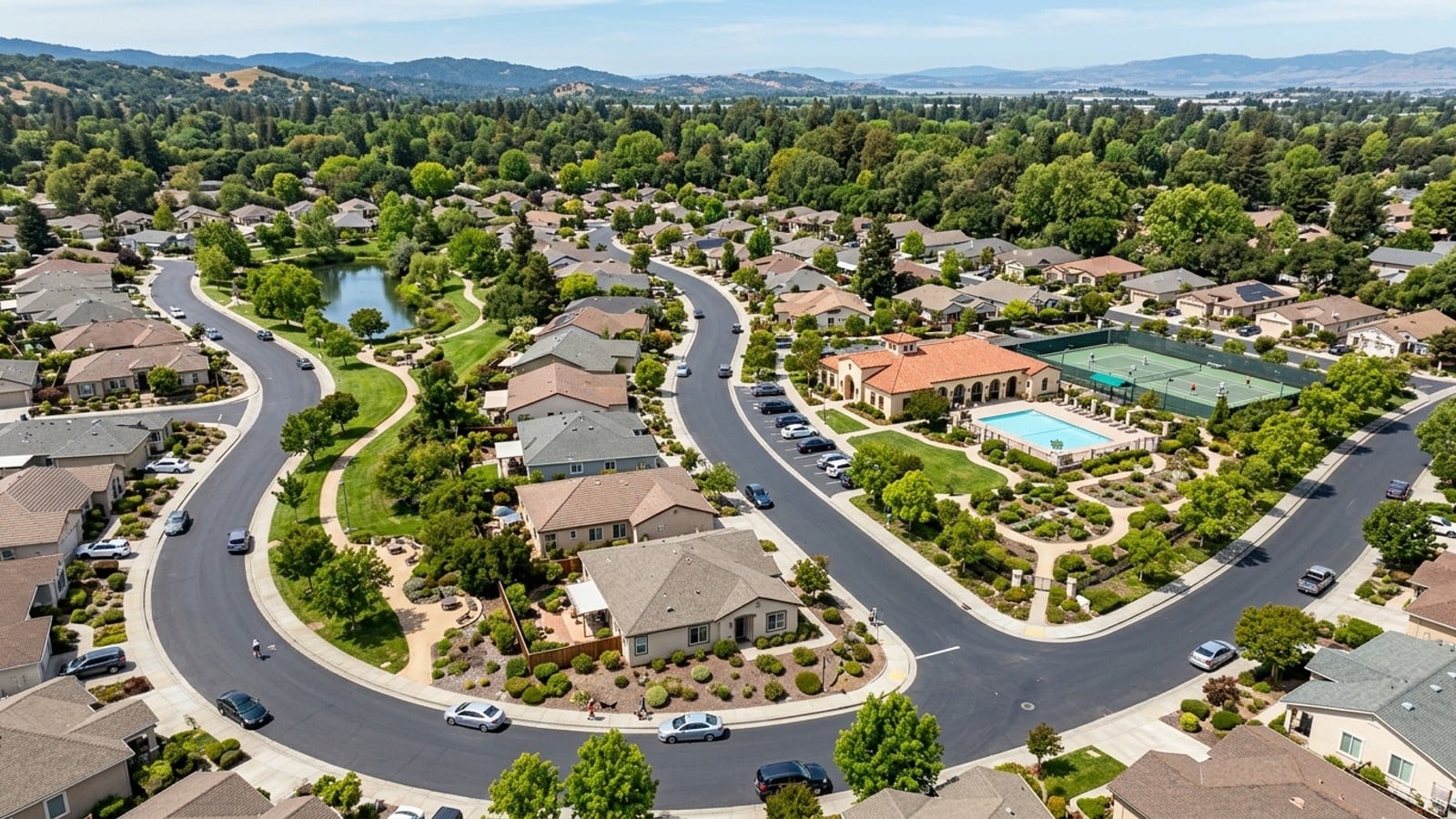
The median home sale price in Santa Clara County is sitting around $1.64 million in the summer of 2026. If single-story living or a low-maintenance home is on your list, you've probably started browsing the 55+ communities in Silicon Valley, and that's exactly where I see a lot of buyers get turned around.
"Active adult" and "age-restricted" get used almost interchangeably in listings, but they aren't the same thing. Federal law, California law, and local HOA rules treat them very differently, and mixing them up can cost you a home you wanted or leave you owning one that's harder to sell than you expected. My primer on what an active adult community is is a helpful companion to this post.
Legal Definitions Under Federal and California Law
The Housing for Older Persons Act sets the baseline for what qualifies as an age-restricted community, and you can read the text of the federal housing for older persons exemption yourself. California layers its own senior housing rules on top in Civil Code Section 51.3. Together these frameworks decide who can actually buy and live in a specific property, not just who the marketing is aimed at.
Each community's rules live in its Covenants, Conditions, and Restrictions (CC&Rs), and new subdivisions file their documents with the California Department of Real Estate. I always have clients read those governing documents before we make an offer, because finding a problem after you're in contract is a lot more expensive. My 2026 guide to laws and rules for 55+ communities goes deeper on this.
What Makes a Community Age-Restricted
A legally age-restricted 55+ community requires at least 80% of occupied units to have at least one resident who is 55 or older. The CC&Rs enforce this at purchase and at move-in, so it's a requirement rather than a preference. I explain how associations manage that threshold in my post on how the 80/20 rule works in 55+ communities.
If a development slips below the 80% threshold, it risks losing its legal protection as housing for older persons. That's why HOAs track resident ages closely and verify age every time a home changes hands.
How Active Adult Neighborhoods Differ
"Active adult" is mostly a marketing description, not a legal category. These neighborhoods offer clubhouses, walking paths, and low-maintenance exteriors, but there's no binding age requirement attached. Anyone can buy a home in an unrestricted active adult community, because the focus is on the property features and shared recreation rather than on who's legally allowed to live there.
Could you use a Helping Hand?

Property Values and Market Inventory
Homes in Santa Clara County are averaging about 18 days on market, and the county overall is selling for around 2% over list price. Both types of communities follow a similarly quick timeline, though inventory varies by neighborhood, and you'll find condos, attached townhomes, and single-family homes in each.
Pricing for Age-Restricted Homes
Age-restricted homes sometimes list below comparable unrestricted homes in the same zip code. That's a direct result of the smaller buyer pool, since a home that can only be sold to someone who meets the 55+ requirement starts with a narrower market from day one. When I list these homes, pricing and marketing have to account for that from the start.
Pricing for Unrestricted Active Adult Homes
Unrestricted active adult homes track much closer to the county median of about $1.64 million. Because anyone can buy them, they compete with the general inventory, and buyers of every age will pay up for single-story layouts and low-maintenance yards in this market. Sellers in unrestricted neighborhoods benefit from that larger pool of bidders, and in a multiple-offer market that difference is real money. If a single-level home in a regular neighborhood is what you're after, my guide to single-story homes for seniors is worth a read.
Find your Place

HOA Structures and Ownership Rules
Nearly all age-restricted and active adult developments in Silicon Valley operate under a homeowners association. The association maintains shared spaces and enforces the CC&Rs, and your monthly dues cover everything from exterior building maintenance to the recreation center. Before you fall in love with a home, factor those dues into your budget, because the number can change the math considerably. My guide to 55+ community HOA fees in Silicon Valley shows what's typical.
Restrictions on Occupancy and Resale
Age-restricted HOAs enforce strict occupancy rules, and those rules can complicate resales in ways that catch owners off guard. If a buyer doesn't meet the 55+ requirement, the HOA can prevent them from moving in, so the pool of eligible buyers is smaller every time.
Unrestricted communities don't run those checks. The HOA focuses on property maintenance and community standards, and the resale works like any standard home sale, which usually means a cleaner and faster process with fewer surprises.
Frequently Asked Questions
What is the legal difference between an "active adult" neighborhood and a strictly age-restricted 55+ community in Silicon Valley?
An age-restricted community must have at least 80% of occupied units housing someone 55 or older under the Housing for Older Persons Act. "Active adult" is usually a marketing term for a community with senior-friendly amenities but no legal age minimum, so anyone can buy there.
Can my younger spouse or adult children live with me in a Silicon Valley age-restricted community?
It depends on the community's CC&Rs. Most HOPA-compliant communities allow a younger spouse as long as one occupant is 55 or older, while adult children may face restrictions. My post on whether a younger family can live in a 55+ community covers the common scenarios.
Are HOA fees generally higher in Silicon Valley active adult communities compared to standard neighborhoods?
Dues depend on the amenities. Communities with clubhouses, pools, and full exterior maintenance charge more than standard neighborhoods with fewer shared facilities, so review the HOA budget and reserve study before you buy.
What happens if I inherit a 55+ age-restricted home in California but I don't meet the age requirement?
You can own the home, but you may not be able to live in it. You'll likely need to sell or rent to an age-qualifying tenant if the community allows rentals at all. I walk through the options in what to expect when you inherit a 55+ community home.
Is it harder to sell an age-restricted property in the Bay Area compared to a non-restricted home?
Selling an age-restricted home limits your buyer pool to people who meet the 55+ requirement. Santa Clara County homes average about 18 days on market overall, but that narrower pool can slow a sale compared with a standard listing, which is why pricing and marketing strategy matter so much.
Time to talk to a REALTOR?

About the Author
Seb Frey is a Broker Associate with Compass in Los Gatos (CA DRE# 01369847) and the Seasoned Living Strategist behind Team Sixty Plus. Over more than 23 years and 450+ closed transactions in Silicon Valley, his practice has centered on longtime homeowners, older adults, and the families helping them through downsizing, estate sales, and housing transitions. He holds the Seniors Real Estate Specialist (SRES), Certified Senior Advisor (CSA), and Certified Aging-in-Place Specialist (CAPS) designations, has been ranked in the top 1.5% of agents nationwide by RealTrends, and hosts the Sixty Plus Uncensored podcast. Market figures in this article reflect Santa Clara County conditions as of mid-2026. HOA dues, community rules, and entrance fees change, so confirm them directly before you make a decision, and talk with your own tax advisor or attorney about anything tax or legal. Seb is a REALTOR®, not a CPA or lawyer.
Senior Friendly Homes in Silicon Valley South
2
3
4
5
6
7
8
9
10
11
12
13
14
15
16
17
18
19
20
21
22
23
24
25
Check out this article next