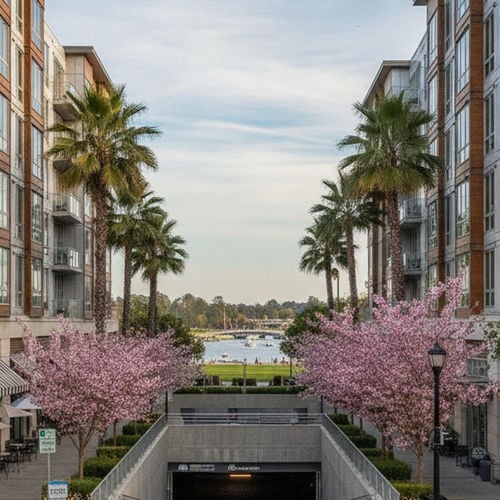
Santa Clara County is still a very active market, with the countywide median sale price around $1,645,000 as of mid-2026. In Saratoga itself, typical single-family home values run much higher, generally in the $3.45 million to $3.6 million range. For anyone comparing the 55+ communities in Silicon Valley, it helps to understand that pricing and ownership structures vary a lot from one option to the next.
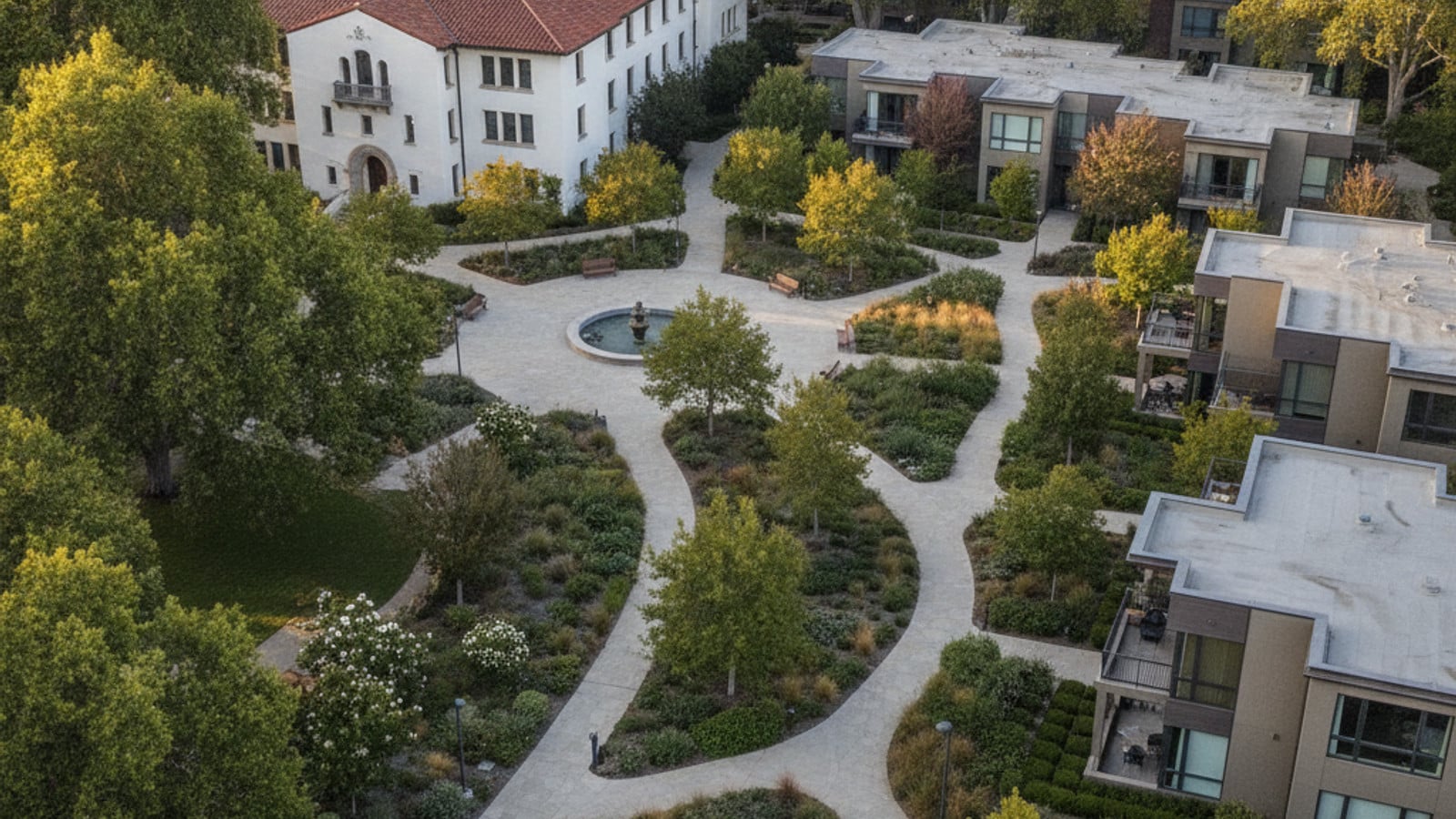
If you're exploring senior living options in Silicon Valley, Saratoga Retirement Community is a different model altogether. It sits on a 37-acre campus and operates as a Continuing Care Retirement Community (CCRC), using an entrance fee rather than a deeded home purchase. You sign one contract on one campus, and your housing and access to future care are handled together. Many of the families I work with are weighing this campus against selling a home they've owned for 30 or 40 years, so I'll cover both sides of that decision here.
Saratoga Retirement Community in Silicon Valley
Saratoga Retirement Community is located at 14500 Fruitvale Avenue in Saratoga. The grounds include the original Odd Fellows Home, built in the early 1900s by the Independent Order of Odd Fellows and listed on the City of Saratoga's Historic Resources Inventory, so it's a real local landmark rather than a marketing detail. The community is still owned by the Odd Fellows Home of California, with day-to-day operations managed by Transforming Age.
As a Life Plan community, it provides a continuum of care. Residents can move between independent living, assisted living, and skilled nursing as their needs change without leaving the campus.
What to Expect on the Campus
Residents live in a mix of private apartments and freestanding cottages spread across landscaped grounds. Housing, dining, and daily amenities are bundled into the contract, so you aren't piecing services together on your own. Because it's a Life Plan community, you pay an upfront entrance fee rather than buying real estate, and that fee helps fund your long-term access to care while you keep a private residence on campus.
Location Within Silicon Valley
Saratoga sits on the western edge of the Santa Clara Valley. It's quieter than San Jose or Santa Clara without being isolated, since shopping and medical offices are a short drive away and family can reach the campus easily from Highway 85 or Highway 17. If you want to know the town better, my post on living in Saratoga, California covers the neighborhoods and daily life.
Simple Strategy Guide
The Downsizing Guide for Bay Area Seniors
What to keep, what to let go, and how to get your home ready for today's buyers without a costly remodel, so you protect your equity and move on your own timeline.
You're all set. Thanks! The Downsizing Guide is on its way to your inbox. If you don't see it in a few minutes, check your promotions or spam folder.
Real Estate and Housing Costs
The broader Santa Clara County market is tight. Homes are spending about 18 days on market, often selling above list price, with roughly 1.7 months of supply as of mid-2026.
Saratoga Retirement Community operates completely outside that MLS market. There's no listing on Zillow and no bidding war. Prospective residents pay an entrance fee, sometimes called a buy-in, that depends on the residence and the care contract they choose.
Home Types and Entrance Fees
Housing on campus includes private apartments and individual cottages, and capacity is growing. A $101.7 million campus expansion broke ground in spring 2026 and will add 52 new apartments in 15 floor plans ranging from roughly 1,072 to nearly 2,000 square feet, with completion expected in spring 2028. The community doesn't publish entrance fee amounts, so you'll need to contact the sales office for current pricing based on what's available.
Many CCRCs offer partially refundable entrance fees, where a set percentage of your initial payment returns to you or your estate when the contract ends, and those plans often fall somewhere between 50% and 90%. Ask Saratoga exactly which refund options are available today and how each one changes the upfront price.
Contract Types and Monthly Fees
Beyond the entrance fee, you'll pay a monthly service fee that covers utilities, housekeeping, dining, and amenities. Third-party estimates put the average monthly cost around $6,525, with a range from about $5,000 to over $7,000 depending on the residence and level of care.
CCRCs generally use three contract types. Type A (extensive life care) has higher upfront and monthly fees but covers most future care costs, Type C (fee-for-service) has the lowest entrance fee but charges market rates for care as you use it, and Type B (modified) falls in between. Ask which types Saratoga currently offers, and review any contract with your attorney or financial advisor. California's Continuing Care Contracts Bureau oversees CCRC contracts and is a good place to check before you sign.
Dining, Getting Around, and Daily Life
Daily life on campus centers on bundled services, with on-site dining and organized activities included in your monthly fee. Outside the gates, Saratoga has the usual suburban conveniences, with grocery stores, pharmacies, and shops along Saratoga-Sunnyvale Road and in nearby Los Gatos.
On-Site and Local Dining
The main restaurant serves California-style cuisine with restaurant seating for lunch and dinner and a monthly Sunday brunch, and the Cal Villa Deli handles casual, grab-and-go meals at lunch. The campus also has a private wine tasting room residents can reserve for celebrations, which is a small detail that residents really seem to enjoy.
Getting Around the Campus and City
Paved paths connect the cottages and apartments to the dining and healthcare buildings, with the historic Odd Fellows Home as a central landmark. For trips off campus, residents use their own cars or local transit, and San Jose and Los Gatos are both easy to reach.
Selling a longtime home?
More support. Less stress.
Concierge-level help for homeowners 60+ and their families: project planning, vetted providers, hands-on logistics, and home prep with zero upfront cost.
See How It Works →Rather talk now? Call or text 408.413.3087

Healthcare and Climate
Medical access is central to why people choose a Life Plan community in the first place. The Saratoga campus includes on-site assisted living and skilled nursing, so care transitions don't require a move, and the surrounding area has plenty of major medical centers for specialized or emergency care.
Hospitals and Medical Care
El Camino Health has a hospital campus in Los Gatos, and Good Samaritan Hospital is nearby in San Jose. Kaiser Permanente Santa Clara, Santa Clara Valley Medical Center, and O'Connor Hospital round out the options. That density of facilities matters when you need something the on-campus care center can't provide. My post on finding homes near healthcare in Silicon Valley covers this in more depth.
Local Climate
Saratoga has a Mediterranean climate with warm, dry summers and mild winters, with most of the rain falling in the cooler months. Extreme heat or cold is rare, so the walking paths and courtyards are usable year-round and weather rarely disrupts daily routines.
Selling Your Home to Fund the Move
Countywide inventory is tight, but getting into a CCRC has nothing to do with what's active on the MLS. Units don't appear on real estate portals, and availability depends on resident turnover and the city-approved master plan expansion now under construction.
Where the real estate side comes in is the home you already own. Most of my clients fund an entrance fee by selling a longtime family home, and the timing has to line up with the move-in date the community gives you. Working with a Seniors Real Estate Specialist helps you plan that sequence, and my ultimate downsizing guide for Bay Area seniors walks through the steps. If you've owned your home for decades, read up on capital gains tax on a long-held Silicon Valley home before you list.
Availability and Touring Options
Your first step is contacting the community's sales office to ask about open apartments or cottages and to schedule a tour. The waitlist is real, with the community reporting more than 130 people waiting at its spring 2026 groundbreaking, so don't expect to time this the way you'd time a traditional purchase.
Frequently Asked Questions
What is the entrance fee and average monthly cost for Saratoga Retirement Community?
It depends on the residence and contract. Entrance fees aren't published, but third-party estimates put the average monthly fee around $6,525, with a typical range of $5,000 to over $7,000.
Do residents own their homes at Saratoga Retirement Community?
No. The entrance fee and monthly service fee secure your residence and future care, but they don't convey a deed.
How long is the waitlist for independent living, and how does the deposit process work?
It depends on turnover and the floor plan you want. The community reported a waitlist of more than 130 people at its spring 2026 groundbreaking, and the 52 new apartments due in 2028 will add capacity. Contact the community directly for deposit amounts and current timelines.
What are the age and health requirements to qualify for independent living?
Applicants need to meet the community's age minimum and baseline health and financial requirements. Contact the admissions office for the exact criteria.
How does Saratoga Retirement Community compare to other CCRCs in Silicon Valley?
It stands out for its historic 37-acre campus and its cottages, while peers like Vi at Palo Alto operate on a Type A model with published fee ranges. See how Silicon Valley CCRCs compare on costs and contracts, and my side-by-side of The Villages vs. Saratoga Retirement Community.
What happens to my entrance fee if I move out or pass away?
It depends on the refund option you chose at signing. With a partially refundable plan, a set portion of your entrance fee goes back to you or your estate when the contract ends.
Moving to assisted living?
Need move-in money in a hurry?
Move-in fees and first months' rent can top $20,000 within days. Compass Concierge can now cover them, repaid when the house sells.
See How It Works →Need help today? Call or text 408.413.3087
About the Author
Seb Frey is a Broker Associate with Compass in Los Gatos (CA DRE# 01369847) and the Seasoned Living Strategist behind Team Sixty Plus. Over more than 23 years and 450+ closed transactions in Silicon Valley, his practice has centered on longtime homeowners, older adults, and the families helping them through downsizing, estate sales, and housing transitions. He holds the Seniors Real Estate Specialist (SRES), Certified Senior Advisor (CSA), and Certified Aging-in-Place Specialist (CAPS) designations, has been ranked in the top 1.5% of agents nationwide by RealTrends, and hosts the Sixty Plus Uncensored podcast. Market figures in this article reflect Santa Clara County conditions as of mid-2026. HOA dues, community rules, and entrance fees change, so confirm them directly before you make a decision, and talk with your own tax advisor or attorney about anything tax or legal. Seb is a REALTOR®, not a CPA or lawyer.
Senior Friendly Homes in Silicon Valley South
2
3
4
5
6
7
8
9
10
11
12
13
14
15
16
17
18
19
20
21
22
23
24
25
Check out this article next