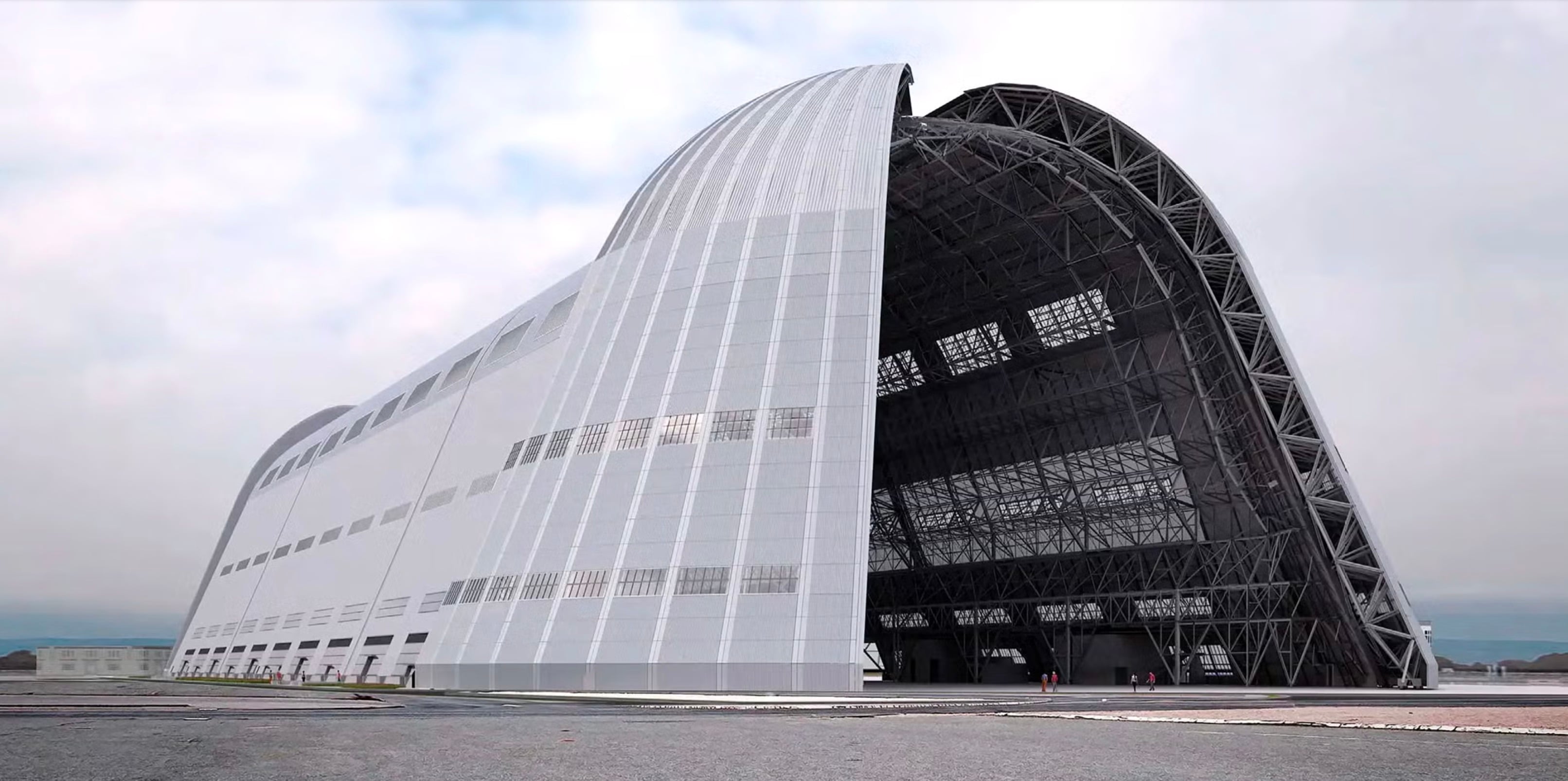
If you’ve driven Highway 101 anywhere between Mountain View and Sunnyvale in the last 90 years, you’ve seen Hangar One. You can’t miss it. It’s the giant rounded landmark sitting just east of the freeway, the one that looks like an enormous metallic cathedral and makes you wonder, every time you pass it, what on earth is inside. I’m a Bay Area native and a REALTOR® who has been selling homes in this part of Silicon Valley for more than 23 years, and I’ve driven that stretch of road thousands of times. It’s a question I hear from clients constantly, and plenty of people who have lived in Mountain View or Sunnyvale for decades have never set foot on the base.
That’s a shame, because tucked into Building 126 on Severyns Avenue, at the south end of Hangar One and across the street from the famous checkered water tower, sits one of the most interesting small museums in the Bay Area. The Moffett Field Museum is a volunteer-run gem that tells the story of how this patch of bayfront farmland became one of the most consequential aviation, military, and technology sites in American history. I spent an afternoon there with my camera, inside and out, and every photo in this guide is from that visit. I want to walk you through it, because I think more people, especially those of us who live nearby, ought to know about it.
Key Takeaways
Summary: The Moffett Field Museum is a nonprofit, volunteer-run museum operated by the Moffett Field Historical Society since 1994, now housed in Building 126 beside Hangar One at Moffett Federal Airfield. It covers the USS Macon airship era of the 1930s, the Army Air Corps years, World War II blimp patrols, the Cold War P-3 Orion mission, and NASA Ames, plus a new immersive World War I exhibit and an outdoor airpark of aircraft and military vehicles. Visitors need a REAL ID or passport to enter the base, and the museum is open Wednesday through Saturday. For longtime Mountain View and Sunnyvale residents, it’s one of the best two-hour primers on how the valley became Silicon Valley.
Table of Contents
- Visiting the Moffett Field Museum: Hours, Tickets, and REAL ID
- What the Museum Actually Is
- The Macon Era: When Airships Were the Future
- Hangar One: The Cathedral of the Bay
- The Army Years and World War II
- The Cold War, the P-3 Orions, and the Long Watch
- The Exhibits Inside the Museum
- The Outdoor Airpark
- Why I Send My Senior Clients Here
- How the Museum Stays Alive
- Make a Day of It
- Frequently Asked Questions About the Moffett Field Museum
Visiting the Moffett Field Museum: Hours, Tickets, and REAL ID
Let me give you the nuts and bolts first, because a few things make this museum different from your average drop-in. According to the museum’s visit page, it’s located at Building 126, Severyns Ave., Mountain View, CA 94035, at the south end of Hangar One and across from the orange and white checkered water tower. Some map apps list it as “500 Severyns Ave.” or “126 Severyns Ave.” Hours are Wednesday through Saturday from 10 a.m. to 3 p.m., and it’s closed Sunday, Monday, and Tuesday. You can call the museum at (650) 964-4024.
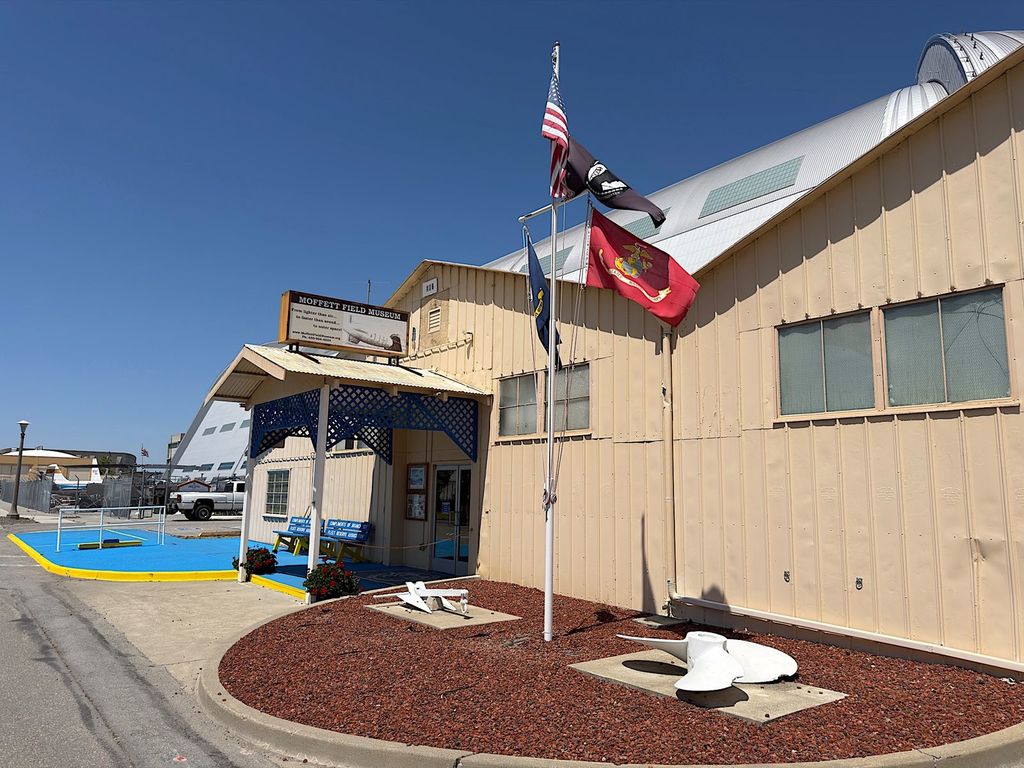
The museum’s entrance at Building 126, with Hangar One rising behind it.
Tickets are sold at the entrance. Admission is $15 for adults 18 to 64, $10 for seniors 65 and older, $8 for youth ages 5 to 17, and free for children 4 and under, active military, and current museum members. Groups of ten or more get a discount, and special events can carry a separate fee.
Now here’s the part that surprises some visitors. Moffett Field is still an active federal installation, so you have to clear security to get in, and every adult 18 and over has to show a photo ID at the gate. Since May 7, 2025, that ID has to be REAL ID compliant, or you’ll need a valid passport. If your California license doesn’t have the gold bear and star in the upper right corner, either upgrade it through the DMV or bring your passport. Also note that the Moffett Field south gate at Ellis Street and Highway 101 is closed on Saturdays, so plan your route accordingly. Getting turned away at the gate is a frustrating way to ruin an afternoon.
What the Museum Actually Is
The Moffett Field Museum is the public-facing arm of the Moffett Field Historical Society, which was formed in May 1993 under the leadership of Carol Henderson and Rose Lesslie, with the support of Commander Carl Honacker, the last Executive Officer of NAS Moffett Field. The museum opened a year later in 1994 in the west side of Hangar One, where it stayed until January 2002. That’s when it had to close because of hazardous materials discovered throughout the hangar’s structure. The hangar was permanently closed in May 2003 after evidence of asbestos, PCBs, and lead paint, and the Society got the use of Building 126 across the street, reopening the museum there in April 2005.
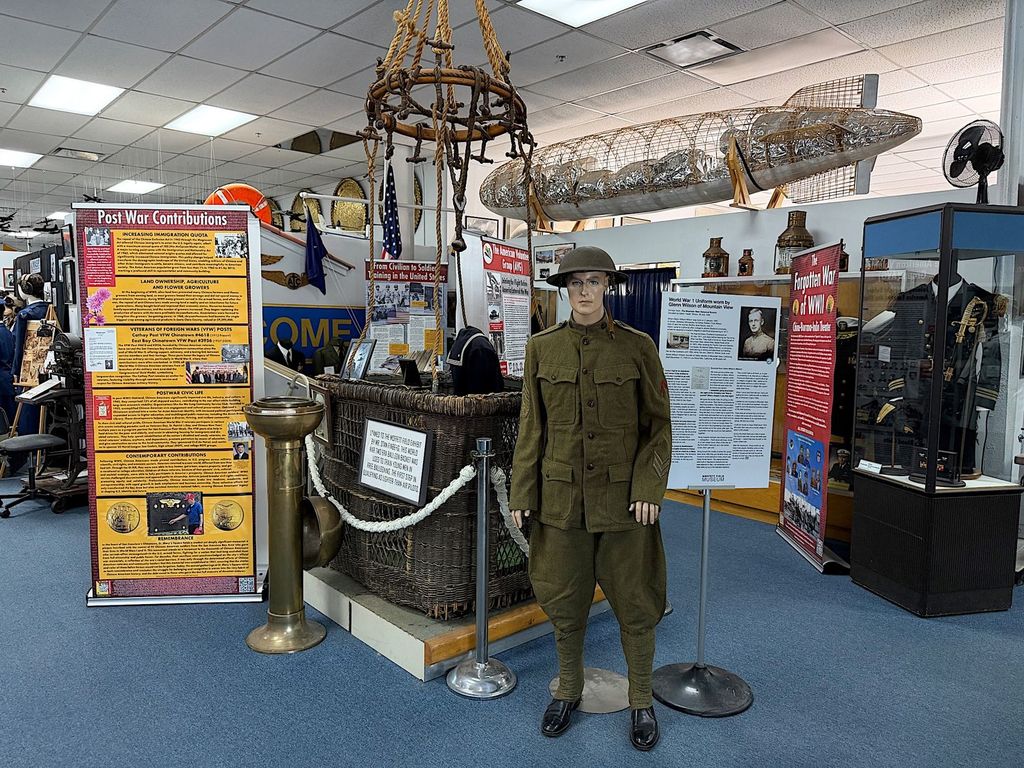
The main hall, with a WWI uniform worn by Mountain View’s Glenn Wilson and a balloon basket once used to train lighter-than-air pilots.
The museum is staffed entirely by knowledgeable volunteers, which is one of the most charming things about it. You’re not getting a sanitized, corporate experience. You’re getting somebody who has spent years researching this stuff, who knew people who served at the base, and who remembers when P-3 Orion submarine hunters lined the tarmac. The information density is extraordinary, and the main hall is packed floor to ceiling with uniforms, models, photos, and personal artifacts donated by local families. In the photo above you can see the uniform Glenn Wilson of Mountain View wore in World War I, a wicker balloon basket that was used to train young men in free ballooning (the first step toward qualifying as a lighter-than-air pilot), and a skeletal airship model hanging overhead.
The Society’s stated mission is “to educate the public about and preserve for future generations, the rich and significant heritage of Moffett Field and NASA Ames Research Center,” including the base’s role “as an essential catalyst in Silicon Valley’s emergence.” That last part is the one I want to come back to. Silicon Valley didn’t appear out of nowhere. The infrastructure, the talent, the federal investment, and the technical culture all have roots going back nearly a century, and a lot of those roots run right through Moffett Field.
The Macon Era: When Airships Were the Future
To understand Moffett Field, you have to start with the airships, and to understand the airships, you have to put yourself back in the late 1920s. The United States Navy believed the future of long-range ocean patrol was giant rigid dirigibles that could carry small fighter planes inside their hulls and launch them in flight. It sounds like science fiction now, but at the time it was government policy. The driving force behind that vision was Rear Admiral William A. Moffett, widely regarded as the father of naval aviation.
In the early 1930s, Sunnyvale acquired a 1,000-acre parcel of bayfront farmland, paid for with nearly $480,000 raised by the people of Santa Clara County, then sold it to the federal government for one dollar as a home base for the Navy airship USS Macon. Think about that. Local residents raised close to half a million dollars of their own money in the middle of the Great Depression so they could hand the federal government a thousand acres just to land the base. That tells you how badly Bay Area communities wanted federal aviation investment, and it tells you something about why this region developed the way it did.
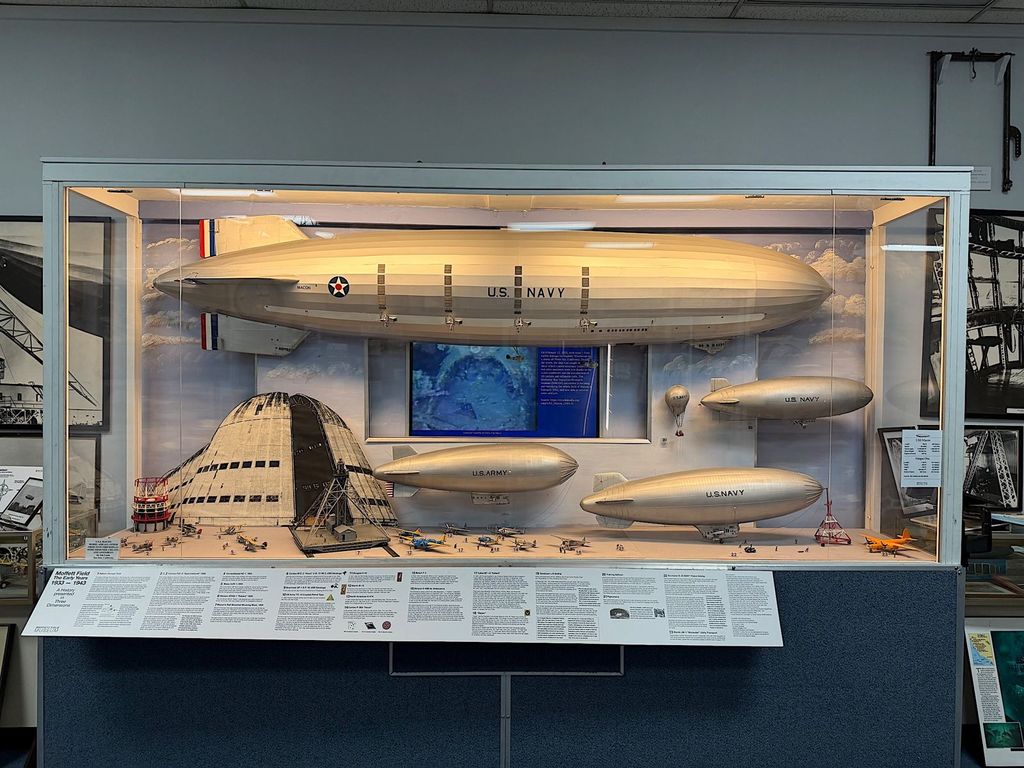
The “Moffett Field: The Early Years, 1933 to 1943” diorama, with the USS Macon above a model of Hangar One and the Army and Navy blimps that followed.
Here’s a fun bit of trivia I love sharing with clients. The base was originally named Airbase Sunnyvale CAL, reportedly because officials worried that calling it “Mountain View” would make Washington picture airships crashing into mountainsides. The land itself sits in an unincorporated part of Santa Clara County between northern Mountain View and northern Sunnyvale, which is why you’ll see both city names attached to it.
The station was commissioned as NAS Sunnyvale on April 12, 1933. Just eight days earlier, on April 4, Admiral Moffett had died when the USS Akron, the Macon’s sister ship, went down off the New Jersey coast, and the airfield was renamed Moffett Field in his honor on September 1, 1933. Within months of opening, the base’s namesake had died in exactly the kind of disaster the airship program was supposed to move past. The museum’s diorama captures this whole chapter beautifully, and a video in the center of the case shows the Macon’s wreckage on the sea floor off Point Sur, which the Monterey Bay Aquarium Research Institute located and surveyed decades later.
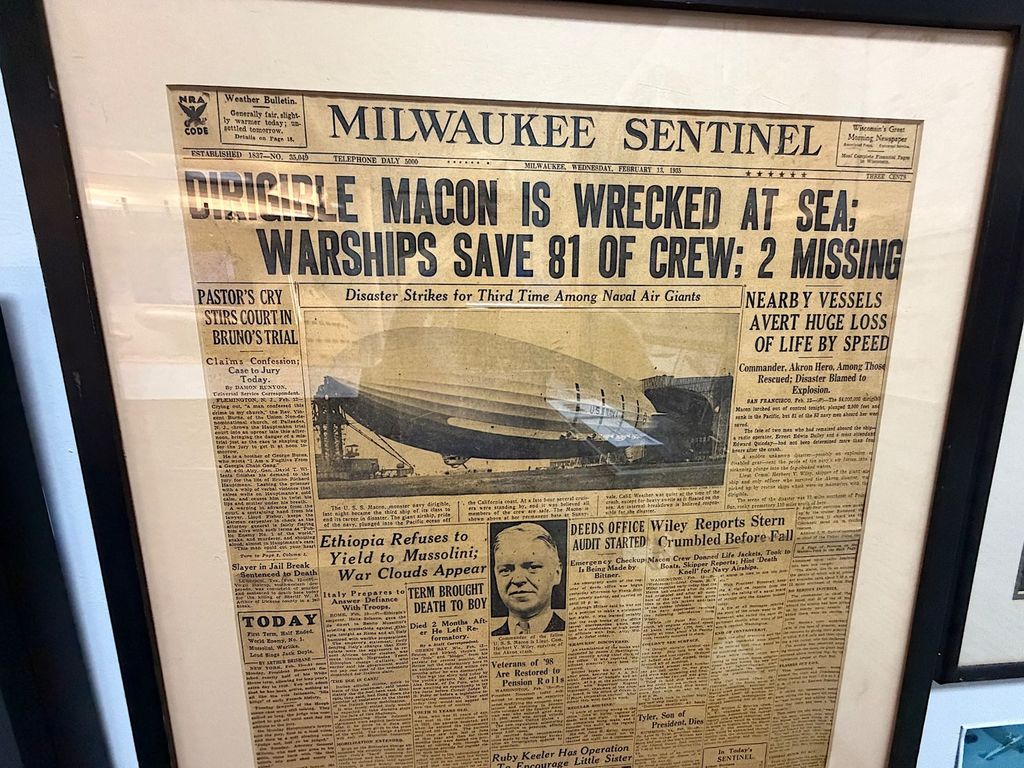
A framed Milwaukee Sentinel front page from February 13, 1935, the morning after the Macon went down.
Then came the Macon itself. On February 12, 1935, the airship, the very one Hangar One was built to house, failed in a storm off Point Sur and sank into the Pacific. Thanks to life jackets and nearby Navy ships, 81 of the 83 men aboard were rescued, and two died. One of my favorite artifacts in the museum is the framed newspaper above, with the headline “Dirigible Macon Is Wrecked at Sea; Warships Save 81 of Crew; 2 Missing.” Coming after the losses of the Shenandoah and the Akron, the Macon’s crash effectively ended the Navy’s rigid airship program. The whole rigid airship era at Moffett Field lasted about two years, and yet the infrastructure built for it, especially Hangar One, shaped the next ninety years of local history.
Hangar One: The Cathedral of the Bay
The museum sits right in the shadow of Hangar One, and the two are inseparable in the local imagination. Hangar One is one of the world’s largest freestanding structures. It measures 1,133 feet long and 308 feet wide, and its walls curve upward and inward to an elongated dome 198 feet high, covering about eight acres of floor. The aerodynamic “orange peel” doors were designed to reduce turbulence as the Macon moved in and out on windy days, and each one weighs about 200 tons and is moved by its own 150 horsepower motor.
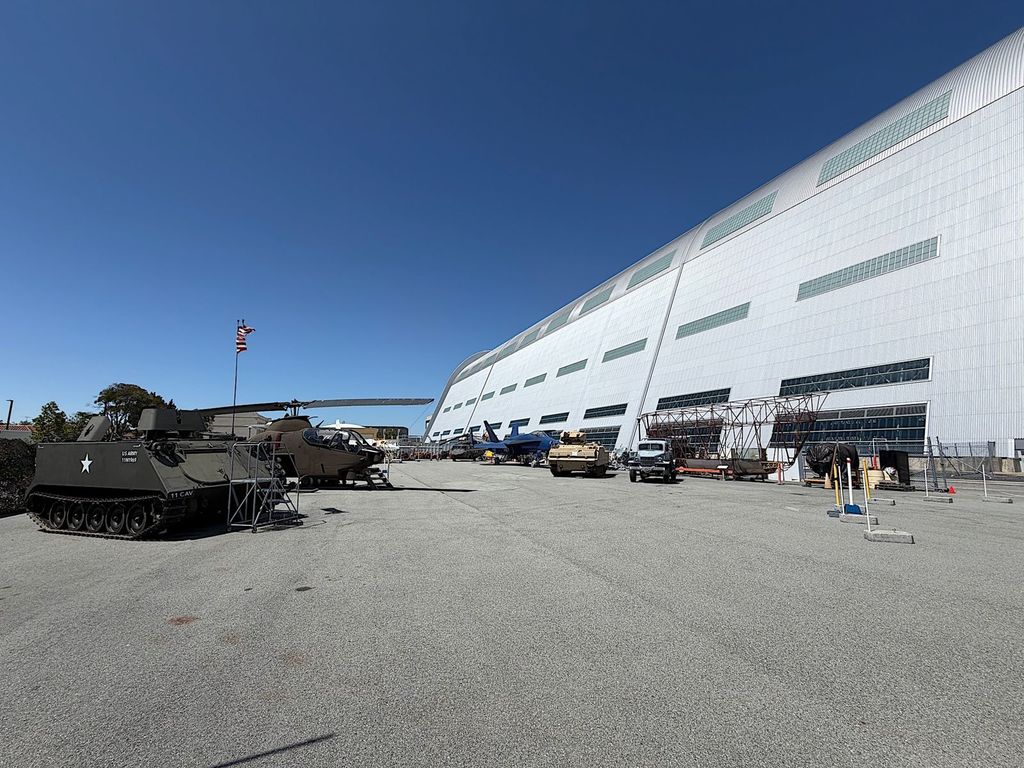
The museum’s outdoor airpark stretches along the side of the newly restored Hangar One.
To put that in terms you can picture, the floor could hold roughly six football fields, and the interior is so large that fog sometimes forms near the ceiling. Every time I tell clients a building can make its own weather, it stops them in their tracks.
For decades this magnificent structure sat there in trouble. Plans to turn it into a space and science center were put on hold in 2003 when it was discovered to be leaking toxic chemicals, including PCBs from the paint and coatings, into the wetlands bordering San Francisco Bay. The siding was eventually stripped, leaving a bare steel skeleton that sat on the skyline for years while federal agencies argued over who would pay. In 2014, NASA chose Planetary Ventures, a Google subsidiary, to manage Moffett Federal Airfield and rehabilitate Hangar One under a lease worth $1.16 billion over 60 years. Restoration was reported complete in December 2025 and celebrated in March 2026. After more than two decades, Hangar One is reskinned, watertight, and gleaming over the South Bay again, as you can see in my photos. A lot of locals haven’t caught up to the news yet, because for so many years it was a beautiful ruin.
The Army Years and World War II
After the Macon went down, the Navy nearly walked away. In October 1935 jurisdiction passed to the War Department, and from then until 1942 the base was run by the U.S. Army Air Corps as a training field, home to the Air Corps’ cadet training command and the 20th Pursuit Group. The museum has a substantial collection from this era, including aircraft parts, vehicles, and uniforms, along with an exhibit on the WASPs, the Women Airforce Service Pilots who ferried and tested aircraft during the war.
Pearl Harbor changed everything. On April 16, 1942, the base was returned to the Navy and recommissioned as NAS Sunnyvale, and four days later it was renamed Naval Air Station Moffett Field. Because steel was reserved for ships, planes, and tanks, the Navy built Hangars Two and Three on the east side of the runways out of wood and concrete for blimp operations. They ranked among the largest freestanding wooden structures in the world. Hangar Two still stands, while demolition of the deteriorating Hangar Three began in 2024.
What happened during the war is a story more Bay Area residents should know. Airship squadron ZP-32 was commissioned at Moffett in 1942, and its K-class blimps, each about 250 feet long with a crew of nine or ten, spent the war patrolling the Pacific coast for Japanese submarines, according to NASA’s Hangar Three history. Day after day for years, blimps lifted off from this base, drifted out over the ocean carrying depth charges, and scanned for enemy submarines that were a real threat to coastal shipping. ZP-32 wasn’t decommissioned until November 1945.
The museum’s volunteers are restoring the control car of one of those blimps, the K-22, which crashed in 1943. Its salvaged fore and aft sections were rediscovered inside Hangar One during the restoration project, 71 years after they were tucked away, as Flying magazine reported. There’s something deeply satisfying about that to me. A piece of the local World War II story, lost inside the walls of an iconic building for decades, is being brought back to life by volunteers across the street from where it was found.
The Cold War, the P-3 Orions, and the Long Watch
From the end of World War II until it closed, NAS Moffett Field was home to generations of land-based anti-submarine and maritime patrol aircraft, including the Lockheed P-2 Neptune and the Lockheed P-3 Orion. In the 1950s it was also the Navy’s West Coast base for carrier fighter and attack squadrons, and later it served as headquarters for Patrol Wings Pacific. Until the fall of the Soviet Union and for some time after, daily anti-submarine and reconnaissance flights left Moffett to patrol the Pacific coastline.
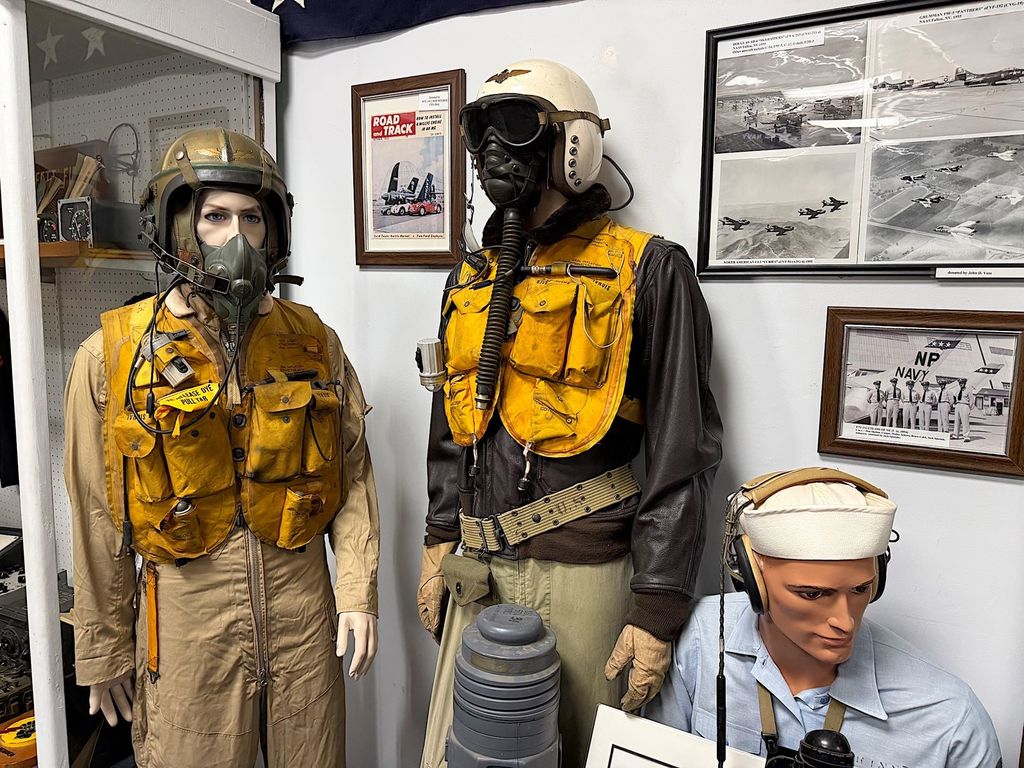
Cold War era Navy flight gear, with photos of the jets that flew from Moffett and nearby fields in the 1950s.
This is the era many older Bay Area residents remember personally. If you grew up in Mountain View, Sunnyvale, or Los Altos in the 1960s, 70s, or 80s, you remember the drone of P-3 Orions taking off from Moffett. While the public was watching Top Gun and thinking about fighter pilots, the long, patient work of tracking Soviet submarines in the Pacific was being done out of bases like this one.
For clients who have lived in Silicon Valley for forty or fifty years, talking about Moffett often unlocks memories that have nothing to do with real estate. They remember the airshows. They remember neighbors who were pilots or mechanics, and how base families were woven into everyday life in Mountain View and Sunnyvale. Moffett wasn’t just a base on the edge of town. It was part of the community.
The Navy closed NAS Moffett Field on July 1, 1994, as part of the base closure process, and turned it over to NASA’s Ames Research Center. Today Moffett Federal Airfield is shared by NASA, the California Air National Guard’s 129th Rescue Wing, and Google’s Planetary Ventures, among others. That shift from Cold War defense work to NASA research and Google is a perfect microcosm of what happened to Silicon Valley as a whole, with federal infrastructure providing the bones that the private sector built on.
The Exhibits Inside the Museum
The museum’s exhibits page covers the early days, the USS Macon, Admiral Moffett, World War II, the WASPs, the Cold War, and a NASA collection of space exploration artifacts. Here are the highlights I’d point you toward.
World War I: America in the Great War
The newest addition is the WWI: America in the Great War exhibit, which the museum calls its most immersive yet. It starts with a World War I officers’ staff car painted for the 94th Aero Squadron, the famous “Hat in the Ring” squadron Eddie Rickenbacker flew with, surrounded by uniforms, a footlocker, recruiting posters, and an “I Want You” Uncle Sam poster.
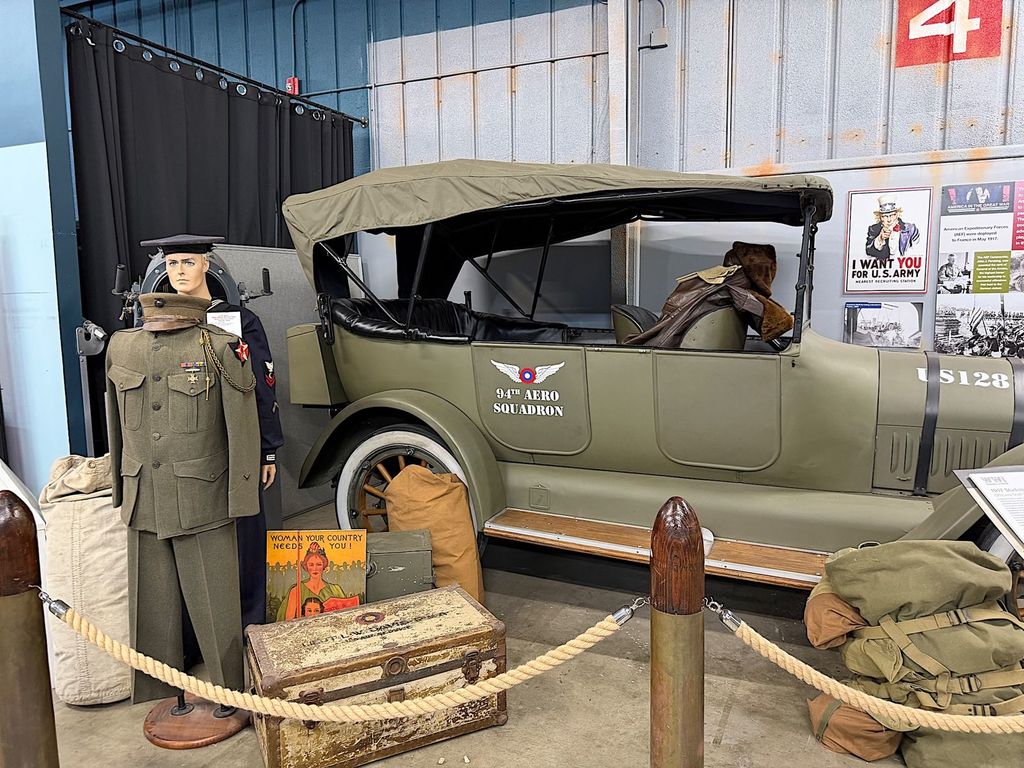
A WWI officers’ staff car marked for the 94th Aero Squadron, at the entrance to the Great War exhibit.
From there you step into a fully immersive, walk-through trench. The lighting drops, the duckboards creak underfoot, and sandbags line the walls, putting you in the environment soldiers faced on the front lines. The first bay introduces the American “doughboy,” with uniforms, helmets, and packs displayed against a flag.
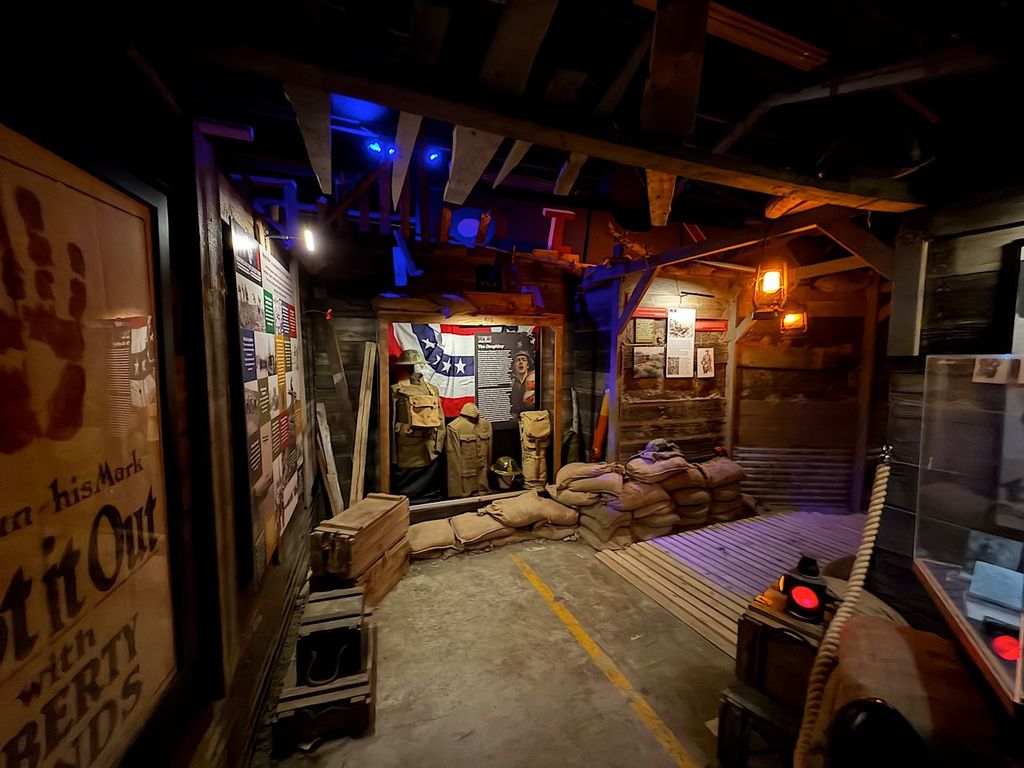
The walk-through trench opens with “The Doughboy,” a display of American WWI uniforms and gear.
Further in, you pass a dugout that shows how soldiers lived between shifts on the line, with a bunk, a wind-up phonograph, a shaving kit, family photos, and boots lined up by the footlocker. It’s the small personal items that bring history down to a human scale.
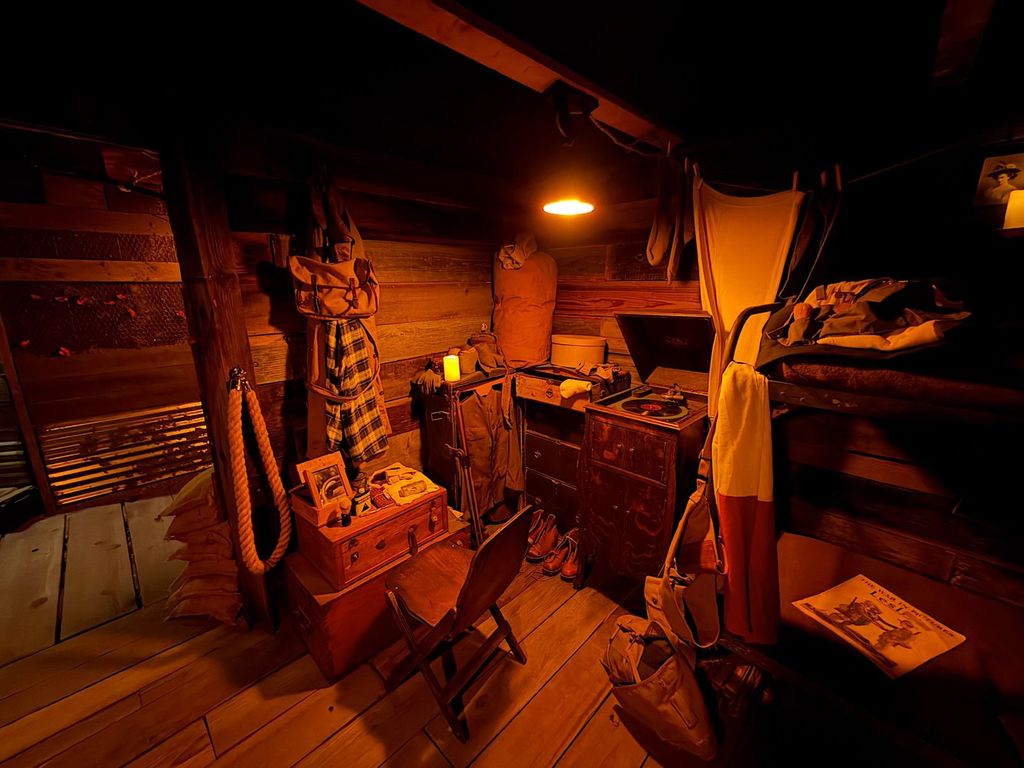
A recreated dugout, complete with a phonograph and a soldier’s personal effects.
A wall of period weapons shows the rifles American troops carried, including Springfield rifles with bayonets and a Browning Automatic Rifle, with ammunition pouches, a grenade pouch, and a helmet and field gear in the case beside them.
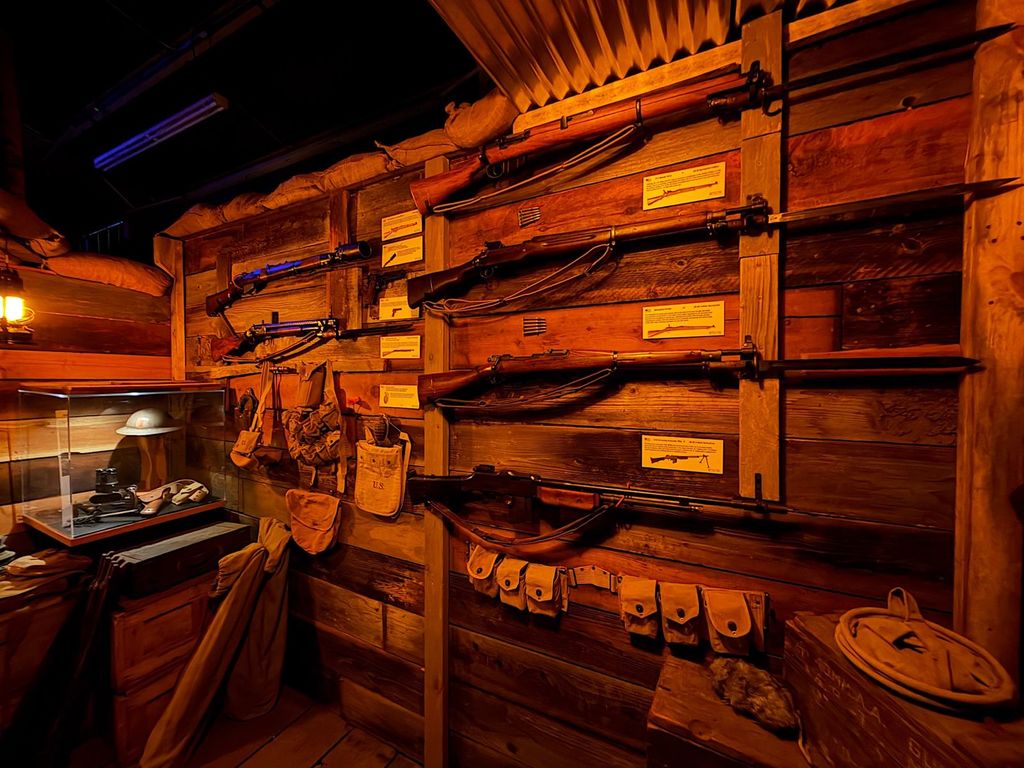
The weapons wall, with Springfield rifles and a Browning Automatic Rifle.
The field kitchen is one of the most detailed scenes in the exhibit, with an Army cook in his apron surrounded by stockpots, corned beef crates, a Mills Bros. coffee tin, and baskets of potatoes and apples. Kids tend to spend a long time in here pointing things out.
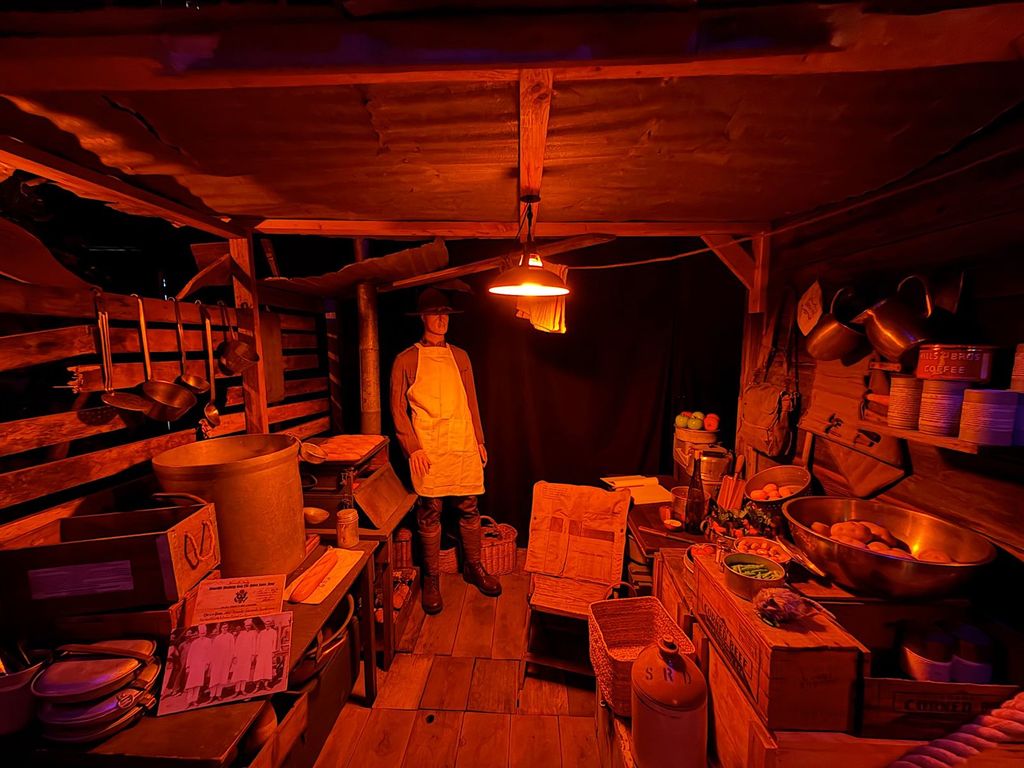
The WWI field kitchen, stocked with period cookware and rations.
The exhibit ends with one of my favorite scenes, a tribute to the women of the Motor Corps of America, who served as drivers and mechanics during the war. A uniformed driver sits beside a Ford Model T ambulance with its hood open and a Red Cross on the grille, under period recruiting posters. The museum also displays a striking biplane as part of the exhibit. This is the kind of experience that’s worth the trip on its own.
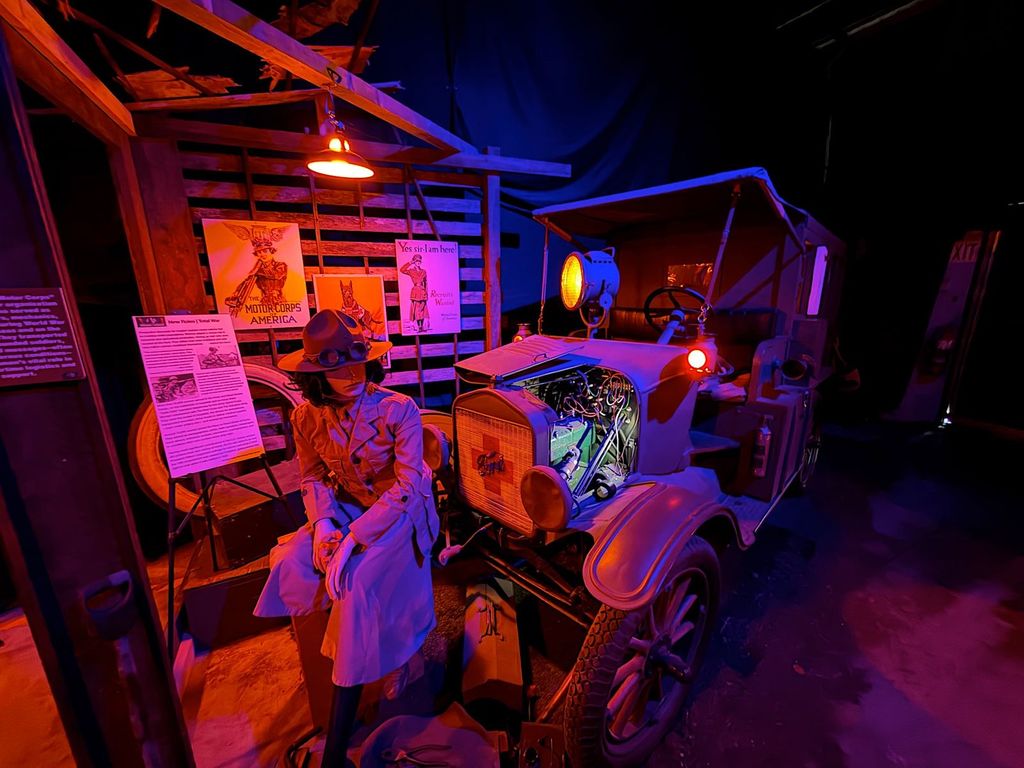
A tribute to the women of the Motor Corps of America, with a Ford Model T ambulance.
The Cockpit Collection: Climb Into a Harrier
Here’s something you won’t get at most museums. The cockpit collection includes hands-on, accessible P-3 and Harrier jump jet cockpits, and you can climb in. The Harrier forward fuselage sits on the floor in white and blue paint, with its canopy open and a Mark 81 “Snakeye” bomb displayed beside it.
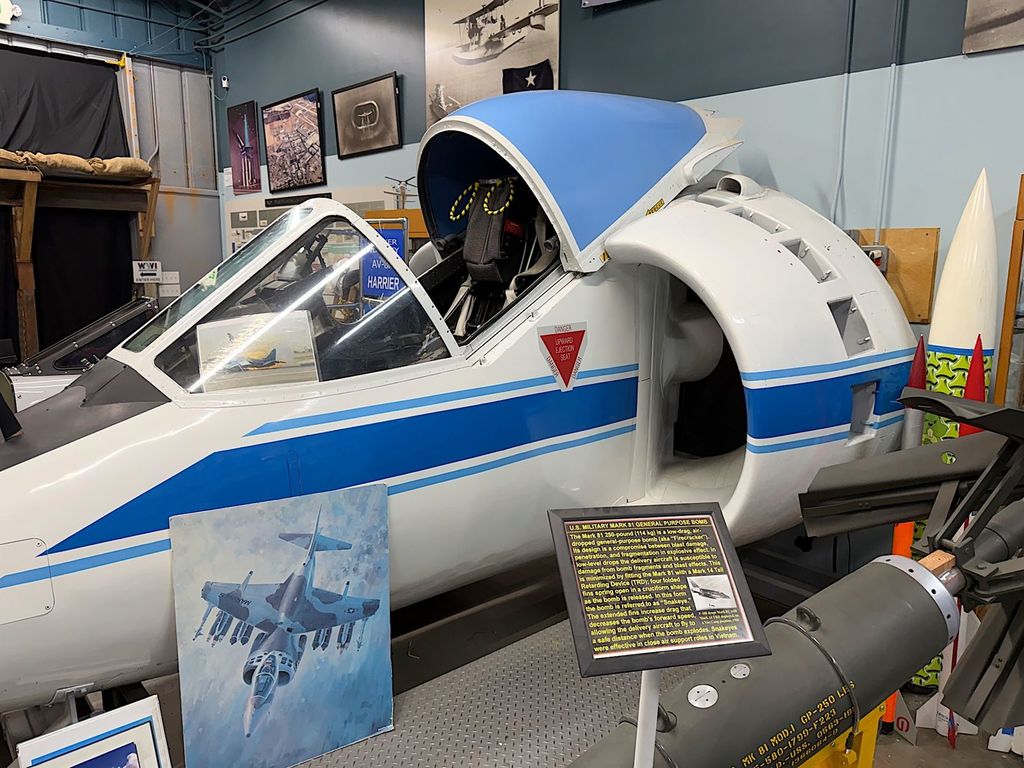
The Harrier cockpit section, with a Mark 81 “Snakeye” bomb on display beside it.
I couldn’t resist. Sitting in that seat and looking at the altimeter, airspeed indicator, and control stick, you get a real feel for how tight a fighter cockpit is. Grandkids love it, and frankly so did I.
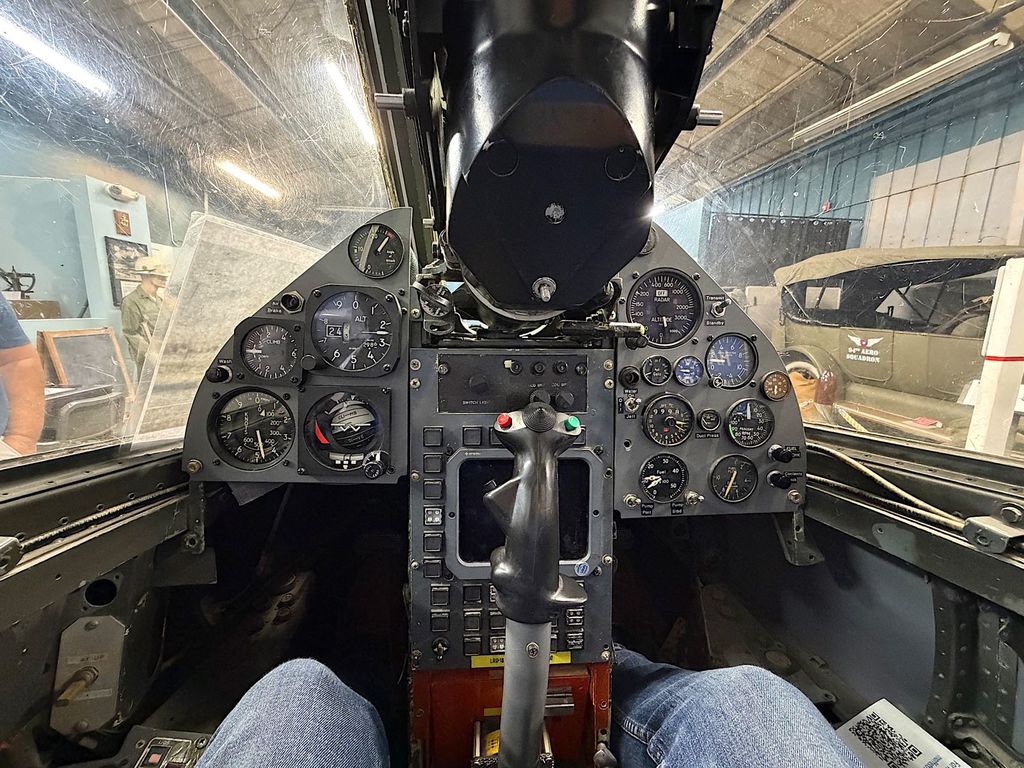
My view from the Harrier’s pilot seat, looking out over the instrument panel.
From Jet Engines to SpaceShipOne
Engine fans should look for the General Electric J85-5 turbojet. Two of these powered the White Knight carrier aircraft that lifted Burt Rutan’s SpaceShipOne to about 46,000 feet before it rocketed past the edge of space. Financed by Microsoft co-founder Paul Allen, those flights won the $10 million Ansari X Prize in 2004 for the first privately funded, crewed, reusable spacecraft.
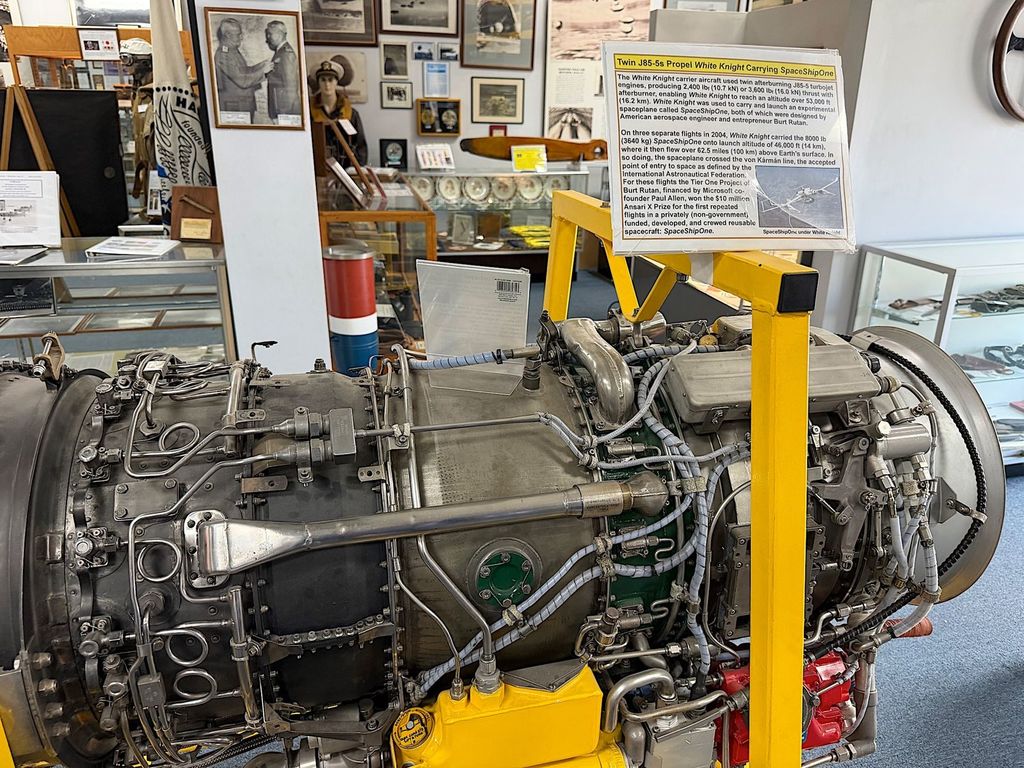
A J85-5 turbojet, the type that powered White Knight when it carried SpaceShipOne aloft in 2004.
The museum also has a Hall of Honor paying tribute to those who served, an EFF tank collection, and a train room that I’ve seen kids absolutely lose their minds over, in a good way. There’s even a kids’ coloring book if you’re bringing little ones. You can easily spend two hours inside, and longer if you get a docent talking, which you should, because the docents are the secret sauce of the whole operation.
The Outdoor Airpark
Don’t leave without walking the airpark outside, which runs along the base of Hangar One. The museum lists Navy and NASA aircraft including an F/A-18 Hornet, a U-2 spy plane, an F-104 Starfighter, a Cobra helicopter, and P-2 and P-3 patrol planes, though some are rotated out for restoration. The NASA-painted Hornet was the first thing that caught my eye, gleaming dark blue against the new silver siding of the hangar.
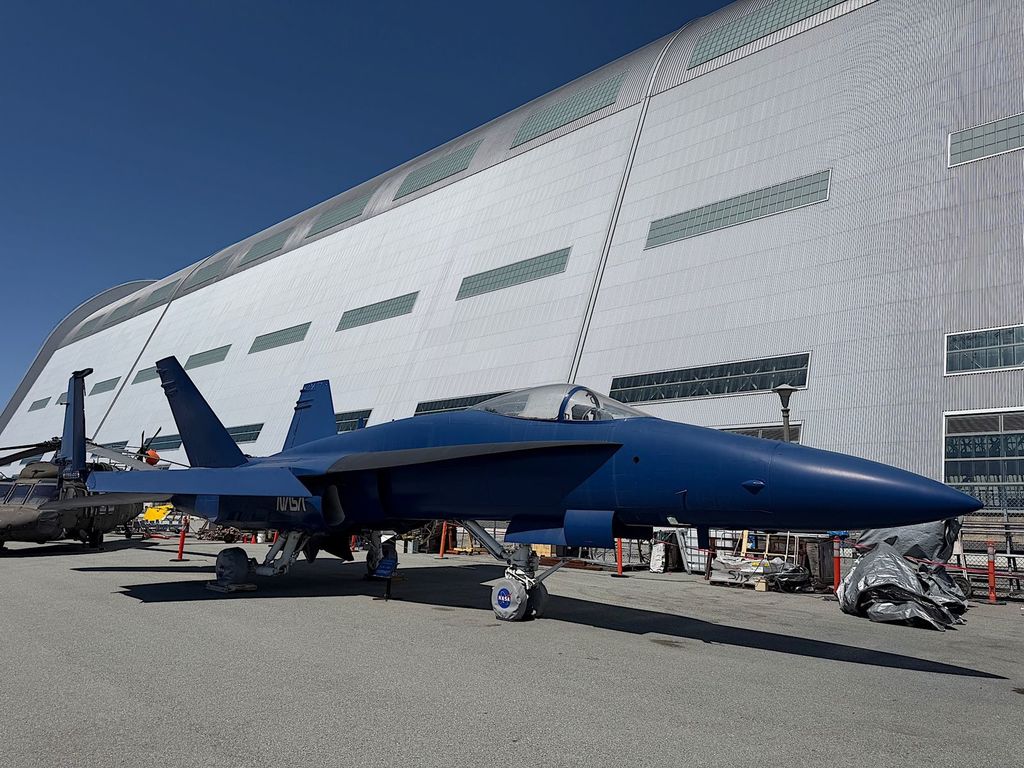
A NASA F/A-18 Hornet parked beside the restored Hangar One.
Right next to it is an AH-1 Cobra, the slim attack helicopter that defined Army aviation from Vietnam onward, with its rocket pods still mounted under the stub wings.
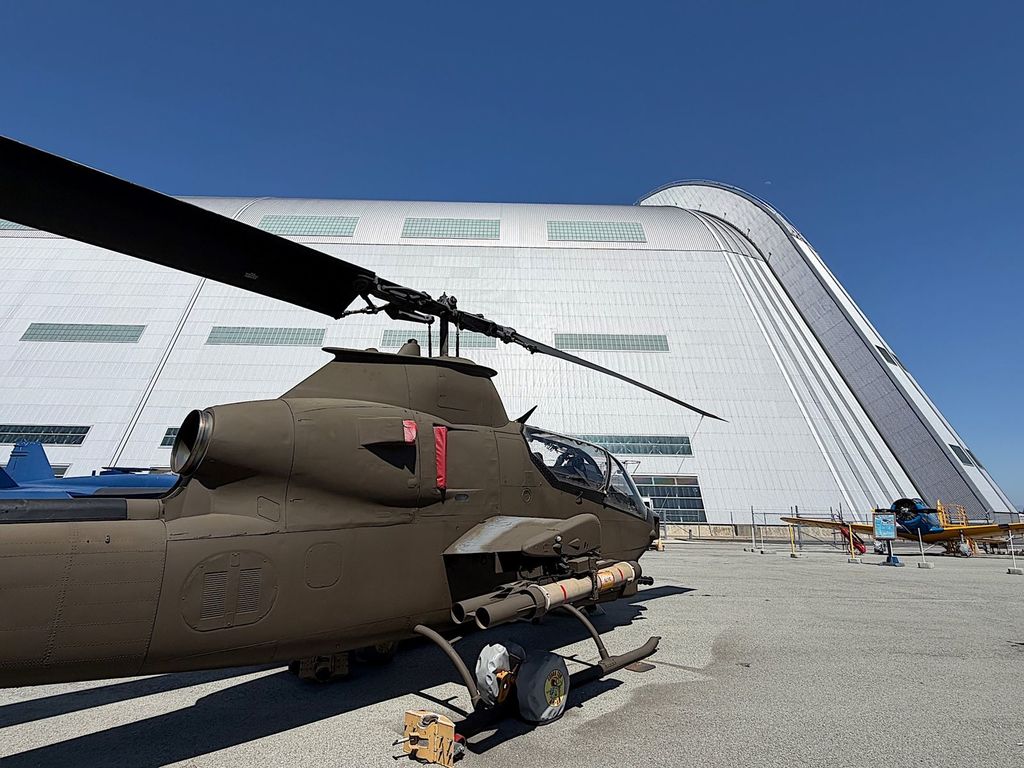
An AH-1 Cobra attack helicopter, with Hangar One’s curved end in the background.
A UH-60 Black Hawk sits head-on to the walkway, rotors spread wide. Seeing one up close, you appreciate just how big these utility helicopters are.
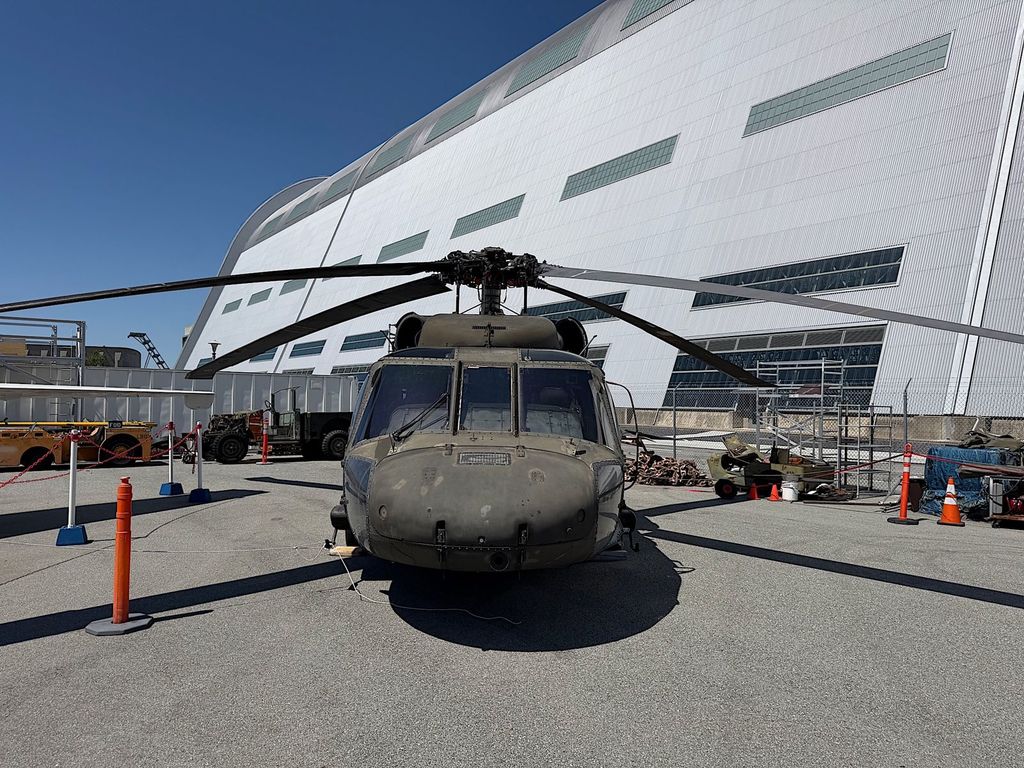
A UH-60 Black Hawk in the airpark.
The ground vehicles are just as fun. An M113 armored personnel carrier in 11th Armored Cavalry markings sits beneath the iconic red and white checkered water tower, one of my favorite photo spots on the base.
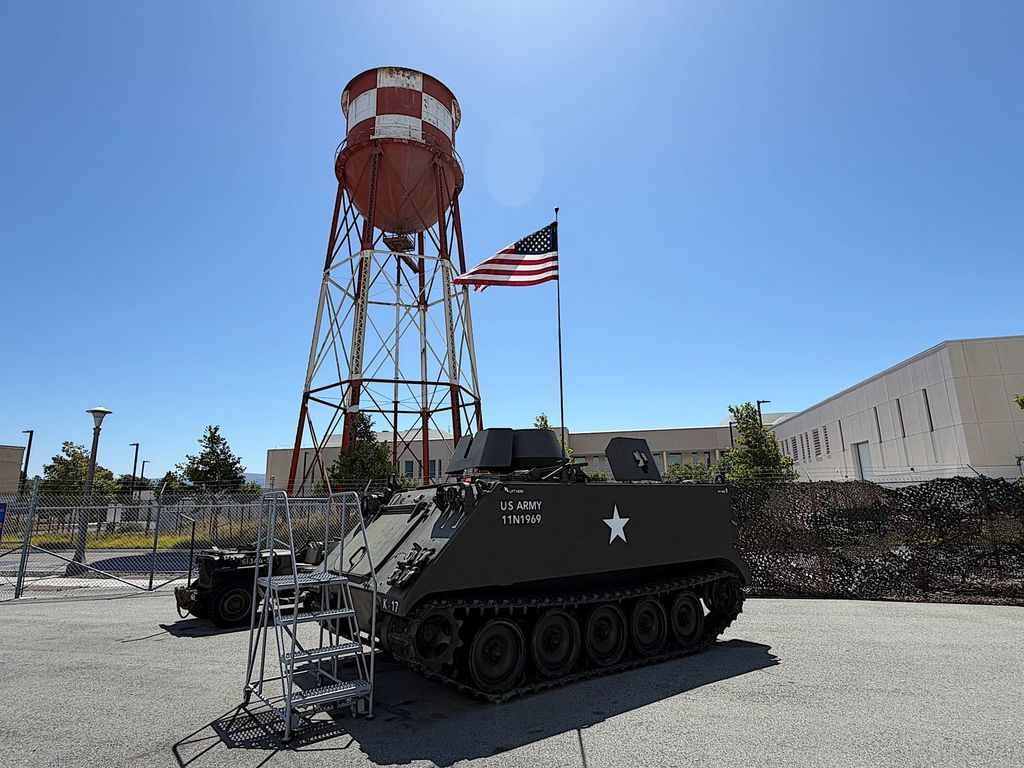
An M113 armored personnel carrier beneath Moffett Field’s checkered water tower.
When volunteers have it open, you can look inside a Bradley Fighting Vehicle, packed with the gear, bench seats, and 25mm ammunition cans a crew and infantry squad would carry. It’s a cramped, fascinating look at what the job is really like.
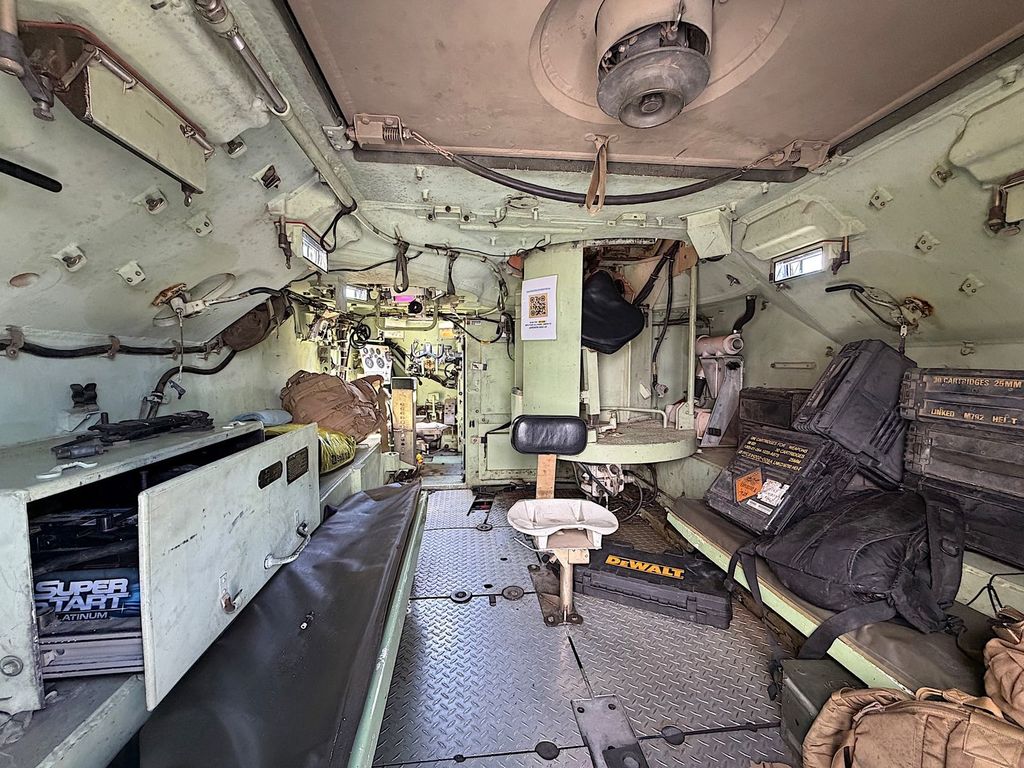
Inside the troop compartment of a Bradley Fighting Vehicle.
Why I Send My Senior Clients Here
I want to take a moment to talk about why this place matters to me as a Silicon Valley senior real estate specialist. I work with a lot of older adults and their families, people who have lived in Mountain View, Sunnyvale, Los Altos, Palo Alto, and the surrounding communities for decades, and many are now thinking about what their next chapter looks like.
One thing I notice again and again is how much local history matters to longtime residents. When you’ve raised your kids in a place and watched orchards become tech campuses, you develop a relationship with it that goes well beyond the four walls of your house. Places like the Moffett Field Museum preserve that continuity. They remind you that you weren’t a passive observer to all this change. You were part of a story that goes back generations and is still being written.
I’ll often suggest the museum to clients who are working through a big life transition. Sometimes they’re downsizing or relocating, sometimes they’re deciding whether to stay in the family home or move closer to their kids, and sometimes they’re just making peace with how much the area has changed since they bought in 1978. A visit with a docent walking you through the eras is a surprisingly powerful way to reconnect with what makes this part of California special. If you’re at that stage, my guide to the best Silicon Valley neighborhoods for senior downsizers is a good next read.
Practically speaking, it’s also just an excellent outing. The senior ticket is a modest $10, the volunteers are welcoming, the cockpits are built to be accessible, and it pairs beautifully with lunch on Castro Street afterward. If you call ahead, the staff can tell you what’s open that day and help with any mobility questions.
How the Museum Stays Alive
The museum is a 501(c)(3) nonprofit that survives on memberships, donations, ticket sales, and the work of volunteers. They’re always looking for new members and new volunteers, and if you have any background in aviation, military history, or education, or you simply enjoy talking to people about remarkable old things, this is a wonderful group to join.
Their donation page explains what your support funds, from artifact preservation to STEM workshops, lectures, and special exhibits like the new WWI trench. The museum exists because local volunteers, mostly retirees, aviation enthusiasts, and former service members, decided in the early 1990s that Moffett’s heritage was worth saving. They’ve kept it going for more than thirty years through a hangar closure, funding crunches, and a pandemic. That’s no small thing.
Make a Day of It
Silicon Valley has a lot of polished, beautifully designed places to visit, and the Computer History Museum, just a few minutes away on Shoreline Boulevard, is one of my favorites. The Moffett Field Museum is something different, and I’d argue just as important. It’s a place where you can stand on a working federal airfield, sit in a fighter cockpit, walk through a World War I trench, and connect the dots between the mid-century defense industry and the tech industry that grew up beside it. History lovers can round out the day at the Rengstorff House in Shoreline Park, which shows what Mountain View looked like when it was still farmland.
If you’ve lived here a long time and never been, please go. If you’re new to the area and trying to understand the place you’ve moved to, this is one of the best two-hour primers you can get. And if you’re considering your own next move in Mountain View, Sunnyvale, or anywhere else in Silicon Valley, whether that’s selling, buying, downsizing, or just figuring out your options, I’d love to talk. You can reach me at 408-413-3087, book a call with me directly, or browse my resources for Bay Area seniors and longtime homeowners. After more than two decades doing this work, I still believe the people who built this valley deserve thoughtful, knowledgeable representation when it’s their turn to make a move, and the Moffett Field Museum is one of the places that reminds me why.
Frequently Asked Questions About the Moffett Field Museum
Where is the Moffett Field Museum located?
What are the Moffett Field Museum’s hours?
How much does the Moffett Field Museum cost?
Do I need a REAL ID to visit the Moffett Field Museum?
Can you go inside Hangar One?
Why is it called Moffett Field?
Is the Moffett Field Museum good for seniors and grandkids?
Is Moffett Field in Mountain View or Sunnyvale?

Time to talk to a REALTOR®?
Book a Call with Seb
Selling, buying or just weighing your options? Pick a time that works for you and we'll talk it through.
Pick a Time →Rather talk now? Call or text 408.413.3087
Amazing Mountain View Homes for Sale
2
3
4
5
6
7
8
9
10
11
12
13
14
15
16
17
18
19
20
21
22
23
24
25