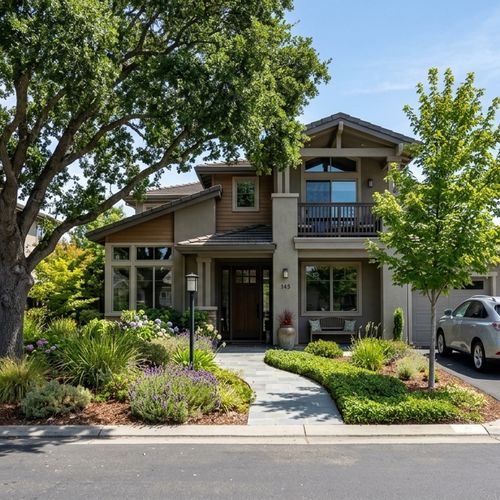
Santa Clara County homes are spending roughly 18 days on the market before selling, and the median sale price sits around $1,645,000. At that level, buyers start looking at every possible option - including age-restricted communities. It's a reasonable instinct, but the rules around 55+ housing are tighter than most people expect.
The short answer is no, a younger family generally cannot live in a 55+ community in Silicon Valley, CA. The longer answer involves federal guidelines, California state law, and the specific CC&Rs of whatever HOA you're dealing with - and those three layers don't always say the same thing.
How Age-Restricted Housing Laws Work in California
The rules come from two directions at once. Federal law sets the floor for what qualifies as an age-restricted development, and then California comes in with something stricter on top of it.
In Santa Clara County, homeowners associations enforce these rules through their Covenants, Conditions, and Restrictions (CC&Rs). Those documents spell out who can occupy a unit and under what circumstances any exceptions might apply - and "might" is doing a lot of work in that sentence.
The Federal Housing for Older Persons Act
The Department of Housing and Urban Development (HUD) oversees the Housing for Older Persons Act (HOPA). Under this federal law, a community qualifies as age-restricted if at least 80 percent of its occupied units have one resident who is 55 or older. That threshold is what allows the community to legally restrict residency by age without running into fair housing statutes.
The remaining 20 percent gives the community some administrative flexibility - but it does not require the HOA to use it. That distinction matters enormously, and I'll come back to it.
California Civil Rights Rules and the Unruh Act
California's Unruh Civil Rights Act, overseen by the California Civil Rights Department, sets rules that go beyond the federal baseline. Under Civil Code Section 51.3, the state generally requires only one qualifying senior - age 55 or older - per household to maintain the age restriction on that unit.
What the law limits is who else can share the home. It specifically allows a spouse, a cohabitant, or someone providing primary economic or physical support. That's a short list on purpose.
The Truth About the Federal Exemption Rule
The 20 percent federal allowance generates more confusion than almost anything else in this conversation. Buyers hear "80/20 rule" and assume there's a bracket they can buy into.
There isn't - at least not here.
What the 20 Percent Exemption Means
The federal 80/20 rule exists as a buffer. If a qualifying resident passes away or a younger spouse remains in the home after the senior's death, the community doesn't automatically lose its HOPA status over a handful of technical exceptions. It's an administrative safeguard, not a reserved allocation of homes for younger buyers.
The association isn't setting aside one-fifth of its units for non-senior residents. That's not what the rule does.
Why Local Homeowners Associations Say No
There are no verifiable examples of Silicon Valley 55+ communities publicly advertising the use of the 20 percent exemption to allow adult children or younger families to reside permanently. Most local HOAs choose strict age enforcement to protect their zoning and community status.
The Villages Golf & Country Club in San Jose, CA is the primary large-scale 55+ development in Santa Clara County. Its rules restrict occupancy exclusively to adults over the age of 55, with no advertised exceptions for the 20 percent allowance. That's a representative example of how these communities operate in this market.
Rules for Visiting and Caregiving
Permanent residency is one thing; visiting or providing care is another. California law and local CC&Rs do carve out space for both - within limits.
The Davis-Stirling Act requires California HOAs to implement guest policies that are reasonable and consistently enforced. What "reasonable" looks like varies considerably from one development to the next, so you'll want to pull the actual governing documents rather than rely on general assumptions.
Enforcing Visitor and Guest Time Limits
Most 55+ communities in Silicon Valley cap visits by younger family members at 30 to 60 days per year, with the exact number determined by each community's CC&Rs.
Here's where people get caught: once a guest stays for roughly 14 to 30 consecutive days, the HOA may reclassify them as an occupant rather than a visitor. That triggers registration requirements, and if the person is under the age threshold, enforcement follows.
State Allowances for Live-In Caregivers
The Unruh Act does include a specific provision for younger residents who provide necessary care to a senior. California law recognizes a "Permitted Health Care Worker" who can reside with a qualifying senior in an age-restricted property.
There's also an exception for a disabled child or grandchild who must live with the qualifying resident due to a disabling condition. HOAs are required to accommodate these situations - violating related disability-access laws carries a statutory damages floor of $4,000 per offense plus attorney's fees.
Buying and Inheriting Senior Real Estate
Ownership and occupancy are legally separate in California. You can hold title to a home in an age-restricted community without being old enough to live there.
That matters for investors, for adult children helping a parent buy, and for families working through probate. Santa Clara County currently has roughly 2,084 homes in active inventory, and some of those are age-restricted units held by younger buyers.
Purchasing as an Investment or for a Relative
A buyer under 55 can purchase a home in a senior community as an investment property or a residence for an older relative. The deed goes in the buyer's name; the person living there still has to meet the age requirement.
If your plan is to rent it out, read the CC&Rs before you close. Many associations impose rental caps or prohibit leasing altogether, which can significantly change whether the numbers work.
What Happens When You Inherit a 55+ Home
Inheriting one of these properties means inheriting the restrictions along with the title. The HOA's age rules apply to whoever occupies the unit - not just to whoever buys it.
As the heir, you generally have three paths: sell the property, rent it to a qualifying senior if the bylaws allow, or leave it vacant. Either way, HOA dues keep coming and maintenance standards still apply.
Frequently Asked Questions
Can a younger spouse or adult child legally live in a 55+ community in Silicon Valley, CA?
Yes, a younger spouse or cohabitant can legally live with a qualifying senior under California's Unruh Civil Rights Act. An adult child generally cannot live there permanently unless they qualify as a primary caregiver or have a disabling condition requiring them to live with the senior.
What happens if younger family members inherit a home in a Silicon Valley 55+ community?
Younger family members can legally inherit and own the property, but they cannot move in unless they meet the age requirement. They must either sell the home, rent it to an occupant who is 55 or older, or keep it vacant while continuing to pay the required HOA dues.
Do Silicon Valley senior communities use the 80/20 rule exception to allow residents under 55?
No. There are no verifiable examples of Silicon Valley 55+ communities publicly advertising the 80/20 exemption to allow younger residents. Large developments like The Villages Golf & Country Club in San Jose, CA restrict occupancy exclusively to adults over 55.
What is the HOA approval process for a younger relative to move in as a primary caregiver?
The relative must qualify as a "Permitted Health Care Worker" under California law. The homeowner submits documentation to the HOA proving the live-in caregiver is necessary for physical or economic support - documentation the association must approve in order to comply with fair housing laws.
Can a younger buyer purchase a home in a Silicon Valley 55+ neighborhood strictly as an investment property?
Yes. Ownership is separate from occupancy, so a younger buyer can purchase the home. The tenant must be 55 or older, and the buyer has to follow any HOA rental restrictions or leasing caps spelled out in the governing documents.
Are minor children ever permitted to live full-time with their grandparents in California age-restricted communities?
Generally, no. The only exception under California law is if the minor child or grandchild has a disabling condition that requires them to live with the qualifying resident. Otherwise, minor children are subject to the community's standard visitor time limits.
Check out this article next