I grew up in the Bay Area and I’ve spent more than 23 years selling homes in San Jose and the surrounding towns, so you’d think I would have History Park memorized by now. I didn’t. On a bright fall afternoon I walked the whole thing again with a camera and stopped at every single interpretive sign, and I came away with a much deeper appreciation for how this valley went from orchards and arc lights to the place where the world’s technology gets built. What follows is part walking guide, part history lesson, and part love letter to a city that doesn’t always get credit for its past.
Most of the history below comes straight from the signs posted around the park, written by History San José, the Chinese Historical and Cultural Project, local donors, and a group of very talented students. I’ve added context from my own years working in these neighborhoods, and I’ve linked to the organizations behind the exhibits so you can go deeper.
Key Takeaways
Summary: History Park San Jose is a 14 acre outdoor museum in Kelley Park run by History San José, with about 32 original and replica buildings that tell the story of the Santa Clara Valley from the 1850s forward. Highlights include the half scale Electric Light Tower replica, the Bank of Italy tied to A.P. Giannini, O’Brien’s Candy Store, the Pacific Hotel, the Chinese American Historical Museum in a replica of the 1888 Ng Shing Gung temple, and historic family homes like the Chiechi, Hill, and Gordon houses. Grounds are open daily, while museums and the trolley operate on weekends, and the flat, shaded layout makes it a great multigenerational outing.
What Is History Park San Jose?
History Park is a 14 acre outdoor museum tucked into the southern end of Kelley Park, near the corner of Senter Road and Phelan Avenue. It opened on June 18, 1971, and today it holds roughly 32 historic buildings and landmarks. Some are originals that were lifted off their foundations elsewhere in the county and trucked here, and others are careful reproductions of buildings that were lost to fire, wind, or the wrecking ball. The whole thing is laid out like a small town, with paved streets, sidewalks, a working trolley line, and a main drag that feels like downtown San Jose around 1900.
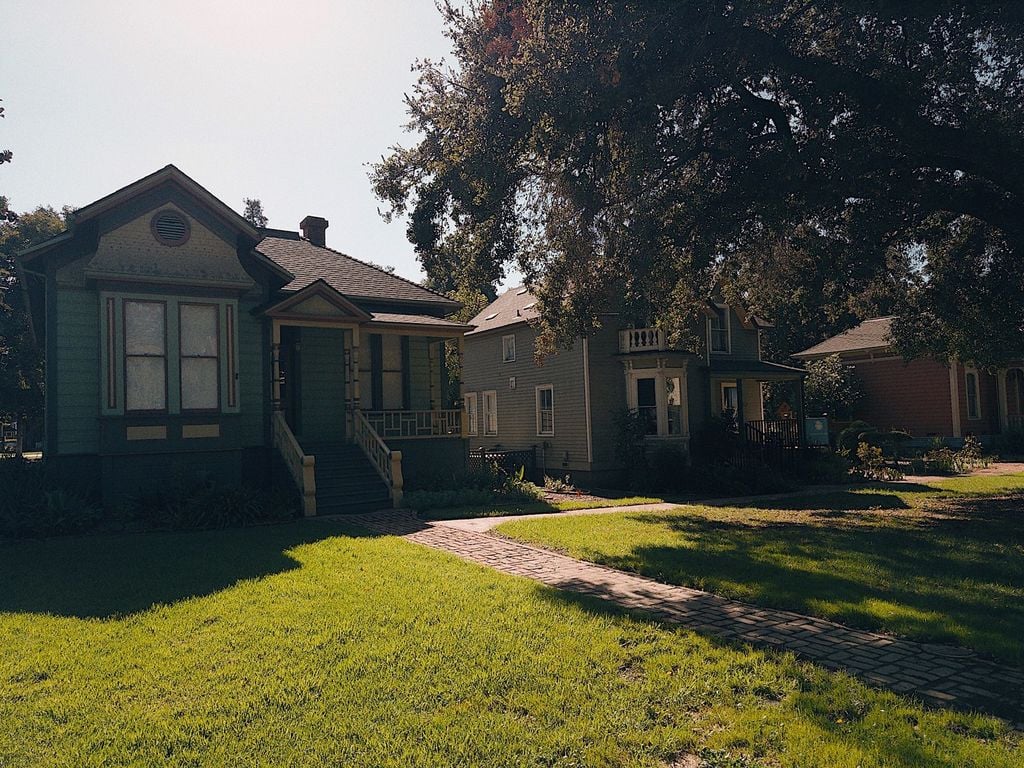
Victorian homes along History Park’s brick walkways, all moved here from neighborhoods around the valley.
The park is operated by History San José, a nonprofit that grew out of the old San Jose Historical Museum and now runs its offices from the upper floor of the Pacific Hotel replica. If you’ve only ever driven past Kelley Park on the way to Happy Hollow, you’ve been missing something special right next door.
The Electric Light Tower: San Jose’s Original Landmark
You can’t miss it. The steel lattice tower rising over the park’s main street is a half scale, 113 foot replica of the San Jose Electric Light Tower, and its backstory is wonderful. According to the sign, the original was the brainchild of J.J. Owens, editor of the San Jose Mercury, who wrote an editorial on May 13, 1881 arguing that one tall, powerful source of arc light could turn night into day for the whole downtown. Local citizens loved the idea enough to pay for it, construction started that August, and on December 13, 1881 the 237 foot tower was lit at the intersection of Santa Clara and Market Streets.
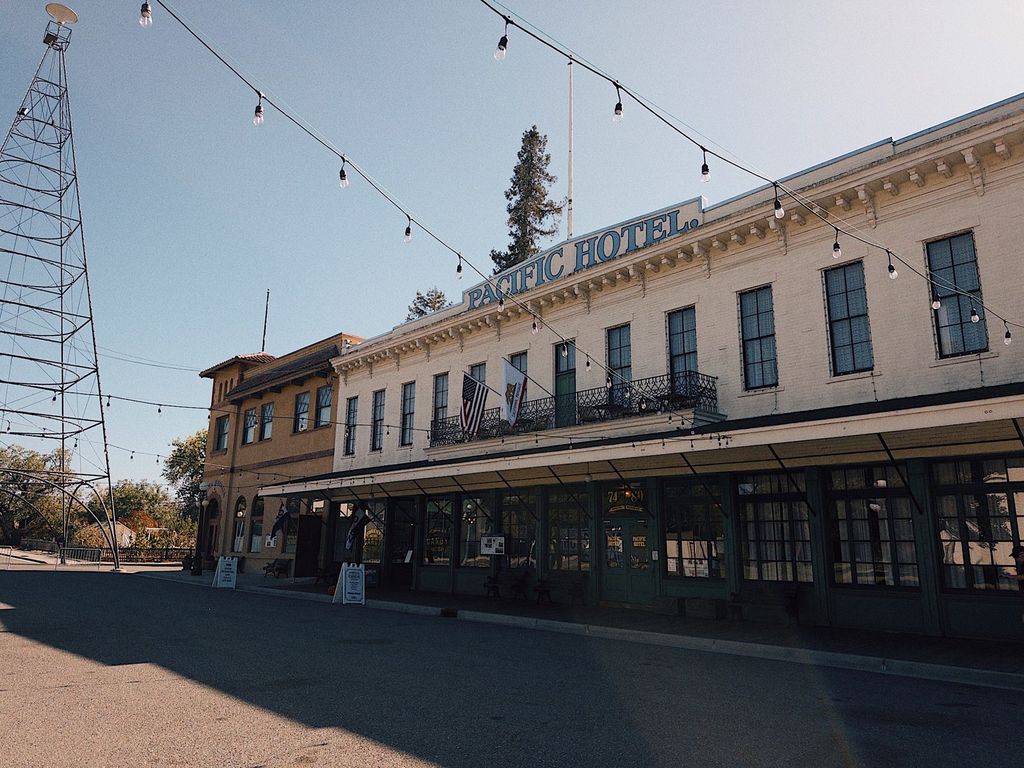
The half scale Electric Light Tower rises over the Pacific Hotel replica on the park’s main street.
At the time it ranked among the 50 tallest structures in the world, and its six arc lights put out 24,000 candlepower, which made it the brightest light tower anywhere. Locals have long claimed it inspired Gustave Eiffel’s tower in Paris, built eight years later, and the sign repeats that story. Historians treat it as a beloved bit of San Jose lore rather than documented fact, but either way it tells you how proud this city was of being early to electricity. A windstorm damaged the tower in February 1915, and at 11:55 a.m. on December 3 of that year it collapsed into the street, telescoping into itself. Nobody was hurt. The replica you see today was built by the San Jose Real Estate Board and donated to the community in 1976, which as a REALTOR® I’ll admit gives me a little bit of professional pride.
The Bank of Italy and A.P. Giannini
Right across the way stands a replica of the first Bank of Italy branch outside San Francisco, and it’s a story every San Josean should know. Amadeo Peter Giannini was born in 1870 at the Swiss Hotel on North Market and St. John Streets in downtown San Jose. In 1904 he founded the Bank of Italy in San Francisco with a simple idea that was radical at the time: lend to the working class, immigrants, and small business owners that the big banks ignored. The bank bought San Jose’s Commercial and Savings Bank in 1909 and turned it into a branch, and Giannini went on to build the first successful branch banking system in the United States.
The list of firsts on this sign is long. A school savings program for children in 1911, a Women’s Banking Department in 1921, door to door advertising, and newspaper ads that actually explained how banking worked. His bank financed the valley’s farms when nobody else would, helped fund the Golden Gate Bridge in the middle of the Depression, and bankrolled Hollywood classics like Snow White and the Seven Dwarfs, Gone with the Wind, and It’s a Wonderful Life. Frank Capra even modeled the lead in his 1932 film American Madness on Giannini. In 1930 the Bank of Italy became Bank of America, which funded this replica building in 1976. The original 1911 interior photo on the sign shows bilingual staff, because Giannini required employees to serve customers in French, Spanish, Italian, and Portuguese.
O’Brien’s Candy Store and the Pacific Hotel
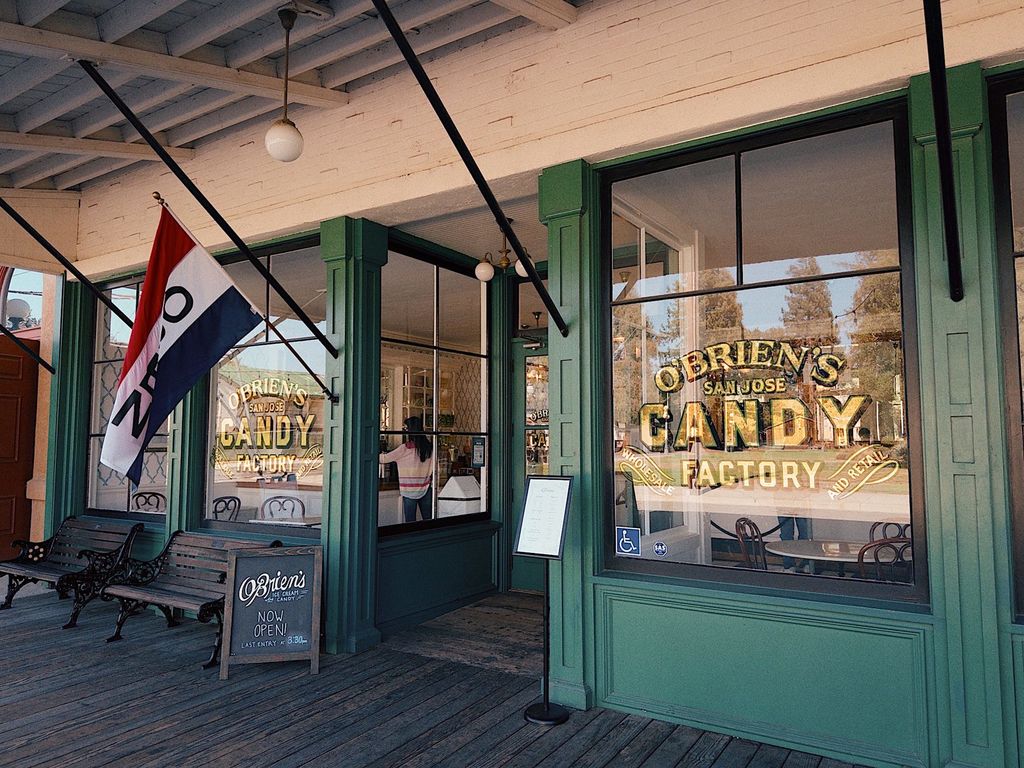
O’Brien’s San Jose Candy Factory, still open for ice cream on weekends.
If you’re bringing kids or grandkids, this is where you’ll end up, and honestly that’s fine with me. The sign calls the original O’Brien’s “the prettiest and most attractive candy store on the Pacific Coast,” and it’s credited as the first place to serve ice cream west of Detroit. Maurice O’Brien, an Irish immigrant, started in 1868 with $500, selling baskets of candy from the doorway of the Pacific Hotel. He moved to a corner stand at First and San Fernando, then in 1874 to 30 South First Street, where the store stayed for 53 years. In 1928 it moved to 223 South First Street, and the family finally closed the business in January 1956.
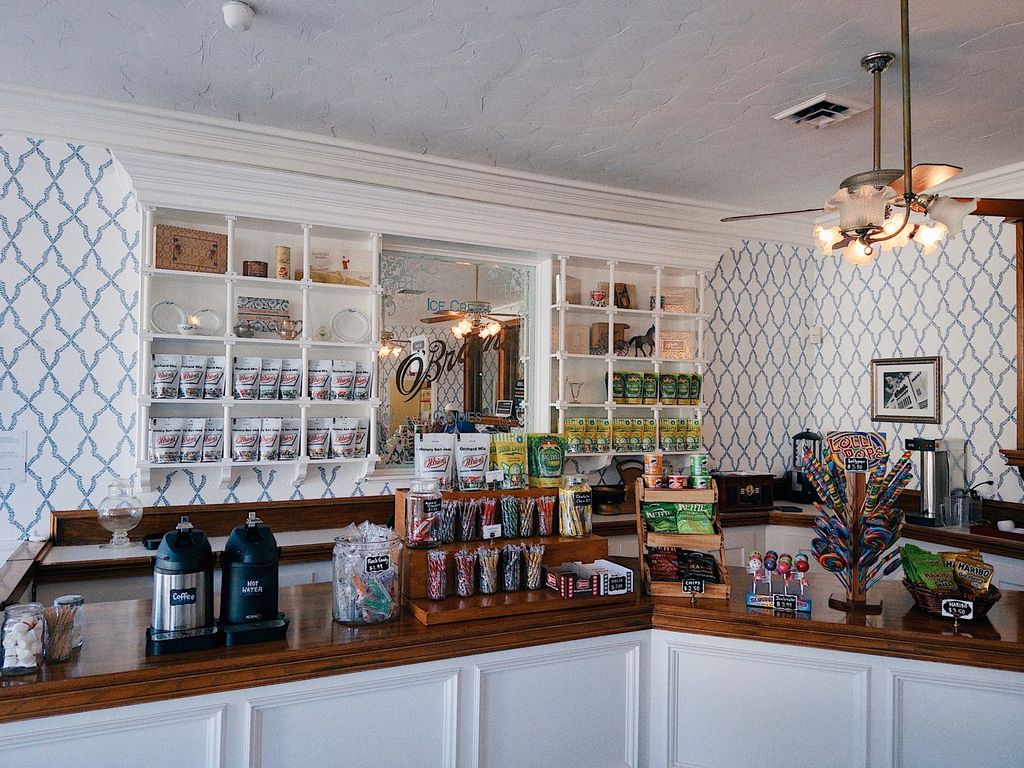
Inside O’Brien’s: penny candy, Orchard Mix, and a little old San Jose charm.
The reproduction was funded by the Rotary Club of San Jose, completed in 1977, and renovated with another Rotary grant in 2016. On weekends it’s still scooping ice cream, so plan your walk to finish here. Next door is the Pacific Hotel replica, dedicated in 1977 as the museum’s headquarters. The original was built of fireproof brick in 1860 as Crandall’s Hotel at 74 to 80 South Market Street, near St. Joseph’s Church. Prussian immigrant Charles Schiele bought it in 1880 and renamed it the Pacific Hotel, and in its heyday it offered 55 rooms, a bar, billiards, reading rooms, and a livery stable. Room and board ran nine to fifteen dollars, German breakfast or dinner in the Deutsches Gasthaus cost fifty cents, and lunch was seventy five. Pacific Telegraph and Telephone bought the building in 1907.
Lillian Gong-Guy Plaza and the Chinese American Historical Museum
Walk a little further and you reach a shaded plaza named for Lillian Gong-Guy (1935 to 2014), a community leader who worked with dozens of nonprofits and co-founded the Chinese Historical and Cultural Project (CHCP). The sign describes her energy for sharing history as something that captivated staff, volunteers, and visitors alike, and the photo of her leading a student tour says the rest.
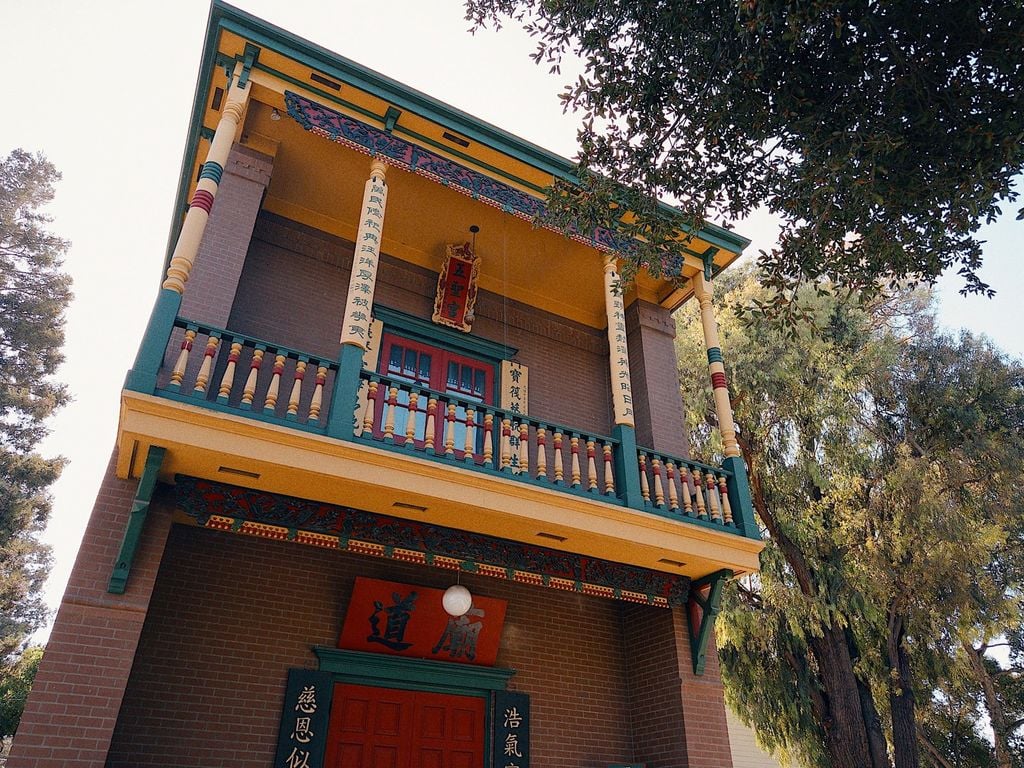
The Ng Shing Gung replica, home of the Chinese American Historical Museum.
Just off the plaza is the building she helped make possible, the Chinese American Historical Museum, housed in a replica of the 1888 Ng Shing Gung, or Temple of Five Gods. The original stood at Taylor and Sixth Streets in Heinlenville, the last of San Jose’s five Chinatowns. Heinlenville was named for John Heinlen, a German immigrant who helped the Chinese community rebuild after the Market Street Chinatown burned in 1887. For decades Ng Shing Gung served as a meeting hall, cultural center, school, hostel, and place of worship. CHCP formed in 1987, raised more than $800,000 between 1987 and 1991 to rebuild it, and dedicated the museum on September 29, 1991. Upstairs is the original temple altar, hand carved and gilded teak made in Canton City in 1892, and it is breathtaking in person. Downstairs there’s a timeline of the U.S., San Jose, and China starting in 1850, plus a “Good Luck” lion made in Fat Shen, China, around 1930.
Homes That Made the Move: Chiechi, Hill, and Gordon
This part of the park hits closest to home for me, because so much of my work is with longtime homeowners and their families. These houses weren’t just buildings. They were the places where families spent entire lifetimes, and each one has its own story about how it survived.
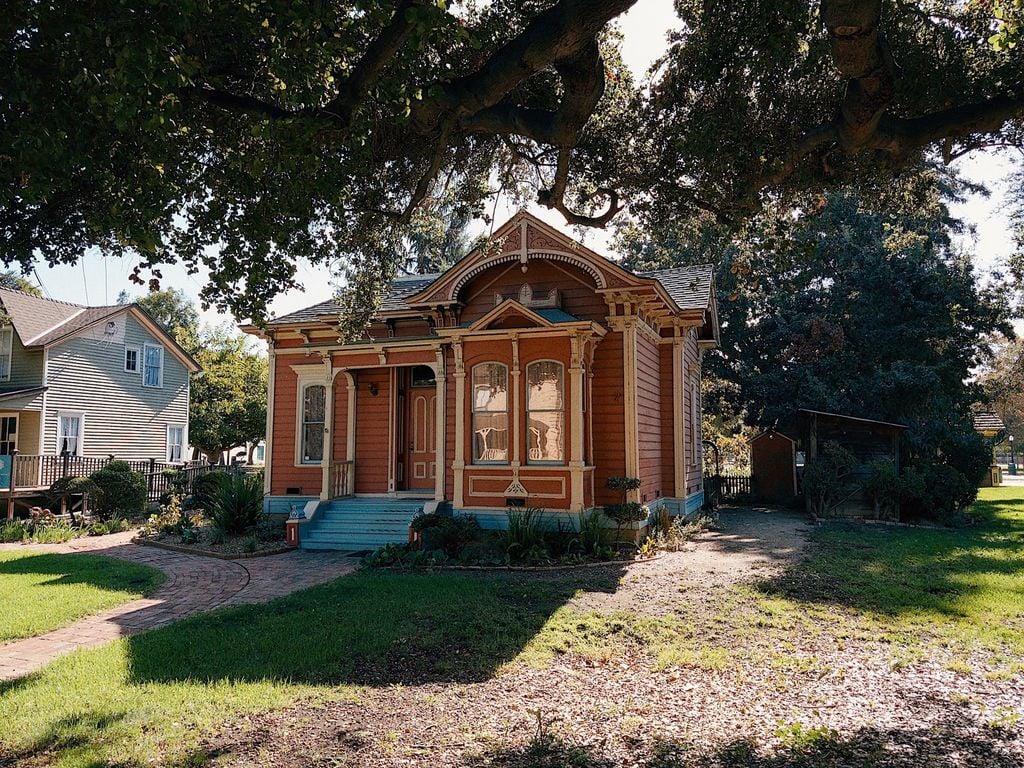
An Italianate Victorian cottage tucked under one of the park’s heritage oaks.
The Chiechi House
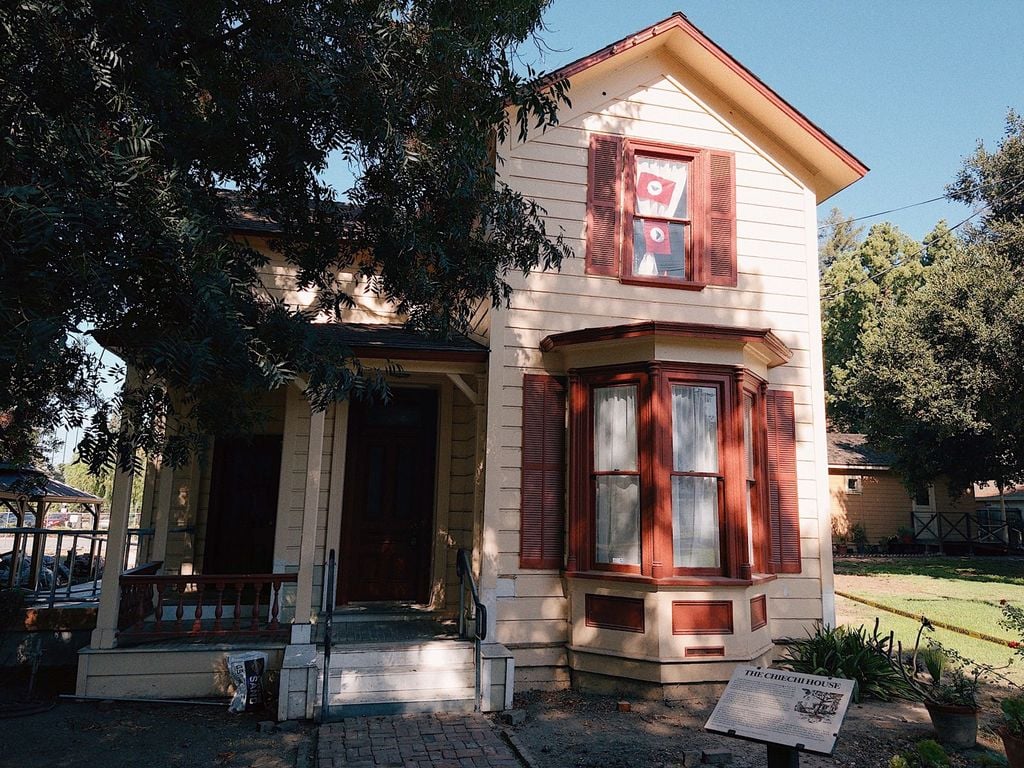
The Chiechi House, home to one orchard family for sixty years.
The Chiechi House is a late Victorian with simplified Italianate lines, built around 1876 by John and Jane Campbell at 820 Northrup Avenue. In 1913 Michele Chiechi bought it, and the family, prominent valley orchardists, lived there for sixty years. In 1973 it was donated and moved to the Historical Museum, and a long restoration that began in 1974 wrapped up in 1987, helped along by proceeds from Living History Days. I’ve sat at plenty of kitchen tables with families who have owned a home for fifty or sixty years, and I can tell you that the decision to let go of a place like that is never really about the house. Seeing a family home preserved this carefully is a reminder of how much those walls hold.
The Andrew P. Hill House
Andrew Putnam Hill was an artist and photographer whose studio sat at 85 South Second Street downtown, but he lived with his family in this Queen Anne style house, originally at 1350 Sherman Street, from late 1898 until his death in 1922. Hill is the reason many of us get to hike under old growth redwoods today. His campaign to save Big Basin in the Santa Cruz Mountains led to the founding of the Sempervirens Club, now California’s oldest land trust, and pushed the state legislature into the conservation business. The sign traces the very origin of the California State Park system back to his effort. The house was landmarked and moved to History Park in 1997, and Victorian Preservation Association volunteers Tony and Paulette Ornellas led a restoration that was finished in 2009. As someone who lives and works between Los Gatos and Santa Cruz, I owe this man a thank you every time I drive Highway 9.
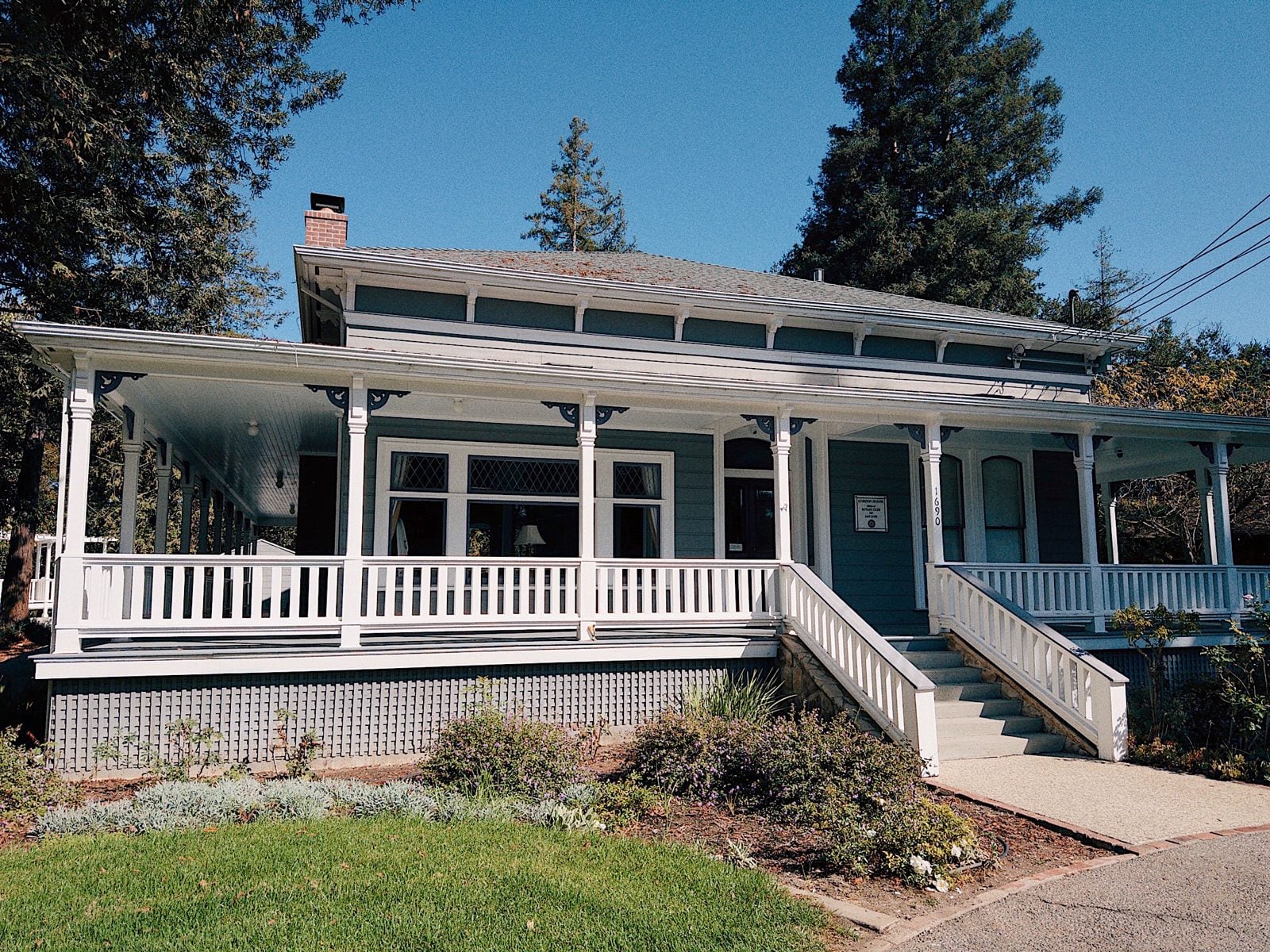
The Gordon House
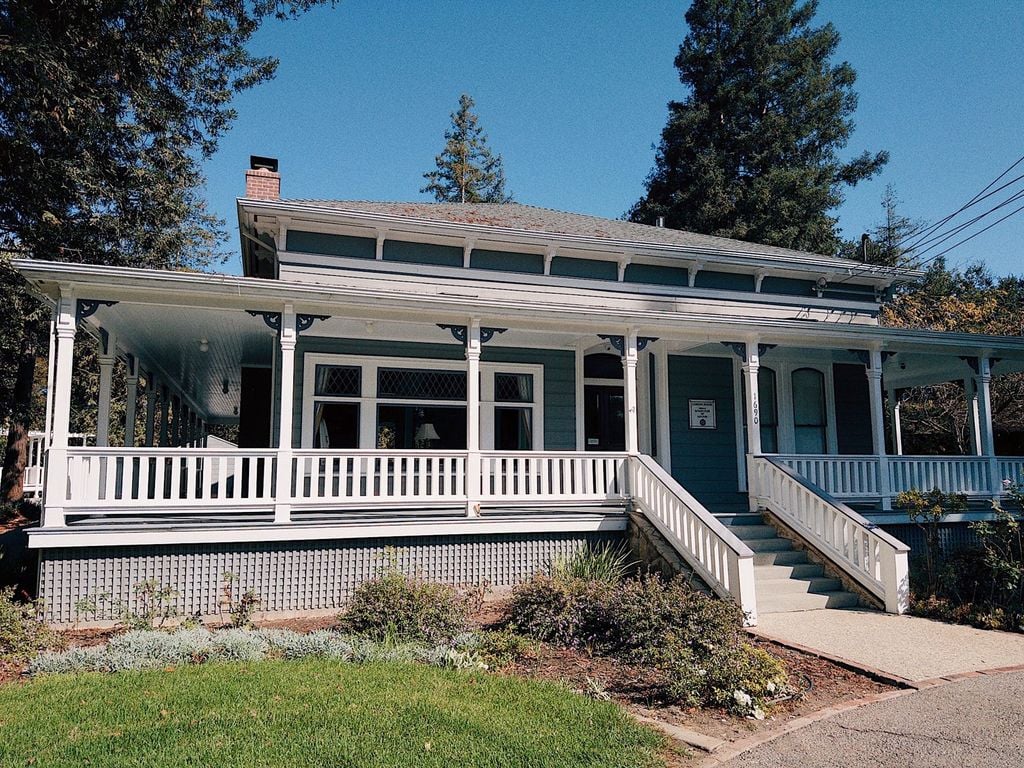
The Gordon House, moved and restored by the Rotary Club of San Jose.
The Gordon House sign is weathered, sun bleached, and peeling, and when I visited it had flyers for the October 2026 NAMIWalks Silicon Valley event taped across it, which I kind of loved because it shows the park is a living community space and not a museum behind glass. Hanford Lennox Gordon was born in 1849 and worked as an attorney, Union Army officer, farmer, and rancher. He and his wife Mary moved here from Minnesota in 1887 into this 1870s house, originally at 5303 McKee Road, and he owned four ranches including more than 100 acres of olive groves. The marriage didn’t last, Hanford eventually moved to Los Angeles, and Mary stayed in the home until she died in 1929. The Rotary Club of San Jose moved the house here in the late 1980s and restored it, keeping the original windows and rebuilding the fireplace from the original brick, and it was dedicated on June 6, 1990. The same sign lists Rotary’s contributions to the city going back to San Jose’s first street signs in 1915, and it’s a good reminder of how much of this town was built by volunteers.
The Printing Office: 50 Years of Letterpress
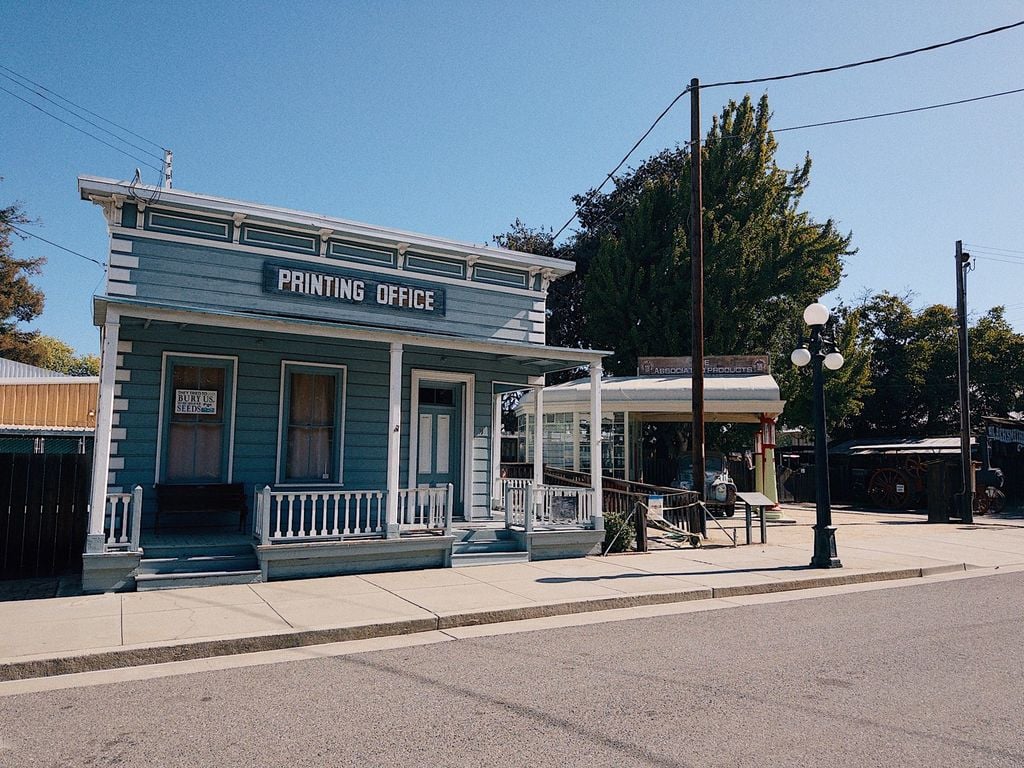
The Printing Office, History Park’s very first exhibit, opened in 1973.
Behind a wooden fence near the Book and Job Printing shop is a sign celebrating 50 years of the Printing Office, which opened in April 1973 as the very first exhibit at History Park. The San Jose Printers’ Guild is now raising money for a new exhibit building so it can run machines currently sitting in storage, including a hot metal Linotype, a Heidelberg Windmill press, and a huge San Francisco iron handpress that printed a Gold Rush newspaper. The plan includes letterpress workshops, hands on events, and a community printing maker space. If you’ve got a grandkid who’s into making things, put this one on your list.
More Stops Along History Park’s Main Streets
Once you’ve seen the headliners, keep wandering, because some of the best corners of the park are the ones people walk right past on the way to ice cream. Here’s what else is worth slowing down for, especially if you have a few extra minutes and a curious grandkid in tow.
Empire Firehouse and Dashaway Stables
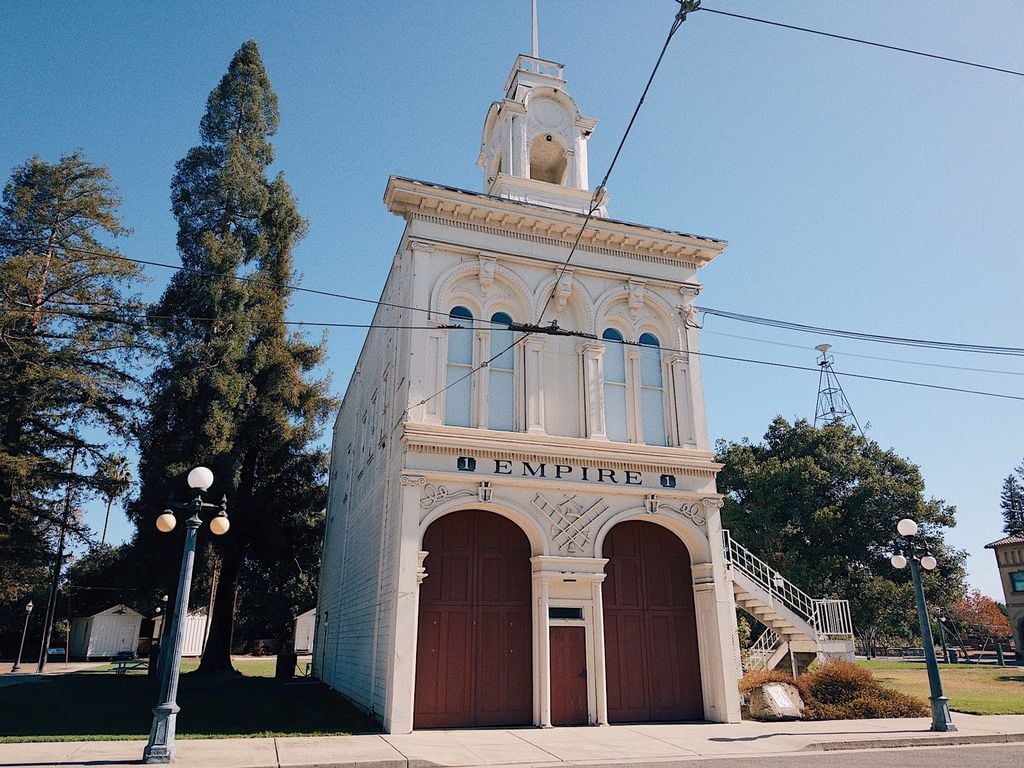
The Empire Firehouse replica, dedicated in 1984.
The bright white Empire Firehouse, with its bell tower and two big red doors, is a replica of the 1869 home of Empire Engine Company No. 1 at 76 South Second Street. The original was destroyed by fire in 1892, which is the kind of irony a firehouse never really lives down, and this replica was dedicated in 1984. A short walk away is Dashaway Stables, a replica of the 1888 livery stable at 130 South Second Street that burned in 1928. Look for the Lick Livery and Hack Co. lettering over the arched carriage entry, a reminder that long before rideshare apps, getting around downtown meant renting a horse and buggy.
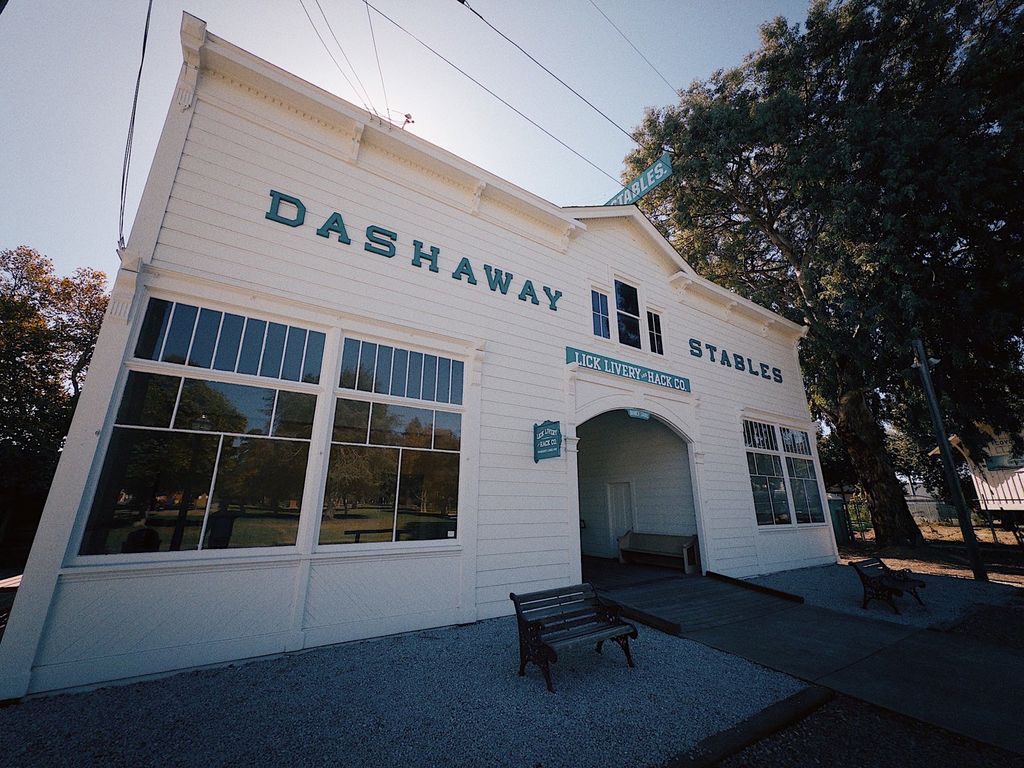
Dashaway Stables, a replica of the 1888 livery on South Second Street.
The Associated Oil Station, Blacksmith Shop, and Trolley Barn
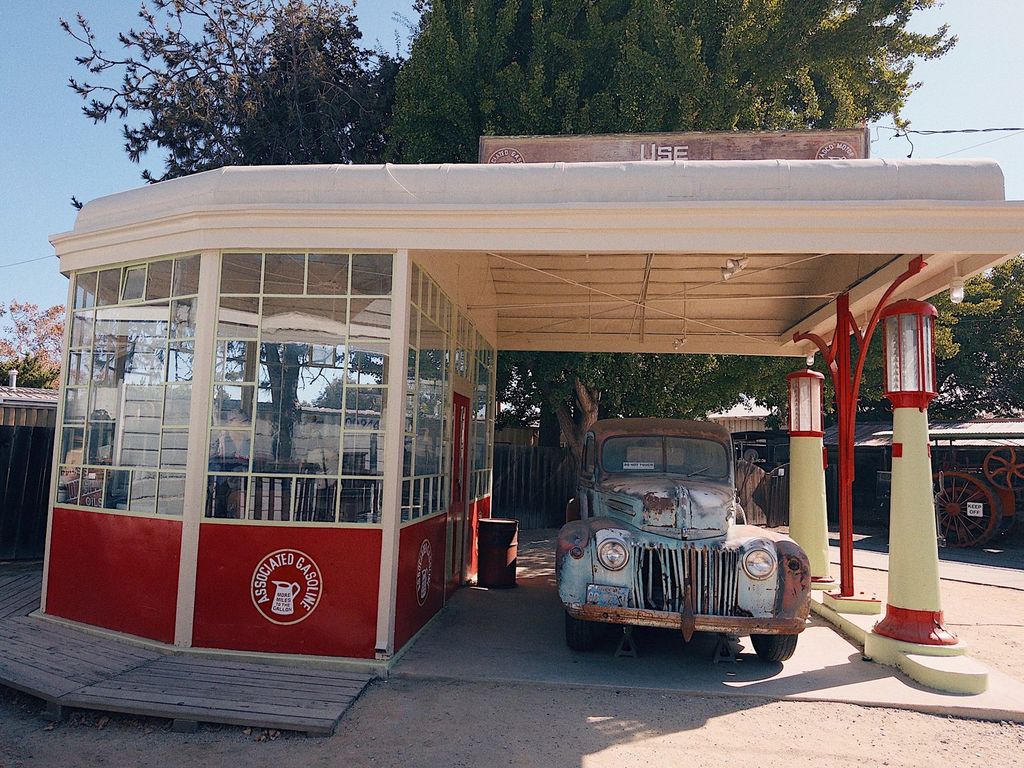
The 1927 Associated Oil station, moved here from Market and Julian Streets.
Car lovers, this corner is yours. The Associated Oil service station was built in 1927 at Market and Julian Streets, moved to the park in 1978, and dedicated in 1979. A rusted vintage pickup sits under the canopy beside restored pumps, and the old “More Miles to the Gallon” logo still promises the one thing every Bay Area commuter wants.
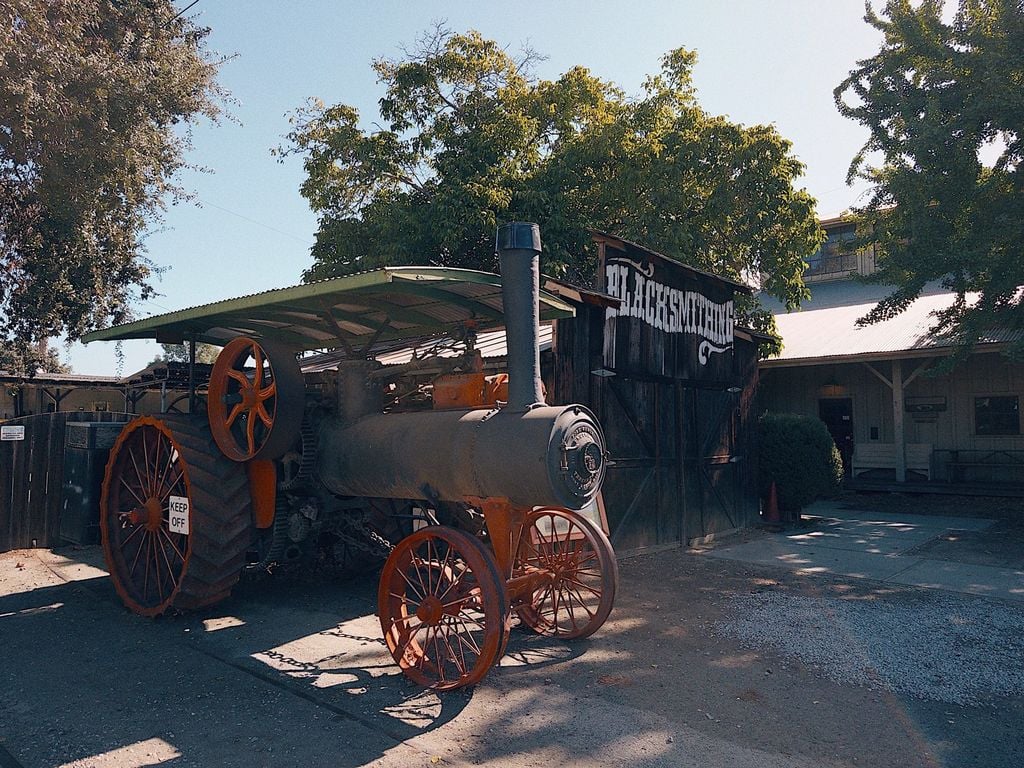
An antique steam traction engine parked outside the blacksmith shop.
Right next door, an antique steam traction engine is parked in front of the Blacksmithing shop. It’s a great visual for how much of the valley’s farm economy ran on iron and steam before gasoline took over, and kids can’t resist those giant spoked wheels (please obey the Keep Off sign, though).
The Trolley Barn, a 1984 replica, is the engine room behind the park’s weekend trolley rides. Volunteers with the California Trolley and Railroad Corporation restore San Jose’s historic streetcars here, and walking down the center aisle you’ll pass beautifully restored trolleys, a bright red Keystone truck, a display on the 1863 horse car, and the heavy shop machinery that keeps all of it running.
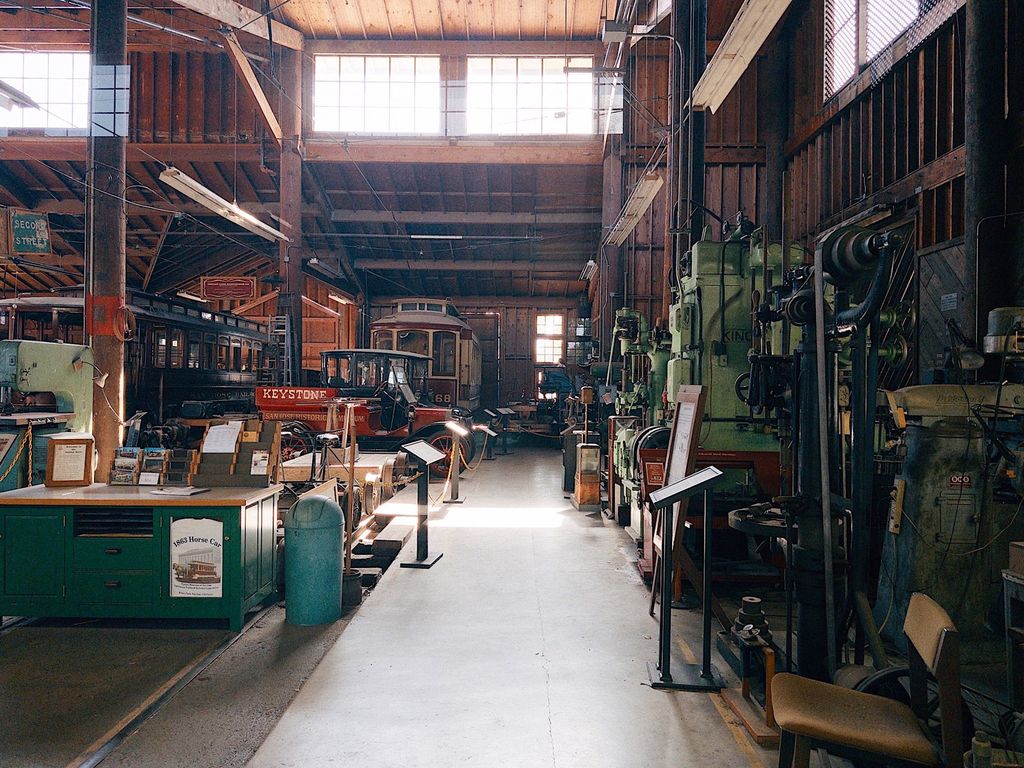
Inside the Trolley Barn, where volunteers restore San Jose’s historic streetcars.
Dr. Warburton’s Office
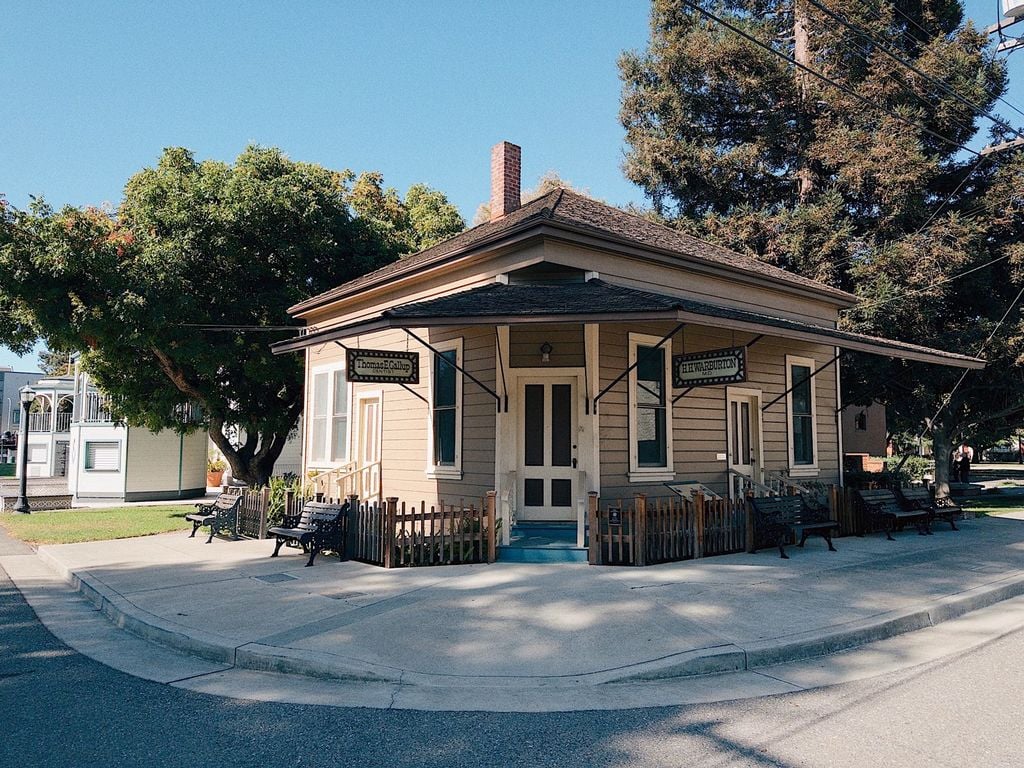
Dr. Warburton’s Office, built in the 1870s in Santa Clara.
This tidy corner building, with hanging signs for H.H. Warburton, M.D., and Thomas E. Gallup, Dentist, dates to the 1870s. It originally stood at Main and Benton Streets in Santa Clara and was moved here in 1966. A doctor and a dentist sharing one modest office tells you a lot about small town medicine in the valley, and the benches out front make it a nice place to rest for a few minutes.
The Portuguese Historical Museum
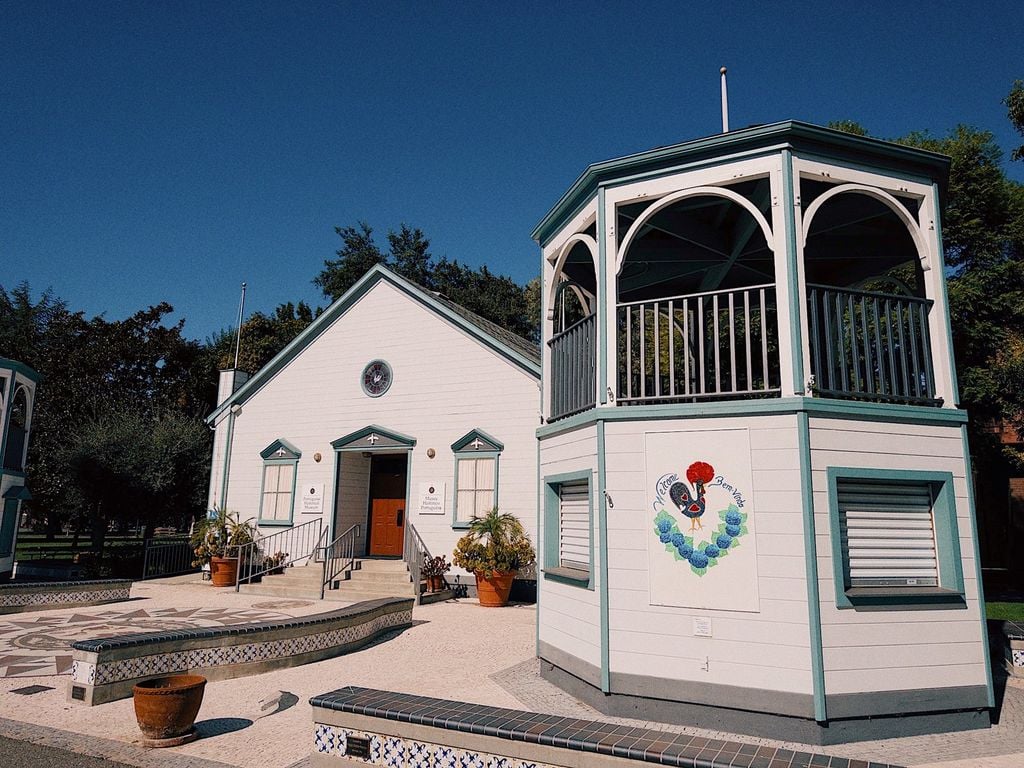
The Portuguese Historical Museum and its Bem-Vindo rooster.
The Portuguese Historical Museum is housed in a replica of a 1915 imperio, the small chapel style hall used for the Holy Ghost festas that Azorean immigrants brought to the Santa Clara Valley. The original stood near East Santa Clara Street and Highway 101, and the replica was dedicated in 1997 in partnership with the Portuguese Heritage Society of California. Don’t miss the mosaic stone plaza out front or the painted Rooster of Barcelos with its Welcome and Bem-Vindo greeting. Portuguese families were a huge part of the valley’s farming and dairy story, and this building honors that legacy beautifully.
Paulson, Greenawalt, and Markham Houses
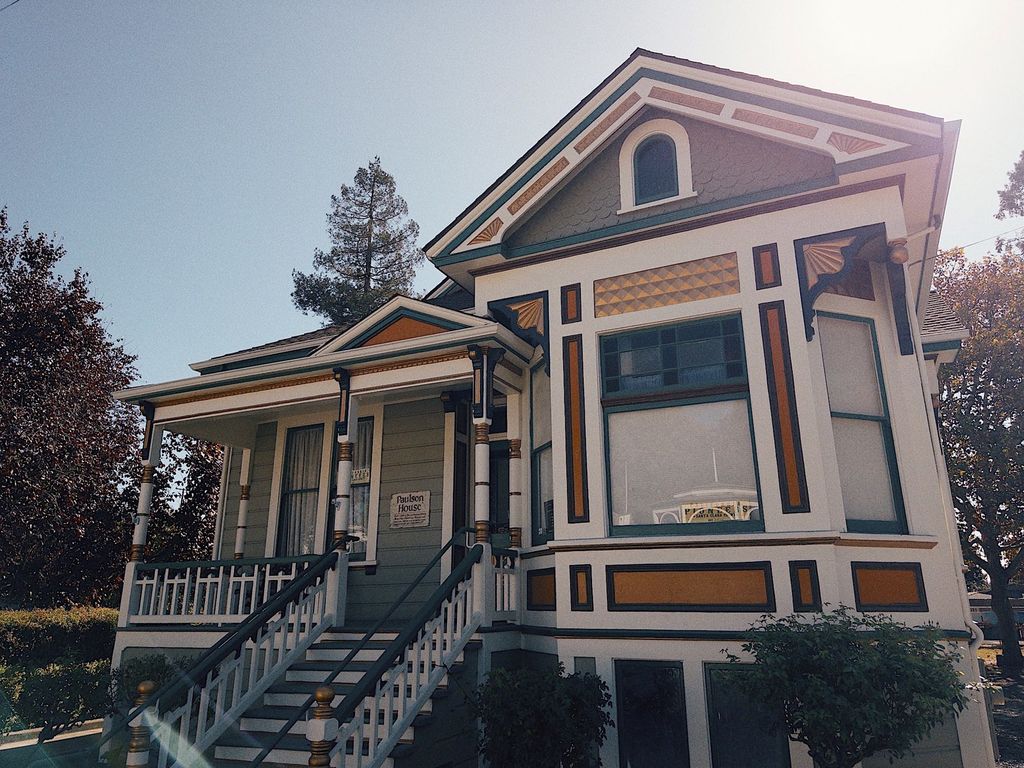
The Paulson House, an 1890s Victorian from downtown San Jose.
The Paulson House, an 1890s Victorian from downtown San Jose, was moved here in 1986 and is cared for with the California Pioneers of Santa Clara County. Its gold, green, and white trim is a great reminder of how bold Victorian paint schemes really were, and it’s one of the most photographed facades in the park.
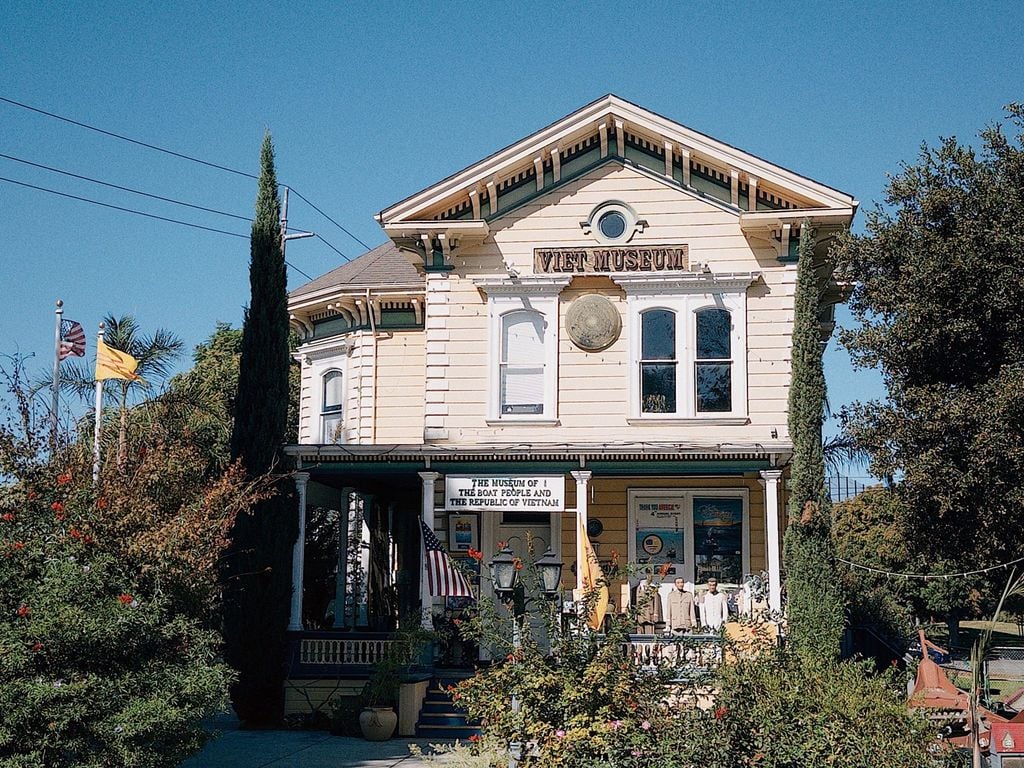
The 1877 Greenawalt House, now the Việt Museum.
The 1877 Greenawalt House, moved from the Almaden area in 1991, is now home to the Việt Museum, the Museum of the Boat People and the Republic of Vietnam. San Jose has one of the largest Vietnamese American communities in the country, and this museum tells the story of the refugees who crossed the ocean and rebuilt their lives here after 1975.
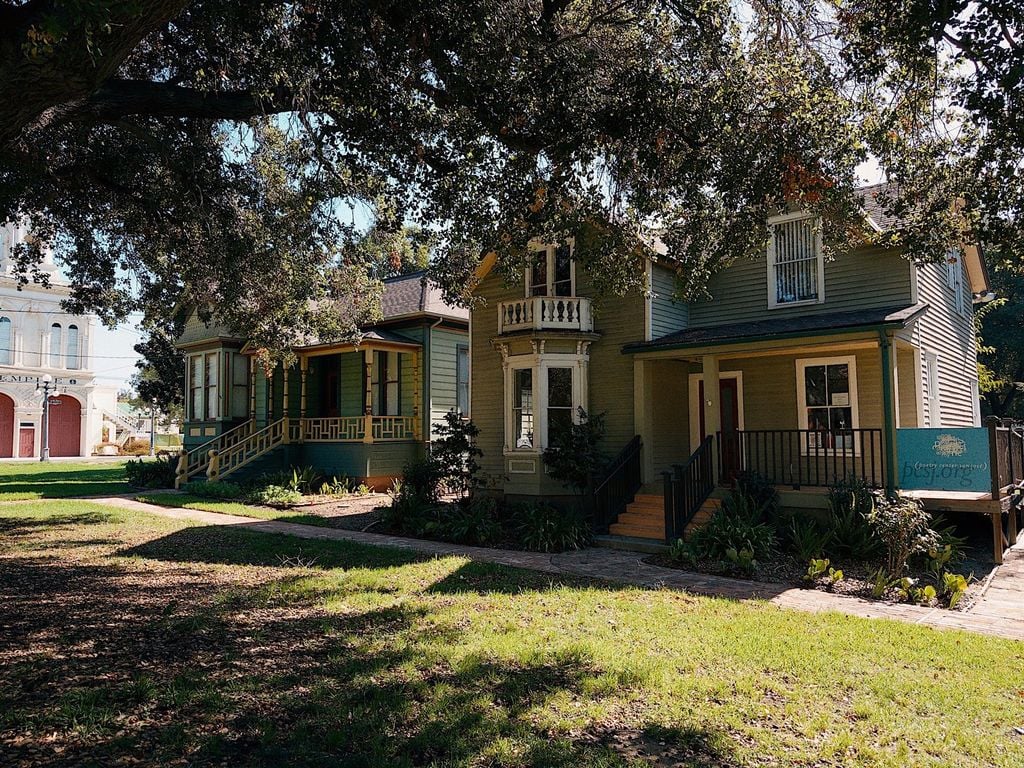
The Markham House, now home to Poetry Center San José.
Under the big oaks nearby you’ll find the Markham House, an 1860s home moved from 432 South Eighth Street in 1987. It was once the home of poet Edwin Markham, and today it houses Poetry Center San José, which feels exactly right for a house with that much history in its walls.
New Voices: Signs Written by San Jose Students
Two of the most thoughtful signs in the park were researched and written by students at the Lobo School of Innovation at Quimby Oak Middle School, with design by artist Nicholas Jimenez in 2024. One tells the story of the Sikh Gurdwara Sahib in the Evergreen hills, which grew from a rented East Bay community center in 1984 to a small plot in East San Jose in 1986 and then to its current home, with construction phases finished in 2004 and 2011. Its Langar Hall serves free vegetarian meals to anyone, around 1,000 people on weekdays and over 7,500 on weekends, and the community opened the Guru Nanak Free Medical Clinic in 2014.
The other honors Ken Yeager, Ph.D., who in 1992 became the first openly LGBTQ+ person elected in Santa Clara County when he won a seat on the San Jose Evergreen Community College District board. He became San Jose’s first openly gay city councilmember in 2001, raised the first Pride flag at City Hall that June, co-founded the Bay Area Municipal Elections Committee (BAYMEC) back in 1984, and served on the Santa Clara County Board of Supervisors from 2006 to 2018. Reading these signs, written by twelve and thirteen year olds, I was reminded that history isn’t only about Victorian houses. It’s about the people who shaped the city we live in right now.
Visiting History Park With Older Parents or Grandparents
A lot of the families I work with are juggling care for an aging parent and kids at the same time, and finding an outing that works for three generations isn’t easy. History Park is one of the better ones in the South Bay. The streets are paved and flat, there’s plenty of shade under old trees, benches are scattered throughout, and you can see a lot in about two hours without anyone getting worn out. On weekends the vintage trolley gives tired legs a break and kids a thrill. I’d suggest calling ahead at 408-287-2290 if you need specific accessibility details for the historic house interiors, since some older homes have steps.
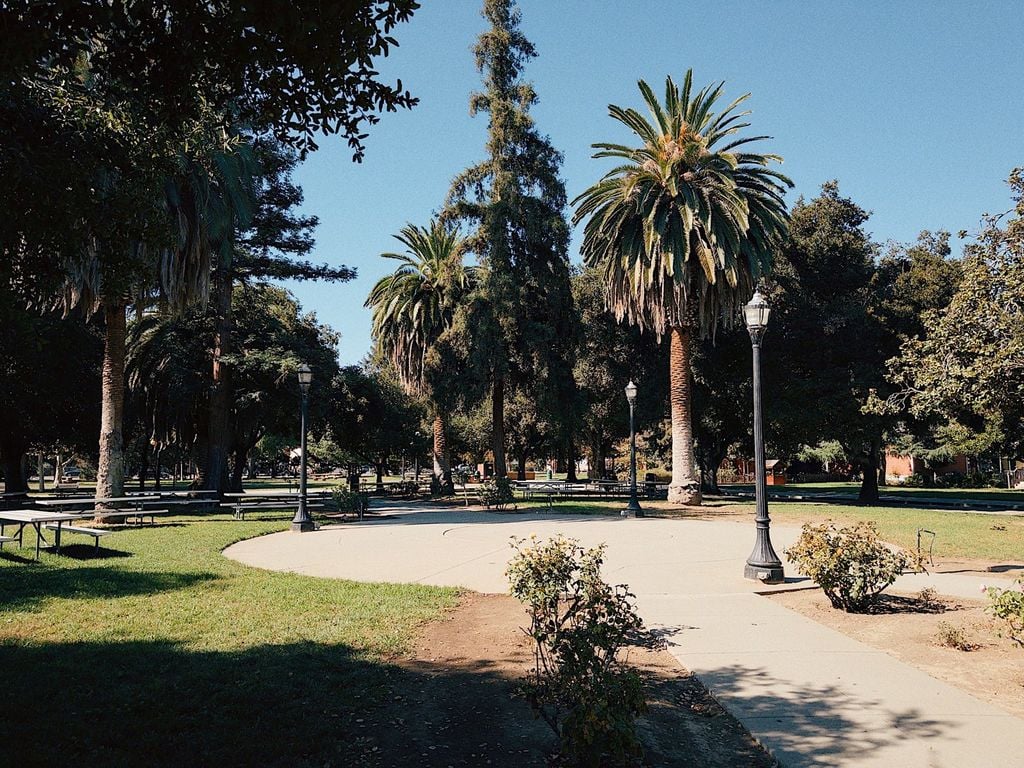
Paved paths, shade, and picnic tables make the park easy for every generation.
The real magic happens when an older relative starts telling stories. Plenty of longtime residents remember O’Brien’s on First Street, the orchards that covered this valley, or a downtown that looked very different from today. Bring the grandkids, let grandpa or grandma lead the way, and listen. You’ll learn more than any sign can teach you.
Practical Visitor Information
- Address: 635 Phelan Avenue, San Jose, CA 95112 (south end of Kelley Park, near Senter Road)
- Grounds: Open daily, 9 a.m. to 4 p.m.
- Historic houses and museums: Saturdays and Sundays, noon to 3:45 p.m.
- Trolley rides: Weekends, first ride at noon, last ride at 3:15 p.m.
- O’Brien’s Ice Cream Parlor: Weekends, 11 a.m. to 3:30 p.m.
- Guided History Park Tour: Wednesdays and Fridays, covering life in San José from 1850 to 1970
- Parking: Off Phelan Avenue
- Phone: 408-287-2290
Hours were current as of October 2026 and the park closes on several holidays, so check the History San José visitor page before you go.
Frequently Asked Questions About History Park San Jose
Is History Park San Jose free?
History San José does not list a general admission fee for walking the grounds on regular days, though some special events carry their own entrance fees. Check the events calendar on historysanjose.org before visiting.
When are the historic buildings at History Park open?
The grounds are open daily from 9 a.m. to 4 p.m., but the historic houses and museums are typically open only on Saturdays and Sundays from noon to 3:45 p.m.
Is the Light Tower at History Park the original?
No. The original 237 foot Electric Light Tower stood at Santa Clara and Market Streets from 1881 until it collapsed in December 1915. The 113 foot half scale replica was built by the San Jose Real Estate Board and donated in 1976.
Did San Jose’s Light Tower inspire the Eiffel Tower?
That’s a popular local legend, and the park’s sign repeats it, but there’s no firm documentation that Gustave Eiffel was influenced by San Jose’s tower. It’s best enjoyed as a great piece of local folklore.
Is History Park a good outing for seniors and grandkids?
Yes. Paved, mostly flat streets, shade, benches, and weekend trolley rides make it manageable for most older adults, and kids love the trolley and O’Brien’s ice cream. Some historic house interiors have steps, so call ahead if mobility is a concern.
How long does it take to see History Park?
Plan on about two to three hours on a weekend if you want to go inside the museums, ride the trolley, and stop for ice cream. A walk around the grounds reading the signs takes about an hour.
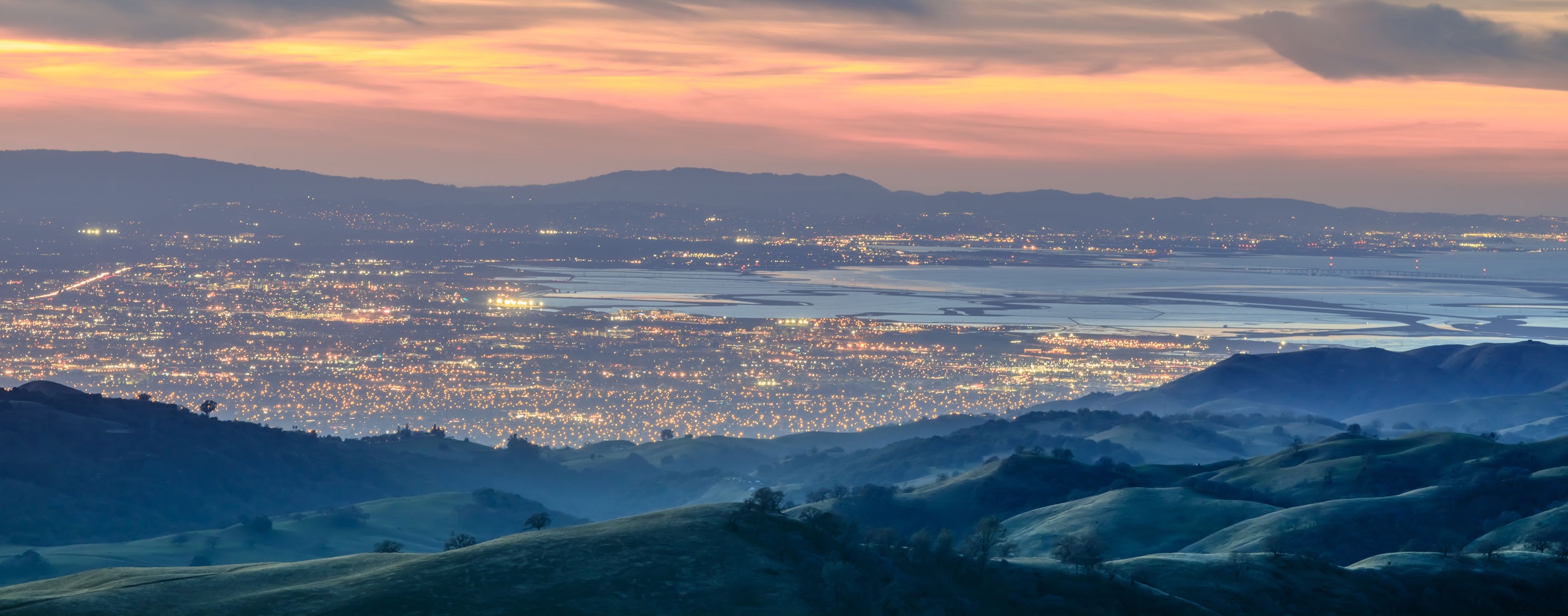
Free Relocation Guide
Thinking About Living in Silicon Valley?
What it really costs to live here, town by town, from someone who has sold homes in this valley since 2003. Current home prices, property taxes and Prop 19, commutes, school districts, and how buying here actually works.
Read the Relocation Guide →Senior Friendly Homes in Silicon Valley South
2
3
4
5
6
7
8
9
10
11
12
13
14
15
16
17
18
19
20
21
22
23
24
25