After 45 years in her California bungalow, she found her next home in Oregon before hers was even on the market. She had one week to sell.
“It was great working with you. You did what you said you would do: sell the house in one weekend! Grateful for that!!”
— The seller, thanking me in an email
- Sold for: $1,305,000
- List price: $1,250,000 (sold 4.4% over list)
- Offers: 3 by the first review date
- In contract: 8 days after listing
- List to close: 39 days
The Seller’s Situation
She had owned the house for 45 years. Over time she had made it work hard for her. Over half of it was rented out, first as a long-term rental and later as an Airbnb. She lived in roughly 270 square feet of it herself. The outbuildings in the back had been sleeping space for her kids, and later her grandkids stayed there on visits.
She was ready for the next chapter. Her daughter lived near Eugene, Oregon, and she wanted a larger, less expensive home near family where she could run the same kind of hosting business. That meant better finances and more cash in the bank for retirement. Because she had rented out a large part of the house for years, she planned a partial 1031 exchange to lower her capital gains tax and carry that rental use into the new home.
Then, in early September 2021, she found the house. While visiting her daughter, she toured a historic home in Springfield with beautiful grounds and room to host. Homes there were selling as fast as in our area. She decided to make an offer right away, contingent on selling a house that was not yet listed.
How We Got Here
We had first met two years earlier, in the fall of 2019, when she invited me to tour the house. I noticed an old sewer clean-out in her sidewalk and was concerned an inspection might turn up some issues, so I connected her with a plumber, who inspected it at no charge. We talked through her plans for the garage, which had been used as a bedroom. When the city later required it to be restored to a garage, that work was already in motion.
So when she called me from Oregon on Labor Day weekend, I knew the house and I knew what she wanted. My job was to help her get there.
- I backed her offer in Oregon. The same day she called, I wrote to her buyer’s agent in Oregon with a market analysis, a list price of $1,250,000, and my commitment to have the departing home in contract within a week. Her agent used it to make the case for her contingent offer. Her offer was accepted.
- I gave her a plan with dates on it. Photos and video on September 14, offers reviewed September 20, and a signed contract to her Oregon agent on September 21.
- I kept the Oregon side informed. Her agent there heard from me when the listing went live and again the night we accepted an offer, so the Oregon seller knew her sale was on track.
The Property
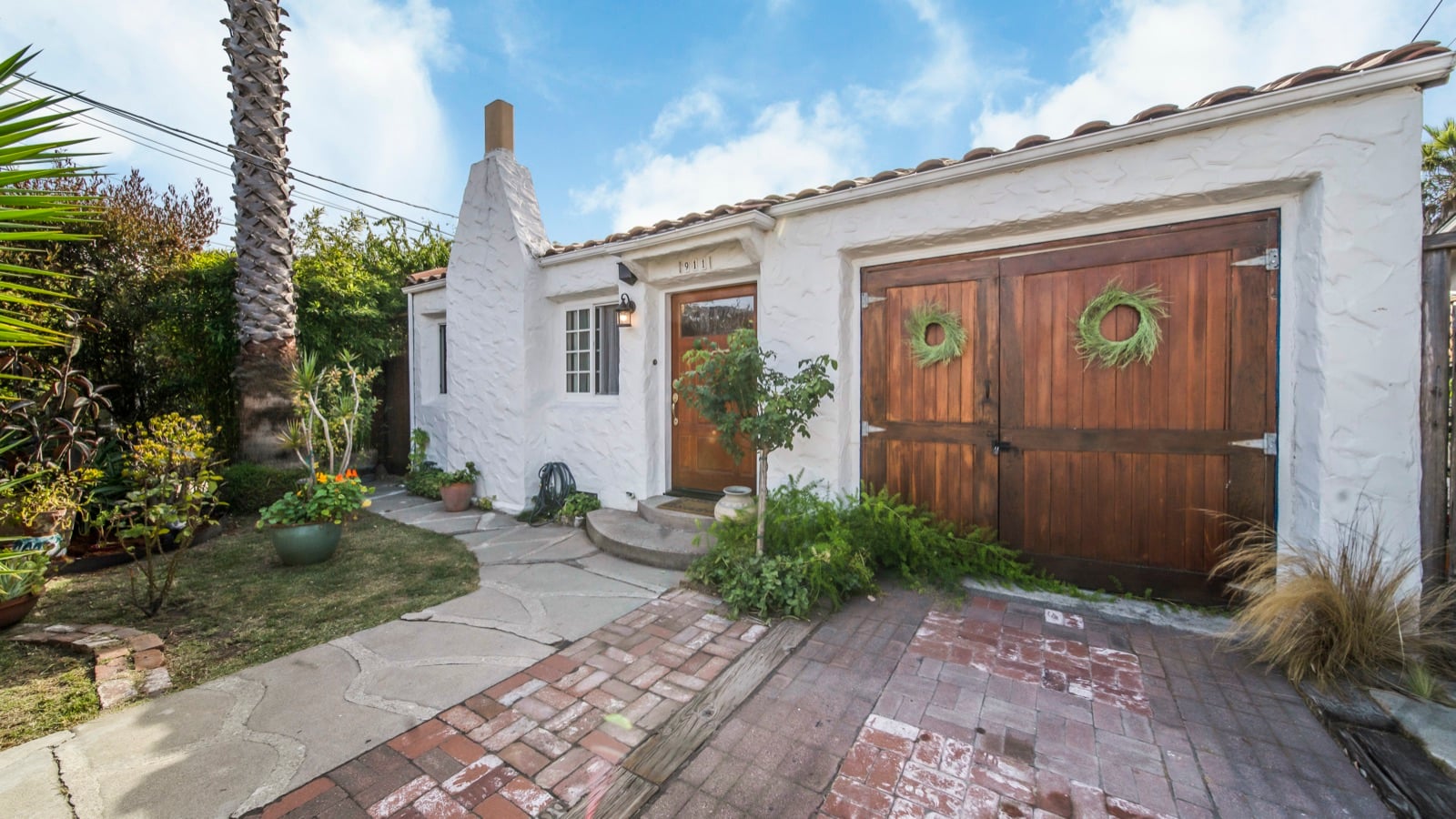
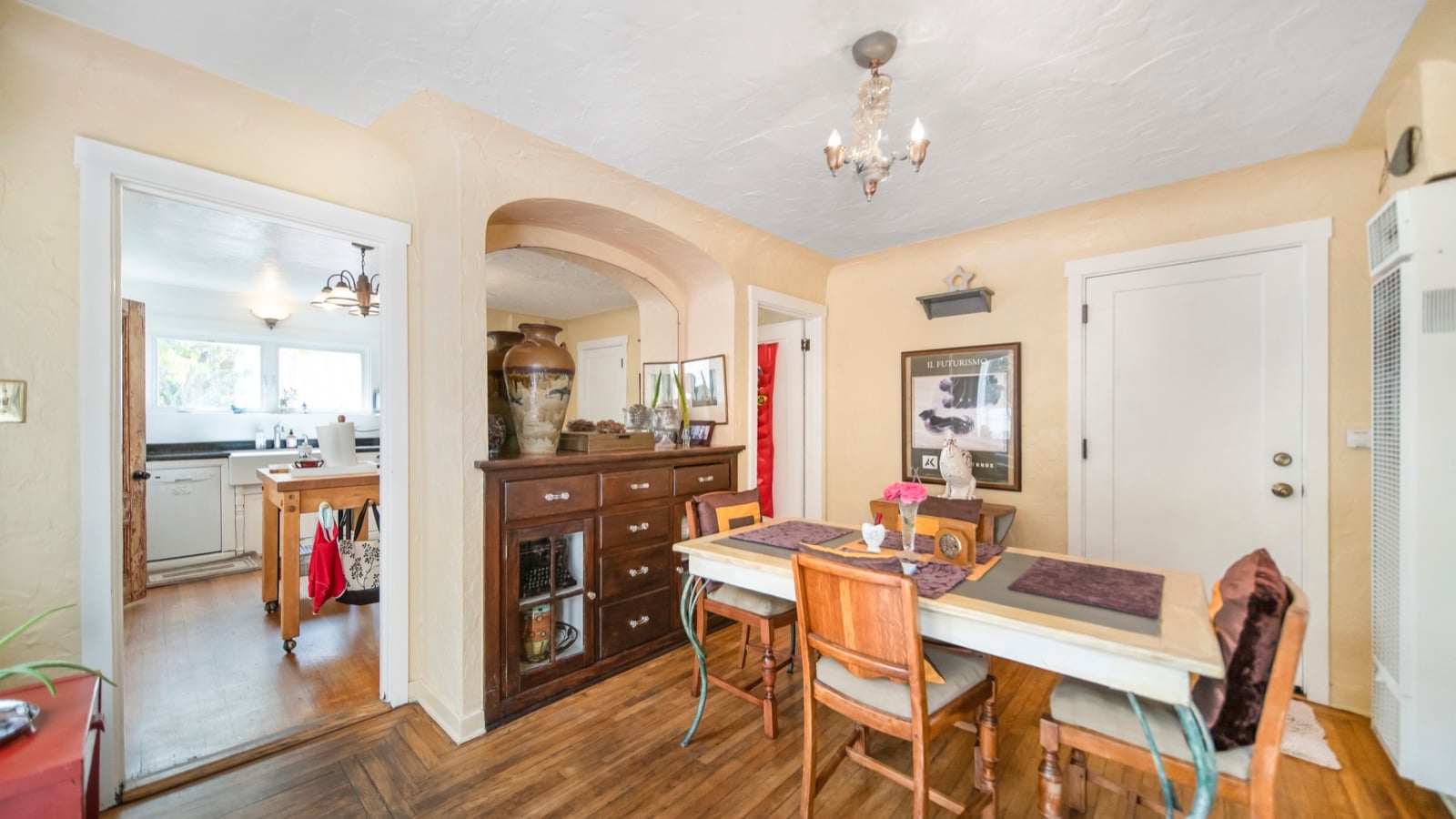
The house is a stucco bungalow in a sought-after, older part of town. It has original wood floors, built-in cabinetry and a fireplace. Over 45 years of ownership it had picked up an attached art studio with its own bath and kitchenette, three backyard outbuildings, and a garage restored from a bedroom the year before the sale. For several years the studio also ran as a hosted Airbnb.
That history made the house appealing, and it also made it complicated to sell. The additions had been permitted in different ways over the years. The lot has a high water table. The property is in a city that requires a sewer-lateral inspection at the time of sale. An automated valuation put the home at about $950,000.
- Style: Spanish-style stucco bungalow
- Layout: 2 bed, 2 bath, about 1,200 sq ft including the attached studio
- Lot: 5,793 sq ft, with three outbuildings
- Listed: September 13 at $1,250,000
- Closed: October 22 at $1,305,000
The Strategy: Put Every Answer in Front of Buyers Before They Ask
She could not afford a sale that fell apart in escrow. Her Oregon purchase depended on it. So we disclosed everything before buyers could ask.
- Inspections done before launch. She paid for a full home inspection, a termite report, a city sewer-lateral inspection with a repair proposal, a natural hazard report and preliminary title, all in the first week. The inspection found a leaking shower supply line. It was fixed the same day and disclosed.
- A complete disclosure package from day five. Twelve documents, about 170 pages, went online September 18 alongside professional photography, video and a property website. Ten buyer’s agents opened it before offers were due.
- A single, short offer date. Offers were reviewed Monday, September 20, one week after going live. This gave buyers time to do their homework and gave her competing offers to compare side by side.
- Her history, in her own words. She wrote down 45 years of repairs, additions and permits, and we turned it into two disclosure addenda. Buyers read this before offering instead of finding it in escrow.
Three Offers, Three Different Deals
The highest price was not clearly the best offer. The three offers differed on down payment, contingencies, rent-back and who would pay for the sewer lateral. I laid them out for her side by side:
| Offer | Price | Financing | Contingencies | Other Terms |
|---|---|---|---|---|
| A (accepted) | $1,200,000, countered to $1,315,000 | 50% down | Loan and appraisal waived; 3-day inspection | Buyer pays for the sewer lateral; seller may stay until Nov 1 |
| B (backup) | $1,250,000 | 34% down | 21-day loan, 17-day appraisal; inspection waived | 45-day free rent-back; buyer’s personal letter |
| C | $1,275,000 | Loan (amount not stated in offer) | 21-day loan; 2-day inspection | Seller pays for the sewer lateral and a home warranty; no rent-back |
One Counter to Everyone, Then a Clear Winner
That night she sent a Seller Multiple Counter Offer to all three buyers. Each was asked for their best price and terms.
Buyer A had come in lowest. The next afternoon they came back at $1,315,000, $115,000 above their first offer – which just goes to show what I always say, a buyer’s first offer is rarely their best offer, and sometimes, it’s not even particularly close to it. They kept their waived loan and appraisal contingencies and their 3-day inspection, took on the sewer lateral, and let her stay after closing with a free rent back. Their counter gave her just 70 minutes to accept. That wasn’t enough time to review and sign, so I sent an amendment extending the deadline to 10 PM, and she signed that evening. That same night I sent word to her agent in Oregon that the home in California was in contract.
Buyer B came back at $1,250,000, also taking on the sewer lateral, and signed as the backup offer. Their terms would have let her keep hosting in the studio through October 31. All of Buyer A’s contingencies were removed on September 24, three days after acceptance.
- Automated valuation: $950,300
- List price: $1,250,000
- Best initial offer: $1,275,000
- Accepted counter: $1,315,000
- Final sale: $1,305,000
A Late Challenge, Solved with the Paperwork Already Filed
Six days after contingencies were removed, the buyer’s agent reported that the city considered the studio an art studio rather than living space. On that basis he put the home’s living area at 896 sq ft instead of 1,200. His buyers were worried about code enforcement.
I replied within half an hour. The studio stove and the shed wiring had already been disclosed on the Transfer Disclosure Statement and in my visual inspection. Assessor records showed 1,166 sq ft. I added the city’s permit records to the disclosure package. She walked me through the history of each permit that same day, and we met the buyers at the property to walk through the outbuildings.
The buyers then asked for a $20,000 credit or price reduction. She had sold the house as-is, and she was ready to take it off the market for a year rather than give in.
What I advised: With contingencies removed, she had no obligation to renegotiate. Walking away would still have cost her a clean, fast closing, and with it her home in Oregon. I recommended one concession, a $10,000 reduction or a $10,000 credit but not both, framed against the original $1.25M to $1.30M pricing guidance. She agreed, and the buyers accepted the reduction. Along with it they signed a transfer of sewer-lateral responsibility, and the sale stayed on schedule.
The Finish Line: Completing Her 1031 Exchange
Selling a home that was partly her residence and partly a rental meant one more job before closing. She had to decide how much of the sale counted as her personal residence and how much as rental property going into the exchange. She met with her CPA and worked with her 1031 intermediary. I gave her an updated net sheet showing her expected proceeds so she could run the numbers.
The day before signing, she was still working out how to split the sale between the part of the property she’d lived in and the part she’d rented out. She checked with the exchange team at her Oregon title company and settled on the split that matched how she had used both homes. I coordinated with escrow so the documents could be redrawn the same day. She signed on October 21, the buyer’s loan funded the next morning, and the sale recorded on October 22. Her moving van pulled up at 8 AM that same morning.
Timeline: From Contingent Offer to Closing
- Early September: She finds a historic home in Springfield, Oregon, and makes an offer contingent on selling her California home. I send her Oregon agent a market analysis and pricing plan to support it. Her offer is accepted.
- Sep 13 (Day 0): Listed at $1,250,000.
- Sep 15-17 (Days 2-4): Home inspection, termite and sewer-lateral reports done. Shower leak repaired the day it was found.
- Sep 18 (Day 5): Disclosure package goes online. Open house.
- Sep 20 (Day 7): Three offers reviewed. Multiple counter offer sent to all three buyers.
- Sep 21 (Day 8): Buyer A’s $1,315,000 counter accepted. Her Oregon agent is notified the same night. Buyer B signs as backup the next day.
- Sep 24 (Day 11): All buyer contingencies removed.
- Sep 27-29 (Days 14-16): Permit and square-footage questions answered. City permit records added to disclosures. Walk-through of the outbuildings.
- Oct 1-5 (Days 18-22): $20,000 request negotiated down to a $10,000 price adjustment.
- Oct 14-21 (Days 31-38): Net sheet delivered, 1031 split finalized, closing documents signed.
- Oct 22 (Day 39): Closed at $1,305,000. The moving van arrives the same morning.
What Made This Sale Work
She knew what she wanted
She had a clear goal: a larger home near family, a hosting business to keep running, and more money in the bank. Every decision in this sale was measured against it.
Early disclosure protects the price
The issues raised in escrow were already in the disclosures, which kept a $20,000 request down to $10,000.
Compare whole offers, not prices
The winning buyer started lowest. Their strength was in the terms: half down, no loan or appraisal contingency, a 3-day inspection, and a counter $115,000 above their first offer.
Countering all buyers at once works
One round of counters raised the top price $40,000 above the best initial offer and produced a signed backup.
One clear option beats a menu
Offering a single concession instead of a menu ended the renegotiation quickly and protected the closing date her Oregon purchase depended on.
Her Happily Ever After
She walked away with just over $1 million after paying off her mortgages, commissions and closing costs. The partial 1031 exchange let her defer tax on a large part of her gain and put it toward her next home. I also set her up with Compass Concierge Capital, which advances funds against a seller’s expected proceeds. She applied in the first days of escrow and received $4,500 in early October, so she had cash in hand while escrow was still open.
She moved into a larger historic home in Springfield, Oregon, near her daughter. She has room for family and a downstairs to host guests, as she had for years in the home she’d just sold.
For the bigger picture on selling a longtime family home and moving somewhere smaller, start with my Bay Area downsizing guide.
Free Downsizing Strategy Call
Before you start sorting decades of belongings or call a moving company... let's figure out where you're headed and how to get there.
Most downsizing regrets come from doing things in the wrong order. In 30 minutes, we’ll talk through what your home may be worth, whether to buy or sell first, how Prop 19 could affect your property taxes, what the house actually needs before listing, and a realistic timeline for your move—so the process feels manageable, not overwhelming.
Book My Downsizing Strategy Call →