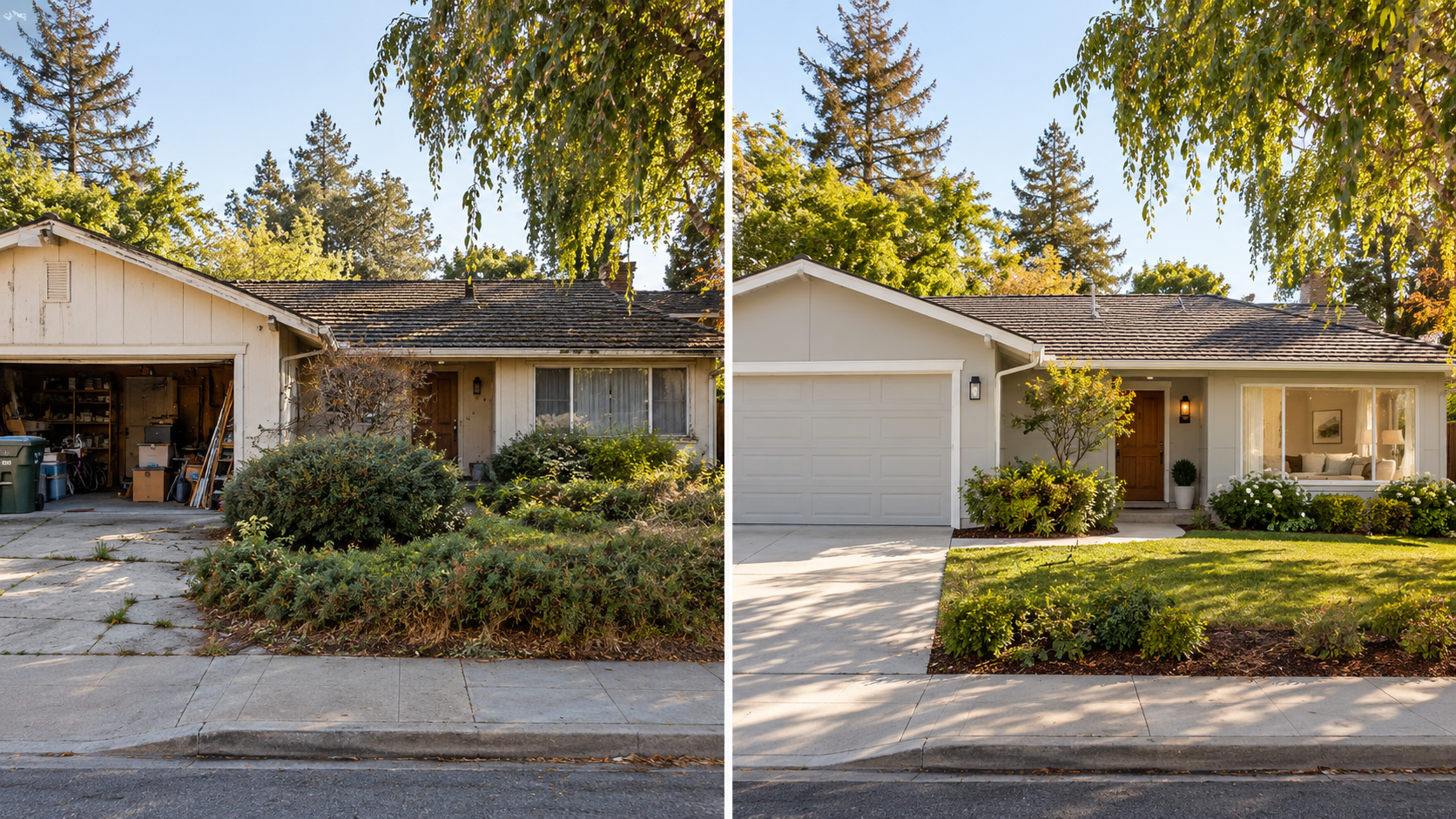
Almost every probate house I sell in Santa Clara County has been lived in by the same person for 30, 40, or 50 years. The kitchen is original, the carpet has been down since the 1980s, the electrical panel may be a brand that inspectors flag, and the garage is full. The executor, often a son or daughter who grew up there, looks around and wonders how much they should fix before selling. This article is my honest answer based on what I’ve seen actually pay off here, and it’s part of my complete guide to selling a house in probate in Santa Clara County.
Key Takeaways
Summary: Big renovations before a probate sale rarely pay off in Silicon Valley, because most buyers of older homes plan to remodel anyway. A cleanout, paint, floors, and a pre-listing inspection usually do pay, and they fit the executor’s duty to spend estate money prudently.
From my practice: An estate administrator I worked with lived on the East Coast, and the townhouse she was responsible for was packed floor to ceiling, with dark painted walls and torn flooring. The as-is cash price was about $425,000. We spent $29,900 on cleanout, paint, carpet and flooring, all paid from the proceeds at closing, and the home sold for $490,000 net to a buyer putting 3% down. The family paid nothing upfront, never had to fly back, and kept about $35,000 more than the as-is route would have netted.
Why Big Remodels Rarely Make Sense in Probate
I have written before about why major pre-sale renovations rarely pay off for Bay Area sellers, and the argument is even stronger in probate. There are three reasons. First, a remodel takes months, and every month the estate carries property taxes, insurance, and utilities, often $2,000 to $5,000 a month here. Second, the executor is spending money that belongs to the heirs and has a legal duty to be prudent, so a project that goes over budget or runs into permit problems creates personal exposure. Third, and most important, the buyers who show up for a 1960s ranch home in Willow Glen or Cambrian are often planning to renovate, add on, or rebuild. They’re paying for the location and the lot, and your new kitchen is something they may tear out.
Does your place need a little work?
Sell As-Is. Sell for More.
No remodel, no lowball investor offer. Most Bay Area sellers net more selling as-is, and I'll show you how to get full market value without fixing a thing.
Show Me How →
What Usually Does Pay Off
There’s a big difference between remodeling and preparing, and preparation is where the return is. In my experience these are the items that consistently move the needle on older Silicon Valley homes:
- A complete cleanout. Buyers can’t see past 50 years of belongings. An empty, clean house photographs and shows dramatically better.
- Interior paint. Neutral paint throughout is one of the highest-return dollars you can spend.
- Floors. Pulling old carpet to reveal hardwood and refinishing it often pays for itself several times over. If there’s no hardwood underneath, new inexpensive carpet or simple flooring can still help.
- Landscaping and curb appeal. Trimming, cleanup, fresh mulch, and a tidy front entry.
- Safety and financing issues. Active roof leaks, missing smoke and carbon monoxide detectors, water heater strapping, and anything that could stop a lender or insurer.
- Light staging. Especially for the main rooms, so buyers can picture themselves there.
I go through this in more detail in how to prepare an older home for sale for maximum cash out.
An Illustration With Numbers
Here is a simplified illustration based on a 1958 three-bedroom ranch in Cambrian Park. The values are illustrative, not an appraisal, and they leave out commission and closing costs to keep the comparison clean.
| Sell as-is | Targeted prep | Full remodel | |
|---|---|---|---|
| Work done | Cleanout only | Cleanout, paint, floors, landscaping, minor repairs | New kitchen, baths, windows, flooring, paint |
| Cost | $0 beyond cleanout | $60,000 | $250,000 |
| Extra months of carrying cost at $4,000 per month | 0 | 1 ($4,000) | 5 ($20,000) |
| Illustrative sale price | $1,550,000 | $1,700,000 | $1,850,000 |
| Net after work and carrying costs | $1,550,000 | $1,636,000 | $1,580,000 |
In this illustration targeted prep nets about $86,000 more than selling untouched, while the full remodel nets less than the targeted prep and carries far more risk of delays, permit problems, and cost overruns. Your house will be different, and sometimes as-is is the right answer, particularly when the buyer pool is going to be builders no matter what you do.

Free 9-Step Guide for Heirs
The Guide to Selling an Inherited Property with Ease
Nine steps from the day you inherit to the day you close: settling the debts and utilities, clearing the house without losing the keepsakes, getting a real number on value, knowing when you need a probate attorney and a CPA, and which repairs actually pay you back. Every month you hold the house costs property tax, insurance and utilities, so it pays to have a plan before you start.
You're all set. Thanks! The Guide to Selling an Inherited Property with Ease is on its way to your inbox. If you don't see it in a few minutes, check your promotions or spam folder.
When Selling As-Is Is the Right Call
- The lot value is most of the price, and builders or investors are the obvious buyers.
- The house has major structural, foundation, or sewer problems that would cost more to fix than they add in value.
- The estate has no cash for preparation and the heirs don’t want to advance money.
- The sale is going through court confirmation, where buyers are already buying as-is and closing without contingencies.
- Heirs disagree, and spending money on the house would invite an objection.
A real example: Sometimes as-is is the only sensible answer. I sold a probate cabin that was full to the doors with debris, with no power, no water and no safe way in, for an executor who lived out of state and told me he didn’t want to see inside. We listed it as-is at $300,000, got the first offer the next day, and closed at $307,000 all cash with no contingencies 26 days after listing. When a house can’t be safely prepared, a clean as-is sale with strong disclosure beats spending months and money trying to fix it.
Paying for Preparation
Money is often the practical problem. The estate account may have little cash until the house sells, and heirs are understandably reluctant to front money. There are a few options. An heir can advance funds and be reimbursed from the sale proceeds, which should be documented clearly with the attorney. Some brokerages offer programs that front the cost of preparation and are repaid at closing, which can work well for estates. One example of course is Compass Concierge, which can be a godsend for many people. Whatever route you take, keep receipts and a written record of every decision, because the executor will be accounting for the money to the court and the other heirs.
Disclosures Still Matter
A sale by an executor administering an estate is exempt from California’s Transfer Disclosure Statement, but the executor still has to disclose material facts they know about. A pre-listing inspection and termite report, shared with buyers up front, protects the estate, reduces renegotiation, and helps the house sell faster. For the complete process, go back to my guide to selling a house in probate in Santa Clara County.
Sources and Further Reading
- California Courts Self-Help Guide: Property After Someone Dies
- California Probate Code § 10503 (sales under independent administration authority)
- California Probate Code § 10300 (notice of sale for court-supervised sales)
- California Probate Code § 10311 (overbids at confirmation)
- IRS Publication 559, Survivors, Executors, and Administrators

Does your home need some work first?
Let's get it market-ready, and pay for it at closing.
Paint, repairs, flooring and staging, all handled for you through Compass Concierge with nothing out of pocket up front and no contractors for you or your family to manage.
See How It Works →Rather talk now? Call or text 408.413.3087
Frequently Asked Questions
Should I fix up a probate house before selling?
In Silicon Valley, targeted preparation like a cleanout, paint, floors, and landscaping usually pays off, while major remodels rarely do. Selling fully as-is makes sense when the likely buyers are builders or the house has major structural problems.
Can the executor use estate money for repairs?
Yes, reasonable repairs and preparation that protect or increase the value of the property are normal estate expenses. The executor has a duty to act prudently and should keep records for the accounting.
Do probate sellers have to give disclosures in California?
Executors are exempt from the Transfer Disclosure Statement, but they still must disclose material facts they actually know about the property.
Are probate sales always as-is?
Court confirmation sales are effectively as-is. Full-authority IAEA sales can include normal inspection and loan contingencies, though many executors still sell in as-is condition.
Who pays for the cleanout of a probate house?
The estate typically pays for the cleanout. If the estate lacks cash, an heir can advance the money and be reimbursed from the sale, documented with the attorney.
Free Inherited Home Strategy Session
Inherited Mom or Dad's house? Find out what it will net each heir, and what to do first.
In a 30-minute call, we'll estimate what the house will sell for and what each heir walks away with after selling costs. We'll also sort out whether to sell as-is or do some light prep, and how probate or the trust affects your timing. I'll flag the tax questions to take to your CPA, like the step-up in basis and whether Prop 19 makes keeping it worthwhile. You'll leave with real numbers and a clear order of operations. No listing agreement, no pressure.
Book My Inherited Home Strategy Session →
Senior Friendly Homes in Silicon Valley South
2
3
4
5
6
7
8
9
10
11
12
13
14
15
16
17
18
19
20
21
22
23
24
25