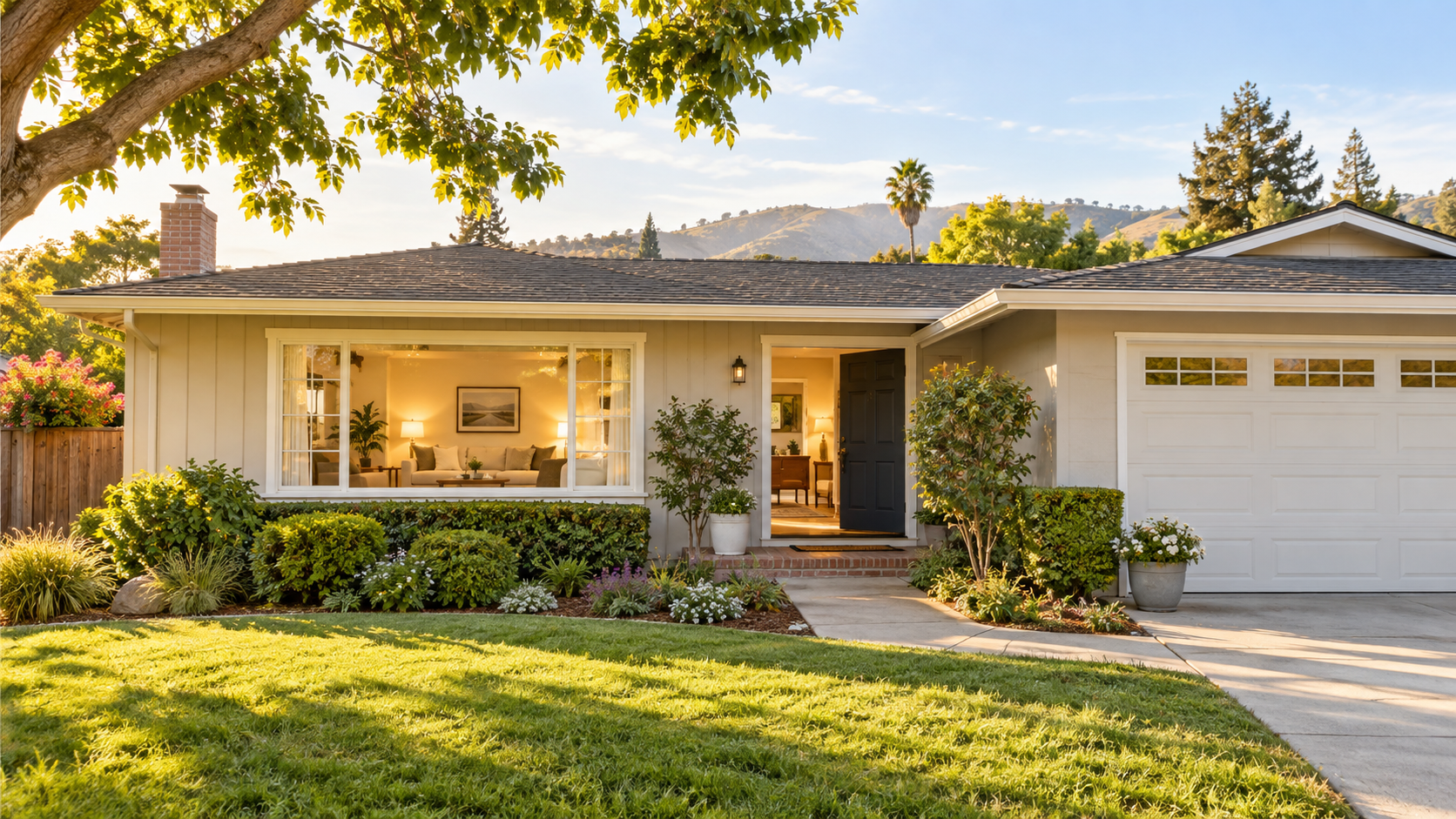
If you’ve owned a home that’s been in the family for twenty, thirty or forty years, there’s a good chance it looks a lot like it did when you moved in. The kitchen still works, the bathrooms are original, and somewhere along the way the carpet went from beige to a color that doesn’t quite have a name. When it comes time to sell, the first instinct for most longtime homeowners is to fix all of that before a buyer ever sees it. That instinct is understandable, but it’s usually wrong.
I’ve been selling homes in Silicon Valley for more than two decades, many of them for older adults and their families, and I’ve watched sellers spend six figures on remodels that returned pennies on the dollar. I’ve also watched sellers spend a few thousand dollars on the boring stuff and walk away with more money, less stress, and a house that went into contract in the first two weeks with a wholly non-contingent offer, sold as-is. The research backs up what I’ve seen in the field, and it proves that when it comes to pre-sale home preparation, the truth is that often, less is more.
Why the “fix it all first” instinct costs sellers money
There’s a simple economic reason that big pre-sale remodels rarely pay off. You are choosing finishes, layouts and materials for a buyer you haven’t met, paying retail for labor and materials, and then asking that buyer to reimburse you for choices they didn’t make. Buyers, meanwhile, price a home against comparable sales, against a total package of value, and what really determines value isn’t new quartz counters: it’s location, lot size, square footage, and floor plan. A $90,000 kitchen doesn’t make a 1960s ranch worth $120,000 more than the identical ranch next door with an original kitchen. It makes it worth whatever the market thinks a nicer kitchen is worth, which is almost always less than what it cost to do the kitchen remodel.
The other problem is time. A whole-house remodel on a dated home is a six to twelve month project when everything goes right, and things rarely go right. According to the 2026 U.S. Houzz & Home Study, 37% of renovating homeowners exceeded their budgets in 2025, compared with 35% who stayed on target and just 3% who came in under. The most common reasons projects went over were higher than expected costs, choosing pricier materials midstream, unexpected complexity, scope changes, and surprise construction issues. Every one of those risks is amplified in an older house, where opening a wall tends to reveal something you didn’t want to find.
What the numbers say about remodels versus smaller projects
The most widely cited industry benchmark for renovation returns is the annual Cost vs. Value Report, published by Zonda through Remodeling magazine and the Journal of Light Construction. The 2025 edition compares average costs for 28 remodeling projects with the value those projects retain at resale across 119 U.S. markets. The pattern in that data is remarkably consistent from year to year, and it’s the opposite of what most sellers assume.
The winners are small, cheap and visible. Garage door replacement led the 2025 report at a job cost of $4,672 and a resale value of $12,507, recouping 268% of its cost. A steel entry door came in at $2,435 with $5,270 in resale value, or 216%. Eight of the top ten projects by return were exterior replacements, and a minor kitchen remodel at 113% was the only interior project in the top five. In other words: projects that boost curb appeal more often pay dividends; big interior projects do not.
Now look at the big projects. A midrange major kitchen remodel cost $82,793 and returned $42,130, or 51%. An upscale major kitchen remodel cost $164,104 and returned $58,561, or 36%. An upscale bath remodel cost $81,612 and returned $34,000, or 42%. A midrange primary suite addition cost $170,517 and returned $55,097, just 32%. In plain terms, the seller who does the big kitchen is handing the buyer a $40,000 gift on top of the aggravation.
For sellers on the West Coast the picture is the same. The 2025 report ranks the Pacific region of Washington, Oregon and California as the top remodeling ROI region in the country, supplanting New England for the first time in the report’s history, but even here the spread between a garage door and a gut remodel is enormous. A strong region raises every number without changing the ranking.
The National Association of REALTORS® runs a separate study with the National Association of the Remodeling Industry that compares what REALTORS® believe a project adds at resale against what remodelers say it costs. In the Remodeling Impact Report, the highest percentage cost recovered for any interior project was refinishing hardwood floors at 147%, followed by new wood flooring at 118% and an insulation upgrade at 100%. The study calculated a $3,400 wood floor refinish with a $5,000 estimated cost recovery. A kitchen upgrade, by comparison, recovered 67% of its cost. Notice that in both benchmarks, the cheapest, least invasive projects sit at the top of the list.

Free 19-Page Playbook
The Longtime Homeowner's Playbook for Selling Smart
The three mistakes that cost sellers six figures, the tax moves that can save you a fortune, and 10 questions to ask any REALTOR® before you hire one.
You're all set. Thanks! The Smart Seller Playbook is on its way to your inbox. If you don't see it in a few minutes, check your promotions or spam folder.
The low hanging fruit, in order of impact
Once you accept that the big remodel is off the table, the question becomes where to put a limited budget. Here is the order I use with my own clients, which lines up closely with what top agents around the country report.
Declutter and depersonalize before you do anything else
This is the highest-return step because it costs almost nothing beyond effort, and for a longtime homeowner it’s usually the biggest job. Forty years of accumulation in the garage, the closets and the spare bedroom reads to a buyer as a house with no storage. Top agents across the country say that failing to declutter, depersonalize, deep clean or deodorize is one of the biggest mistakes sellers make, according to HomeLight’s Top Agent Insights Q3 2025 report. In a HomeLight survey of top agents nationwide, respondents estimated that decluttering alone could add $11,706 to a sale price.
For my older clients, this step also does double duty. Sorting a lifetime of belongings before the move, rather than in a panic after the sale closes, is the single most effective way to lower the stress of a downsizing transition. Start with the spaces buyers judge hardest: kitchen counters, closets, the garage and the primary bath.
Invest in curb appeal
The research on curb appeal is some of the strongest in the whole field, and it comes from academia rather than the industry. A study by researchers at the University of Alabama and the University of Texas at Arlington, published in the Journal of Real Estate Finance and Economics, found that homes with high curb appeal sell for an average of about 7% more than similar houses with an uninviting exterior, with the premium rising to as much as 14% in slower markets with more inventory. The researchers scored Google Street View photos and sales data from nearly 89,000 Denver-area properties, defining low curb appeal by blemishes like broken pavement or overgrown grass, and high curb appeal by well kept lawns and tidy landscaping.
Read that definition again. The study isn’t rewarding elaborate hardscape. It’s rewarding tidiness. Mow, edge, mulch, prune, pressure wash the driveway and walkway, replace the mailbox and house numbers, put a fresh coat on the front door, and set out a few pots of seasonal color. If the garage door is dented or dated, the Cost vs. Value data says that replacement is the best pure return in the entire report. On a $2 million Los Gatos or Campbell home, a 7% curb appeal premium is $140,000, and the work to earn it costs a few thousand dollars.
Deep clean everything, including the things you stopped noticing
A dated home that is spotless reads as well cared for. A dated home with grime reads as neglected, and buyers price neglect into their offers because they assume it extends to the roof, the plumbing and the furnace. One top agent in Madison, Wisconsin puts it well: a deep clean prompts buyers to describe a house as solid and well maintained even when it is clearly outdated. Hiring a professional to clean a 2,000 square foot, three bedroom, two bath home in Silicon Valley typically costs between $1000 and $1500, which makes this among the cheapest line item on the list. Pay special attention to windows, grout, light fixtures, baseboards and anything a buyer touches, like the front door handle and the kitchen faucet.
Fix the lighting
Older homes are dark. They have fewer windows, smaller windows, heavier window coverings and decades of dim fixtures. Buyers respond to light more than almost any other single variable, and it is one of the easiest thing to improve. Natural light is a critical feature for homebuyers, with a significant majority willing to skip properties that lack adequate lighting. Buyers are often prepared to pay a premium for bright, sunlit spaces, viewing it as one of the most important factors when house-hunting. Ultimately, homes with abundant natural light tend to sell faster and for higher prices.
If the home is in any way dark, my advice is to swap every bulb to a consistent warm-white LED at the same color temperature, replace the dated brass or frosted glass fixtures in the entry, kitchen and dining room with clean, inexpensive modern ones, take down heavy drapes, and trim any landscaping that shades the windows.
On a typical three bedroom house you can do all of this for under $1,500, and the difference in the listing photos is dramatic.
Paint in a neutral palette
Fresh paint is the closest thing to a remodel that doesn’t cost like one. It’s fast, it’s cheap relative to the square footage it transforms, and it photographs beautifully. While this is by no means scientific, Agents in HomeLight’s 2025 survey said a fresh coat of paint could add nearly $12,130 to a home’s resale value. Stick to warm whites and maybe flirt with very light earth tones or soft greiges. My rule of thumb is: if it’s currently painted, re-paint it, including the interiors of closets, the garage, doors and trim, ceilings – the whole ball of wax.
And if the exterior is faded, a repaint of the front facade and trim alone can carry most of the curb appeal benefit at a fraction of the cost of the whole house.
Deal with the floors
Flooring is where the “restrained” part of restrained prep matters most. If there is hardwood under the carpet, and in Silicon Valley homes from the 1950s and 1960s there very often is, pulling the carpet and refinishing can prove to be a solid investment, at least if you trust the NAR/NARI data above. If the carpet is shot and there’s no hardwood underneath, replace it with inexpensive neutral carpet or a mid-grade vinyl plank rather than living with stains. What you shouldn’t do is install expensive new hardwood throughout a house that will otherwise remain dated. It signals a mismatch to buyers and it eats the budget that should go to everything else on this list.
What the academic research says about staging
You’ll notice I have ‘t said anything about staging, because the peer-reviewed evidence is more nuanced than the industry surveys. A study by Lane, Seiler and Seiler in the Journal of Housing Research found that both homeowners and agents believed staging conditions like furnishings and wall color would significantly affect willingness to pay, but buyers in the experiment did not actually change their valuations based on staging. What neutral wall color and good furnishings did do was significantly improve buyers’ perceived livability and overall opinion of the home. Lead author Michael Seiler told the Wall Street Journal that his design could only test what a home would sell for, not whether a well-staged home sells faster, and he allowed that it might sell more quickly.
And yes, I do say that homes that sell more quickly tend to sell for a higher price. But how often have I seen staging gathering dust and cobwebs, and staged patio furniture covered in fallen leaves? Buyers know that the staging furniture doesn’t come with the home; they know it’s not part of the total value package, and the only unbiased study I’ve ever found backs that up. And staging a small home may actually make the home feel even smaller, which is rarely a good thing.
But go ahead and stage, if you feel it’s going to add to your bottom line, but don’t imagine that it’s really going to add to the bottom line.
Does your place need a little work?
Sell As-Is. Sell for More.
No remodel, no lowball investor offer. Most Bay Area sellers net more selling as-is, and I'll show you how to get full market value without fixing a thing.
Show Me How →
Speed and risk: the part of the equation sellers forget
A big remodel doesn’t just cost money. It costs months, and months have a price. You carry the mortgage, taxes, insurance and utilities the whole time, you’re exposed to whatever the market and interest rates do in the interim, and you miss your window. Zillow found that San Jose sellers who listed in the second half of March pocketed 5.3% more than at any other time of year, an additional $93,200 on a typical Silicon Valley home. A remodel that pushes your listing from March to September can erase every dollar it was supposed to add.
Targeted prep, by contrast, is a two to four week project. Decluttering, cleaning, paint, lighting, floors and yard work can all run in parallel, none of them require permits, none of them can uncover dry rot in your wall framing, and all of them are done by tradespeople or handymen who can quote a fixed price in an afternoon. The downside risk is close to zero. The upside is a home that hits the market looking cared for, photographs well, and generates the early online engagement that predicts a fast, strong sale. Zillow’s benchmarks show that listings drawing 250 or more views per day typically go under contract in a week, and listings drawing 500 or more views per day often sell above list price.
Since Spring 2023, the median home listing on Zillow, went pending after 15 days, and sold at 98% of the initial listing price.
When it comes to views, 250 per day typically means a home will move to pending status in a week, with 75% of those homes sold in two weeks. Listings that initially attract more than 500 daily views are often sold for more than the list price.
A realistic budget for a dated Silicon Valley home
To make this concrete, here’s roughly what a restrained prep plan looks like on a typical three bedroom, two bath home from the 1960s in Santa Clara County, based on what my clients have paid over the past couple of years. Numbers will vary by house and by contractor.
- Professional decluttering help and hauling: $2,500 to $8,000
- Deep cleaning including windows: $800 to $2,000
- Interior paint, full house, neutral: $6,000 to $12,000
- Lighting fixtures and LED bulbs: $800 to $1,500
- Hardwood refinish or new carpet: $3,000 to $8,000
- Yard cleanup, mulch, pots, pressure washing: $2,500 to $8,000
- Front door paint, hardware, house numbers: $500 to $1,000
All in, that’s somewhere between $18,000 and $40,000 for a home that will likely sell in the $1.8 million to $2.5 million range, and it can be finished in under a month. Compare that to a $120,000 kitchen remodel that recoups a third of its cost and takes half a year, and the decision practically makes itself.
When a bigger project does make sense
Restraint doesn’t mean nothing. There are three situations where I tell sellers to spend more. The first is a genuine defect that will show up on inspection and scare buyers, like an active roof leak, a failed sewer lateral or knob-and-tube wiring. Fix those or price them in openly, because surprises during escrow cost more than repairs before listing. The second is a home where one room is so far behind the rest that it drags down the whole house, in which case a minor kitchen refresh with, perhaps, refaced cabinets, new counters and hardware may make sense. The third is a home you plan to live in for several more years, where the joy of the remodel is more to the point and resale is secondary.
Outside those cases, the data and my own experience both point the same way. The dated home that sells for the most money is rarely the one with the most expensive improvements. It’s the one that is clean, bright, uncluttered, inviting from the street and photographed well, with a price that reflects the market rather than the seller’s renovation receipts. That’s a plan you can execute in a month, fund from savings rather than a loan, and finish with the confidence that every dollar you spent was likely to come back to you.
Frequently asked questions
Should I remodel my kitchen before selling an older home?
Usually not. Major kitchen remodels recouped 51% at the midrange level and 36% at the upscale level in the 2025 Cost vs. Value Report. A minor refresh can pay off, but a full remodel typically returns far less than it costs and delays your listing by months.
What’s the cheapest way to add value before listing?
Declutter, deep clean and paint, in that order. All three are inexpensive, fast and dramatically improve listing photos. Top agents surveyed by HomeLight estimate that decluttering and painting each add roughly $12,000 to a sale price, and those estimates are based on a national median home price far below Silicon Valley’s.
Does curb appeal really matter that much?
Yes, and the evidence is academic rather than anecdotal. Peer-reviewed research in the Journal of Real Estate Finance and Economics found an average 7% premium for homes with strong curb appeal, rising in slower markets, and the definition of “strong” was mostly about maintenance rather than elaborate landscaping.
Is staging worth the cost?
Targeted staging of the living room, primary bedroom and kitchen is worth it. The peer-reviewed evidence suggests staging improves buyer impressions and likely speeds the sale more than it directly raises what any single buyer will pay, which in a competitive market translates into more offers.

Thinking about selling?
Just list with me, I'll do the rest.
Minimum hassle, maximum profit, and a sale on your timeline at a price and terms you'll love.
Let's Get Started →Rather talk now? Call or text 408.413.3087
Sources
- Zonda / Remodeling magazine / Journal of Light Construction, 2025 Cost vs. Value Report
- National Association of REALTORS®, 2025 Profile of Home Staging
- NAR / National Association of the Remodeling Industry, Remodeling Impact Report
- Johnson, Tidwell and Villupuram, “Valuing Curb Appeal,” Journal of Real Estate Finance and Economics, 2020
- Lane, Seiler and Seiler, “The Impact of Staging Conditions on Residential Real Estate Demand,” Journal of Housing Research, 2015
- Zillow Research, best time to list analysis (March 2025) and views, saves and shares benchmarks (April 2025)
- HomeLight, Top Agent Insights reports and 2025 agent survey
- Houzz, 2026 U.S. Houzz & Home Study
Senior Friendly Homes in Silicon Valley South
2
3
4
5
6
7
8
9
10
11
12
13
14
15
16
17
18
19
20
21
22
23
24
25