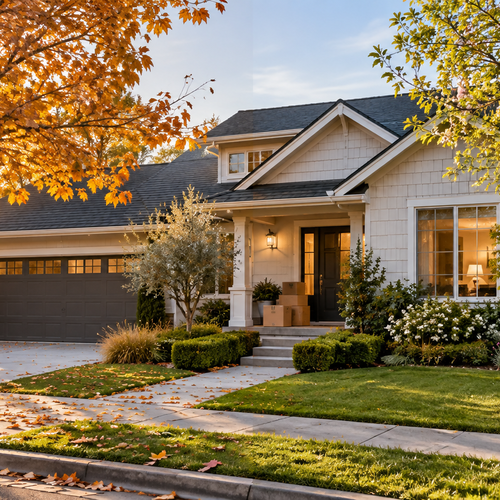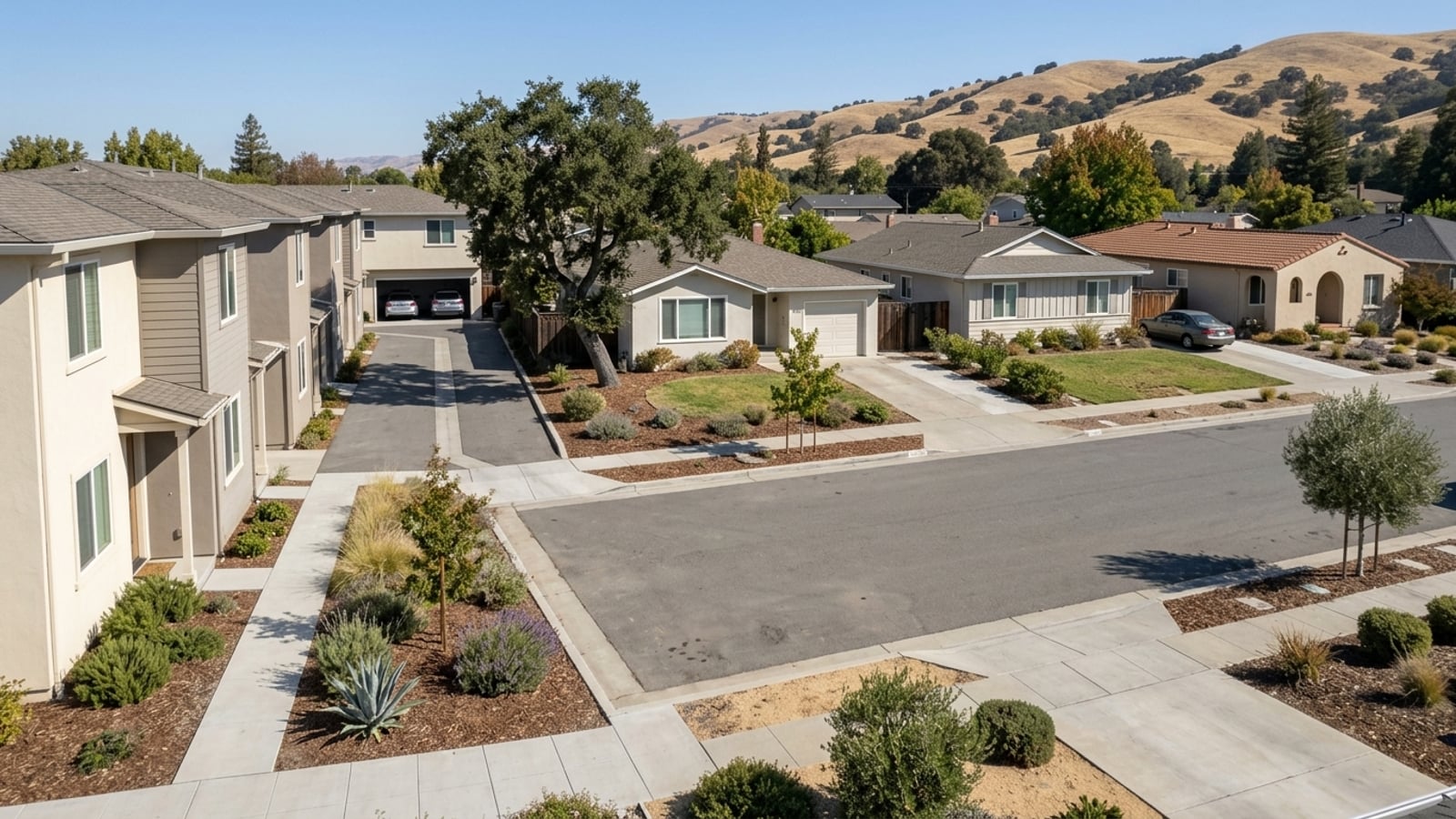
The median sale price for a home in Santa Clara County currently sits around $1.53 million. For property owners holding large houses with empty bedrooms and extensive yards, that's a massive amount of tied-up equity. Trading a maintenance-heavy property for a smaller footprint lets you cash out that equity while cutting your monthly upkeep considerably. To simplify the process, many owners seek out the best real estate agent for seniors in Silicon Valley, CA.
Selling a large home and buying a smaller one at the same time requires careful coordination. Available homes in the area spend a median of roughly 19 days on the market, so the timeline from listing to closing moves fast. Understanding local property types, tax implications, and association fees will help you plan a transition that doesn't leave you scrambling.
Why Consider a Smaller Footprint in the Bay Area
The price difference between a large house and a smaller unit can be substantial - one recent estimate puts a roughly $951,000 gap between a typical four-bedroom and a two-bedroom home in the region. That's not a rounding error. It's the primary reason most owners make this move.
A standardized four-bedroom, two-bathroom house of about 2,000 square feet ranges from roughly $1.43 million in areas like San Jose's Blossom Valley up to $3.95 million in premium markets like Saratoga. Moving to a smaller property frees up that capital for other investments or living expenses.
There's also the simple math of ownership overhead. Large yards require constant landscaping, and aging roofs or HVAC systems on expansive homes come with steep replacement costs. A smaller property demands less of your time and less of your budget - which, after years of the other thing, tends to feel like a relief.
Current Market Conditions for Sellers
Sellers of large homes face a split market depending on location and condition. Homes in top school districts currently sell in just 5 to 7 days, often drawing multiple offers.
Larger homes in less competitive pockets, or those needing significant repairs, take longer - averaging 25 to 40 days on the market. How well you prepare before listing will have a direct effect on which side of that range you land on.
Popular Low-Maintenance Home Styles
Santa Clara County currently holds about 2.8 months of supply for condos and townhomes, compared to a tighter 2.3 months for the broader market. That difference matters to you as a buyer - more inventory means more room to be selective.
Downtown San Jose has a concentrated high-rise condo market, with buildings like The 88, Axis, City Heights, and Skyline offering numerous options. Buyers looking for value and selection outside the downtown core often focus on Santa Clara, Campbell, and Milpitas, which carry more attached-home inventory than tighter single-family markets like Palo Alto or Los Altos. San Mateo County also offers a slightly higher condo supply at 3.4 months, giving buyers more room to negotiate.
Single-Story and Ranch Layouts
For buyers who want a detached home but want to avoid stairs, single-story ranch houses remain a popular choice. They eliminate the need for elevators or stairlifts and tend to age better for changing mobility needs.
Because ranch homes spread their square footage across a single floor, they occupy larger lots - and price higher than multi-level homes of comparable size. Expect real competition for updated single-story properties, particularly those near main commercial districts.
Financial Changes to Expect When Moving
Effective property tax rates for 2025-2026 in Santa Clara County generally sit between 1.0% and 1.28% of the home's assessed value. San Mateo County sees similar effective rates, typically ranging from 1.10% to 1.25%. Both figures include the base 1% rate established by Proposition 13, plus local voter-approved bonds and special district levies.
Under California Proposition 19, eligible homeowners over the age of 55 can transfer their existing property tax base to a new, replacement primary residence anywhere in the state. For long-time owners, this rule can make a meaningful difference - without it, your tax bill on a replacement home could jump even if you're spending less. There are specific filing deadlines and criteria you'll need to meet, so don't treat it as automatic.
Factoring in Association Dues
Moving into a condo or townhome almost always means taking on an HOA fee. In Santa Clara County, the average runs roughly $363 per month - well above the state median, which tells you something about what's baked into the local market.
Normal dues for attached homes in Silicon Valley typically fall between $500 and $600 per month. Luxury buildings or those with extensive amenities routinely charge over $1,000 per month, and certain outlier communities in Menlo Park have reported dues near $2,000. Factor these costs in carefully when you're comparing an attached home to a single-family property - the price gap between the two can shrink fast once HOA dues enter the equation.
How to Manage the Transition
About 47% of homes in Santa Clara County recently sold above their list price, so sellers who prepare carefully can still see strong returns. The first step is decluttering and deciding what furniture will fit in a smaller space. Getting that done early makes your current home look larger to prospective buyers and takes one stressful task off your plate before closing.
You'll also need to review your financing options for the new purchase. A contingent offer - where your purchase depends on the successful sale of your current home - protects you from carrying two mortgages, but it can make your offer less attractive to sellers in a market that moves this quickly. It's a real trade-off, not a technicality.
Timing Your Sale and Purchase
Some owners sell first, rent a temporary apartment, and shop for their next home with cash in hand. That approach removes the pressure of a ticking clock, and it gives you a very clear budget going into the purchase.
Others prefer to secure the new, smaller home first using bridge financing or cash savings, then list the larger property vacant. An empty, staged home is generally easier to show and can command a higher final sale price. Neither sequence is wrong - the right one depends on your financial cushion and your tolerance for uncertainty.
Frequently Asked Questions
What is the best time of year to downsize in Silicon Valley?
It depends on your specific goals. Spring typically brings the most buyers to the market, which can help your large home sell faster and potentially above list price. Shopping for your smaller replacement home during the slower winter months, though, might give you more negotiating power on the purchase side.
Are there single-story homes available in Silicon Valley?
Yes. Many mid-century neighborhoods throughout Santa Clara and San Mateo counties feature single-story ranch homes. Because these layouts are popular with buyers wanting to avoid stairs, they often sell quickly and command premium prices compared to two-story homes.
How do property taxes change when downsizing in Santa Clara and San Mateo counties?
It depends on your age and the purchase price of your new home. Santa Clara County effective tax rates are around 1.0% to 1.28%, and San Mateo County rates are roughly 1.10% to 1.25%. If you're over 55, California Proposition 19 may allow you to transfer your current, lower tax base to the new property.
How do I time the sale of my current Silicon Valley house while buying a smaller property?
You can use a contingent offer, sell first and rent temporarily, or buy first using bridge financing. Selling first gives you exact numbers for your budget and removes the stress of carrying two mortgages. Buying first allows you to move at your own pace and list your old home vacant.
Which Silicon Valley cities have the best walkable neighborhoods and amenities for downsizers?
It depends on whether you prefer a downtown high-rise or a quieter suburban center. Downtown San Jose offers dense, walkable condo living in buildings like Axis and The 88. Cities like Campbell, Santa Clara, and Milpitas provide excellent attached-home options near local shopping and dining districts.
Will I owe capital gains tax if I sell my appreciated Silicon Valley home to downsize?
It depends on your profit and filing status. Current federal tax law allows single filers to exclude up to $250,000 of profit, and married couples filing jointly to exclude up to $500,000, provided the home was your primary residence for two of the last five years. You should consult a tax professional to review your specific equity situation.
Check out this article next