
Most families I meet don’t go looking for a conservatorship. It usually arrives after a hard stretch: a parent with dementia who never signed a durable power of attorney or a trust, a fall that ends independent living, and a care bill that’s growing every month while the house sits there holding most of the family’s wealth. At that point someone asks whether the house can be sold to pay for care, and the answer is yes, but with a court looking over your shoulder. A conservatorship gives a court-appointed conservator legal authority over another adult’s finances or personal care, and selling the conservatee’s home is one of the most closely watched things a conservator can do in California. This guide covers how that sale works in practice here in Santa Clara County, what the court wants to see, and where families lose time.
Key Takeaways
Summary: A conservator can sell a conservatee’s house in California, but the court protects a person’s home and expects the conservator to explain their wishes and why staying isn’t workable. If your parent still has capacity, a power of attorney or a funded trust may avoid conservatorship altogether.
From my practice: I sold a property for a family member the court had appointed as conservator, with the Order to Sell already in hand when they called me. The conservator had never lived there and could answer almost no questions about its history, so we did a pre-listing inspection, put every disclosure online from day one and answered each buyer question in writing. It sold for $920,000 all cash, 128 days from the first call, and when the buyers asked for $35,000 off after inspections, we settled $20,000 above what they asked for.

Free 2026 Checklist for Families
The Parent's Home Transition Plan
Moving Mom or Dad into assisted living or memory care usually happens faster than anyone planned, and the house ends up being the biggest decision on the table. This checklist walks Silicon Valley families through every step in order, from the first conversation and the legal paperwork to paying for care, the cleanout, the sale of the house and the taxes, so nothing important gets missed while you're focused on your parent.
You're all set. Thanks! The Parent's Home Transition Plan is on its way to your inbox. If you don't see it in a few minutes, check your promotions or spam folder.
First, Do You Actually Need a Conservatorship to Sell?
Before anyone files a petition, it’s worth checking what documents already exist. If the house is in a revocable living trust and a successor trustee can step in when the owner becomes incapacitated, the trustee can usually sell without any court involvement. If your parent signed a durable power of attorney with real estate powers while they still had capacity, the agent under that document can often sign the listing agreement and the deed. I cover how that works in Power of Attorney and Real Estate. A conservatorship is what’s left when neither document exists or when the existing documents are being challenged. It takes months to establish, it involves a court investigator, and it comes with ongoing accountings, so it’s worth a conversation with an estate attorney about whether a simpler path is available before you start.
The search volume on this topic is a little misleading, by the way. A large share of Californians searching for “conservatorship” are dealing with LPS conservatorships under the Welfare and Institutions Code, which cover people with serious mental illness. The probate conservatorship that applies to an older parent’s house is a separate process, and that’s the one this article is about. I walk through setting one up in How to Pursue a Conservatorship or Guardianship Through the Courts.
Why the Conservatee’s Home Gets Special Treatment
California law starts from the position that a conservatee’s own home is the least restrictive place for them to live. That presumption is written into Probate Code section 2352.5, and it can only be overcome with clear and convincing evidence. In plain terms, the court doesn’t want a house sold simply because it would be convenient for the family or because the proceeds would be nice to have. It wants to know that selling is really in the conservatee’s interest.
So before the conservator commits significant resources to a sale of the conservatee’s present or former residence, Probate Code section 2540 requires notice to the court that the sale is being proposed. That notice has to say whether the conservator has discussed the sale with the conservatee, whether the conservatee supports or opposes it, and why the sale is necessary, including whether the conservatee can still live in the home and why alternatives like in-home care services aren’t available. The court can send an investigator to talk with the conservatee about it. The practical lesson for families is simple: don’t sign a listing agreement, order a big cleanout, or start repairs before that notice has been given and your attorney tells you it’s time.
Free Seller Strategy Session
Before we talk money, let's talk about you.
The biggest financial wins in a move happen long before a home hits the market, and they start with understanding your situation. In 30 minutes we'll talk through what's changing, who's involved, and what you need this move to do for you, then map out a plan that gets you there with a clear financial advantage.
Book My Strategy Session →
Two Ways the Sale Can Go: Independent Powers or Court Confirmation
How the sale actually runs depends on the powers the court gave the conservator. Some conservators are granted independent powers under Probate Code section 2591, which can include the power to sell real property without a court confirmation hearing. When that authority covers the sale, the process looks much closer to a normal sale. The home is appraised, it’s listed at a price that’s generally at least 90 percent of the appraised value, the conservator accepts an offer, and escrow closes on a normal timeline. The conservator still has to account to the court afterward, including filing the closing statement.
When the conservator doesn’t have independent power to sell, the accepted offer is only the beginning. The conservator petitions the court to confirm the sale, a hearing is set, and at that hearing other buyers can show up and overbid, the same way they can in a court-confirmed probate sale. I explain how those overbid rules work in The Probate Overbid and Court Confirmation Hearing. From a marketing standpoint, that means buyers have to be comfortable with a longer, less certain timeline, and in our market that usually means fewer owner-occupant buyers and more investors unless the listing is presented carefully.
What the Sale Looks Like on the Ground
Conservatorship homes in Silicon Valley tend to share a profile. They’ve usually been owned for decades, they’re often dated, and many have deferred maintenance that crept in during the years when the owner was declining. That affects strategy more than people expect. A home with an old roof or a failing sewer lateral can scare off buyers who need a loan, and a conservator has a duty to act prudently with the conservatee’s money, which argues against big speculative remodels. What usually pays is a thorough cleanout, fresh paint, basic repairs that keep the house financeable, and good photography. I cover that tradeoff in Selling a Probate House As-Is or Fixing It Up, and the same logic applies here.
Disclosures are a little different, too. Sales by a fiduciary in the course of administering a conservatorship are generally exempt from California’s Transfer Disclosure Statement under Civil Code section 1102.2, but that doesn’t mean the conservator can hide known problems. Anything material the conservator knows about still needs to be disclosed, and in practice I recommend a pre-listing inspection so everyone is working from the same facts.
How Long It Takes
If a conservatorship is already in place and the conservator has independent power to sell, you can often go from court notice to close in a few months, depending on how long the notice period and cleanout take. If the conservatorship still has to be established, add several months for the petition, the investigator’s report, and the hearing. If the sale needs court confirmation, add the time to get on the court’s calendar for the confirmation hearing. Families paying for memory care while this unfolds should talk to their attorney early about how to cover the gap. My article on paying for assisted living while the house sells covers the common options.

Free 2-minute family assessment
Worried about Mom and Dad? See If It's Time to Have The Talk.
Answer a dozen quick questions about what you've noticed, the house itself, and who in the family is involved. You'll get an honest read on how urgent things really are and a plan for starting the conversation without a family fight.
Take the Quiz →Rather talk now? Call or text 408.413.3087
Taxes Still Matter
A conservatorship sale is still a sale by the conservatee, so the usual home sale rules apply. If the conservatee owned and lived in the home long enough, the federal home sale exclusion can shelter up to $250,000 of gain, and there’s a special rule that counts time in a licensed care facility toward the use test when the owner became unable to care for themselves. I break that down in Moving to Assisted Living Before Two Years? On a Silicon Valley house owned since the 1980s, though, the gain is often well above the exclusion, and families should also weigh the step-up in basis that heirs would receive if the house were held until death. That decision belongs with the conservator, the attorney, and a CPA, and it should be made before the house is listed, not after.
Sources and Further Reading
- California Probate Code § 2540 (sale of a conservatee’s residence)
- California Probate Code § 2352.5 (presumption that home is the least restrictive placement)
- California Probate Code § 2591 (independent powers of a conservator)
- California Civil Code § 1102.2 (fiduciary exemption from the Transfer Disclosure Statement)
- California Courts Self-Help Guide: Probate, Conservatorships, and Guardianships
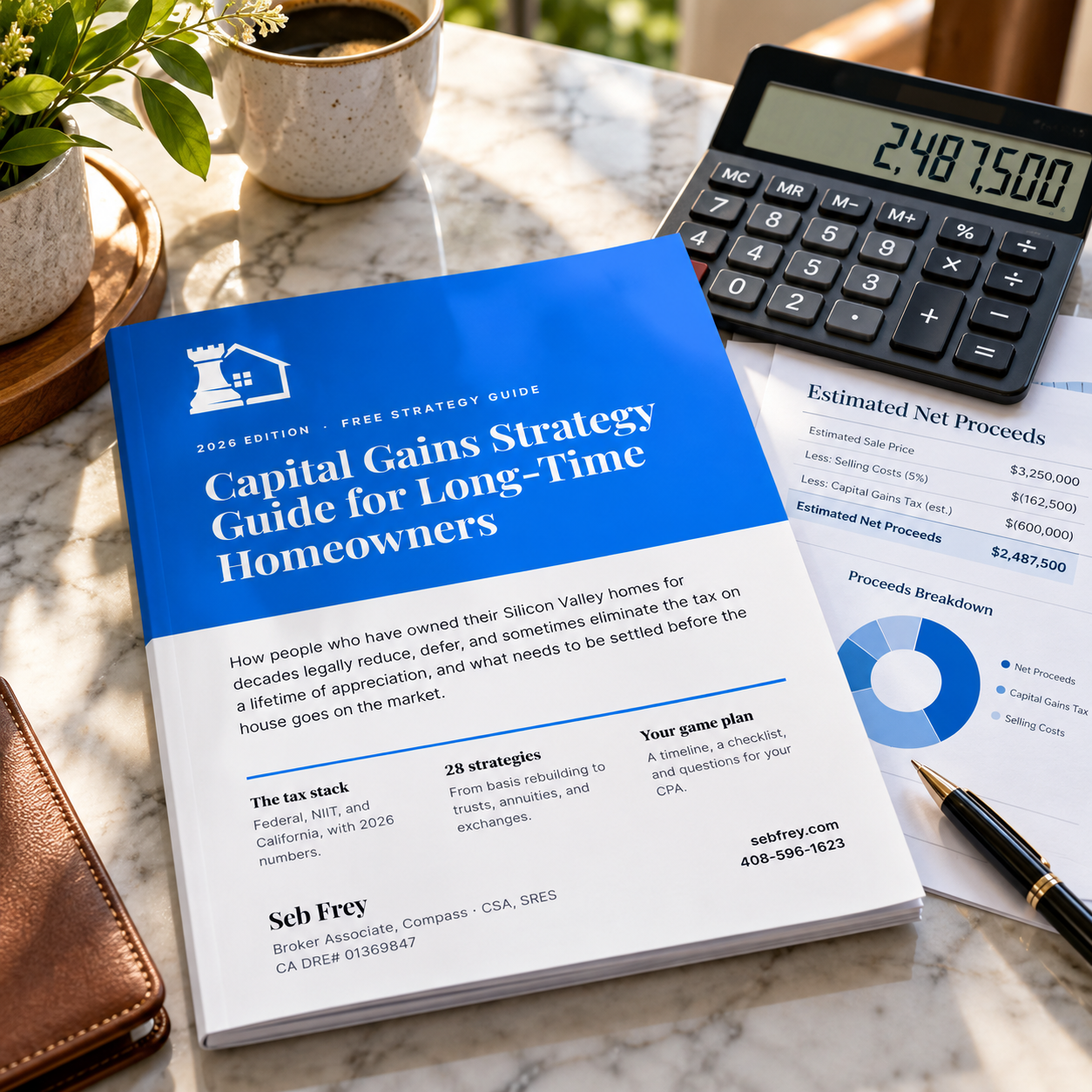
Free 2026 Strategy Guide
28 legal ways long-time owners cut their capital gains tax. Know your options before you list.
After decades in Silicon Valley, your gain can blow past the $250,000 and $500,000 exclusions. The guide walks through each strategy, a real bracket-by-bracket example, and what to settle before you list.
You're all set. Thanks! Your Capital Gains Strategy Guide is on its way to your inbox. If you don't see it in a few minutes, check your promotions or spam folder.
Frequently Asked Questions
Can a conservator sell the conservatee’s house in California?
Yes. A conservator of the estate can sell real property, but for the conservatee’s own residence the conservator must first give the court notice of the proposed sale, report the conservatee’s wishes, and explain why the sale is necessary and why alternatives like in-home care aren’t available.
Does a conservatorship home sale need court confirmation?
It depends on the conservator’s powers. With independent powers that include selling real property, the sale can usually proceed without a confirmation hearing, generally at a listing price of at least 90 percent of the appraised value. Without those powers, the court must confirm the sale, and other buyers can overbid at the hearing.
How long does it take to sell a house under a conservatorship?
With a conservatorship already in place and independent power to sell, a few months is common. Establishing the conservatorship first, or needing a court confirmation hearing, can add several months.
Is an LPS conservatorship the same as a probate conservatorship?
No. An LPS conservatorship is a mental health conservatorship under the Welfare and Institutions Code. The probate conservatorship is the process usually used to manage an older adult’s finances and property, including selling their home.
Do we need a conservatorship if Mom has a trust or a power of attorney?
Often not. A successor trustee of a funded living trust, or an agent under a durable power of attorney with real estate powers, can usually sell without a conservatorship. Have an estate attorney review the documents first.

Thinking about selling?
Just list with me, I'll do the rest.
Minimum hassle, maximum profit, and a sale on your timeline at a price and terms you'll love.
Let's Get Started →Rather talk now? Call or text 408.413.3087
Senior Friendly Homes in Silicon Valley South
2
3
4
5
6
7
8
9
10
11
12
13
14
15
16
17
18
19
20
21
22
23
24
25