Key Takeaways
Summary: Mortgage rates above 7% are slowing the Silicon Valley market without breaking it. For longtime homeowners over 60, especially those who can buy their next place with cash and carry their tax base over with Prop 19, higher rates cost a little on the sell side and can help on the buy side, so the decision to sell now or wait should follow your health, carrying costs and plans for the next chapter rather than the rate.
If you’re a longtime owner trying to decide what rates mean for your own move, see how I help as a Silicon Valley senior real estate specialist.
Here’s why that matters if you’ve owned your home for decades.
Last week (late September, 2026) Freddie Mac reported that the average 30-year fixed mortgage rate hit 7.03%, up from 6.95% the week before and 6.30% a year ago. It’s the first time the survey has been above 7% since January 2025, and it came after five straight weekly increases. The Wall Street Journal ran a piece last week on what the 7% line means for the housing market, and its core point is one I hear from real estate industry insiders damn every day: the number itself has no magic to it, but it changes how people behave. Buyers pull back, sellers get nervous, and a market that has been stuck for four years gets a little more stuck.
I want to take that article a step further, because the WSJ is writing for the whole country and most of my clients are not the whole country. They’re longtime Silicon Valley homeowners in their 60s, 70s and 80s, many sitting on a paid-off or nearly paid-off house worth several times what they paid for it. For you, the question isn’t so much whether you can afford a 7% mortgage. It’s whether this environment changes when, or whether, you should sell, and what happens to your retirement plans if you wait one, two or three years to find out.

Simple Strategy Guide
The Downsizing Guide for Bay Area Seniors
What to keep, what to let go, and how to get your home ready for today's buyers without a costly remodel, so you protect your equity and move on your own timeline.
You're all set. Thanks! The Downsizing Guide is on its way to your inbox. If you don't see it in a few minutes, check your promotions or spam folder.
What’s actually tightening in 2026
When people say “credit is tightening,” they usually mean one of two things, and it’s worth separating them. The first is the price of credit, meaning interest rates. The second is the availability of credit, meaning whether banks will lend to you at all and on what terms. Right now the story is almost entirely about price.
On price, the pressure is real and it’s coming from several directions at once. On September 16 the Federal Reserve raised its benchmark rate by a quarter point to a range of 3.75% to 4.00%, its first hike since 2023, and signaled it expects one more before year end. New Trump-appointed Fed Chair Kevin Warsh said inflation has been too high for too long, with headline inflation running around 3.4% as the Iran conflict keeps oil prices elevated. The 10-year Treasury yield, which mortgage rates tend to follow, touched roughly 5.1% this week. And if you’re counting, that 5.1% rate is the highest since 2007, or 19 years.
But you should also know this: the Freddie Mac average actually understates where rates are today, since it’s a weekly average. Mortgage News Daily’s daily index had 30-year rates near 7.45% on September 24.
On availability, the picture is calmer than the headlines suggest. The Fed’s July survey of senior loan officers found banks left standards for most residential mortgages basically unchanged, and a modest share actually eased standards on jumbo loans, which is what most Silicon Valley purchases require. Standards are sitting toward the tighter end of where they’ve been since 2005, but nobody is pulling the rug out the way they did in 2008. That distinction matters a lot for what comes next, and it’s the key to reading the history I’ve written out below.
However, one piece of the Fed hike does hit older homeowners directly. HELOCs are variable-rate, so if you’ve been using a home equity line to fund renovations, cover a gap before selling, or help a child with a down payment, your payment rises within a billing cycle or two of each Fed move.
How this compares to past credit crunches
Many of my clients have lived through every one of these cycles as homeowners, which gives them an advantage younger buyers don’t have. You’ve seen rates go up before, and you’ve seen what did and didn’t happen afterward. Here’s a quick look at the major tightening periods since the late 1970s, with approximate peak rates from Freddie Mac’s historical survey.
| Period | Approx. peak 30-year rate | What tightened | What happened to home prices |
|---|---|---|---|
| 2022 to 2023 | 7.79% (Oct 2023) | Price of credit; rates more than doubled in about a year | Sales froze nationally; Silicon Valley dipped from its spring 2022 high, then recovered |
| 2006 to 2009 | Around 6.5% | Availability of credit; lenders stopped making loans | National prices fell about 27% peak to trough; foreclosures drove the drop |
| 2000 | Around 8.6% | Price of credit, plus the dot-com bust locally | Valley prices softened as tech jobs disappeared |
| 1994 | Around 9.2% | Price; rates jumped about 2.5 points in a year | Sales slowed, prices mostly held |
| 1979 to 1982 | 18.63% (Oct 1981) | Price, at levels most people today can’t imagine | Sales collapsed; prices lagged inflation but rarely fell in dollar terms |
The pattern that jumps out is that the price of credit and the availability of credit behave very differently. When rates rise but banks keep lending, as in 1981, 1994, 2022 and now, the market mostly responds with fewer sales rather than falling prices. Owners who don’t have to sell simply don’t, inventory stays thin, and prices grind sideways. The one true price collapse in modern memory, 2008, happened when rates were relatively ordinary but credit itself nearly disappeared and forced sellers flooded the market.
We don’t have that ingredient today. Most homeowners have fixed-rate loans, strong equity and good credit, which is why the WSJ describes this as a stagnant market rather than a crashing one.
The early 1980s hold another lesson that’s especially relevant to older sellers. When rates hit the high teens, deals still got done, but they got done creatively. Sellers carried back financing, buyers assumed existing loans, and adjustable-rate mortgages went mainstream. The WSJ notes we’re already seeing a version of this, with ARMs and interest-only loans becoming more attractive as rates climb. Homes.com economist Brad Case warned buyers in that piece, “You have to know why the monthly payment is lower.” For a seller who owns a home free and clear, though, that creativity can cut the other way in your favor, and a seller carry-back note is a tool worth discussing with your financial and tax advisors…and may be a way to defer some of the substantial capital gains tax you may owe, were you to sell.

Capital Gains Calculator
Bought for $180K and worth $2.4M today? See what you'd owe in capital gains tax.
After decades in Silicon Valley, your gain can blow right past the $250,000 and $500,000 exclusions. Plug in your numbers and see your estimated tax bill and how much cash you'll walk away with.
Run My Numbers →What it looks like here in Silicon Valley
The national story and the local story are rhyming, not matching. In August, Santa Clara County single-family resales had a median price of about $1.89 million, essentially flat from a year ago, while the number of sales fell about 13%. The county averaged 987 sales a month since 2000, and August came in at 568. Inventory was up roughly 20% year over year, and homes were still selling for about 103% of list price on average. So buyers have more to choose from and less urgency, but well-prepared homes in good locations are still drawing strong offers.
The softness is showing up unevenly. Condo prices countywide fell about 11% from last year, which is tough news for condo sellers but good news for anyone planning to downsize into one. City by city the numbers swing widely, with some areas like Campbell and Saratoga posting gains while Cupertino and Sunnyvale slipped. That’s why I always tell clients a county-wide median price headline tells you almost nothing about what your specific house is worth this fall.
The WSJ also points out that national inventory has climbed to 1.62 million homes, the most since 2019, as the lock-in effect eased and more owners decided they couldn’t wait any longer. Its warning is that 7% rates could reverse that, with owners choosing to renovate and stay rather than sell into a softer market. If that happens here, the sellers who are already prepared will face less competition, not more.
What this means for longtime homeowners over 60
Here’s the part the national coverage misses. Most of the pain from 7% rates lands on people who need to borrow, and many longtime owners don’t. If you’re selling a house you’ve owned for 25 or 40 years and buying a smaller place, there’s a good chance you can buy your next home with cash. In a market where financed buyers are being squeezed, a cash buyer has extra leverage, especially in the condo and townhome segments where prices have already softened considerably. Higher rates will likely hurt you on the sell side but can help you on the buy side if you’re paying in cash (or mostly cash), which is a trade a lot of downsizers come out ahead on.
Your own “lock-in” is probably not your mortgage rate. For many older owners it’s property and capital gains taxes, and California’s Prop 19 largely solved the property tax part. If you’re 55 or older, you can move your Prop 13 tax base to a replacement home anywhere in the state, up to three times, as long as you buy within two years of selling. If the new home costs more, the difference gets added to your base rather than resetting everything. I still meet people all the time who don’t know this exists.
Nowadays, the bigger financial questions are usually capital gains taxes and equity access. The federal home-sale exclusion is still $250,000 for single filers and $500,000 for married couples, unchanged since 1997, and on a Silicon Valley home bought decades ago the gain can blow right past that. There are bills in Congress to raise or eliminate the cap, but as of this writing none has passed, so plan around the current rules and treat any change as a bonus. If you’re widowed, remember the $500,000 exclusion generally stays available only if you sell within two years of your spouse’s death. But then again, it’s quite likely that you now enjoyed a stepped-up basis to market value at the time of your spouse’s death, which may wipe out any capital gains tax liability entirely (check with your CPA or financial advisor).
And if your plan is to keep the house and leave it to your children, the step-up in basis at death can make holding the smarter move, which is a another conversation to have with your CPA and estate attorney, not just your REALTOR®.
Finally (and this is important!), rising rates make it more expensive to tap equity without selling. HELOC rates are tied to Prime, so payments climb when the Fed raises rates, and reverse mortgage limits shrink when longer-term rates rise, since the calculation factors in expected interest. If your retirement plan assumed you’d borrow a bunch of money against the house later, this is a good moment to revisit that assumption.
Does your place need a little work?
Sell As-Is. Sell for More.
No remodel, no lowball investor offer. Most Bay Area sellers net more selling as-is, and I'll show you how to get full market value without fixing a thing.
Show Me How →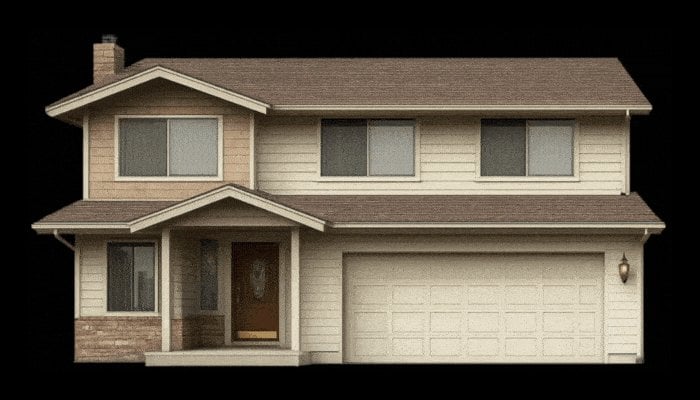
Should you sell now, or wait one, two or three years?
Nobody can tell you where rates will be in 2028, and anyone who says otherwise is selling something. In fact, many REALTOR®s and mortgage lenders haven’t done their clients any favors, as they have been telling people that “you marry the house and date the rate” in an effort to encourage people to go ahead ignore the payment. They were implying the buyer (mortgagor) would be able to refinance into a better rate inside of a couple-few years, and that is flat-out misleading in my opinion.
The problem is that rates don’t come back down the way they go up. In 2022, the average 30-year fixed went from about 3% in January to over 7% by October, which is more than doubling in less than ten months. The trip down is a different story. Lenders and bond investors move fast to protect themselves when inflation heats up, but they wait for proof before they give anything back. When the Fed finally started cutting in September 2024, mortgage rates actually went up over the next few months. More than three years after that 2022 spike, rates still aren’t anywhere close to where they started.
If you go back further, it took more than a decade for rates to settle after the early-1980s peak. So if you bought a house on the assumption that you’d refinance in a year or two, you were really making a bet, and most of the people who made that bet are still waiting to collect. And, actually, they may never collect, as many will sell or refinance into a higher rate regardless.
What I can do is lay out what waiting actually costs and gains you, because for older homeowners the math includes things a 35-year-old buyer never has to think about.
If you wait one year. The near-term forecasts aren’t encouraging for a quick rate drop. The Fed has signaled another hike this year and at least one bank’s read of its guidance points to no cuts until 2028. Realtor.com’s economist said this week that rates are more likely to go up than down in the next few months, though NAR’s perpetually optimistic Lawrence Yun noted that a resolution to the Iran conflict could send oil and rates down quickly. So a year from now you may be selling into the same market or a tougher one, with more competing inventory, and you’ll be a year older with a year more of property taxes, insurance and upkeep behind you. On a large older home, carrying costs and deferred maintenance might run tens of thousands a year.
If you wait two or three years
History is on your side for prices over that stretch. After all, prices can and do rise even as mortgage rates rise, as this often happens as a result of an improving economy. Silicon Valley has come back from every tightening cycle in my 23 years, and waiting out a soft patch has usually worked for owners who could afford to wait. The honest question is whether the next three years of your life can afford to wait. Health changes, a spouse’s needs, or a fall on the stairs can turn a planned sale into a rushed one, and rushed sales in a slow market are where people leave real money on the table.
In this crazy mixed-up world, it’s increasingly uncertain what’s going to happen tomorrow, much less two or three years from now. If I had to bet, I’d assume the market will be better three years from now than it is today – but probably not much, at least, not for most parts of Silicon Valley. Housing has become unaffordable for many, even professionals with good paying jobs. I feel like the market will need more time for wages to catch up with inflation, coupled with lower rates, before we really see strong home prices appreciation in most of Silicon Valley again.
If you sell now
You’re selling into a softer market, and you should expect more negotiation and a somewhat longer transaction timeline than you would have in 2021. In exchange, you lock in today’s price in a county where values are still near their all-time highs, you may be able to buy your next place with cash while financed buyers struggle, and you turn a large, illiquid asset into money that can earn interest at today’s higher rates. For many retirees that last point is underrated, since CDs and Treasuries are paying more than they have in years.
My honest take is that rates alone are a poor reason to sell or to wait. The better question is whether your home still fits the next five or ten years of your life. If it does, a 7% rate is mostly noise. If it doesn’t, waiting for the perfect market often costs more than the market does.
What Selling Looks Like in a High-Rate Environment
Before I wrap this up, I want to be clear about something I wrote earlier. In contrast to widely-held and cited beliefs, high rates don’t automatically mean home prices go down. Here in Silicon Valley, prices have held up better than a lot of people expected, and in the best neighborhoods they’ve kept climbing. What high rates do, though, is slow things down, and a slow market can hurt you without ever showing up as a clear and sharp price drop. In many parts of the valley and the surrounding towns, home values have gone flat or crept up a percent or two a year, which means that after inflation, your house is actually losing ground. It might look like the same number on Zillow, but it buys less than it used to.
That matters more than most homeowners realize, because the equity sitting in your house isn’t doing anything else while it sits there. If you’ve owned your home for 25 or 30 years, you might have a million or two (or more) tied up in it, and over the past several years that money has been underperforming what it could have earned in a plain, boring, diversified portfolio. I’m not a financial advisor, and I’m not telling you where to put your money, but the opportunity cost is real, and it adds up quickly when the amount is that big. Staying put isn’t a free choice, even when it feels like the safe one.
The bigger issue is what’s actually selling right now, and in the higher-rate environment of the likely near-ish term future. When buyers are paying 6 or 7 or even 8+ percent on a mortgage, they get pickier, and they save their energy (and their best offers) for the best houses in the best locations. Those homes still sell, sometimes with multiple offers. For everything else, your odds of selling go way down, and your home will sit on the market, often for months and even years. I see it every week: the home that needs a little work, the one on the busy street, the one priced like it’s still 2021. They rack up days on market, take a price cut, and then another one, and eventually the listing expires and the seller tells themselves they’ll try again next spring.
The trouble is that life doesn’t wait for the market to cooperate. Too many times I’ve watched a family hold on, waiting for a better moment, until a fall, a poor turn of health, or the inability to continue paying the mortgage, tax, and insurance forces the decision for them. At that point the seller has no time left, and buyers can smell it. That’s when people end up selling on the worst terms of the whole cycle, often for considerably less than they turned down a year or two earlier. I’d much rather help you make this decision while you still have time and choices, because that’s when you get to set the terms instead of having them set for you.
Frequently Asked Questions
Will home prices crash now that mortgage rates are above 7%?
Is it a bad time to sell my house in retirement?
Should I wait for mortgage rates to come down before selling?
Do higher mortgage rates affect me if I’m buying my next home with cash?
Can I keep my low property taxes if I downsize in California?
How much capital gains tax will I owe when I sell a home I’ve owned for decades?
How do rising rates affect my HELOC or a reverse mortgage?
Sources
- Freddie Mac Primary Mortgage Market Survey, Sept. 24, 2026
- CNBC: Fed rate decision, Sept. 16, 2026
- Mortgage News Daily, Sept. 24, 2026
- Federal Reserve Senior Loan Officer Opinion Survey, July 2026
- Santa Clara County market report, August 2026
- Enterprise Bank monetary policy update, Sept. 2026
- The Wall Street Journal, on how the housing market changes with rates above 7% (Sept. 2026)
Free Seller Strategy Session
Before we talk money, let's talk about you.
The biggest financial wins in a move happen long before a home hits the market, and they start with understanding your situation. In 30 minutes we'll talk through what's changing, who's involved, and what you need this move to do for you, then map out a plan that gets you there with a clear financial advantage.
Book My Strategy Session →
Senior Friendly Homes in Silicon Valley South
2
3
4
5
6
7
8
9
10
11
12
13
14
15
16
17
18
19
20
21
22
23
24
25