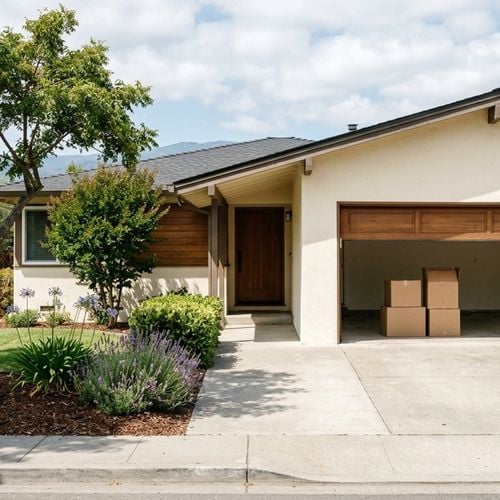
The median sale price in Santa Clara County sits around $1,534,863 right now, and homes are moving in roughly 19 days on average. That's a fast market by any measure - but a property with serious deferred maintenance doesn't automatically ride that wave. Buyers paying top dollar expect move-in ready. Investors expect a steep discount. Figuring out which direction to go means honestly weighing your upfront costs against what you'll net at the end, especially if you are downsizing in Silicon Valley, CA.
Understanding Deferred Maintenance in Real Estate
Deferred maintenance is straightforward: it's the repairs and upkeep a homeowner puts off to save money or time. The problem is that minor issues don't stay minor. Left alone, they compound into structural or functional defects that are much more expensive to address later.
Silicon Valley has its own particular version of this problem. Santa Clara County homes are unusually prone to foundation issues because of the expansive clay soil that runs through so much of the region - soil that can expand up to 10% in volume when it gets wet. That constant swelling and shrinking is what causes foundation cracks, uneven floors, and those doors and windows that suddenly won't open or close right. Moisture and wood rot in crawl spaces are another common South Bay issue, made worse by the region's seasonal pattern of heavy rainfall followed by drought.
Options for Selling a House That Needs Repairs in Silicon Valley
There are three realistic paths for a seller in this situation. Each one lands differently depending on how quickly you need to close and how much capital you're willing to put in before you get there. With around 2,112 homes currently available in Santa Clara County, buyers do have choices - which means your pricing and positioning matter more than they would in a thinner market.
Selling As-Is on the Open Market
Listing as-is means you make no repairs before closing. The home goes on the multiple listing service, traditional buyers see it, and their offers will reflect their estimate of what it'll cost to fix. You keep your upfront costs low and avoid the headache of managing contractors. The tradeoff is that homes marketed this way often sit longer than that 19-day county median - retail buyers can struggle to secure standard financing when a property has significant defects.
Selling to a Cash Investor or iBuyer
Cash buyers represent roughly 12% of all sales in Santa Clara County, though it varies by city - San Jose runs about 10%, while Los Gatos comes in around 12%. Going this route means a fast, predictable closing with no showings and no staging. These buyers plan to flip or rent the property, so their profit margin is already baked into what they'll offer you. You skip the repair process entirely, but you'll almost certainly net less than you would on the open market.
Making Repairs Before Listing
If you have the capital and the time, upgrading the home before you list opens the door to retail buyers who'll pay a premium for something turnkey. The key is running the numbers on each project before you commit. A full HVAC system replacement in the San Jose area runs roughly $12,000 to $28,000 installed in 2026. If a new system adds more to your sale price than it costs to install, it makes financial sense. If it doesn't, it probably doesn't.
Repairs to Prioritize If You Choose to Fix
The repairs worth doing are the ones that show up on a home inspection as health, safety, or structural concerns - not the cosmetic stuff. If your home has active leaks, exposed wiring, or serious plumbing problems, lenders may refuse to fund a standard mortgage until those items are resolved.
Government-backed loans add another layer. FHA and VA mortgages have specific property condition requirements, and things like peeling paint, missing handrails, or a non-functioning heater have to be addressed before an underwriter will sign off. That alone can knock a meaningful percentage of buyers out of your pool if the issues aren't corrected.
Structural integrity is where you start. Roofs and foundations are the two categories that scare retail buyers most - and for good reason. Everything else is negotiable. Those two generally aren't.
California Seller Disclosure Laws You Must Follow
California Civil Code §§1102-1102.14 requires sellers of residential properties with one to four units to complete a Transfer Disclosure Statement, or TDS. This applies even when you're selling strictly as-is - the as-is label doesn't exempt you from disclosing what you know.
The TDS covers more than 20 categories of known material defects, including foundation settling, roof leaks, plumbing issues, unpermitted structural changes, and drainage problems. You're required to complete it in good faith.
Delivery timing matters here. The TDS is typically provided within seven days of an accepted offer, and if you're late, the buyer gets a statutory right to cancel - three days if it's delivered in person, five days if it goes by mail or electronic means. Some transfers are exempt from this requirement entirely, including probate sales and foreclosures.
How to Price a Fixer-Upper in Silicon Valley
Pricing a home that needs work starts with the After Repair Value - the ARV. That's what the home would sell for in excellent condition, comparable to recently updated properties in the same neighborhood. From there, you subtract the estimated repair costs and build in a buffer for the buyer's time, effort, and exposure to whatever hidden issues might surface once work begins. Buyers taking on a project expect to be compensated for that risk.
Santa Clara County homes are currently selling at roughly 102% of list price on average, so the market is competitive. But a fixer-upper priced like a turnkey home won't benefit from that dynamic - it'll just sit. A local agent will run a Comparative Market Analysis to find exactly where your property fits into the current inventory, given its condition.
Frequently Asked Questions
Can I sell a house with deferred maintenance in Silicon Valley?
Yes. You can list it as-is on the open market, or sell it directly to a cash buyer or investor. Either way, you're still required to disclose all known defects to the buyer using the California Transfer Disclosure Statement.
Should I fix my Silicon Valley house or sell it as-is?
It comes down to your timeline and what capital you have available. If you can fund major repairs - like a $12,000 to $28,000 HVAC replacement - you can often attract retail buyers and come out ahead. If you need a fast close without putting money in first, selling as-is to an investor is the more practical path.
How much does deferred maintenance devalue a home in the Bay Area?
At minimum, by the full cost of the needed repairs - and usually more than that. If a home needs $50,000 in foundation and roof work, buyers will typically offer less than $50,000 below market value to account for the hassle and the risk of uncovering additional problems once work starts.
What happens if I fail to disclose deferred maintenance to a buyer in California?
Failing to disclose known material defects is a violation of California Civil Code §§1102-1102.14. Before closing, a buyer who learns of undisclosed issues has the statutory right to cancel the contract. After closing, they can pursue legal action against you for the damages caused by what you didn't tell them.
How do you accurately price a fixer-upper in a competitive market like Silicon Valley?
Start with the After Repair Value, based on comparable updated properties in Santa Clara County. Subtract estimated repair costs and a margin for the buyer's risk. An agent will use a Comparative Market Analysis to land on a list price that's competitive given the home's condition.
Which specific repairs are worth doing before listing an older Bay Area home?
Focus on health, safety, and structural issues - the ones that prevent buyers from getting traditional financing. Active roof leaks, foundation cracks from expansive clay soil, and crawl space moisture problems are worth addressing. Cosmetic updates generally aren't where you'll see the return.
Do I owe capital gains tax if I sell my Silicon Valley home as-is?
Selling a property in its current condition does not exempt you from standard tax obligations on your profit. Long-term owners should carefully review the rules around capital gains tax when selling a home to understand their potential liability. Deducting any repair costs you did choose to make before listing can sometimes help offset that final burden.
Can older sellers transfer their property tax base if they sell a fixer-upper?
Selling a home that requires significant repairs does not prevent eligible older adults from keeping their current tax assessment. Sellers looking to downsize can utilize a Proposition 19 property tax transfer when moving to a replacement primary residence. This allows you to leave a high-maintenance property behind without facing a steep tax increase on your next purchase.
Check out this article next