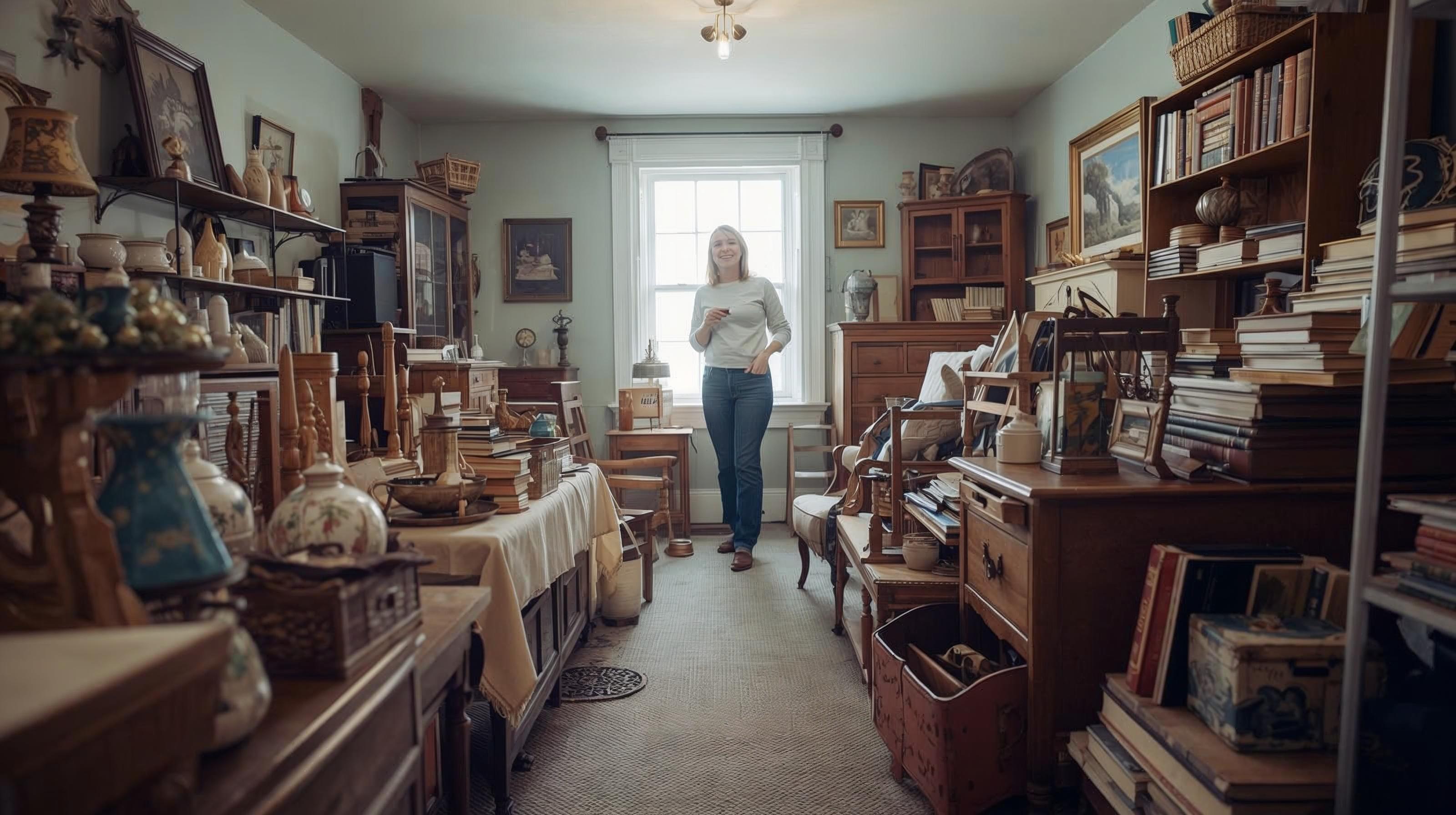
Most families who call me about selling Mom or Dad’s house are also staring at forty or fifty years of stuff, and sooner or later someone asks whether they could just run the estate sale themselves. I’m a Broker Associate at Compass, a Certified Senior Advisor (CSA), a Seniors Real Estate Specialist (SRES) and a Certified Aging-in-Place Specialist (CAPS), and over 23+ years and 460+ home sales in Silicon Valley, I’ve watched a lot of families work through this exact decision. You can absolutely do it yourself, and in the right house it can pay off. Here’s what it really takes, what it costs, what you legally can’t sell, and when I’d pick up the phone instead. I last updated this guide in November 2026.
Key Takeaways
Summary: To run a DIY estate sale in the Bay Area, confirm who has legal authority to sell, pull out keepsakes and paperwork, research prices using eBay sold listings, advertise on estate sale sites and local groups, and run a two or three day sale with daily markdowns. It keeps the 30 to 50 percent commission in the family’s pocket, but it’s a lot of work, so get a free company walkthrough first and compare the real numbers.
Table of Contents
- Should You Run Your Own Estate Sale or Hire a Company?
- Why a DIY Estate Sale Is Harder Than It Looks
- What to Do Before You Price a Single Item
- What You Can’t Sell at a California Estate Sale
- How to Run a DIY Estate Sale, Step by Step
- How to Price Estate Sale Items
- What Are Estate Sale Items Really Worth?
- Where to Advertise Your Estate Sale
- Selling Online Instead of (or Along With) a Sale
- Bay Area Companies That Can Help
- How to Stay Safe and Avoid Scams
- Do You Owe Taxes or Need a Permit?
- What Happens to Whatever Doesn’t Sell?
- How Much Money Can You Make From a Bay Area Estate Sale?
- Final Thoughts
- Frequently Asked Questions
Should You Run Your Own Estate Sale or Hire a Company?
An estate sale is the liquidation of most or all of what’s in a home: furniture, art, jewelry, electronics, collectibles, kitchen goods, tools and clothing. And no, it doesn’t mean someone has died. In the Bay Area, I see them just as often when someone is downsizing, relocating, or moving into a senior living community. It’s also a much bigger job than a garage sale, which is why the first decision is who’s going to run it.
Companies typically keep about 30 to 50 percent of gross sales, with the higher percentages on smaller sales, and AARP puts the average around 35 percent. That hurts until you see where it goes. When I sat down with Jason Smith of Blue Moon Estate Sales, he told me labor is by far their biggest expense: several people working three to six days just to stage and price, plus marketing and the sale itself.
Here’s the math I’d run. Let’s say a company would gross $20,000 at a 40 percent commission, leaving the family $12,000 (these are round numbers to illustrate, not a quote). To beat that yourself, you’ve got to bring in more than $12,000 without their pricing experience or their list of regular buyers, and you’ve got to deal with everything that doesn’t sell. Sometimes that works, and sometimes the family ends up with less money and a lost month.
| Option | What it costs | Your workload | Best for |
|---|---|---|---|
| DIY estate sale | No commission, but your time, ads and hauling | Heavy | Everyday goods, local family, flexible timeline |
| Estate sale company | Typically 30 to 50 percent of gross sales | Light | Full houses, valuables, out-of-town kids, tight deadlines |
| Online auction | Varies by company, so get it in writing | Moderate | Families who don’t want crowds in the house |
| Auction house | A cut of the sale price, often plus fees | Light | A few high-value pieces of art, jewelry or antiques |
I lean toward hiring a company when there’s fine art, antiques or jewelry in the house, when the kids live out of town, when the house has to be empty by a certain date, or when siblings can’t agree on what things are worth. DIY makes more sense when it’s mostly ordinary furniture, small appliances, clothes and tools, someone local can give it a few weeks, and the family would rather keep the commission. If you want to compare every route side by side, I broke it down in my guide to estate sales vs. liquidators vs. cleanouts.
Why a DIY Estate Sale Is Harder Than It Looks
Putting things out, slapping on prices and opening the door sounds simple until you’re doing it. Pricing is usually the first wall people hit, since most of us have no idea whether a set of china should be $20 or $200, and sentimental attachment pushes every number up. Then there’s the physical side. Jason’s team touches and prices about 90 percent of what’s in a house, and it takes them three days in a smaller home and five or six in a bigger one, and that’s with a crew that does this for a living.
The sale itself is a whole different animal. A busy estate sale can bring several hundred people through the front door, the haggling never stops, and you’re trying to watch every room while people ask you about Dad’s tools. All of this is happening during an emotional stretch for the family, which is the part nobody budgets for. For a lot of families, that burnout turns out to be the real cost.

Free Guide for Families
Selling Mom or Dad's Home to Pay for Care?
Bay Area assisted living runs $7,800 to $8,300 a month, and the house is usually the only asset big enough to cover it. This guide walks you through timing the sale, who has legal authority to sign, the capital gains rules for seniors in care, and how a sale affects Medi-Cal and VA benefits, so the decision gets made from strength instead of in a crisis.
Read the Family Guide →What to Do Before You Price a Single Item
Start by making sure the person running the sale is allowed to. If your parent is alive and making their own decisions, that’s simple, it’s their stuff and their call. If they can’t make decisions anymore, you’ll want to check that a power of attorney or conservatorship actually covers it. After a death, the belongings generally have to be handled by the trustee or the court-appointed personal representative, and whether you’re in a trust or a California probate changes the rules, so ask the attorney before anything gets sold.
Next, get the family on the same page. Let everyone claim what they want in writing before a single price tag goes on, because arguments over Grandma’s china can blow up fast, and my article on sibling conflict during a parent’s home sale can help if it’s already getting tense. Then go through every pocket, purse and drawer. Jason has found a Purple Heart, class rings and blank checks in coat and purse pockets, and pink slips and Social Security cards turn up too. Those documents, along with family photos, go in a locked room that shoppers never see. If you still need to track down accounts, here’s how families get into a parent’s accounts and passwords.
The last step is one almost nobody takes, and it’s the one I care about most. Call an estate sale company and ask for a walkthrough before you sell or throw away anything, since the consultation is usually free. You’ll find out what’s valuable, and you’ll get a number to compare against. Selling the best stuff yourself first can also backfire, because a company needs good merchandise to draw the crowd that buys everything else. If all that’s left is a couch and some plates, most companies will pass, and you’ll be stuck paying for a cleanout. My article on working with an estate sale company covers what to ask.
What You Can’t Sell at a California Estate Sale
A few things need to come out of the house before you open the doors, and this is the part most DIY guides skip. I’m not an attorney, so treat this as a heads-up and check with one if you’ve got questions about a specific item.
- Guns. Under California Penal Code section 27545, a private sale has to go through a licensed firearms dealer, so you can’t sell one off a table. The California Attorney General’s firearms page explains the rules. Deal with these before you schedule anything.
- Ivory and rhino horn. California Fish and Game Code section 2022 bans selling them, and that includes older carvings, piano keys and scrimshaw. The exceptions are narrow, like an antique at least 100 years old with less than 5 percent ivory by volume and paperwork to prove it. If you’re not sure what a piece is made of, leave it out.
- Prescription medications. Don’t sell them, and don’t leave them in the bathroom cabinet where shoppers can reach them. The DEA Take Back program and many local pharmacies will take them for free.
- Alcohol. You need a license to sell it in California, so keep Dad’s wine collection out of the sale and talk to a licensed auction house if it’s worth something.
- Paint and chemicals. These aren’t for sale or for the trash. Santa Clara County runs a free household hazardous waste program.
How to Run a DIY Estate Sale, Step by Step
Jason’s team usually plans a sale three to four weeks out, and I’d give yourself at least that long since you’re not doing this every weekend. If you’re also selling the house, this needs to fit into your bigger plan, and my 90-day senior move timeline shows how the pieces line up. Here’s a rough schedule that works.
- Four weeks out: Confirm authority, have the family claim keepsakes, remove documents and items you can’t sell, and get that free company walkthrough. Book an appraiser for anything that might be valuable.
- Three weeks out: Sort everything into keep, sell, donate and toss. My 3-step decluttering guide and guide to getting rid of a lifetime of stuff can help. Line up your helpers and a hauler now.
- Two weeks out: Clean, stage and start pricing room by room. Take photos of your best pieces. Check your city’s rules on sales and signs, and ask your insurance agent how your policy treats a house full of strangers, especially if it’s sitting vacant.
- One week out: Post your ads and photos, set up your card reader, get change from the bank, and borrow tables. Give the neighbors a heads-up about parking, since they’re the ones who’ll call if it gets messy.
- Sale days: Run two or three days at full price on day one, with markdowns posted at the door after that.
- The day after: Donate what’s left, haul what can’t be donated, and sweep the house so it’s ready for whatever comes next.
How to Price Estate Sale Items
Price from research instead of memory, because what Mom paid in 1985 has nothing to do with it. Look up similar items on eBay and filter for sold listings to see what buyers really paid, and then check Facebook Marketplace and Craigslist for local demand. For anything you suspect is special, hire an appraiser for a few hours, which you can find through groups like the International Society of Appraisers. That small bill can save you from selling a painting for a tenth of its value.
You can save yourself a ton of work by borrowing how the pros do it. They use menu pricing for everyday items, with a sign in each room that says something like a few dollars for plates or a dollar for socks, and they save individual tags for the better pieces. Day one is full price. Day two might be 25 percent off, and day three might be 50 percent off certain items, with smaller markdowns on jewelry and original signed art. Late on the last day, make deals, especially on anything heavy you don’t want to pay to haul.
What Are Estate Sale Items Really Worth?
This is the hard conversation, and resale value is almost always well below what the family expects. That couch you paid $2,500 for might bring $150. Electronics drop fast, so a high-end TV from a decade ago might bring $50. Dining sets can range from about $200 to $1,500 depending on style and condition, but they’re tough sellers because few buyers have room for them. Art is all over the map, and unless the artist has a following, a painting that cost thousands may sell for a fraction of it. That grandfather clock the family swears is worth $10,000 might bring $500 on a good day.
There’s good news too. Jewelry, collectibles, vintage designer goods and some mid-century furniture can bring strong prices, especially here, where buyers know what they’re looking at. Small oddball stuff can surprise you as well. Jason told me about a 1970s rock concert T-shirt that gets its own tag at $30 or $40 instead of the usual $5.

Simple Strategy Guide
The Downsizing Guide for Bay Area Seniors
What to keep, what to let go, and how to get your home ready for today's buyers without a costly remodel, so you protect your equity and move on your own timeline.
You're all set. Thanks! The Downsizing Guide is on its way to your inbox. If you don't see it in a few minutes, check your promotions or spam folder.
Where to Advertise Your Estate Sale
Advertising can make or break the whole thing, and you want your best photos out early. EstateSales.NET and EstateSales.org are where serious shoppers look every week, though they’re built around estate sale companies, so check whether they’ll take your listing as a private seller. After that, use Facebook Marketplace, local buy and sell groups, Craigslist and Nextdoor. Lead your photos with the marquee stuff like art, a fur coat, a rare collectible or a big dining table, then add a wide shot of each room.
Don’t underestimate plain old signs. Big, simple signs with an arrow, the date and the hours can bring in a steady stream of neighbors, as long as your city allows them where you put them, and you take them down when you’re done.
Selling Online Instead of (or Along With) a Sale
You don’t have to open the house at all. Facebook Marketplace is strong for bulky furniture and electronics because buyers pick up locally, and Craigslist still gets traction around here for furniture and household goods. eBay works best for collectibles, designer goods and anything you’re willing to pack and ship, while OfferUp and Nextdoor can help move everyday stuff locally. Just remember my warning from earlier, and get that walkthrough before you sell off the best pieces.
Bay Area Companies That Can Help
If you want some backup without doing everything yourself, here are the names I’d start with. Check current services and terms with each of them, since offices and offerings change.
- Blue Moon Estate Sales of San Mateo and San Jose is run by Jason Smith, who I interviewed for this site. They do free consultations, in-home sales and online auctions.
- Caring Transitions Silicon Valley serves Los Gatos, San Jose and Morgan Hill, with a focus on senior moves, estate sales and online auctions. If you need help with the whole move, see what a senior move manager costs in the Bay Area.
- Grasons Co. is a national estate sale franchise. Its Bay Area coverage has shifted over the years, so call to find out which office handles your city.
- MaxSold runs online auctions where the winning bidders haul things away. You can manage it yourself or pay for more help, which is handy when you don’t want crowds in the house.
- Everything But The House is a national online auction company that handles the cataloging and photos, but it’s selective, so ask whether they’re taking consignments from your area.
- Michaan’s in Alameda is an auction house I’d call about art, jewelry and antiques that deserve serious buyers.
How to Stay Safe and Avoid Scams
Most shoppers are lovely, but estate sales attract opportunists too, and a house full of small valuables is an easy target. Keep jewelry in a locked case next to the cash table with someone always watching it, and lock or block off any room that isn’t part of the sale. Have at least two people there at all times, and more if the house is big. Early birds will try to talk their way in before opening, so hold the line and hand out numbers at the door if there’s a crowd.
Be careful with payments, because this is where the old advice falls short. Cash and an in-person card reader like Square are your safest bets, and a cheap counterfeit pen takes care of the big bills. The FTC warns sellers not to accept mobile payments from strangers, since a fake Venmo or PayPal notification can look real. If you do take one, confirm the money in your own app before anything leaves the house. Never accept a check for more than the price, and never share a verification code with a buyer. For big items sold online, don’t meet buyers alone, and have someone else in the house when they come to pick up.
Do You Owe Taxes or Need a Permit?
Usually not much, but it’s worth a quick conversation with your CPA. The California Department of Tax and Fee Administration says people selling used items at a garage sale generally don’t need a seller’s permit if they hold no more than two sales in 12 months. It doesn’t spell out estate sales, so ask if you’re planning more than one.
On income tax, most household goods sell for less than they cost, and the IRS says losses on personal-use property aren’t deductible. If you sell something for more than you paid, like that coin collection, the gain is taxable. For inherited items, your basis is generally the fair market value on the date of death, which is one more reason to get valuable pieces appraised. Payment apps also send a Form 1099-K when you pass $20,000 across more than 200 transactions, and they can send one below that, so keep your records.
Free Guide: Selling a Home You’ve Owned for Decades

What Happens to Whatever Doesn’t Sell?
Something’s always left over, and the house has to be empty at the end, so plan for this from day one. Donate first, keep a record, and look at IRS Publication 561 for how donated items are valued. Then haul the rest, and budget for it, because Jason says just throwing away one couch can run $100 to $200 here. Dining tables, armoires and heavy tool chests are the usual headaches. I’ve got a whole article on what to do with the things nobody wants, and if the house is beyond a normal cleanout, here’s my advice on selling a hoarder house.
How Much Money Can You Make From a Bay Area Estate Sale?
It varies a lot. A modest sale of everyday items might bring in a few thousand dollars, while a home full of antiques, collectibles and high-end furnishings can bring in tens of thousands. Your number depends on what you’ve got, what shape it’s in, and how well you price and advertise it. Keep it in perspective too. Jason reminded me that most of the value is in the house rather than the contents, and on a Silicon Valley home, letting the contents hold up the sale can cost you more than they’re worth. Getting it empty and ready to sell is often the bigger win, and my pro tips for emptying out a Silicon Valley home walk through how to do it.
Final Thoughts
Running your own estate sale can be rewarding, and for the right house and the right family, it’s real money that stays in the family. Just go in with your eyes open. Get the free walkthrough, run the numbers, keep the keepsakes and paperwork safe, and be realistic about what your stuff is worth and what your time and sanity are worth. Hiring a specialist for one job, like an appraiser or an online auction, can work great, but cherry-picking the good stuff and then expecting a company to take the rest usually doesn’t.
At the end of the day, this is about more than squeezing out every last dollar. It’s about closing a chapter well and making room for the next one. If the house is the next step, I’d love to help you plan the whole move, from the contents to the closing. You can book a call with me here or reach my office at 408-413-3087, and you can find more on this topic in my estate sale articles and my resources for older adults and families.
Frequently Asked Questions
What is an estate sale?
An estate sale is the liquidation of most or all of a home’s contents, usually run as a two or three day event in the house, with prices dropping each day. It covers far more than a garage sale, including furniture, art, jewelry, collectibles, kitchen goods and clothing.
Do estate sales only happen after someone dies?
No. In the Bay Area, estate sales are just as common when someone is downsizing, relocating, or moving into a senior living community. Plenty of people hold one while they’re alive and well and ready for what’s next.
How much do estate sale companies charge?
Estate sale companies typically keep about 30 to 50 percent of gross sales, with higher percentages on smaller sales. AARP puts the average around 35 percent. Hauling is often billed separately, so get all the terms in a written contract.
When does a DIY estate sale make sense?
It works best when the house holds mostly everyday goods, someone local can give it a few weeks, and you’re not up against a hard deadline. If there’s fine art, jewelry or antiques, the kids live out of town, or the family is fighting over values, I’d lean toward hiring a company.
How long does it take to run an estate sale yourself?
Plan on three to four weeks from start to finish. Professional crews spend three to six days just staging and pricing, and most sales run two or three days, so expect it to take you longer if you’re doing it on nights and weekends.
How should I price items for a DIY estate sale?
Check eBay sold listings to see what buyers really paid, then look at Facebook Marketplace and Craigslist for local demand. Use signs with category prices for everyday items, save individual tags for better pieces, and hire an appraiser for anything that might be valuable. Then mark things down each day, for example 25 percent off on day two and 50 percent off on day three.
Where should I advertise an estate sale in the Bay Area?
Start with EstateSales.NET and EstateSales.org, checking whether they’ll take a private seller’s listing, and then use Facebook Marketplace, local buy and sell groups, Craigslist and Nextdoor. Lead with photos of your best pieces, and add clear neighborhood signs if your city allows them.
What can’t I sell at an estate sale in California?
Guns have to go through a licensed firearms dealer, and ivory and rhino horn are banned with very narrow exceptions. Prescription medications and alcohol can’t go on the table either, and paint and chemicals should go to a household hazardous waste program. Check with an attorney if you’re not sure about something.
Do I need a seller’s permit to hold an estate sale in California?
The California Department of Tax and Fee Administration says garage sale sellers generally don’t need a permit if they hold no more than two sales in 12 months. It doesn’t spell out estate sales, so ask your CPA if you’re planning more than one or you’re selling for someone else.
Do I have to pay taxes on estate sale money?
Often not, because most household goods sell for less than they cost, but those losses aren’t deductible. A gain on something that went up in value is taxable. For inherited items, your basis is generally the fair market value on the date of death, so talk to your CPA about anything valuable.
What’s the safest way to get paid at an estate sale?
Cash and an in-person card reader like Square are your safest bets. The FTC warns sellers against taking mobile payments from strangers because fake payment notifications can look real, so if you do take one, confirm it in your own app first. Never accept a check for more than the price.
What happens to the items that don’t sell?
Donate what you can and keep a record, then haul the rest away. Budget for hauling, because getting rid of one couch can run $100 to $200 in the Bay Area. Whatever’s left has to be out before the house can be listed.
How much money can I make from a Bay Area estate sale?
A modest sale of everyday items might bring in a few thousand dollars, while a home full of antiques, collectibles and high-end furnishings can bring in tens of thousands. Most of a family’s value is in the house itself, so don’t let the sale hold up your larger plan.
Free Family Strategy Session
Paying for Mom or Dad's care with the house? Find out how many months of care it will fund.
In a 30-minute call, we'll estimate your parent's net proceeds after selling costs and taxes, map that against the care costs you're looking at, and sort out timing: sell before the move, after it, or bridge the gap. You'll leave with real numbers and a clear order of operations. No listing agreement, no pressure.
Book My Family Strategy Session →Senior Friendly Homes in Silicon Valley South
2
3
4
5
6
7
8
9
10
11
12
13
14
15
16
17
18
19
20
21
22
23
24
25