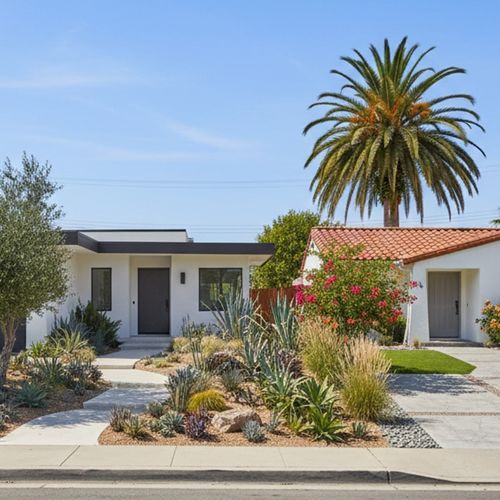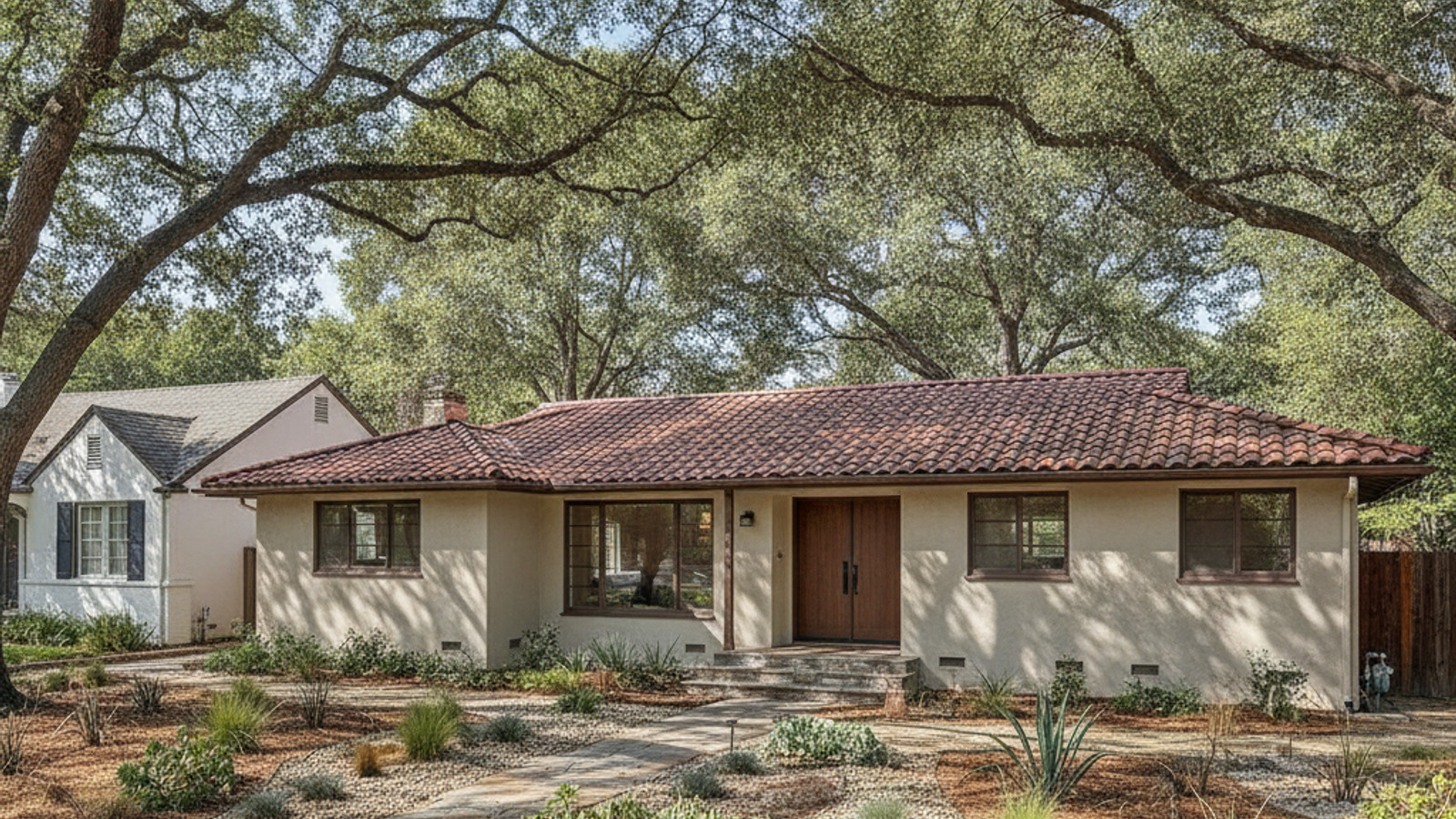
If I had to name the single most requested feature among my downsizing clients, it would be a single-story home. After decades of climbing stairs with laundry baskets, and often after a fall or a knee replacement, a home with everything on one floor becomes the goal. In Silicon Valley that's harder to find than it sounds. The median single-story home that sold in the seven cities I cover below went for $1.75 million over the past year, and many of the original single-story ranch homes have been torn down or expanded into two-story houses. This guide covers where single-story homes for seniors still are, what they cost, the accessibility problems that hide in mid-century floor plans, and what to do when the right house isn't on the market. It's part of my ultimate downsizing guide for Bay Area seniors.
Key Takeaways
Summary: Single-story homes for seniors in Silicon Valley are concentrated in 1950s and 1960s tracts, sold for a median of $1.75 million over the past year at about 23 percent more per square foot than two-story homes, and draw strong competition from downsizers and builders. Single-story doesn't always mean accessible, so check the entry, bathrooms, and floor transitions, and consider condos with elevators, townhomes with a main-floor suite, or adapting your current home.
From my practice: When one of my sellers in her eighties wanted single-level living, the home that fit was a newer manufactured home in a nearby community: three bedrooms, two baths and 1,520 square feet, all on one level, at $725,000. We toured it and wrote a full-price cash offer the same evening, and the community's residency application had to be delivered in person with wet signatures. When the right single-story home comes up, being ready to act matters, which is why the buy first or sell first decision should be made before you start touring.
Why Single-Story Homes Are Getting Harder to Find
Developers built thousands of single-family homes across Santa Clara County during the postwar boom of the 1950s and 1960s, and most of them were one-story ranch houses with low-pitched roofs and wide, rectangular footprints. That history is the reason Silicon Valley still has more single-level inventory than many other expensive metros. The problem is that the same lots are now worth more than the houses on them, so a dated ranch home is just as likely to sell to a builder who adds a second story as to a downsizer who wants to live in it.
A few neighborhoods have pushed back. Cupertino has a single-story overlay district and Eichler zoning rules that limit homes in those areas to one story, and several Sunnyvale Eichler tracts such as Fairbrae and Dartshire-Devonshire have adopted single-story combining districts. Those overlays protect the single-level character of a neighborhood, which is good news for a downsizer looking there.
Where to Find Single-Story Homes in Silicon Valley
In my experience, these are the areas where downsizers most often find them. For a broader comparison of walkability, services and price, see my guide to the best Silicon Valley neighborhoods for senior downsizers.
- San Jose: the largest inventory of ranch homes in the county, especially in Cambrian, Blossom Valley, Almaden Valley, West San Jose, parts of Willow Glen, and Evergreen. Willow Glen and Almaden have flat, tree-lined streets that are easy to walk, and the Fairglen Eichler tracts sit in the Willow Glen and Cambrian area.
- Campbell and Santa Clara: large areas of mid-century ranch homes on modest lots.
- Sunnyvale and Cupertino: Eichler neighborhoods and ranch tracts on smaller, lower-maintenance lots, some protected by the single-story overlays mentioned above.
- Los Gatos and Saratoga: fewer and more expensive, often on larger lots with updated outdoor space, plus some older single-level homes near downtown and in the flatlands.
- 55-plus communities: Santa Clara County has fewer age-restricted communities than other parts of the state, but The Villages Golf and Country Club in San Jose has many single-level homes. See my 55-plus community series.
Free 50+ Page Buyer Guide
The Silicon Valley Strategic Purchase Blueprint
Five percent over the mark costs about $89,500 on a median Santa Clara County home, and nobody feels it the day they win. Learn what actually drives value here, what a disclosure package isn't telling you, and how to write a strong offer without overpaying.
You're all set. Thanks! The Strategic Purchase Blueprint is on its way to your inbox. If you don't see it in a few minutes, check your promotions or spam folder.
What Single-Story Homes Cost in 2026
I pulled every single-family home sale in seven Silicon Valley cities from MLSListings for the 12 months from October 2025 through September 2026 and split them by number of stories. Single-story homes made up about two-thirds of those sales, and their median sale price was $1.75 million, compared with $2.11 million for two-story homes. The price gap is smaller than the size gap, though. The median single-story home had about 1,510 square feet against roughly 2,230 for two-story homes, so buyers paid a median of $1,163 per square foot for single-story homes versus $944 for two-story homes, a premium of about 23 percent.
| City | Single-story sales | Single-story median price | Single-story $/sq ft | Two-story $/sq ft | Single-story premium |
|---|---|---|---|---|---|
| San Jose | 2,496 | $1,530,000 | $1,035 | $881 | 17% |
| Santa Clara | 322 | $1,900,000 | $1,400 | $1,007 | 39% |
| Campbell | 135 | $2,101,000 | $1,316 | $1,035 | 27% |
| Sunnyvale | 387 | $2,580,000 | $1,600 | $1,339 | 19% |
| Los Gatos | 146 | $2,801,000 | $1,498 | $1,151 | 30% |
| Cupertino | 131 | $3,150,000 | $1,835 | $1,421 | 29% |
| Saratoga | 160 | $4,150,000 | $1,645 | $1,423 | 16% |
| All seven cities | 3,777 | $1,750,000 | $1,163 | $944 | 23% |
Source: MLSListings sold single-family homes, October 1, 2025 to September 30, 2026, analysis by Seb Frey. Medians; data deemed reliable but not guaranteed.
Part of that premium is simple math, since smaller homes almost always sell for more per square foot and more of a single-story home's price is land. It still tells you what to expect. A single-story home gets you less house for the money than a two-story home in the same city, and the gap is widest in Santa Clara, Los Gatos, Cupertino and Campbell. San Jose remains the most affordable place to find one, with a median just over $1.5 million.
In most neighborhoods, a well-kept single-story home competes with two groups: downsizers who want to live in it as is, and builders or younger families who want to expand or rebuild. That dual demand, combined with shrinking supply, means updated single-story homes in good neighborhoods often draw multiple offers and sell quickly. The flip side is that dated single-story homes on larger lots can be priced as land, which makes them expensive for a downsizer who just wants to live there. I track this closely in the neighborhoods where my clients are looking so we can recognize a fair price quickly.
Property taxes are the other number to plan for. California reassesses a home at its purchase price, so a buyer leaving a long-held home can face a much bigger tax bill, unless they qualify to carry their old assessed value with them. If you're 55 or older, read my explainer on the Prop 19 base-year transfer before you set a budget. For condos, townhomes and 55-plus communities, add the monthly HOA dues as well, and look at my list of condo and HOA red flags for downsizers.
What to Look for in a Single-Story Layout
Most mid-century homes in the area have between 1,200 and 1,800 square feet of living space, which means less time and money spent on upkeep. The best layouts for aging well share a few traits:
- A main-level primary suite with a full bathroom close to the bedroom. This is the real reason to buy a single-story home.
- An open floor plan with wider turning room and clear sightlines between the kitchen and living areas.
- An easy transition outdoors to a patio or yard without steps.
- A low-maintenance lot with drought-tolerant landscaping that won't need weekly work.
Single-Story Isn't the Same as Accessible
Only about 3.5 percent of US homes have all three basic accessibility features (a no-step entry, single-floor living, and wide halls and doorways), according to the Harvard Joint Center for Housing Studies. That matters because the CDC reports that more than one in four adults 65 and older falls each year. Many mid-century homes have features that become problems as mobility changes:
| Common issue | Why it matters | Typical fix |
|---|---|---|
| Steps at the front entry or from the garage | Hard with a walker or wheelchair | Ramp or regraded path |
| Sunken living rooms or step-down family rooms | A common fall risk | Raise the floor, add rails, or choose another home |
| Tub-shower combinations | Hard to step over | Curbless walk-in shower |
| Narrow hallways and doors | Difficult for walkers and wheelchairs | Widening, which can be costly |
| Eichler radiant floor heating and slab floors | Unique maintenance and repair considerations | An inspector familiar with Eichlers |
| Poor lighting | Falls at night | Added fixtures and switches |
As a Certified Aging-in-Place Specialist, I walk through homes with clients looking specifically at these issues and estimate what it would cost to address them, which often changes which home is really the best value.
A real example: Single-level on paper doesn't always mean easy to live in. I sold a single-level coastal home where you had to climb stairs from the garage and driveway, and the back yard could only be reached through the garage or the primary bedroom. Buyers liked the location but kept backing away over the stairs and the yard, and one visitor called the back yard a fishbowl. When you're shopping for a home to age in, walk the route from the car to the bed, not just the floor plan.
Free 3-minute decision check
Stay, downsize, or move away? Find out which one costs you the least.
For longtime Bay Area owners, the wrong call can cost six figures in taxes, remodeling, or years of higher living costs. Answer a dozen quick questions and see all three paths side by side, with a rough dollar figure for what each one would cost you or free up.
See My Best Path →Rather talk now? Call or text 408.413.3087
Healthcare and Daily Amenities Nearby
Santa Clara County is served by several major medical networks, including Stanford Health Care and El Camino Health, with campuses spread across the valley. I encourage buyers to map the drive from a prospective home to their doctors before making an offer, and to do the same for the grocery store and pharmacy they'll use every week. Flat places to walk matter too. Shoreline at Mountain View and the Los Gatos Creek Trail both have miles of level, paved paths that work for different mobility levels.
Alternatives When the Right House Isn't Available
A single-story house isn't the only way to get single-level living, and with inventory this tight it pays to keep a few options open.
- A condo with an elevator. Single-level living with no yard, often closer to downtown areas.
- A townhome with a main-floor primary suite. Guests and storage upstairs, daily life on one floor.
- A 55-plus or independent living community. Exterior maintenance is handled for you. See independent living vs. a 55-plus community, and if care needs are part of the picture, how a continuing care retirement community works.
- Adapting your current home. Converting a downstairs room into a primary suite, adding a stair lift, or building an ADU can let you stay. The AARP 2024 Home and Community Preferences Survey found 75 percent of adults 50 and older want to stay in their current home, and the changes they expect to need most are grab bars and easier entryways. See ADUs as an aging-in-place solution, strategies for aging in place, and my aging in place vs. moving cost comparison.
- Moving to be near family. Single-story homes are far more common in some other California counties, and the Prop 19 base-year transfer can go with you. See moving to another county to be near family.
For the full downsizing picture, including the money, see how much money downsizing frees up and my ultimate downsizing guide for Bay Area seniors. If you'd like help finding the right home, you can book a call with me.
Free Buyer Strategy Call
Before you tour a single home, let's build your game plan.
In Silicon Valley, the buyers who win usually aren't the ones with the biggest offer. They're the ones who knew exactly how they'd compete before the right house ever came up. In 30 minutes we'll talk through your timing, how your down payment and equity comp fit together, and which neighborhoods really match the way you live, then put together a plan to win the home you want without overpaying for it.
Book My Buyer Strategy Call →
Frequently Asked Questions
Where can I find single-story homes in Silicon Valley?
Mostly in 1950s and 1960s neighborhoods in San Jose, Campbell, Santa Clara, Sunnyvale, Cupertino, and parts of Los Gatos and Saratoga, including Eichler tracts and 55-plus communities such as The Villages in San Jose.
How much does a single-story home cost in Santa Clara County?
Over the 12 months ending September 2026, the median single-story home sale was about $1.53 million in San Jose, $1.9 million in Santa Clara, $2.1 million in Campbell, $2.58 million in Sunnyvale, $2.8 million in Los Gatos, $3.15 million in Cupertino, and $4.15 million in Saratoga, according to MLSListings data.
Do single-story homes cost more than two-story homes?
Per square foot, yes. Single-story homes in seven Silicon Valley cities sold for a median of $1,163 per square foot over the past year, about 23 percent more than two-story homes, although their total price was lower because they are smaller.
Is a single-story home automatically accessible?
No. Entry steps, sunken rooms, tub-only bathrooms, and narrow halls are common in mid-century homes and may need modification.
Are there many 55-plus communities in Silicon Valley?
Fewer than in other parts of California. Most downsizers here buy standard single-story homes in regular neighborhoods, and The Villages Golf and Country Club in San Jose is one of the few large-scale options.
What are alternatives to a single-story house for seniors?
Condos with elevators, townhomes with a main-floor primary suite, 55-plus or independent living communities, or adapting your current home with a downstairs suite, stair lift, or ADU.
Should I adapt my current home instead of moving?
Sometimes. If your home can be modified at reasonable cost and suits you otherwise, aging in place can be the better choice. An aging-in-place specialist can help evaluate it.
Sources and Further Reading
- MLSListings: sold single-family home data, October 2025 to September 2026
- Harvard Joint Center for Housing Studies: Housing a Growing Population of Older Adults
- CDC: Older Adult Falls Facts and Stats
- AARP: 2024 Home and Community Preferences Survey
- HUD: Accessibility of America's Housing Stock
- City of Cupertino: Single-Family Residential Zoning and Single-Story Overlay
- Eichler Network: Sunnyvale Single-Story Combining Districts
- California State Board of Equalization: Proposition 19
Free Buyer Strategy Call
Before you tour a single home, let's build your game plan.
In Silicon Valley, the buyers who win usually aren't the ones with the biggest offer. They're the ones who knew exactly how they'd compete before the right house ever came up. In 30 minutes we'll talk through your timing, how your down payment and equity comp fit together, and which neighborhoods really match the way you live, then put together a plan to win the home you want without overpaying for it.
Book My Buyer Strategy Call →
Senior-Friendly Homes for Sale in Silicon Valley
2
3
4
5
6
7
8
9
10
11
12
13
14
15
16
17
18
19
20
21
22
23
24
25
Check out this article next