The median sale price for a home in Santa Clara County sits around $1.53 million right now, and properties are moving in roughly 19 days. If you've been in your house for a while, that's not just a number to admire - it's a genuine opportunity. When downsizing in Silicon Valley, CA, trading a large, maintenance-heavy home for a smaller footprint lets you pull out significant equity while cutting what you spend every month just to keep the lights on and the gutters clean.
The catch is that downsizing means sorting through decades of accumulated life before you can do any of that. A structured plan keeps it from turning into a months-long stall. This checklist walks you through everything - evaluating smaller property types, clearing out the house, preparing it for a fast market, and landing comfortably in whatever comes next.
Why You Might Want to Downsize in Silicon Valley, CA
The price spread here is hard to ignore. Condos and townhomes in commutable areas like Sunnyvale and Campbell generally range from $750,000 to $1.2 million. Larger 3-4 bedroom single-family homes in those same neighborhoods often command $2.0 million to $2.5 million. That's a gap of over $1 million - and for a lot of longtime owners, that gap is the entire point. Selling the bigger place frees up capital you can invest or use to buy the smaller one outright.
The ongoing savings matter just as much as the sale-day windfall. Heating, cooling, and maintaining a 3,000-square-foot house costs meaningfully more than caring for a two-bedroom condo. You're also off the hook for exterior maintenance, landscaping, and the structural surprises that seem to find every older home eventually.
If you're 55 or older, California's Proposition 19 adds another layer worth understanding. It lets you transfer your current, lower assessed property tax base to a replacement home - so you can sell a larger property and move into something smaller without triggering a massive reassessment on the new place. For your long-term budget, that's a significant piece of the picture.
Step 1: Assess Your Space and Lifestyle Needs
Before you pack a single box, you need to decide what kind of smaller home fits how you live day to day. That decision shapes everything else - how much furniture survives the cut, what neighborhoods make sense, and what amenities need to be nearby. Single-family homes in Santa Clara County carry a median price around $1.9 to $2.05 million, while condos trade considerably lower, with a median around $711,000 to $953,000 depending on the month.
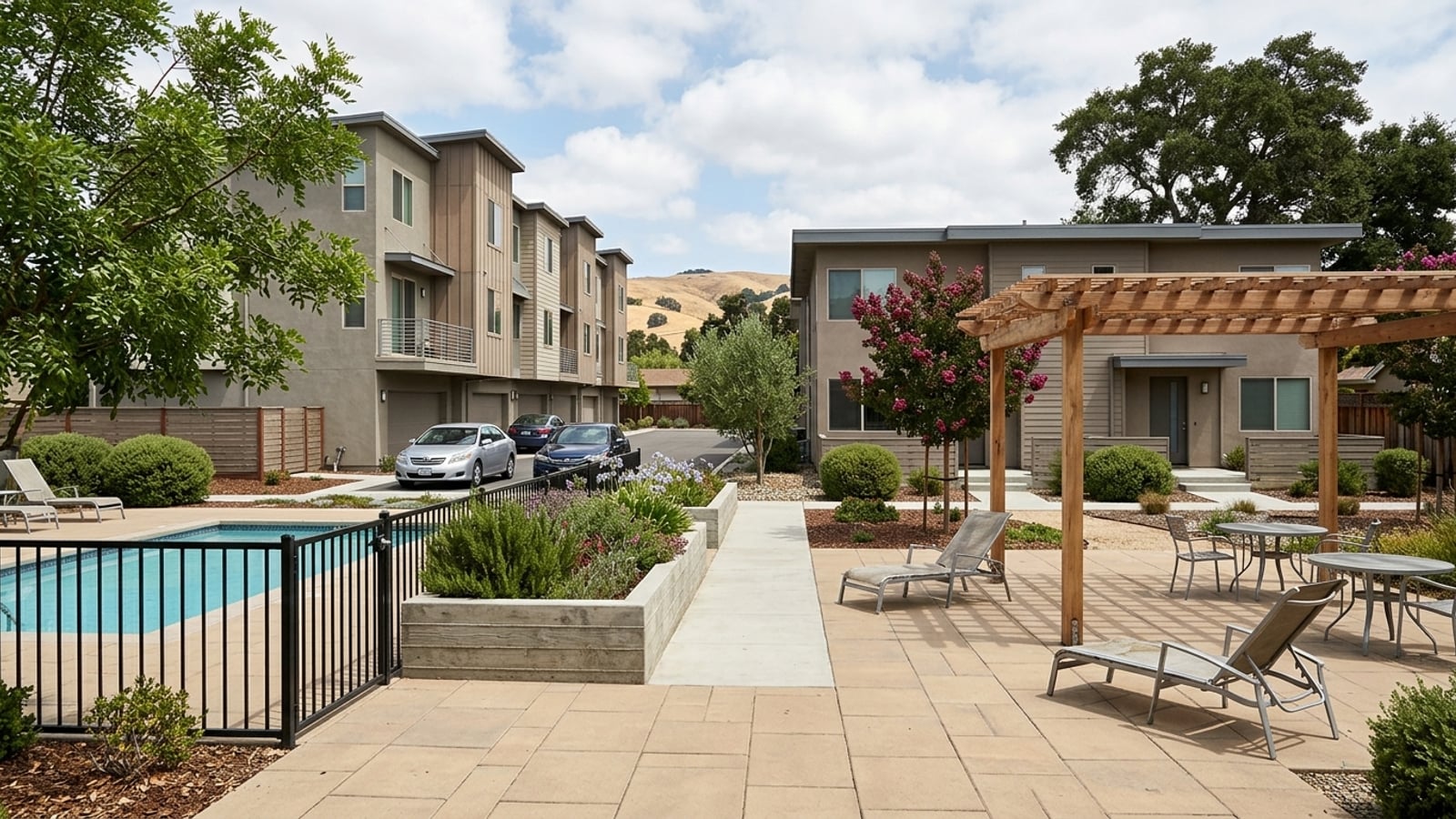
Many downsizers gravitate toward single-story ranch-style homes or 55+ communities that prioritize wide hallways and step-free entrances. Those communities offer replacement homes ranging from 1,000-square-foot condos to 2,000-square-foot detached houses - a meaningful range depending on how much space you want to give up. If urban living appeals to you, downtown San Jose has high-rise options like The 88, Axis, City Heights, and 188 W. St. James, with fitness centers, pools, and concierge services built in.
Factoring in HOA Dues and Amenities
Condos and townhomes almost always carry HOA dues, and you need to build those into your monthly budget comparison before you fall in love with a list price. These fees typically cover exterior maintenance, roof repairs, landscaping, and community amenities - costs you're currently absorbing on your own.
An HOA fee offsets the unpredictable expense of maintaining a large house. No more scrambling to cover a sudden roof leak or scheduling a weekly landscaping crew. That said, review the association's financial health and rules carefully. The restrictions need to fit your lifestyle, not just your budget.
Step 2: The Decluttering Process
Moving from a four-bedroom house into a two-bedroom condo means letting go of roughly half of what you own. That's a lot to work through. Start months before you plan to list, and tackle it room by room so the project doesn't stall out under its own weight.
Begin with spaces that carry the least emotional charge - the garage, guest bedrooms, hallway closets. Working through old tools, holiday decorations, and forgotten coats builds the momentum you'll need before you get to the harder rooms. Save sentimental items, family photos, and your primary bedroom closet for last.
One practical technique that cuts through indecision: measure your current furniture against the floor plan of your future home. If a large dining table physically won't fit into a downtown San Jose condo, you have your answer.
The Four-Box Sorting Method
Bring four distinct bins into every room - Keep, Sell, Donate, and Discard. Every item goes into one of them. Don't let a "maybe" pile form. That's just delayed decision-making wearing a different label.
Keep only what you use regularly or what holds genuine personal significance. Sell and Donate will handle most of the overflow. Discard is for anything broken or unusable. Once a box is full, get it out of the room immediately - clearing the physical space helps you keep moving.
Step 3: Liquidating and Donating Belongings
If you have a house full of furniture to move, local estate sale companies like Caring Transitions Silicon Valley, NorCal Estate Liquidations, and Legacy Estate Liquidators handle the whole operation - pricing, marketing, and managing buyers on the day of the sale. For a large volume of quality items, a professional liquidator is usually the most efficient path.
For donations, a few local organizations will come to you. Goodwill of Silicon Valley partners with ReSupply to schedule home pickups for a fee, processing items at their Opportunity Center on Technology Drive in San Jose. Habitat for Humanity ReStore San Jose on Las Plumas Ave accepts gently used furniture, appliances, and building materials, with pickups available within 24 to 48 hours.
If you need something faster that handles both donation and disposal in one stop, The Junkluggers of Silicon Valley operates throughout San Jose, Palo Alto, Mountain View, and Sunnyvale. They focus on eco-friendly donation of unwanted items and keep as much out of the landfill as possible.
Step 4: Preparing Your Current Home for the Market
Santa Clara County homes are currently selling for an average of 102% of list price, with nearly 47% of properties going above asking. Your home needs to show well to capture that demand. Once the clutter is out, you'll see clearly what deferred maintenance and minor updates need attention before you go live.
Start with the basics - patch the drywall, fix leaky faucets, service the HVAC. Fresh, neutral paint and updated lighting fixtures consistently deliver strong returns in older homes. These aren't glamorous projects, but buyers notice them, and the absence of obvious neglect signals a well-cared-for property.
Work closely with your agent on which updates make sense for your neighborhood. What buyers expect in Los Altos isn't necessarily what buyers expect in Campbell. Allocate your preparation budget where it moves the needle for your specific market.
Staging the Cleared Space
A thoroughly decluttered home gives a stager something to work with. The goal is arranging furniture and decor to highlight the home's square footage and architectural features - giving buyers room to picture their own lives in the space rather than navigating yours.
Professional stagers often bring in modern, appropriately scaled furniture that makes rooms feel larger and brighter. Even if you use your own pieces, removing the extras and pulling down personal photographs creates a more universally appealing environment. It's a small shift that makes a real difference on listing day.
Step 5: Moving and Settling Into Your Smaller Home
Book your movers well in advance - securing a company early is the only way to guarantee help on your exact closing or lease-start date. Professional movers are worth it, especially when you're dealing with stairs or tight condo hallways.
Once you're in, storage becomes your immediate priority. Smaller homes require smarter organization: vertical space with tall shelving, furniture with hidden compartments, custom closet organizers that use every square inch. It's a different mindset than living in a large house, and it's one most people adapt to faster than they expect.
On the administrative side, update your address with the USPS, your bank, and your healthcare providers as soon as you take possession. Transfer utilities to the new address, and cancel any recurring maintenance subscriptions - pool cleaning, landscaping, anything tied to the old property - so you're not paying for services at a home you no longer own.
Frequently Asked Questions
How long does it take to downsize a house?
It depends on the size of the home and how long you've lived there. Most homeowners should start the decluttering process at least three to six months before they plan to list. Breaking the work into smaller, weekly tasks prevents burnout and keeps the timeline from slipping.
What is the hardest room to pack when downsizing?
Usually the garage, the attic, or the primary bedroom - spaces that tend to accumulate the most sentimental items, family heirlooms, and forgotten storage boxes over the years. Tackling lower-emotional-attachment spaces first helps you build momentum before you get to the personal keepsakes.
Should I sell my current house before buying a smaller one?
It depends on your financial situation and the market at the time. Selling first gives you exact numbers for your next purchase and removes any home sale contingency from your offer. Some buyers prefer to secure the new home first, though, so they have a place to move immediately. There's no universal right answer here.
Can I keep my current property tax rate if I downsize to a smaller home in Silicon Valley, CA?
Yes. Under California's Proposition 19, eligible homeowners aged 55 and older can transfer their current assessed property tax base to a replacement home. You can sell a larger property and buy a smaller one without triggering a massive reassessment on the new place.
Where are the best places to donate or sell high-end furniture in Silicon Valley?
For selling, local estate liquidators like Caring Transitions Silicon Valley, NorCal Estate Liquidations, or Blue Moon Estate Sales are solid options. For donations, Habitat for Humanity ReStore San Jose and Goodwill of Silicon Valley both accept gently used furniture and offer pickup services.
How much should I spend updating my older Silicon Valley home before listing it?
It depends on the neighborhood and the condition of the property. Buyers in Santa Clara County are currently paying an average of 102% of list price, so targeted updates - fresh paint, modern lighting, drywall repairs - tend to yield a strong return. Your agent is the right person to identify which specific improvements will resonate with buyers in your area.
Will I owe capital gains tax when selling my long-time Silicon Valley home?
Trading a large house for a smaller footprint lets you pull out significant equity, but it can also create new tax liabilities. Longtime owners should review the capital gains tax rules for seniors to understand how much of their sale-day windfall they get to keep. Consulting a financial professional ensures you are prepared for any costs before you list the property.
Check out this article next