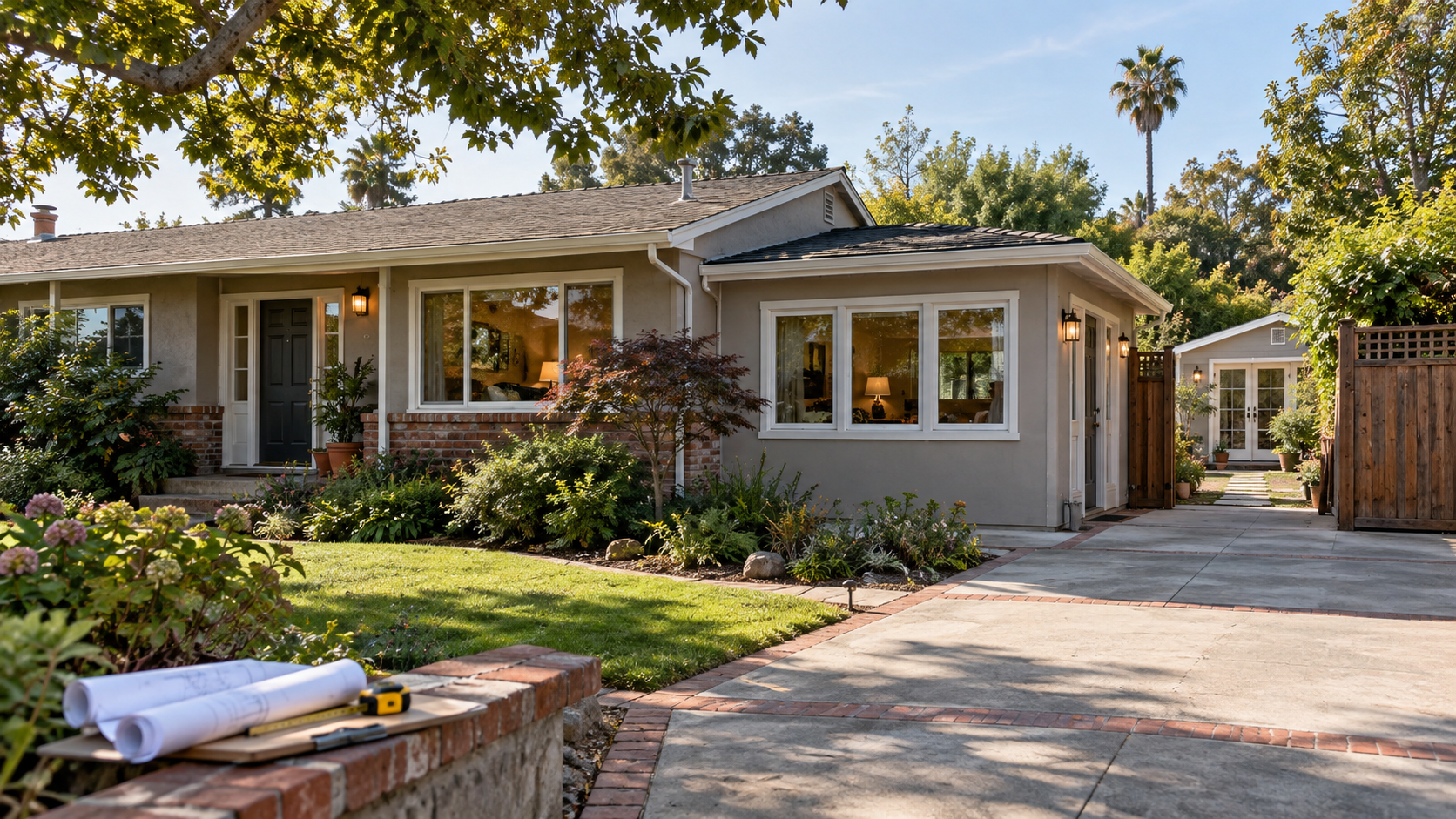
If you’ve lived in your Silicon Valley home for 30 or 40 years, I’d bet there’s something in it that was never permitted. Maybe it’s the family room your husband built off the back in 1984, the garage that became a bedroom when the grandkids moved in, or the “guest cottage” out back that’s been rented to the same quiet tenant for a decade. I see it in a lot of the longtime-owner homes I list in San Jose, Campbell, and the older parts of Los Gatos and Santa Clara, and it almost always comes up in the first meeting with the same nervous question: is this going to blow up my sale?
Usually, no. Unpermitted work is common, buyers and appraisers deal with it all the time, and California gives sellers a clear path, which is honest disclosure. What it can do is cost you money if it’s handled poorly, so I’d like to walk through exactly what you have to disclose, the three options I lay out for every seller in this situation, and how it really affects price and financing. As always, I’m a REALTOR®, not an attorney or a building official, so for anything involving a code violation notice, please bring in the pros.
Key Takeaways
Summary: unpermitted work rarely kills a Silicon Valley sale when it’s disclosed early and priced honestly, and legalizing an older ADU can be worth exploring before you list.
What California Requires You to Disclose
Almost every residential seller in California has to give buyers a Transfer Disclosure Statement under Civil Code §1102.6, and it asks two questions that matter here: whether you’re aware of room additions, structural modifications or other alterations made without the necessary permits, and whether you’re aware of any that aren’t in compliance with building codes. Selling as-is doesn’t let you skip the form, because §1102.1 says the TDS can’t be waived in an as-is sale. If the TDS is delivered late, the buyer gets a short window to cancel (three days if delivered in person, five if mailed), which is one more reason I like to have disclosures done before the house goes live.
There’s also a newer rule worth knowing if you’ve owned the home only briefly. For offers accepted on or after July 1, 2024, Civil Code §1102.6h requires sellers who accept an offer within 18 months of taking title to disclose contractor work, the contractors’ names and the permits pulled. That’s aimed at flippers, but it can also catch heirs who inherited and renovated quickly.
The part that surprises people is that you only have to disclose what you know, but “I didn’t know” is a weak defense if the garage obviously has carpet and a closet. If you’re unsure what was permitted, it takes a few minutes to check. San Jose’s permit history is online at sjpermits.org, searchable by address or APN, and most other Santa Clara County cities will pull records on request. I run that check for every listing so we’re disclosing from facts, not memory. For a broader look at what goes in the package, see my quick guide to Bay Area seller disclosures.
The Most Common Unpermitted Work I See in Silicon Valley Homes
After 23 years of walking through ranch homes, Eichlers and post-war tracts, the same things come up again and again: garage conversions into bedrooms or family rooms, enclosed patios and sunrooms, a bathroom added in a basement or garage, backyard cottages and detached ADUs, kitchen and bath remodels where the cabinets were permitted but the electrical wasn’t, water heater and furnace swaps without a permit, and window replacements. None of these is unusual, and buyers in this market have seen them all. What matters is how big the work is, whether it’s safe, and whether it changes how the house is valued.
Your Three Options
| Option | Best when | Trade-offs |
|---|---|---|
| Disclose and sell as-is | There is no code complaint case, red tag, or notice of violation, and there is no significant health/safety or other liability issue. | Some buyers will discount for it, and a few lenders or appraisers may push back on unpermitted living space |
| Legalize with an after-the-fact permit | If the process to get the work recognized / legalized can be done with an “over the counter” permit and can be done with minimal time and risk. | Inspectors may require opening walls; costs and timelines vary widely by city and by what’s found |
| Remove or restore | There is an open code complaint case, or the property has become “red tagged” which could preclude financing | You lose whatever value the space added, and you still have to disclose that work was removed |
For most of my longtime-owner clients, disclose-and-sell-as-is is the winner, because the cost and hassle of legalizing usually outweighs what it adds to the price, and I’ve written before about why selling as-is often means netting more. The big exception is a backyard unit, because the state has made it much easier to legalize those.
Does your place need a little work?
Sell As-Is. Sell for More.
No remodel, no lowball investor offer. Most Bay Area sellers net more selling as-is, and I'll show you how to get full market value without fixing a thing.
Show Me How →
The ADU Exception: Legalizing an Older Backyard Unit
If your unpermitted space is a separate unit (a converted garage with a kitchen, a backyard cottage, or an in-law unit), California law is on your side. AB 2533, effective January 1, 2025, expanded the amnesty in Government Code §66332 so that owners of accessory dwelling units and junior ADUs built before January 1, 2020 can apply to legalize them without paying impact fees and without being penalized for having built them unpermitted. A city can still deny the permit if the unit is substandard under Health and Safety Code §17920.3, so health and safety items like egress, electrical and smoke detectors still have to be right. Separately, Health and Safety Code §17980.12 lets owners request a five-year delay in enforcement for ADUs built before 2020 when the issues aren’t health and safety problems.
Why does this matter for selling? A legal ADU in Silicon Valley adds real rental income and real appraised value, while an unpermitted one is often valued as little more than storage. If you have time before you list, a conversation with your city’s ADU desk can be one of the best-paying hours you’ll spend.
How Unpermitted Work Affects Price, Appraisal and the Buyer’s Loan
This is where I see sellers get blindsided. Fannie Mae’s appraisal guidance (Selling Guide B4-1.3-05) tells appraisers that when an addition was built without permits, they have to comment on its quality and appearance and its impact, if any, on market value, and ADU square footage is reported separately from the main home’s living area. In plain English, the 400-square-foot family room you added may not get counted the same way as the original house, and a buyer financing 80% of the price may find their appraisal comes in lower than the contract price.
That’s why I price these homes on what comparable buyers will actually pay for the usable space, not on the total square footage the county doesn’t know about. When the pricing and the disclosures match from day one, there’s nothing for the appraiser or the buyer’s inspector to “discover,” and the price holds through escrow. When they don’t match, that’s when renegotiations happen. If you’re curious how the buyer’s side thinks about it, I wrote about the risks of buying a home with unpermitted work for my buyer clients, and it’s useful to see it from their chair.

Does your home need some work first?
Let's get it market-ready, and pay for it at closing.
Paint, repairs, flooring and staging, all handled for you through Compass Concierge with nothing out of pocket up front and no contractors for you or your family to manage.
See How It Works →Rather talk now? Call or text 408.413.3087
A Story I See All the Time
Here’s a pattern I’ve watched play out more times than I can count. A widowed mom in her eighties is moving closer to her daughter, and the family home in Santa Clara has a garage that her late husband converted into a big rec room in the 1970s. Her son is convinced it’s worth “a bedroom’s worth” of value and doesn’t want to hear otherwise. The daughter is worried the city will show up with a red tag the minute they list. Mom just wants it to be over without anyone fighting.
The way through is the same almost every time. We pull the permit history, so everyone’s looking at the same facts. I bring two or three comparable sales with and without permitted space so the son can see how buyers actually priced it. We disclose the conversion plainly in the TDS and the listing, and we price the home on its permitted square footage with the rec room as a bonus. When that happens, the room becomes a selling point (a buyer’s teenager or home office) instead of a problem, and nobody has to have the argument in the middle of escrow. If your family is having a version of this conversation, my post on sibling conflict during a parent’s home sale may help too.
What Not to Do
Don’t try to hide it. Covering up a converted garage with a fresh coat of paint and leaving the TDS boxes unchecked is the single fastest way to turn a minor issue into a lawsuit, and buyers’ inspectors in this market are very good at spotting additions. Don’t pull a permit right before you list unless you’re ready to finish it, because an open permit with a failed inspection is harder to explain than a long-disclosed old addition. And don’t assume you have to fix everything. In most cases the buyer would rather have the price reflect the work than have you rush a repair. If you’re in Santa Cruz County, the rules around enforcement are a little different, so read my piece on red tags in Santa Cruz County before you decide anything.
How I Help Sellers With Unpermitted Work
When I take on a listing like this, I pull the permit history, walk the house with a contractor I trust to flag anything unsafe, help you decide between selling as-is and legalizing, write the disclosures in plain language with your attorney’s input where needed, and price the home so the appraisal holds. I’ve been doing this for longtime owners since 2003, and I hold the SRES® and CSA designations because most of my clients are in exactly this stage of life. If you’d like to talk it through, book a 30-minute call with me and we’ll look at your specific situation.
Free Seller Strategy Session
Before we talk money, let's talk about you.
The biggest financial wins in a move happen long before a home hits the market, and they start with understanding your situation. In 30 minutes we'll talk through what's changing, who's involved, and what you need this move to do for you, then map out a plan that gets you there with a clear financial advantage.
Book My Strategy Session →
Frequently Asked Questions
Can you sell a house with unpermitted work in California?
Yes. There’s no law requiring you to permit or remove the work before selling, but you must disclose what you know about it on the Transfer Disclosure Statement and in your other disclosures.
Do I have to disclose unpermitted work if I’m selling as-is?
Yes. Civil Code §1102.1 says the Transfer Disclosure Statement can’t be waived in an as-is sale, and the TDS asks directly about additions, alterations or repairs made without permits.
Should I get a permit before I sell?
It depends on the size of the work and your timeline. Minor or cosmetic work is usually better disclosed and priced in. A substantial addition or a backyard unit can be worth legalizing if you have a few months, especially an ADU built before January 1, 2020, which may qualify for California’s ADU amnesty.
Does unpermitted square footage count in the appraisal?
Not always in the same way. Fannie Mae requires appraisers to comment on unpermitted additions and their impact on value, and ADU square footage is reported separately from the main home’s living area. That can lower the appraised value compared to the total square footage.
Can the city fine me for unpermitted work when I sell?
Selling by itself doesn’t trigger an inspection in most Santa Clara County cities, but a code complaint can. Disclosing the work doesn’t report it to the city. If you’ve received a notice of violation, talk to an attorney before listing.
How do I check my home’s permit history in San Jose?
Go to sjpermits.org, choose Property Information, and search by street number and name or by APN. Other cities in Santa Clara County will provide records through their building departments.
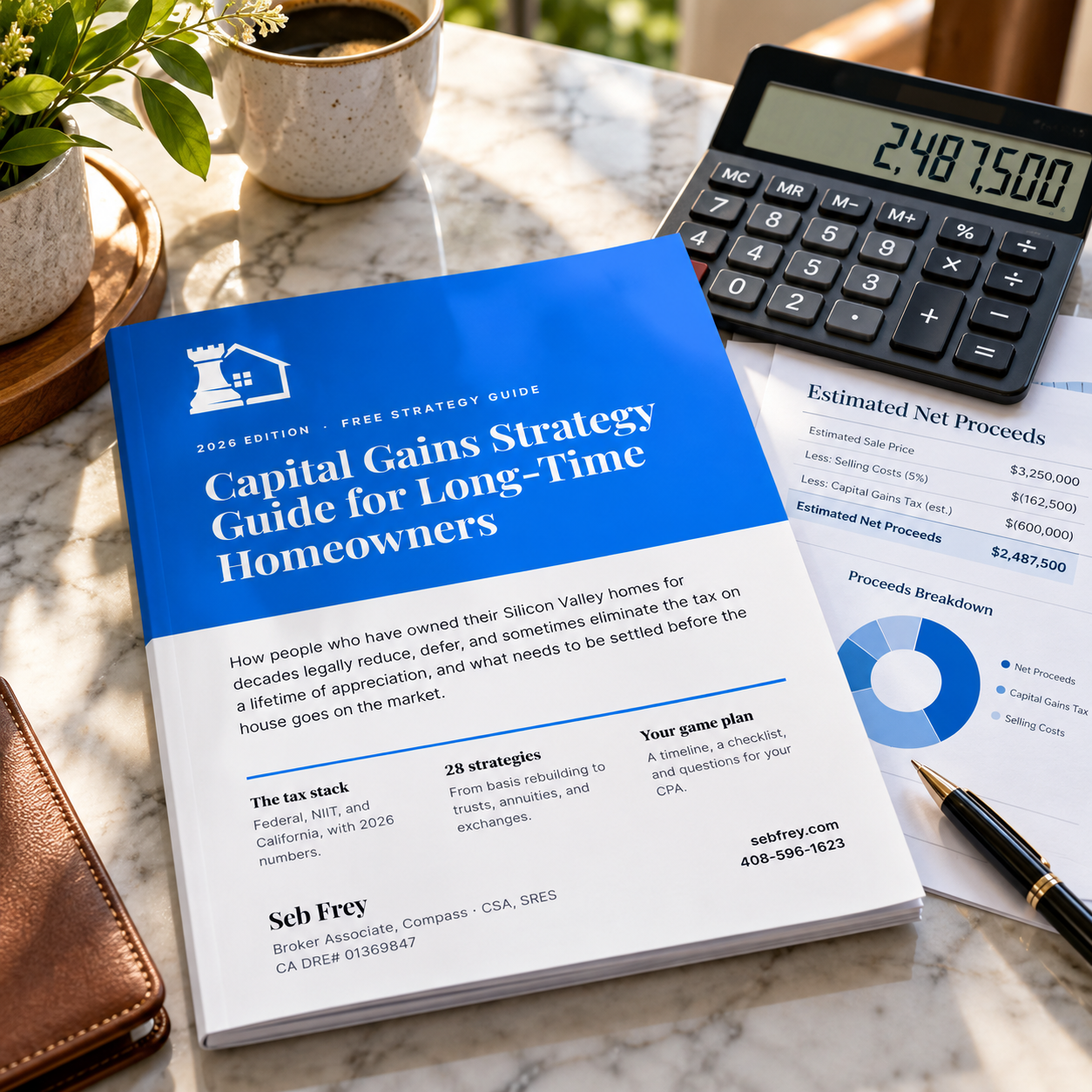
Free 2026 Strategy Guide
28 legal ways long-time owners cut their capital gains tax. Know your options before you list.
After decades in Silicon Valley, your gain can blow past the $250,000 and $500,000 exclusions. The guide walks through each strategy, a real bracket-by-bracket example, and what to settle before you list.
You're all set. Thanks! Your Capital Gains Strategy Guide is on its way to your inbox. If you don't see it in a few minutes, check your promotions or spam folder.
Senior Friendly Homes in Silicon Valley South
2
3
4
5
6
7
8
9
10
11
12
13
14
15
16
17
18
19
20
21
22
23
24
25